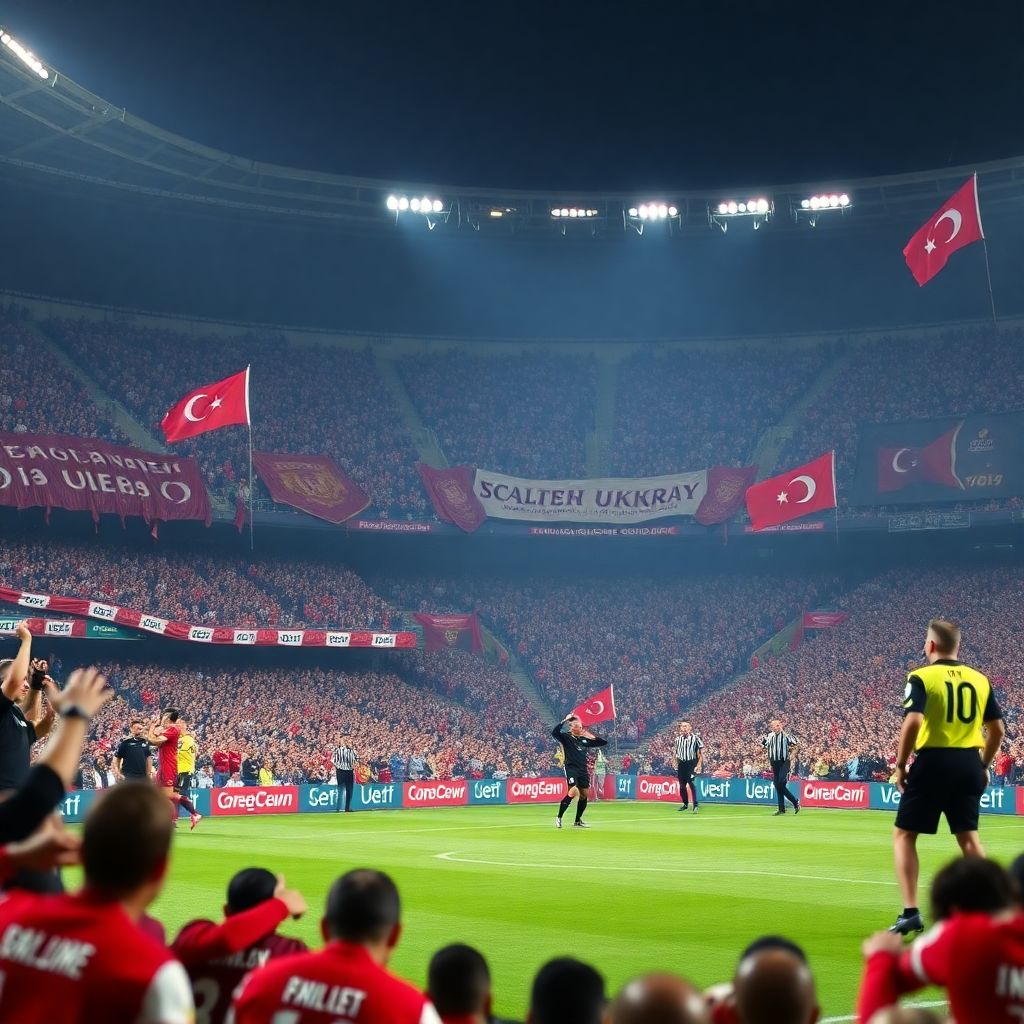
Fan culture in Turkey amplifies home advantage through noise, choreography and strong club identity that pressure opponents and influence referees. Süper Lig derbies, intense ultras traditions and stadium design all shape team behavior, decision-making and momentum. Coaches, analysts and venue managers can systematically measure these effects and adapt tactics, preparation and operations.
Fan Dynamics That Drive Match Outcomes
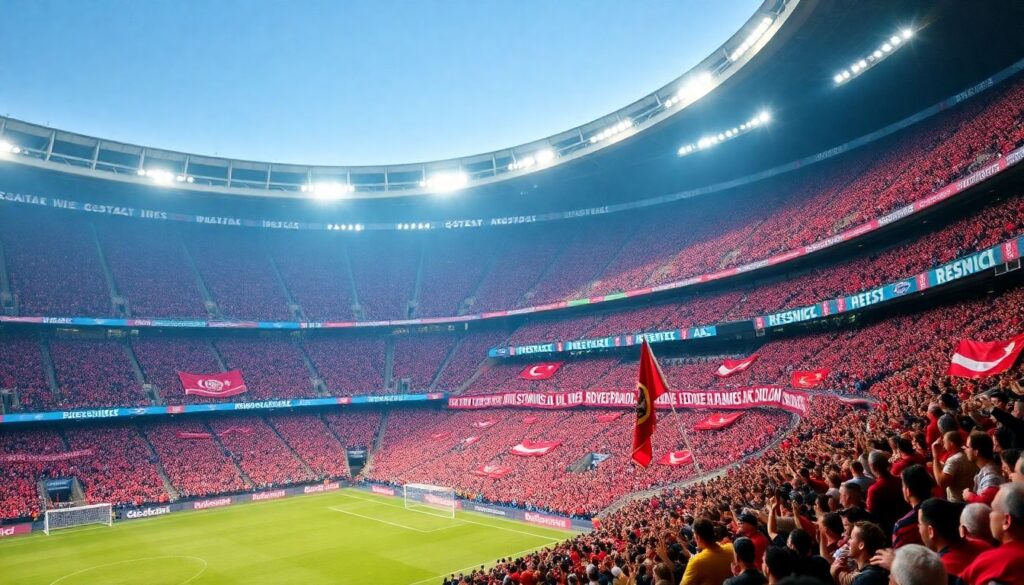
- Home advantage in Turkey is strongly tied to dense, organized fan groups and choreographed support across 90 minutes.
- Derby atmospheres, especially in Istanbul, can alter player risk-taking, composure and communication quality.
- Referee decision patterns often correlate with noise spikes and collective crowd reactions, especially on marginal calls.
- Stadium layout, acoustics and club policies either concentrate or dilute the psychological pressure on opponents.
- Coaches who rehearse communication, set-piece routines and emotional regulation for hostile away venues tend to adapt better.
- Data on crowd volume, momentum swings and game state helps separate narrative from measurable impact.
Historical Roots and Social Identity of Turkish Fan Culture
In Turkey, fan culture is deeply linked to city identity, neighborhood belonging and club history. Major clubs such as Galatasaray, Fenerbahçe, Beşiktaş and Trabzonspor represent more than sports; they embody political leanings, class lines and regional pride.
This background matters for performance analysis because the stadium is not a neutral venue. Singing, banners and collective rituals create a sense of duty for players and a near-tribal defense of home turf. When people search for “turkey football tickets best home stadium atmosphere”, they are essentially looking for the most intense versions of this identity on display.
Such knowledge suits analysts, coaches, tour organizers and venue managers who want to understand or leverage home advantage. It is less suitable for making rigid predictions; correlation between fan culture and results does not mean every loud crowd guarantees a win, and individual matches can easily break the pattern.
Mechanisms of Home Advantage in Turkish Stadiums
To study or manage how fan culture influences team performance, you need a small but clear toolkit. Most elements are low-risk and accessible to clubs outside the very top level.
- Basic match and event data
- Minute-by-minute events (shots, fouls, cards, set pieces, substitutions).
- Game state information (scoreline, red cards, injuries, tactical shifts).
- Competition and context tags (league, cup, “super lig derbi tickets galatasaray fenerbahce besiktas” type fixtures).
- Context on crowd structure and behavior
- Approximate attendance and section layout (ultras stand, family areas, VIP tiers).
- Qualitative notes on choreographies, protests, whistles or coordinated silence.
- Ticketing context (local sales, away allocation, “hospitality vip tickets turkish super lig matches”).
- Simple audio and video references
- Broadcast recordings or internal tactical footage with sound preserved.
- Time-stamped notes where crowd noise clearly peaks (goals, controversial calls).
- Optional: basic sound-level estimates if your club or broadcaster collects them.
- Player and staff feedback channels
- Short post-match questionnaires for players focusing on communication, stress and motivation.
- Coaches’ notes on how the crowd affected instructions, referees or time management.
- Sports psychology input where available.
- Operational and commercial information
- Ticket categories and pricing (including “turkey football fan tours matchday experience packages”).
- Travel context for away teams and fans (for example, “cheap flights and hotel packages for football matches in turkey”).
- Security and access policies that may dampen or intensify atmosphere.
With these elements, you can build a structured view of home advantage mechanisms instead of relying purely on reputation or isolated anecdotes.
Psychological Effects of Crowd Support on Player Performance
This section offers a practical, low-risk method to understand and integrate psychological crowd effects into your work. It is designed to be safe for coaches, analysts and staff, without direct interventions on fans or referees.
Risks, limits and safe-use notes
- Do not treat crowd effects as deterministic; use them as one factor among tactics, fitness and quality.
- Avoid blaming players or referees on “pressure” in public; use findings internally and constructively.
- Never encourage unsafe behavior, pyrotechnics or confrontational actions to increase noise.
- Respect privacy: only use audio/video and survey data that your club is allowed to collect and share.
- When applying results to betting or commercial decisions, be aware that football outcomes remain highly uncertain.
- Define the specific psychological questions you care about
Clarify what you want to understand before you start collecting data. Examples: Does our home crowd boost our pressing intensity? Do away players mis-place more passes after loud derbies? Do referees hesitate to book home players near the ultras stand?
- Mark key crowd moments across several matches
Select matches with clear, energetic atmospheres: big Süper Lig clashes, cup ties, and high-demand dates when “turkey football tickets best home stadium atmosphere” are sold early. For each game, log time stamps for:
- Goal celebrations and near-misses.
- Mass protests (whistles, boos, coordinated chants against the referee).
- Iconic choreographies, anthem moments, or large tifos at kick-off.
- Link crowd peaks to on-pitch behavior
For each marked time window (for example, one minute before and three minutes after a crowd peak), compare team behaviors to calmer periods.
- Look at pressing actions, duels, clearances and risk-taking (long shots, dribbles).
- Check basic technical accuracy: pass completion, first-touch errors, rushed clearances.
- Review whether team shape stays compact or becomes stretched in emotional phases.
- Capture players’ subjective experience safely
Use short, voluntary surveys in the day after the match. Ask players to rate, on simple scales, how much they felt:
- Supported and energized by the home crowd or disturbed by the away fans.
- Distracted by whistles, chants or objects thrown (if any).
- Confident in communication (hearing calls, set-piece codes, bench instructions).
Combine these perceptions with your event data; do not over-interpret a single response.
- Identify repeatable patterns, not one-off stories
Aggregate findings over multiple matches and different contexts (routine league games, “super lig derbi tickets galatasaray fenerbahce besiktas” fixtures, early kick-offs, midweek nights). Identify patterns such as:
- Specific minutes where focus drops (for example after controversial incidents).
- Player roles that seem most sensitive to noise (young goalkeepers, new centre-backs, foreign playmakers).
- Differences between home and away mental responses.
- Translate insights into training and match routines
Turn your observations into safe, practical actions for staff and players, such as:
- Simulated noise in training when rehearsing build-up and set pieces.
- Pre-agreed hand signals and visual codes for hostile away grounds.
- Short pre-match briefings on expected atmosphere for specific stadiums and tour groups (including “turkey football fan tours matchday experience packages”).
Keep monitoring outcomes and adjust calmly; avoid sudden changes based on a single match.
How Coaches and Teams Adjust Tactics for Hostile Atmospheres
Use this checklist to evaluate whether your team is operationally ready for intense Turkish away environments and whether you are leveraging home crowds effectively.
- You have a specific communication plan for loud phases (hand signals, pre-agreed cues, simple code words).
- Set-piece routines are practiced with artificial noise and time pressure, not only in quiet sessions.
- Goalkeepers and central defenders have rehearsed playing under heavy whistles and visual distraction.
- There is a clear strategy for referee interaction: defined captain, calm approach, no mass protests.
- Match plans consider emotional waves: how to slow the game after a conceded goal, or accelerate after a huge chance.
- Substitutions and tactical shifts are timed with crowd dynamics in mind (for example, during prolonged home pressure or brief lulls).
- Home-match warm-ups and walk-outs are used to connect with fans and align energy, not just as physical routines.
- Staff travel planning for away fixtures considers fatigue and stress, potentially using “cheap flights and hotel packages for football matches in turkey” to reduce disruption.
- Commercial and hospitality departments coordinate with coaching staff so that “hospitality vip tickets turkish super lig matches” and fan-based promotions enhance, not distract from, performance focus.
- Debrief sessions explicitly discuss atmosphere: what helped, what distracted, and what to refine next time.
Quantifying Noise, Momentum and Decision Bias in Turkish Matches
When trying to put numbers on fan influence, these are frequent pitfalls that distort conclusions.
- Confusing correlation with causation: better teams with richer fan bases may win more regardless of crowd noise.
- Ignoring game state: a leading team will naturally attack less, which can be wrongly attributed to a “quiet” or “tense” stadium.
- Using single-match examples to prove general rules about derbies, referees or specific clubs.
- Relying only on final scorelines instead of minute-by-minute patterns of shots, chances and decisions.
- Not separating league, cup and European fixtures, where travel, scheduling and ticket allocations differ widely.
- Assuming all noisy crowds affect referees the same way, without checking referee profiles and prior tendencies.
- Ignoring away fans: some Turkish grounds host significant away support, especially when tour operators bundle “turkey football tickets best home stadium atmosphere” with travel products.
- Over-interpreting commercial segments such as ultras, family stands or VIP hospitality as homogenous groups.
- Underestimating how pre-match narratives in media shape both fan expectations and official performances.
- Failing to document methodological choices, which makes it hard to repeat or challenge your analysis later.
Stadium Design, Policy and Operational Measures to Modulate Home Edge
For clubs and venue managers, there are multiple ways to adjust home advantage without compromising safety or fairness. These alternatives can be combined or applied selectively depending on club culture, league rules and local regulations.
- Acoustic and seating configuration adjustments – Use architectural tweaks, sound-reflective materials and concentrated singing sections to channel noise towards the pitch, while maintaining safe evacuation routes. This suits clubs looking to strengthen identity and make season tickets and “turkey football tickets best home stadium atmosphere” more attractive.
- Policy and access management – Through ticket allocation, away-fan zoning and clear conduct rules, clubs can shape how intense and targeted the pressure feels. Balanced policies are particularly relevant when handling high-risk derbies and international visitors booking “turkey football fan tours matchday experience packages”.
- Operational coordination with teams – Adjust warm-up timings, pre-match shows, anthem length and fan-engagement elements to match coaching needs. This is ideal where departments for operations, marketing and performance already collaborate around “hospitality vip tickets turkish super lig matches” and broader matchday experiences.
- Fan education and support programs – Instead of purely repressive measures, clubs can invest in fan groups’ self-organization, dialogue platforms and inclusion campaigns. This is helpful when the goal is a passionate yet safe atmosphere that also appeals to families and tourists taking advantage of “cheap flights and hotel packages for football matches in turkey”.
Practical Concerns and Clear Responses for Coaches and Analysts
How many matches do I need to study to say something meaningful about fan effects?
You need more than a handful of games, ideally across different opponents and contexts, before drawing conclusions. Focus on patterns that repeat in various situations rather than trying to prove a point from a single dramatic derby.
Can we safely simulate Turkish stadium noise in training without harming players?
Yes, using controlled audio from speakers at reasonable volumes is generally safe, as long as you respect hearing health guidelines and allow players to give feedback. The goal is not to recreate exact chaos but to practice clarity under distraction.
Do intense home crowds always help the home team perform better?
No. While they often correlate with stronger home performances, they can also increase anxiety, rushing and individual hero attempts. The impact depends on player profiles, coaching, recent results and how the team has prepared mentally.
How should we brief new foreign players before their first big Turkish derby?
Offer concrete explanations of what they will see and hear, show short video clips, and walk through communication plans. Emphasize routines, not fear: focus them on first actions, cues from teammates and the match plan, not on the noise itself.
Is it ethical to account for possible referee bias in our match strategy?
Yes, as long as you do not try to manipulate referees. It is reasonable to understand tendencies, encourage disciplined behavior in risky zones and prepare players to stay calm around controversial calls, particularly in emotionally charged stadiums.
What can analysts do if they do not have access to professional audio data?
Use time-coded notes from match videos, observer logs and simple markers like crowd reaction to chances and fouls. Even low-tech annotations can reveal patterns when matched with event data and player feedback.
Should venue managers reduce atmosphere to lower risk, or enhance it for commercial reasons?
The best path is balance: prioritize safety and regulatory compliance, then carefully build rituals and experiences that encourage positive, continuous support. Strong atmosphere and safe operations can coexist when planning is evidence-based and collaborative.