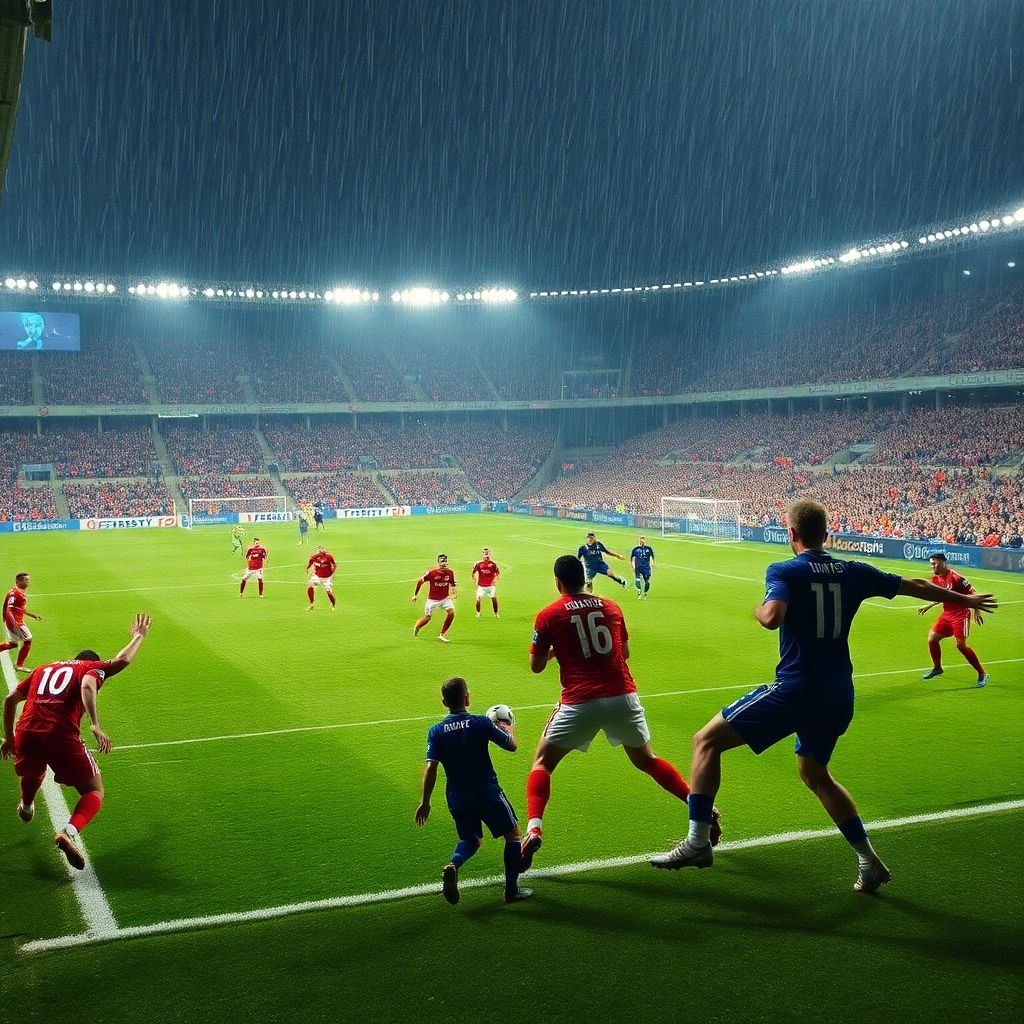
Turkish clubs struggle in Europe because short-term thinking, fragile finances, and shallow squads clash with the tactical and physical demands of modern continental football. Domestic success in the Süper Lig often relies on emotional atmospheres and individual quality, which rarely compensate for structural weaknesses, poor squad planning, and outdated tactical habits against elite European opponents.
Essential Tactical and Structural Insights
- Results of turkish football clubs in european competitions reflect structural issues more than bad luck or referees.
- Debt-driven spending creates aging, unbalanced squads that cannot sustain European intensity.
- Weak youth development and limited scouting reduce depth and tactical flexibility.
- Many domestic coaching habits lag behind contemporary European tactical trends.
- Logistics, scheduling, and travel management often undermine recovery and performance.
- Governance and ownership models reward short-term wins instead of continental competitiveness.
Debunking Common Myths About Turkish Clubs in Europe
The core idea: persistent underperformance in Europe is systemic, not a one-off coincidence. When you look at turkish football clubs in european competitions over time, similar tactical and structural patterns appear regardless of coach names or star signings.
Myth 1: “We are unlucky and robbed by referees.” Single decisions can swing matches, but consistent early exits across different eras, coaches, and squads show something deeper. When you run a turkish super lig performance in europe analysis, you see familiar issues: failing to control tempo, conceding easy transitions, and losing intensity after 60 minutes.
Myth 2: “Home atmosphere will win it for us.” Intimidating stadiums help domestically, but away legs and neutral venues neutralize this edge. Opponents are prepared psychologically and tactically to absorb pressure, drag the pace down, and punish naive pressing or poor rest defense.
Myth 3: “Spending on big names guarantees Europe-level quality.” The real gap lies in squad architecture, not only names on the team sheet. When veterans who were elite five years ago have to play every three days without rotation, the intensity required in the Champions League quickly exposes weaknesses in pressing, tracking, and transition recovery.
To make this concrete, here is a short algorithm to check whether a European result is mainly “bad luck” or a structural problem:
- Count clear chances conceded vs created in both legs (not just shots).
- Review goals conceded: how many came from transition or set-piece organization, not brilliance from the opponent.
- Compare running intensity and pressing quality before and after minute 60.
- Check bench usage: number of impactful substitutions and tactical adjustments.
- Repeat for at least three recent European ties; if patterns repeat, the issue is structural, not just luck.
Using this checklist, questions like why turkish teams fail in champions league become easier to answer in a grounded, evidence-based way instead of relying on narratives about curses or conspiracies.
Financial Constraints and Their Tactical Consequences
The core idea: financial structures dictate tactical options. The way clubs earn, spend, and manage money heavily shapes how they can play in Europe.
- Debt-driven short-term transfers
Reliance on high-wage veterans limits intensity and pressing. Coaches are tactically forced into deeper blocks or mid-blocks because the squad cannot sustain high-tempo pressing over two matches per week. - Limited rotation options
When the wage bill is concentrated on 6-7 players, the bench is thin. That means predictable line-ups, tired key players, and reduced ability to adjust shapes mid-game. Tactical systems that require specialist roles (e.g., inverted full-backs, aggressive number 8s) become hard to implement. - Unbalanced positional investment
Spending focuses on forwards and 10s, while full-backs, holding midfielders, and backup centre-backs are neglected. In tactical analysis of turkish clubs in european cups, you repeatedly see teams losing control in wide areas and defensive midfield, even when their front line is dangerous. - No budget for tactical continuity
Frequent coach changes lead to tactical resets. Every reset means new player profiles, often incompatible with existing contracts. Clubs end up with hybrid squads built for three different systems, forcing compromises that are punished by organized European opponents. - Insufficient investment in performance staff
Sports science, analysts, and nutrition support are often underfunded compared to European rivals. The result is suboptimal conditioning and weaker match preparation, which manifests as late-game collapses and poor adaptation to opponent game plans. - Risk-averse financial planning
Because of fragile balance sheets, some clubs play overly cautious football in Europe, trying “not to lose heavily” rather than imposing a clear plan. This defensive mindset lets opponents dictate tempo and territory, limiting the chances of meaningful away goals or big home wins.
Youth Development, Scouting and Squad Depth Issues
The core idea: depth and variety in the squad are prerequisites for modern European football; many Turkish clubs lack both because of structural youth and scouting problems.
Typical scenarios where these issues show up:
- Over-reliance on aging core players
Lack of academy graduates trusted for European minutes forces coaches to use the same veterans every 3-4 days. Fatigue leads to slower pressing and late defensive reactions, exactly the weaknesses top European sides exploit. - No like-for-like replacements for key roles
Scouting that focuses on highlight reels, not profiles, creates squads where there is only one competent ball-playing centre-back, one true holding midfielder, or one winger who can press. When they are injured or suspended, the system collapses. - Academy football not aligned with first-team tactics
Youth teams often play very differently from the first team. When youngsters are promoted, they do not fit the adult tactical model, so coaches hesitate to use them in European matches, reinforcing the cycle of shallow depth. - Foreign-player quota distortions
Domestic regulation can lead to signings driven by passport rather than tactical profile. This may help with local rules but weakens the squad’s European suitability, especially when versatile, tactically intelligent squad players are overlooked. - Reactive, not proactive scouting
Clubs often chase players after they shine against them or trend on social media. This reactive scouting undermines coherent long-term planning and makes it harder to build balanced squads that can adjust to various European styles.
Coaching Philosophies vs. Contemporary European Tactical Trends
The core idea: coaching preferences in the Süper Lig frequently lag behind tactical evolution in Europe, creating a clash in game tempo, spacing, and pressing structures.
Strengths and situational advantages
- High individual creativity in attack – Many Turkish coaches give creative freedom in the final third, which can surprise rigid European defenses when the ball reaches dangerous areas.
- Adaptability to chaotic games – Players are used to emotionally charged, end-to-end matches. In some European ties, this can help in turning around games that become open and transitional.
- Strong set-piece delivery – Technically gifted players and good delivery from wide areas can punish opponents who underestimate dead-ball situations in Istanbul or other Turkish stadiums.
- Intuitive combinations in tight spaces – Many attackers are comfortable in crowded zones, which helps break down low blocks when the build-up manages to progress.
Limitations and recurring tactical gaps
- Outdated pressing schemes – Pressing is often man-oriented and emotionally driven rather than coordinated with clear triggers, leaving exploitable gaps between lines.
- Poor rest defense – Full-backs and central midfielders frequently commit forward without structured coverage behind them, leading to counterattacks from lost possession.
- Limited focus on phase-based control – Many teams struggle to shift calmly between pressing, mid-block, and low block; once they drop deep, they rarely manage to step up again as a unit.
- Inadequate build-up against high press – Goalkeepers and centre-backs are often less comfortable under pressure, leading to rushed long balls, loss of possession, and constant defending.
- Insufficient video and data integration – While improving, opponent-specific tactical plans often lag behind the high detail seen at top European clubs, particularly in pressing traps and build-up patterns.
Matchday Logistics, Scheduling and Player Fatigue
The core idea: even the best tactical plan fails if the squad arrives tired, under-recovered, or poorly prepared for travel and schedule demands.
Common errors and myths that shape the problems of turkish football in european tournaments:
- Underestimating travel recovery
Late-night returns, long connections, and disrupted sleep cycles are often accepted as “part of football” instead of being actively managed. This leads to underperformance in weekend league games, forcing coaches to prioritize and rotate in suboptimal ways. - Ignoring micro-periodization
Training loads are sometimes planned as if there is one game per week, not two. Players either train too hard between matches or not enough to maintain intensity, which shows in the last 20 minutes of European ties. - Emotional build-up draining mental energy
Overheated pre-match narratives and pressure can mentally exhaust players before kick-off. The crowd lifts intensity early, but concentration drops later, leading to lapses on set pieces and in defensive positioning. - Suboptimal rotation strategy
Instead of distributing minutes intelligently, some coaches make wholesale changes in either the league or Europe. This breaks rhythm and cohesion, making it hard to maintain a consistent tactical identity across competitions. - Blaming calendar instead of planning
Fixture congestion is real, but European peers face similar calendars. The difference often lies in planning: squad building for two games per week, earlier travel, better sleep management, and using performance data to individualize recovery.
Institutional Governance, Ownership Models and Long-Term Planning
The core idea: boardroom decisions shape the tactical ceiling. Governance models in many Turkish clubs reward short-term domestic success more than sustainable European competitiveness.
In practice, this means frequent presidential elections, fan-driven transfer demands, and media pressure push clubs to sign big names immediately rather than invest in structure. Coaches become short-term employees, afraid to commit to a long-term tactical project that might initially bring mixed results in Europe.
To link this governance layer to on-pitch outcomes, think of a simplified “club decision algorithm” that often drives European performance:
IF season_goal == "win league now"
    THEN prioritize big-name transfers
         reduce budget for scouting, academy, analysts
         hire coach with immediate-results profile
ELSE IF season_goal == "be competitive in Europe in 3 years"
    THEN invest in data scouting and youth
         hire coach with clear tactical model
         accept initial inconsistencies
END IF
A mini-case typical of turkish super lig performance in europe analysis would be a club that finishes domestically in the top three, spends heavily on aging stars to “go for the Champions League”, then suffers from slow defenders, predictable pressing, and repeated group-stage exits. The same pattern repeats under different presidents and coaches because the underlying algorithm never changes.
When evaluating why turkish teams fail in champions league and other continental tournaments, the most productive question is not only “What happened on matchday?” but “Which club-level rules and incentives made this result predictable months in advance?” This is where tactical and structural analysis converge.
Practical Answers to Recurring Tactical and Structural Doubts
Are Turkish clubs technically good enough to compete in Europe?
Individual technique is rarely the main problem. The issue is collective structure: spacing, pressing coordination, and rest defense. With better tactical frameworks and squad building, existing technical quality could translate much more consistently to European success.
Is the main reason for failure simply financial inferiority?
Money matters, but strategic use of resources matters more. Clubs with similar or even smaller budgets sometimes outperform Turkish sides because they build balanced squads, invest in staff and data, and stick with a coherent tactical model over several seasons.
How can a fan quickly judge if a European loss was “deserved”?
Use a simple checklist: who controlled territory, who created more clear chances, who managed transitions better, and who looked fresher after 60 minutes. If your team lost on all four, the defeat is probably structural rather than unlucky.
What is the fastest structural improvement Turkish clubs can make?
Align recruitment with a defined tactical model and reduce coach turnover. Even without new money, keeping a consistent style and signing players who fit specific roles will raise the floor of European performances.
Do intense home atmospheres still provide a European edge?
They help, but opponents are far better prepared than in the past. Atmosphere must complement, not replace, a clear tactical approach and strong rest defense. Without those, emotional energy usually leads to reckless pressing rather than controlled pressure.
Can Turkish youth academies realistically impact European results?
Yes, if they are integrated into first-team tactics. When academies produce players who already understand the club’s pressing and build-up patterns, coaches can rotate more confidently and maintain intensity across domestic and European schedules.
Where should analysis start for a serious club-level reform?

Begin with an honest audit: financial structure, recruitment process, coaching continuity, and performance data from recent European ties. From there, define a 3-5 year tactical identity and align all decisions-transfers, staff, academy-with that identity.