
Mental preparation for high-pressure Turkish and European derbies means building clear match-day routines, stable confidence and fast decision-making under intense emotion, noise and provocation. Players, coaches and staff should combine structured mental training, realistic visualization and clear communication habits, ideally supported by evidence-based sports psychology services for football clubs and adapted to each team’s culture.
Core mental objectives for derby day
- Keep arousal in the optimal zone: not flat, not over-excited.
- Maintain role clarity: every player knows exactly what “good” looks like for them.
- Protect decision quality under pressure, fatigue and provocation.
- Anchor confidence in controllable behaviours, not in result or hype.
- Use the crowd’s energy without becoming reactive to it.
- Communicate calmly and precisely, especially after mistakes or refereeing decisions.
- Recover emotionally after the match to preserve long-term consistency.
What makes Turkish and European derbies psychologically unique
Mental preparation for big derbies is relevant for professional players, ambitious youth players, coaches and performance staff who want a structured, safe way to handle extreme pressure. It becomes especially useful when players already have a stable basic routine and want to refine it for Fenerbahçe-Galatasaray, Beşiktaş derbies or intense European rivalries.
Turkish derbies often combine volcanic stadium atmospheres, strong political and regional identities, and very intrusive media cycles. European derbies like El Clásico or Manchester derbies share high tactical complexity and global attention, but the social pressure around family, neighbourhood and daily life is often more intense in Turkey, where defeat can follow a player everywhere for months.
Key psychological differences to factor into mental training for professional soccer players:
- Ambient noise and emotion: Süper Lig derbies feature almost constant chants, flares and emotional spikes. Players must train selective attention more deliberately.
- Social proximity: Players meet rival fans in daily life; the result can affect their perceived safety and belonging, raising anticipatory anxiety.
- Media narrative intensity: Local TV debates, social media and rumors magnify every gesture; players need strategies for media boundaries.
- Cultural expectations of “heart”: Playing with passion is valued, but over-arousal increases risk of rash fouls and tactical indiscipline.
There are also situations when heavy mental work for the derby is not advisable:
- If a player currently struggles with clinical anxiety, depression or trauma symptoms: in that case prioritise medical and psychological care with a qualified sports psychologist for football teams or clinical professional.
- If the club cannot protect basic sleep, nutrition and recovery: mental drills will add load without foundation.
- If the coaching staff plans radical tactical changes right before the derby: keep mental content simple, otherwise cognitive overload grows.
- If a player is obsessively checking football derby betting tips and psychological analysis: encourage them to step back, avoid gambling exposure and focus on controllable preparation.
Designing individualized pre-match rituals for optimal arousal
Pre-match rituals are short, repeatable sequences that help players arrive at their personal optimal arousal level. They should be simple, evidence-informed and flexible enough to adjust to different stadiums, kick-off times and travel routines across Turkish and European competitions.
Before designing rituals, clarify what you have available:
- Time windows: Typical timeline from arriving at the stadium to kick-off (e.g., 75-90 minutes).
- Spaces: Access to quiet rooms, gym corners, video room or only a crowded dressing room.
- Support personnel: Whether there is a staff member trained in mental training for professional soccer players, such as an in-house sports psychologist or well-prepared assistant coach.
- Technology: Headphones, music playlists, tablet for video clips, heart-rate monitor or breathing apps.
- Club policies: Rules about phones, media access, religious practices and pre-match interactions with guests.
Components you can combine into individualized rituals:
- Breathing and body activation: 2-5 minutes of slow exhale breathing and light mobility work to stabilise arousal.
- Self-talk scripts: Short cue phrases linked to role and strengths (e.g., “win first duel”, “simple first touch”).
- Micro-visualizations: 3-5 key scenarios (pressing triggers, defending set pieces, finishing patterns).
- Music: Energising or calming depending on whether the player tends to be under- or over-aroused.
- Social interactions: Some benefit from joking and lightness, others from brief solitude-decide consciously.
Safe design principles for coaches and staff:
- Ask each player to rate their usual derby arousal (too low / optimal / too high).
- Choose two elements to calm down (breathing, quieter space, grounding) or energise (music, dynamic warm-up, motivational messages).
- Test the ritual in at least one non-derby match before the big game.
- Keep total ritual time short (5-10 minutes) so it fits within team warm-up and tactical meetings.
- Review after each high-pressure match and adjust one small element at a time.
For clubs without a dedicated psychologist, consider an evidence-based online course in sports psychology for football coaches to help staff lead these rituals safely, staying within their competence and knowing when to refer players for specialised help.
Practical visualization and decision-rehearsal techniques
Visualization and decision-rehearsal can accelerate learning if used correctly, but they are not magic and must be applied carefully, especially before emotionally loaded derbies.
Risks and limitations to keep in mind:
- Over-use without rest can increase mental fatigue and worry.
- Unrealistic, fantasy-like images may create pressure to be “perfect”.
- Traumatic or aggressive images (e.g., revenge on a rival) can destabilise mood and behaviour.
- Poorly guided visualization might accidentally reinforce bad habits or fear.
- Players with a history of panic attacks or intrusive images should only do this under supervision of a qualified specialist.
- Define the derby situations you actually want to improve
Select 3-5 specific scenarios that will likely decide the match, for example:- Receiving under high press facing your own goal in Kadıköy.
- Defending near-post corners against a known aerial threat.
- Counter-attacking in a hostile away European derby.
Avoid vague content like “play amazingly” and focus on clear tactical pictures.
- Build a short, realistic mental script for each situation
For every scenario, write or record a 20-40 second script describing:- What you see (shirts, pitch zones, ball trajectory, crowd colour but not individual faces).
- What you feel in your body (boots on grass, breathing, muscle tension reducing as you act).
- What you do first, second, third (scan, body orientation, pass, press, finish).
Keep language simple and action-focused.
- Attach decision cues, not just “highlight moments”
For each script, define one or two decision cues, such as:- “If full-back is locked, play inside to 6.”
- “If I cannot win cleanly, delay and show outside.”
Mentally rehearse noticing these cues and choosing the safe, tactical option rather than forcing hero plays.
- Rehearse in short, scheduled blocks
Implement visualization in safe, predictable doses:- 2-3 blocks of 5 minutes in the 48 hours before the match.
- Optionally 2-3 minutes on the bus or in the dressing room, not during warm-up.
Stop if imagery becomes disturbing or if concentration drops; forcing it is counterproductive.
- Blend imagery with breathing and grounding
Start each block with 3-5 slow breaths and end with feeling your feet on the floor, chair contact and sounds in the room. This keeps players anchored in the present and lowers risk of spiralling into worry or rumination about the derby. - Review and adjust with objective feedback
After the match, briefly compare imagined scenarios with what actually happened, using video if possible. Identify which cues were helpful and update scripts. If there is a sports psychologist for football teams supporting the club, involve them in refining these scripts and monitoring player reactions.
Leadership, communication and collective mental models on derby day
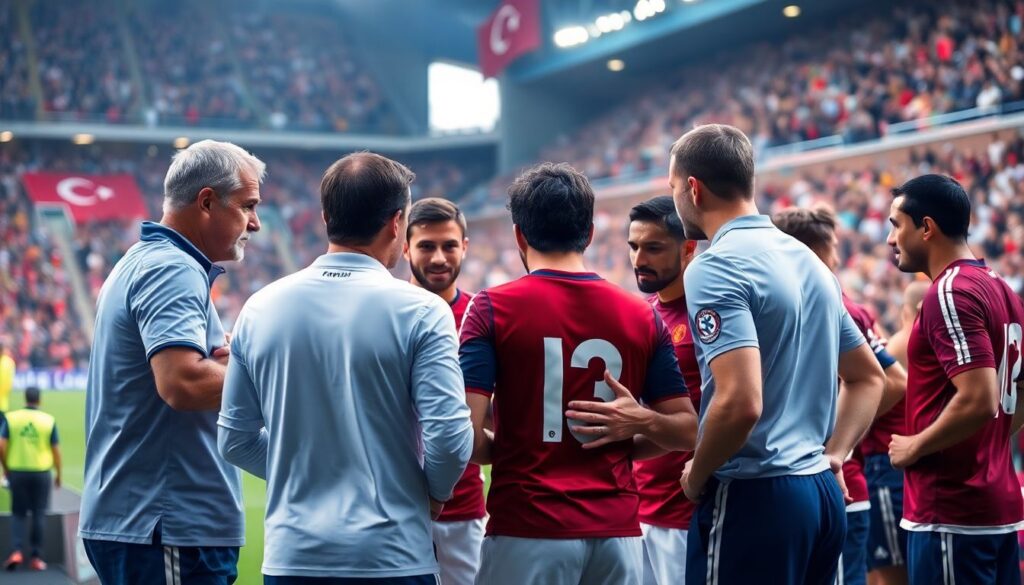
On derby day, individual mental skills need to be aligned through clear leadership and communication. Coaches and captains should co-create a shared mental map of the match, so that under pressure everyone roughly “sees” the same game, even inside a chaotic Turkish stadium.
Use this checklist to evaluate whether your collective mindset is match-ready:
- The team can state, in one sentence, the main game plan (e.g., “compact mid-block, fast wide transitions”).
- Each line (defence, midfield, attack) can list 2-3 non-negotiable behaviours for the derby.
- Leaders know exactly what to say after a goal conceded or red card, using calm, specific cues.
- There is a clear protocol for addressing the referee (who speaks, how often, what tone).
- Substitutes know their expected emotional role: energy givers, calmers, tactical messengers.
- Pre-match and half-time talks include at least one reference to controllable actions, not only to opponent or emotions.
- Hand signals or short code words are agreed for key adjustments when noise makes talking difficult.
- Staff behaviour on the touchline matches the desired team mindset (not panicking, not over-arguing with officials).
- After big momentum swings (goal, near-miss, controversial decision), two or three players automatically pull teammates together for a mini-huddle.
- Leaders can explain differences between Turkish stadium dynamics and typical European away games, so foreign players are not surprised by the intensity.
Managing crowd noise, provocation and media-driven pressure
Derbies amplify external pressure through fans, opponents and media narratives. Many mental errors are predictable and avoidable when staff anticipate them in advance.
Common mistakes to avoid:
- Checking social media and news on match day: Consuming criticism, rumours or football derby betting tips and psychological analysis before kick-off often spikes anxiety and distracts from preparation.
- Using hatred as the main motivational fuel: Anger can briefly energise but usually harms decision-making, leading to fouls and tactical breakdowns.
- Chasing personal revenge against specific rivals: Players focus on battles instead of space, ball and teammates; cards and positioning errors follow.
- Over-focusing on the referee: Constant complaining drains attention; leaders should accept some injustice as part of the game.
- Ignoring individual sensitivity to noise: Not all players react the same; some may need earplugs in warm-up or extra grounding strategies.
- Last-minute tactical overload in the dressing room: Coaches sometimes respond to pressure by adding more instructions, which increases confusion under crowd noise.
- Publicly shaming players in media after derbies: This might satisfy short-term anger but often damages confidence and trust long-term.
- Letting family and friends influence mindset on the day: Emotional messages about honour or humiliation can amplify fear of failure.
- Underestimating provocation patterns from rivals: Many derby opponents specialise in subtle fouls, verbal taunts or time-wasting; if you do not prepare emotionally, players react impulsively.
Post-match debrief: emotional regulation and learning loops
What happens after the derby is crucial for both mental health and future performance. Not every player can, or should, process the game in the same way. Different approaches are useful in different contexts and emotional states.
Consider these safe alternative formats for post-match processing:
- Short, structured cooldown debrief (same evening): Best when the result was emotionally intense but players are not overwhelmed. Include 5-10 minutes of calm breathing, 3 “what worked” points, and 1-2 controllable improvement targets. Avoid tactical deep dives while emotions are raw.
- Delayed video review (next day or 48 hours later): Useful after painful defeats or controversial derbies. Players first stabilise sleep and mood; then, in a calmer state, they watch key clips focusing on decisions, not blame. Ideal when working with sports psychology services for football clubs that can support emotional framing.
- Individual check-ins only (no group analysis yet): Appropriate when there was a traumatic incident (serious injury, crowd trouble). The priority becomes safety, emotional support and, if needed, one-to-one sessions with a sports psychologist for football teams or medical staff.
- Coach-focused reflection (staff meeting without players): When the emotional load on players is already very high, staff can first clarify what they learned and how to frame it constructively, before bringing messages to the squad.
Straight answers to common match-mindset dilemmas
How early before a derby should players start targeted mental preparation?
Begin light, derby-specific mental work about one to two weeks before the match. Focus initially on clarifying roles and rehearsing likely scenarios, then shift to shorter, calming routines in the last 48 hours. Avoid starting brand-new techniques in the final days.
What can a club do if it cannot afford a full-time sports psychologist?
Designate a coach or staff member to study evidence-based resources and possibly complete an online course in sports psychology for football coaches. Use them to coordinate simple routines, and refer complex cases to external professionals on a consultancy basis when needed.
How can players avoid being overwhelmed by Turkish derby atmospheres?
Use stadium visits, crowd-noise audio in training and short imagery sessions to familiarise players with the intensity. Combine this with breathing routines and simple task cues like “next action” so attention returns quickly from the stands to the pitch.
Are pre-match rituals superstition, or do they really help performance?
Rituals help when they stabilise arousal and focus on controllable actions, not when they become rigid superstitions that increase anxiety if anything changes. Test rituals in regular matches, keep them short, and update them as the player’s needs evolve.
What should leaders say after a red card or penalty in a derby?
Leaders should calmly state the new plan (“compact, counter only”), highlight one controllable behaviour (“no more protests”) and reassure the team that the situation is manageable. Avoid blame or emotional language, which usually worsens panic.
How can players switch off mentally after a high-pressure derby?
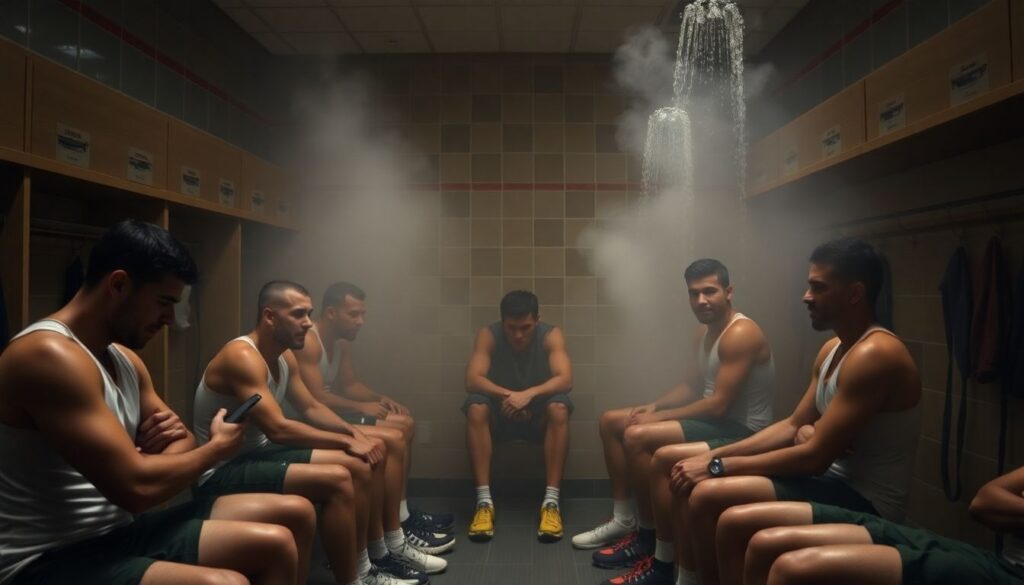
Plan a shutdown routine: brief team cooldown, shower, light food, then limited phone and media exposure. Encourage players to delay watching replays or reading comments until the next day, when coaches can frame the performance more constructively.
Is it helpful for players to study betting odds and predictions before derbies?

It is usually unhelpful and potentially harmful. Odds and predictions are designed for gambling markets, not performance, and can distort perceived pressure. Players are better off focusing on preparation tasks and ignoring betting information altogether.