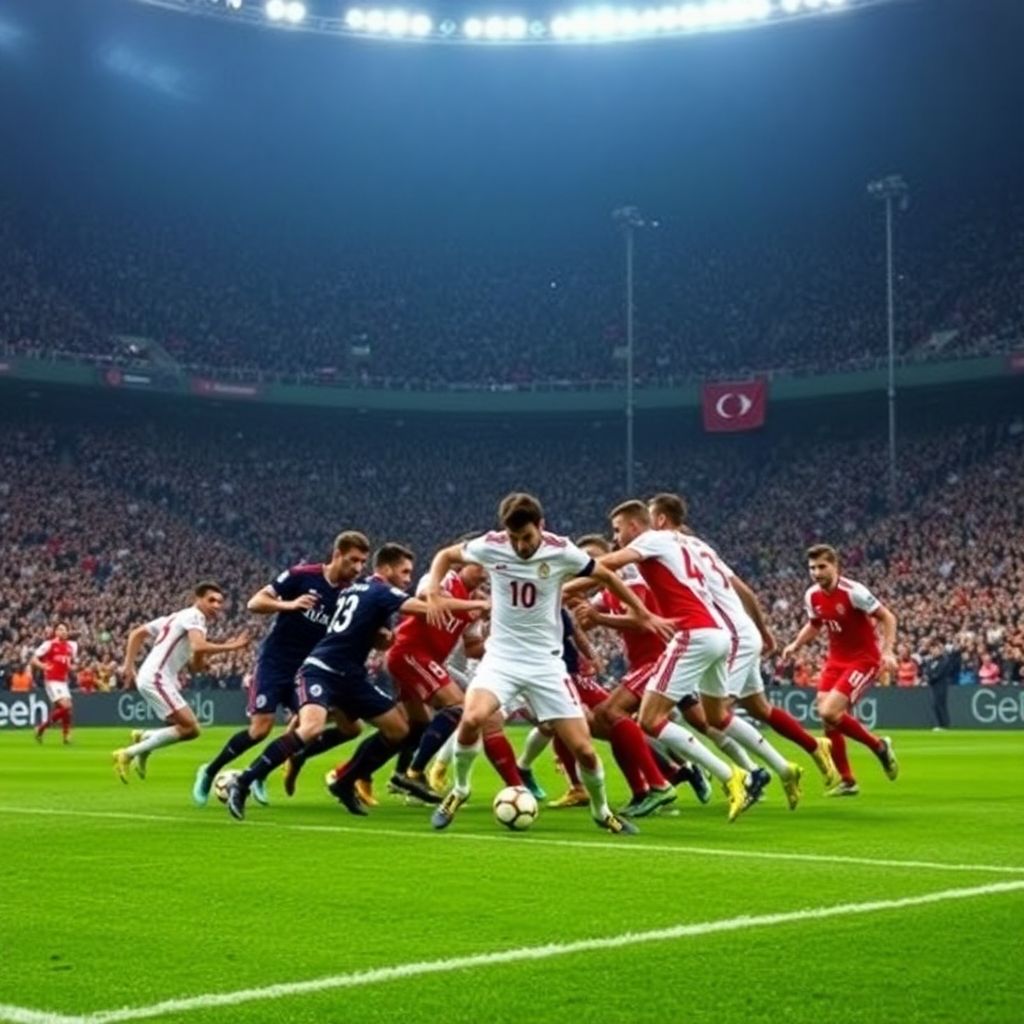
Gegenpressing in the Süper Lig means an immediate, collective press to win the ball back within seconds after losing it, instead of retreating. Elite Turkish clubs use it as an attacking weapon, but its success depends on synchronised pressing triggers, fitness, and risk management compared with more conservative mid‑block or selective pressing models.
Core Principles of Elite Gegenpress as Applied in the Süper Lig
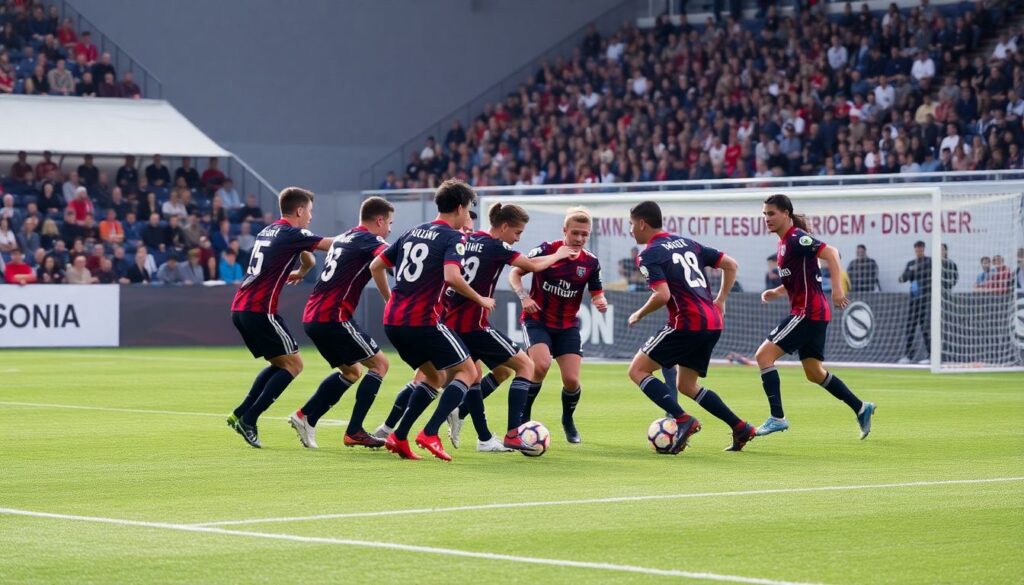
- Press immediately for a short, defined time after losing the ball (often 3-6 seconds) instead of dropping off.
- Use clear pressing triggers: bad first touch, backwards pass, or isolated receiver near the touchline.
- Press as a unit in zones, not as individuals chasing; distances between lines must stay compact.
- Prepare physically: repeat high‑intensity runs with short recoveries as a core conditioning theme.
- Coordinate with the ball: your attacking structure must already be positioned to press on loss.
- Accept calculated risk: space will be left behind the back line, so cover and goalkeeper timing are crucial.
- Continuously review pressing metrics (e.g., PPDA, high regains) and adjust rules by opponent and game state.
Why Süper Lig Clubs Are Accelerating the Shift to Gegenpress
In the last seasons, Super Lig gegenpressing tactics analysis has become central to how top Turkish clubs design their game model. The league’s intensity, frequent transitions and technical attackers favour teams who can transform ball losses into instant chances instead of defending long spells in a deep block.
Gegenpressing, in this context, is best understood as a coordinated pressing phase that starts immediately after your team loses the ball. It is not just “running harder”; it is a pre‑planned system linking your attacking structure, pressing triggers, and rest defence so that the first seconds after loss are fully scripted.
Compared with more classic modern pressing strategies Süper Lig teams used a decade ago (e.g., waiting in a mid‑block then jumping), elite gegenpressing offers faster chance creation and territorial control but increases the risk of being exposed to direct balls behind an aggressive defensive line. Implementation difficulty is also higher: you must re‑shape recruitment, training loads, and match plans.
For example, Galatasaray under recent coaches have used a high, aggressive counter‑press after losing the ball in the opponent half, while clubs like Konyaspor or Antalyaspor at times opted for a safer mid‑block with selective pressing only on certain cues. The choice is a trade‑off between control, player profile, and acceptable defensive risk.
Tactical Anatomy: Pressing Triggers, Zones and Transition Moments
To implement gegenpressing at Süper Lig level, coaches need a clear tactical blueprint describing exactly when, where and how the press starts. This is the “mechanics” part of any serious football coaching course gegenpressing module, and it separates structured elite pressing from chaotic running.
-
Primary pressing triggers
- Bad first touch from the opponent, especially from a centre‑back or pivot with back to play.
- Backwards or square pass in the opponent’s build‑up, allowing your forwards to lock the ball side.
- Receiver facing his own goal near the sideline, where the touchline acts as an extra defender.
-
Secondary, context‑based triggers
- Opponent’s weak foot receiving under pressure.
- Opposition full‑back isolated with no simple return pass.
- Goalkeeper on a bouncing ball or under‑hit back‑pass.
-
Pressing zones
- High zone: around opponent box and wide areas; commonly used by Fenerbahçe and Galatasaray to lock teams in.
- Middle zone: central corridor between boxes, where Beşiktaş often spring traps on pivots receiving between the lines.
- Low zone: around your own box; here “gegenpress” usually turns into emergency compactness, not a full chase.
-
Roles and angles
- First presser curves the run to show play to a pre‑decided side (touchline or weak ball‑side centre‑back).
- Second and third line close inside passing lanes, not the ball, forcing predictable clearances.
- Back line holds a high starting position but is ready to drop in sync when the press is broken.
-
Time limits and “kill or drop” rule
- Players press with maximum intensity for a very short, agreed window.
- If the ball is not won, the team rapidly drops into the pre‑agreed mid‑block or low block shape.
-
Rest defence structure
- When attacking, at least two centre‑backs and one pivot must be positioned to deal with long balls after loss.
- Full‑backs and wingers must coordinate so that both flanks are not exposed at the same time.
Mini‑scenarios of Gegenpress Use in Süper Lig Matches
Scenario 1: High press vs build‑up side. Trabzonspor host Başakşehir, who insist on short build‑up. The trigger is any backwards pass from full‑back to centre‑back. The nearest winger jumps, striker cuts off the return pass to the goalkeeper, and eight players squeeze into a 30‑metre block to win the ball wide.
Scenario 2: Selective counter‑press after long attacks. Adana Demirspor attack down the right for 20 seconds. If they lose the ball inside the final third, they press for 5 seconds with five nearest players; if they lose it deeper, only the nearest two jump while the rest drop to a mid‑block line at the centre circle.
Scenario 3: Hybrid model for risk control. A mid‑table side against Galatasaray only gegenpresses in the middle zone. In the high zone they keep numbers behind the ball; after loss, they delay rather than chase, guiding play into a central trap where three midfielders then squeeze.
Player Profiles, Conditioning and Role Rotation for Effective Pressing
Gegenpressing lives or dies on player profiles and conditioning. Modern pressing strategies Süper Lig teams now adopt put a premium on repeat sprints, decision speed, and the ability to defend big spaces. Below are typical scenarios where certain profiles and rotations become critical.
-
High‑energy number 8s as press engines
In a 4‑3‑3, the two advanced midfielders often cover the most ground. For example, Fenerbahçe’s interiors must jump to press the opposition pivot, then recover to protect half‑spaces. They need high aerobic capacity plus explosive 10-20 metre speed.
-
Wide forwards as pressing triggers
Galatasaray’s wide forwards frequently dictate direction: they curve runs to block inside passes and leave outside lanes “open” to bait opponents. These players must be disciplined without the ball and accept heavy workloads for the team.
-
Centre‑backs with pace and 1v1 quality
With an aggressive line, centre‑backs will defend large spaces behind. Clubs that want to copy elite gegenpressing but keep slow centre‑backs often pay the price through direct balls in behind and high‑quality chances conceded.
-
Rotating 6/8 roles to share load
To reduce fatigue risks across a season, many Süper Lig coaches rotate who presses and who holds. One match, the number 6 steps out aggressively; next match, one of the 8s leads the jump while the 6 screens. Clear role rotation plans help manage cumulative load.
-
Substitution strategy to maintain pressing intensity
Effective gegenpressing teams plan “pressing waves”: fresh wide players and midfielders are introduced around the hour mark to keep intensity levels high. Without this, the structure collapses late in games, especially in hot Turkish conditions.
-
Goalkeeper as sweeper and extra passer
Against long balls over the press, sweeper‑keepers reduce risk. When in possession, they also help create the extra man needed to draw the first line of pressure and prepare better counter‑pressing positions.
Training Protocols: Drills, Micro‑cycles and Periodisation for Collective Press
For clubs without big staffs or tactical analysis subscription Turkish Super Lig services, the key is simple, repeatable training structures. Below is a comparison of pressing approaches by ease of implementation and risks, followed by specific drill ideas and periodisation patterns.
Implementation Advantages of Full Gegenpress vs Alternative Pressing Models
- Pros of full gegenpress adoption
- Creates immediate transition chances near the opponent’s goal, raising shot quality without slower build‑up.
- Reduces time spent defending deep, which suits teams with technically strong attackers but average defenders.
- Gives a clear, aggressive identity that can attract players and fans and support club branding.
- Helps control territory; opponents struggle to get out, especially in smaller Süper Lig stadiums with intense atmospheres.
- Pros of more conservative pressing (mid‑block, selective press)
- Easier to implement quickly with limited training time and heterogeneous squads.
- Lower physical demands reduce injury risk and fatigue, especially for older or less athletic squads.
- Less exposure to balls behind your defensive line; suitable when centre‑backs lack pace.
- More flexible: you can choose specific “pressing moments” instead of committing every loss to a full chase.
Risks and Constraints When Shifting to an Elite Counter‑Press
- If distances between lines are not trained, players press individually, leaving exploitable gaps in half‑spaces.
- Lack of rotation and load management leads to drop in pressing intensity and soft tissue injuries later in the season.
- Technical errors on the ball in build‑up expose the team to counter‑attacks with many players ahead of the ball.
- Against high‑quality playmakers, aggressive presses can be broken with one or two vertical passes, creating clear 1v1s with the goalkeeper.
- Without buy‑in from senior players, the model can become half‑hearted: attackers walk, midfield chases, back line is exposed.
Example Training Drills and Weekly Micro‑cycle
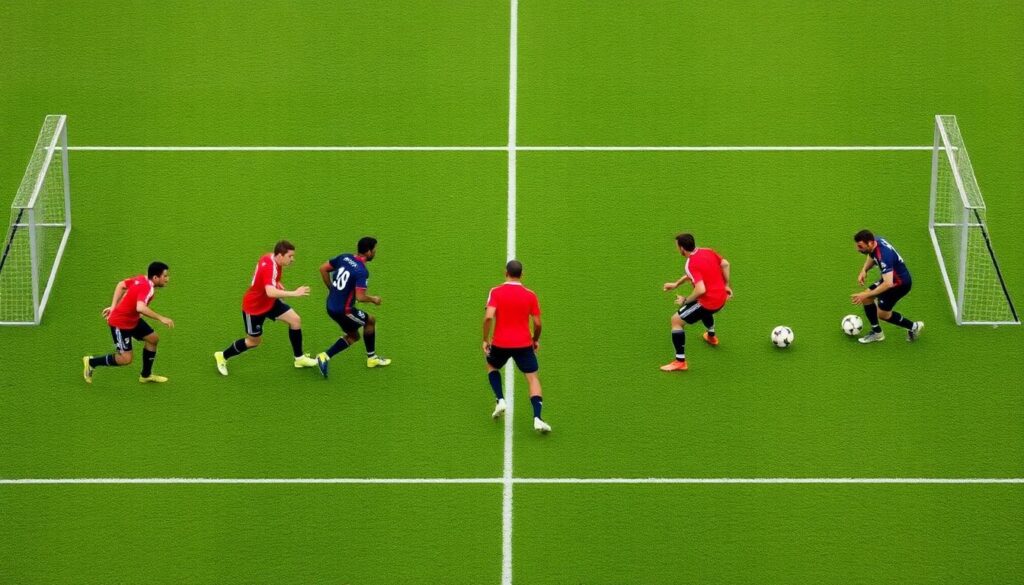
Drill 1: 6v4 counter‑press in a 30x25m zone
- Organisation: 6 attackers keep the ball vs 4 defenders; when defenders win it, the 6 have 5 seconds to win it back.
- Workload: 4-6 repetitions of 60-75 seconds, 2-3 minutes rest between sets; focus on sprinting the first 3 steps on loss.
- Coaching cues: nearest player presses, second closes inside pass, back players squeeze the line; on failed regain, all sprint to a pre‑marked mid‑block line.
Drill 2: 10v10 + 2 neutral in half‑pitch transition game
- Organisation: Two teams in a half‑pitch; on every ball loss, losing team must press for 6 seconds; if they win it, they attack immediately.
- Workload: 3 blocks of 6-8 minutes with 3-4 minutes rest; intensity close to match tempo.
- Coaching cues: communicate the pressing trigger before each block (e.g., bad touch, backwards pass) so players connect triggers to actions.
Simple weekly pattern during one‑game week
- MD‑4: Strength + short pressing games in tight areas (5v5+3, 4×4 minutes).
- MD‑3: Tactical day – 10v10 shapes, focus on pressing triggers, rest defence and line height.
- MD‑2: Speed and sharpness – small‑sided games (3v3, 4v4) with strict 4-6 second counter‑press rules.
- MD‑1: Light activation – walk‑through of pressing cues, set‑pieces, video reminders.
Match Models: Positional Structures, Phase Plans and In‑game Adaptations
Implementing gegenpress in real matches is where theory meets risk. Several myths and recurring mistakes appear again and again in Super Lig gegenpressing tactics analysis pieces and in match‑day footage.
-
Mistake: Pressing high without an in‑possession structure
Many teams push numbers forward to press but keep poor spacing when they have the ball. As a result, once they lose it, there is no compact net of players to counter‑press. Elite models, like some recent versions of Fenerbahçe and Galatasaray, start with good positional play to enable the press later.
-
Myth: You must press high for 90 minutes or “you are not gegenpressing”
Top Turkish and European clubs vary intensity by game phase. They might press aggressively for 10-15 minute waves, then drop into a mid‑block to recover. Smart coaches plan these waves around hydration breaks, substitutions, or opponent fatigue moments.
-
Mistake: Not adapting to opponent structure
Some Süper Lig teams copy‑paste the same press against back‑three and back‑four build‑ups. This leads to free players at the back post or free pivots. Elite staff adjust starting positions, who jumps to which centre‑back, and how the pivot screens the number 10.
-
Myth: Only big clubs with expensive squads can press well
Well‑coached mid‑table sides can execute simple, clear pressing schemes effectively. The key is choosing a model that fits your squad’s athletic profile and training time, not trying to duplicate Champions League complexity without resources.
-
Mistake: Ignoring game state and emotional control
When chasing a goal, players often press with emotion rather than structure. This leads to uncoordinated jumps and counter‑attacks conceded. Top coaches script “what happens when we are 1-0 up/down” and communicate whether to keep gegenpressing or shift to a more selective block.
Analytics and Scouting: Metrics, Video Cues and Opponent Exploitation

Modern clubs increasingly rely on advanced football analytics tools pressing metrics to refine their models. Even without full tracking systems, Turkish staffs can combine video with basic data to answer two questions: “Where are we actually winning the ball?” and “Where are we getting exposed?”
Typical metrics include PPDA (passes allowed per defensive action), number of high regains per match, and how many shots come within a few seconds of a counter‑press. With a tactical analysis subscription Turkish Super Lig packages, analysts can tag clips of every regain following a lost pass in the opponent half and see which pressing triggers succeed or fail most often.
Simple pseudo‑workflow for a mid‑table Süper Lig club:
- Tag all ball losses in the opponent half for the last 5 matches.
- For each, label outcome: immediate regain, foul won, ball forced long, press broken cleanly.
- Note context: which zone (left half‑space, central, right), which player was the first presser, whether rest defence was set (yes/no).
- Calculate where your press works best; design next week’s training to exaggerate those strengths and cover weak zones.
- Feed findings back into recruitment: seek profiles who are successful in your key pressing zones (for example aggressive 8s who dominate central regains).
In parallel, scouting opponents with these tools helps target weaknesses. If data shows a rival full‑back losing many duels under pressure, you design a match plan where your winger and 8 constantly trap him on his weak foot immediately after turnovers. Over a season, this systematic approach turns gegenpressing from a general idea into a repeatable advantage.
Practical Questions on Implementing Gegenpress in Turkish Club Contexts
How should a mid‑table Süper Lig club start transitioning towards gegenpressing?
Begin with short, clear rules in the middle zone only, rather than a full‑pitch high press. Train 5-6 second counter‑presses after loss in small‑sided games, and gradually extend to wider areas once distances and fitness improve.
What is the safest way to manage the defensive line height when using an aggressive press?
Link line height to pressure on the ball: if the first and second line are late or beaten, the back line should instantly drop. Use your goalkeeper as a sweeper to cover long balls, but never hold an extreme high line without strong pressure on the passer.
Do I need a full analytics department before using pressing metrics?
No. Start by manually tagging ball losses and regains from match video. Track simple indicators like where you win the ball, who is the first presser, and how often regains lead to shots. As resources grow, you can add more advanced metrics and tools.
How can a coach integrate pressing work without overloading players physically?
Blend pressing into technical and tactical games instead of adding separate running sessions. Limit high‑intensity games to short, dense blocks with sufficient rest, and rotate key pressers more frequently in friendly matches and early‑round cup games.
What player profiles are non‑negotiable for a basic gegenpressing model?
You need at least one mobile, aggressive holding midfielder, wide forwards willing to defend, and centre‑backs who can defend space. Without this spine, risk grows quickly and you may be better using a more conservative pressing model.
How long does it typically take for a squad to adopt a coherent gegenpressing structure?
With clear ideas and consistent training, visible improvements usually appear within a few weeks, but full automatisms can take months and often a full pre‑season. Changing habits, not just tactics on the whiteboard, is the real time‑consuming part.
Can gegenpressing work for youth teams in Turkey?
Yes, if demands match age and physical maturation. Focus on collective movement, distances and understanding triggers rather than maximum running. Use smaller fields and shorter games so young players learn coordination before high‑load pressing.
Комментарии