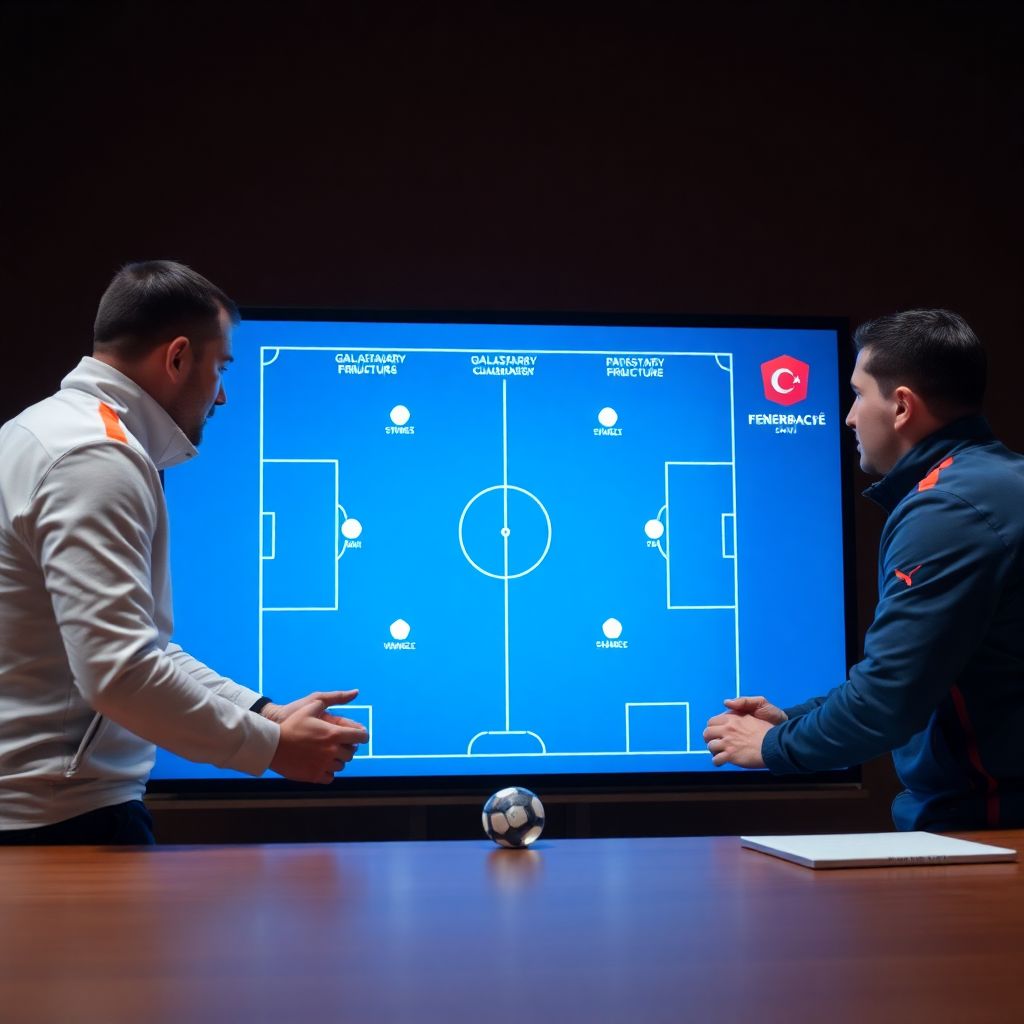
Galatasaray generally approach the derby with more structured possession and wide overloads, while Fenerbahçe lean toward direct verticality, aggressive pressing phases and faster transitions. Neither style is universally superior: the better tactical route depends on squad health, bench depth and whether you want to control rhythm, increase variance or punish opponent errors.
Snapshot: Tactical Contrasts Before the Derby
- Galatasaray prioritise stable possession, shorter build-up and winger-full-back combinations; Fenerbahçe embrace quicker vertical passes and earlier penalty-box entries.
- Defensively, Galatasaray are more comfortable in a mid-block; Fenerbahçe often gamble on higher pressing lines and counter-pressing waves.
- Attacking set pieces are a key Galatasaray weapon, while Fenerbahçe frequently seek fast restarts and counters from opposition corners.
- Individual duels on both flanks usually tilt rhythm: Galatasaray full-backs push high, Fenerbahçe wide players attack space behind them.
- For risk-managed control, Galatasaray’s template is safer; for volatility and upset potential, Fenerbahçe’s more chaotic approach can be leveraged.
Formations and Starting Structures: How Each Side Lines Up
Formational choices in the Galatasaray vs Fenerbahce match analysis are less about numbers on paper and more about how each side wants to control space, tempo and risk over 90 minutes.
| Aspect | Galatasaray | Fenerbahçe |
|---|---|---|
| Base shape | 4-2-3-1 / 4-1-4-1, stable double pivot | 4-3-3 / 4-2-3-1 with more fluid interiors |
| Width usage | Full-backs high, wingers inside (↗ crossing lanes) | One winger wide, opposite side half-space (↕ flex) |
| Central occupation | Structured 3-4 in build-up, clear passing triangles | More rotations, interiors drift wide then attack box |
| First build-up line | Keeper involved, short circulation preferred | More direct access to striker and second balls |
| Attacking reference | 10 as connector (↓), late box arrivals | 9 as target (↑), wide runners attack depth |
Key criteria when deciding which starting structure to mirror or counter
- Desired tempo: choose Galatasaray-like 4-2-3-1 if you want ball dominance; lean to Fenerbahçe-style 4-3-3 if you want end-to-end phases.
- Full-back stamina and discipline: aggressive overlaps only work if recovery runs are reliable over the whole derby.
- Quality of your 6/pivot: a strong playmaking pivot allows you to exploit Galatasaray’s press; a destructive 6 helps you survive Fenerbahçe’s transitions.
- Profile of your 9: technically secure forwards favour Galatasaray’s combinational style; pure runners suit Fenerbahçe’s vertical attacks.
- Bench depth in wide areas: if you can rotate wingers, you can copy the high-intensity wide patterns both teams use in the final half-hour.
- Set-piece focus: if you train rest defence well, field an extra aerial threat and mirror Galatasaray’s emphasis on dead balls.
- Risk tolerance: more attackers high early mimics Fenerbahçe’s approach but increases exposure to counters.
- If you lack data tools, track simple counts: passes into box, crosses and shots following wide overloads instead of complex xG models.
- Use video tags for first 15 minutes to check whether your pivot is overloaded like many teams facing Galatasaray and adjust live.
- Prepare one alternative shape (e.g., 4-4-2) you can switch to without substitutions for late-game stability.
Defensive Lines, Press Triggers and Transition Vulnerabilities
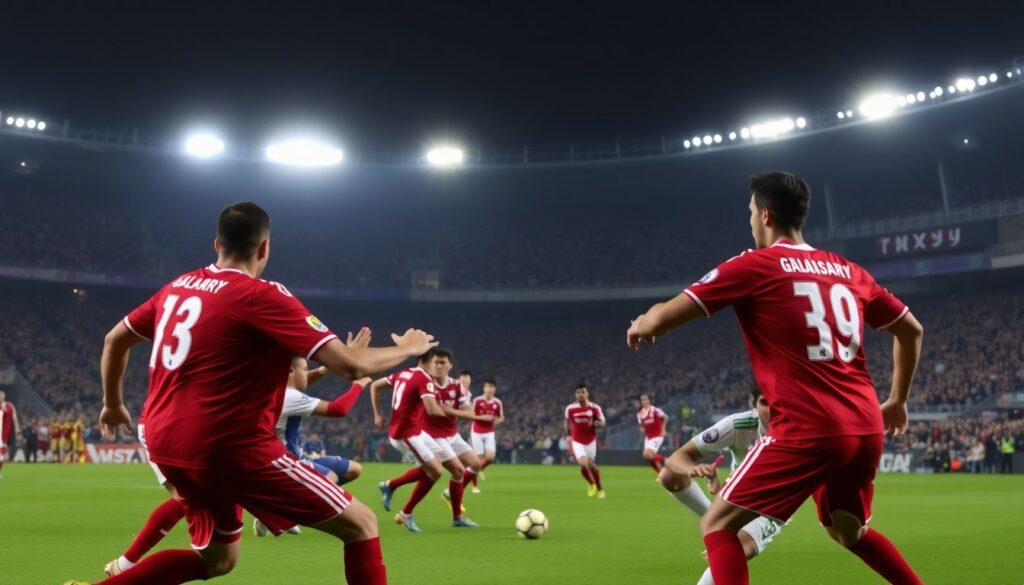
Choosing how to defend against these sides is the single biggest driver of outcome and of any Galatasaray vs Fenerbahce derby predictions based on tactical risk rather than emotion.
| Defensive feature | Galatasaray | Fenerbahçe |
|---|---|---|
| Typical line height | Medium to high (↗ vs weaker buildup) | High with frequent squeezes, can over-commit |
| Primary press trigger | Back pass or wide trap to full-back | Mistouch from centre-back, closed body shape |
| PPDA trend (visual) | Moderate: ███░░ | More intense: ████░ |
| Transition defence | Strong counter-press near ball, rest defence organised | Dangerous when winning it, exposed when losing it |
| Risk zone | Space behind advanced full-backs | Space between lines when press is broken |
Choosing your defensive model against each side
| Variant | Best for which team profile | Pros | Cons | When to choose |
|---|---|---|---|---|
| Dual High Press | Young, fit squads with aggressive centre-backs | Disrupts build-up, creates short-field chances | Huge space in behind, demands synchronised timing | When chasing a win and conditions favour pressing |
| Gala Mid-Block vs Fener High Press | Balanced teams with solid pivots | Limits chaos vs Galatasaray, exploits Fenerbahçe errors | Can invite pressure if line drops too deep | When a draw is acceptable but counters are your weapon |
| Gala High Line vs Fener Deep Block | Technically strong but slower back-lines | Ball dominance vs Fenerbahçe, compact box defence vs Gala | Vulnerable to long balls over top and late cutbacks | When you trust your keeper in sweeper role |
| Mutual Mid-Block Control | Squads with limited pressing fitness | Reduces running load, defensive shape clearer | Fewer high turnovers, more reliance on patterns | When schedule is crowded or weather is extreme |
| Asymmetric Press vs Fener Build-Up | Teams with one elite pressing winger | Targets Fenerbahçe’s weaker side, cheap to coach | Opposite flank can be isolated if distances grow | When scouting shows one Fenerbahçe full-back under pressure |
- In low-budget setups, track only three defensive metrics: PPDA, counters conceded and simple field tilt (share of touches in final third).
- Versus Galatasaray, fix your rest defence first; versus Fenerbahçe, fix your counter-attack protection first.
- Rehearse game-state switches: press higher when a goal down, drop into mid-block when leading by one.
Attacking Blueprints: Build-Up, Width and Penetration Routes
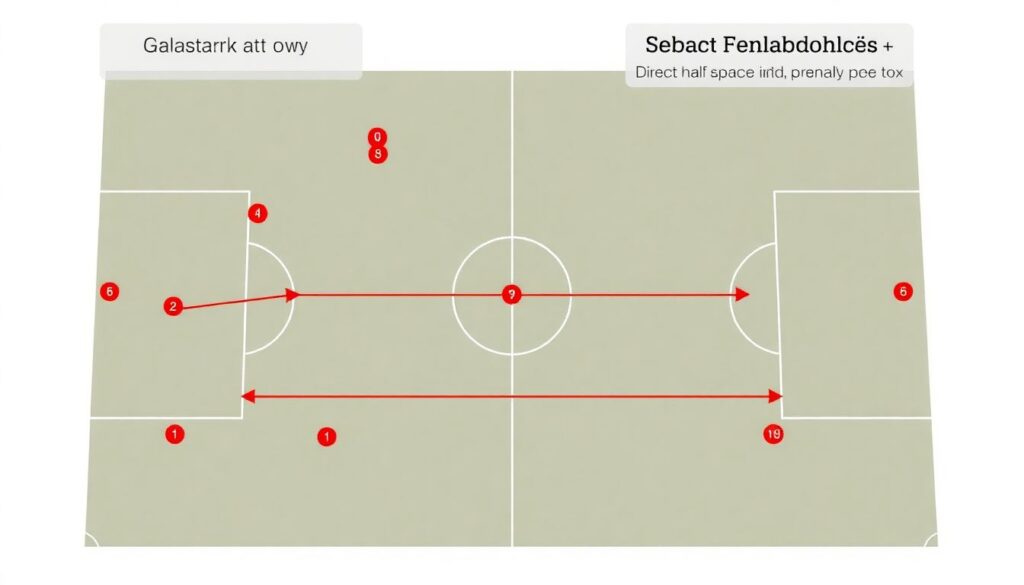
Smart coaches build their Galatasaray vs Fenerbahce betting tips around where each side tends to enter the box from: structured wide overloads for Galatasaray, more direct half-space and transition runs for Fenerbahçe.
| Attacking trait | Galatasaray | Fenerbahçe |
|---|---|---|
| Build-up style | Short-to-medium passes, 3+1 base, patience | Quicker vertical passes, early balls into channels |
| Primary width source | Full-backs and overlapping 8s | Natural wingers on one side, inverted on the other |
| Passes into box (visual) | From wide zones: ████░ | From half-spaces: ████░ |
| Counter-attack pattern | Win-secure-switch-attack weak side | Win-play forward within 2-3 touches |
| Final-third combinations | Cutbacks after overlaps, underlapping 10 | Early crosses, diagonal runs behind line |
Scenario-based attacking choices (with budget and premium paths)
- If you expect a low block from Galatasaray, then copy Fenerbahçe’s quicker diagonal switches and underlaps, using basic passing maps rather than expensive tracking data to find where their full-backs struggle.
- If you expect Fenerbahçe’s high press, then build like Galatasaray: use the keeper as an extra player, fix two central outlets and target the space behind their first line with simple wall passes.
- If your analytics budget is limited, then focus on counting successful counter-attacks and passes into the box instead of advanced models; these two low-cost metrics already separate Galatasaray’s methodical entries from Fenerbahçe’s faster thrusts.
- If you have premium data access, then track reception zones of your 10 and wingers to see whether Galatasaray-style wide overloads or Fenerbahçe-style half-space runs produce higher shot quality, and adjust the game plan at half-time.
- If your 9 is dominant in the air, then lean closer to Fenerbahçe’s template with earlier crosses; if he is a link player, run Galatasaray style with more cutbacks and late box runs.
- If your full-backs are attack-minded but your centre-backs are slow, then copy Galatasaray only on the ball and keep a deeper rest defence line than they usually do.
- Session-plan one Galatasaray-like wide overload pattern and one Fenerbahçe-like fast break pattern so players can switch depending on score.
- Track which flank gives you more passes into the box in the first 20 minutes and bias your attack toward that side.
- Use simple arrow-based sketches in the dressing room instead of complex diagrams so players recall the primary penetration routes under pressure.
Set-Piece Schemes, Pressing Blocks and Game-Management Plans
Set plays and pressing control often decide tight derbies more than open-play artistry, especially when tickets, atmosphere and fatigue raise emotional pressure late in the game.
| Game-management element | Galatasaray | Fenerbahçe |
|---|---|---|
| Attacking corners | Well-rehearsed blocks and near-post runs | Mix of inswingers and short routines |
| Defensive corners | Hybrid marking, strong zonal line | More man-oriented, risk on second balls |
| Pressing block choice | Flexible between mid and high block | Often start high, can drop if lead is narrow |
| Late-game strategy | Control tempo, draw fouls, use width | Counter focus, fresh runners, vertical balls |
| Time/score awareness | Structured, pre-planned phases (███░░) | More momentum-based decisions (██░░░) |
Step-by-step checklist to choose your derby management plan
- Define your priority: decide before kick-off whether you mainly want to prevent set-piece goals like Galatasaray plan, or create transition opportunities like Fenerbahçe.
- Choose primary pressing block: commit to high, mid, or low block for the first 15 minutes and brief two alternative triggers for in-game switches.
- Assign set-piece roles: copy Galatasaray’s clarity by fixing blockers, screeners and runners; use a simple card with these roles for substitutes.
- Plan minute-based changes: for example, at 60 minutes raise the line and pressing intensity if losing, or drop to a compact mid-block if leading.
- Budget your energy: like both sides, protect key pressers from excessive first-half sprints so they still influence the last 20 minutes.
- Script re-starts: decide 2-3 standard options for every throw-in and free-kick zone to reduce decision fatigue under crowd noise.
- Review during breaks: at half-time, adjust your block height based on simple metrics: shots faced from set pieces, counters conceded and defensive line recovery runs.
- In analysis rooms with limited tools, log every set-piece outcome (clear, second ball lost, shot) on paper; this is cheap and highly actionable.
- Borrow Galatasaray-like routines if your squad has tall targets; borrow Fenerbahçe-like quick restarts if you have pace but less height.
- Train late-game 10-minute blocks against 10 men to simulate red-card scenarios, common in heated derbies.
Individual Matchups: Which Players Tilt the Balance
Derbies often swing on a single duel rather than a whole structure, which is why any serious Galatasaray vs Fenerbahce match analysis zooms in on flanks, the 6 vs 10 battle and who dominates second balls around the box.
| Matchup zone | Galatasaray tendency | Fenerbahçe tendency |
|---|---|---|
| Left flank | Full-back overlaps, winger inside | Wide winger vs isolated full-back |
| Right flank | More balanced, support from 8 | Half-space runs from inside forward |
| 6 vs 10 zone | Defensive 6 shields back line | Attacking 8/10 looks to receive on half-turn |
| Central defence vs 9 | Good in air, susceptible to pace | Aggressive stepping out, sometimes over-commits |
| Second balls | Organised line behind the ball | More individuals hunting the rebound |
Frequent mistakes when choosing which matchups to prioritise
- Underestimating how high Galatasaray’s full-backs push, leaving your own wingers chasing back instead of being true outlets.
- Ignoring Fenerbahçe’s ability to overload a single corridor, especially the weaker of your two full-backs.
- Overrating your centre-backs’ speed and holding a line as high as Galatasaray’s without the same automatic cover.
- Failing to double-mark the most creative 10 in pockets, particularly when he drifts between your lines rather than staying central.
- Assigning a technically limited 6 to handle Fenerbahçe’s pressure, leading to turnovers in the worst possible zones.
- Rotating wings late without checking how this changes your ability to defend cutbacks versus far-post crosses.
- Substituting both pivots at once and losing control of second balls around the box in the final minutes.
- Not preparing psychological support for players in hostile atmospheres when Galatasaray vs Fenerbahce tickets sell out and noise peaks.
- Ignoring set-piece markers, allowing opponents to isolate a weaker aerial defender at the back post.
- Map two priority duels before the game (for example, left flank and 6 vs 10) and track them specifically with focused clips.
- Have one bench player ready whose profile directly counters the opponent’s main threat zone.
- Use colour codes on your match sheet to remind staff where you must never leave 1v1 late in the match.
Coaching Decisions, Substitution Patterns and Tactical Flexibility
Across recent seasons, Galatasaray’s approach is generally better for coaches seeking controlled possession, set-piece leverage and lower-variance outcomes, while Fenerbahçe’s template is better for those pursuing aggressive pressing, rapid transitions and higher-variance derbies where momentum and individual runs can flip the match quickly.
| Coaching lever | Galatasaray style | Fenerbahçe style |
|---|---|---|
| Substitution timing | More planned, structure-preserving changes | Impact-driven, can change game rhythm suddenly |
| Tactical flexibility | Adjust block height, keep base shape | Shape and role changes to chase swings |
| Ideal for | Risk-managed control, protecting leads | Comebacks, emotional surges, home pushes |
| Best fit | Squads with technical security | Squads with pace and physicality |
For neutral coaches deciding which model to borrow: the Galatasaray pathway is usually “best for control and stability” in both home and away derbies, while the Fenerbahçe pathway is “best for volatility and comeback potential”, especially when your squad leans on athleticism more than on calibrated possession play.
Practical Queries for Coaches, Analysts and Fans
How should I factor tactics into Galatasaray vs Fenerbahce derby predictions?
Weight how each team’s style suits current form and injuries: Galatasaray’s possession and set pieces normally favour low-scoring control, while Fenerbahçe’s pressing and transitions increase scoreline variance. Your prediction should reflect whether you expect a chaotic or controlled tactical pattern.
Which simple metrics are most useful for grassroots analysts with small budgets?

Count passes into the box, successful counter-attacks and approximate PPDA (passes allowed before a defensive action). These low-cost indicators mirror how Galatasaray and Fenerbahçe create chances without requiring expensive data feeds.
Can tactical patterns help with Galatasaray vs Fenerbahce betting tips?
Yes, but only as one input. For example, if you expect a Fenerbahçe-style high press and open game, goal-related markets may be more attractive; if you expect a Galatasaray-style controlled derby, cards and set-piece outcomes might hold more value.
What should I watch for on a Galatasaray vs Fenerbahce live stream to understand the tactics?
On any live stream, zoom out your focus: watch defensive line height, where the pivot receives, and how often full-backs cross the halfway line. These three cues reveal whether the match is following a Galatasaray-like or Fenerbahçe-like script.
How do ticket factors influence tactical choices in the derby?
When Galatasaray vs Fenerbahce tickets create a very intense home atmosphere, coaches often choose safer early blocks and clearer set-piece routines to reduce emotional chaos. Crowd energy can also tempt more aggressive pressing, which analysts should factor into risk assessments.
Does home advantage change which tactical model is preferable?
At home, copying Fenerbahçe’s aggression can energise fans but also raise risk; copying Galatasaray’s control can calm the game but might frustrate the crowd. The choice depends on your squad’s psychological resilience under noise and expectation.
How can I quickly explain this comparison to players before a derby?
Summarise in three points: Galatasaray equals control plus width plus set pieces; Fenerbahçe equals press plus depth runs plus chaos. Then show two short clips for each pattern and link them to your own game plan.
Комментарии