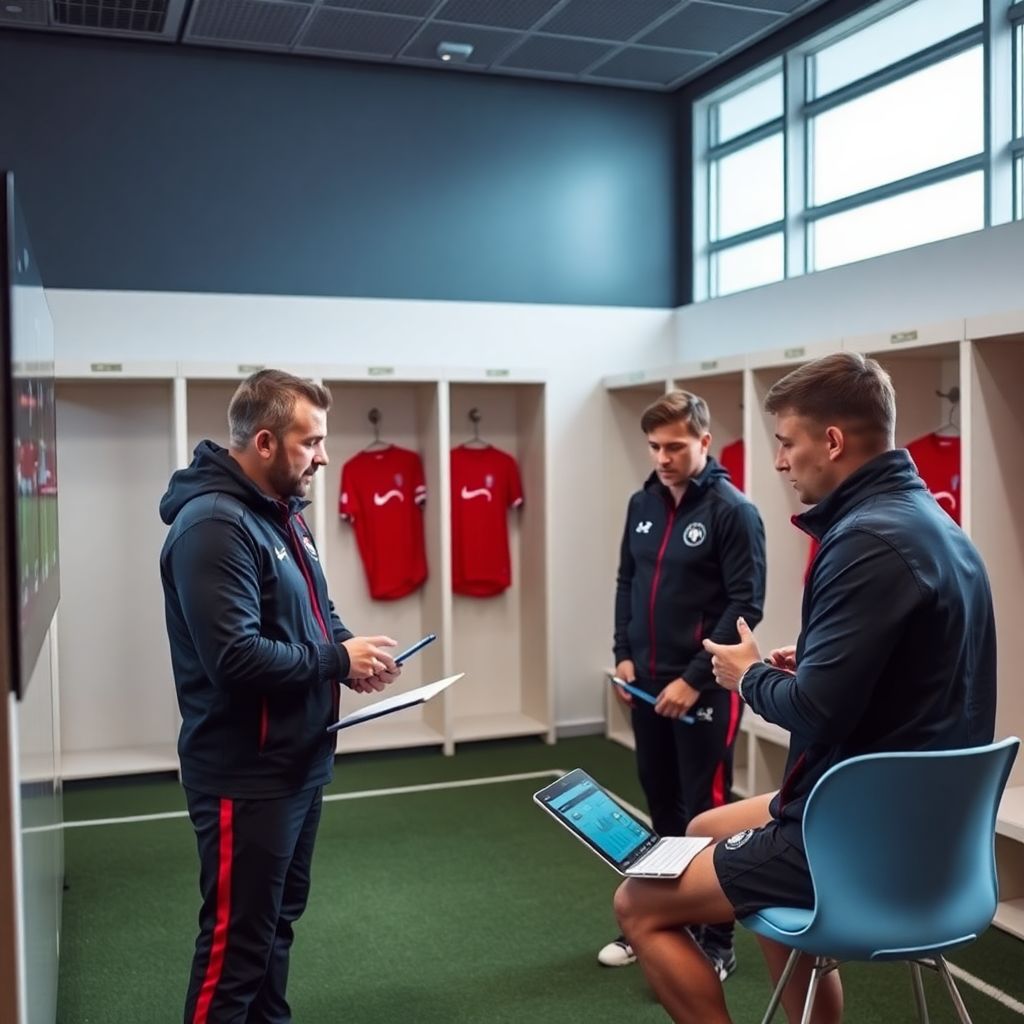
The Champions League is pushing Süper Lig clubs toward more compact defensive blocks, coordinated pressing, fluid positional play and build-up through the keeper. To use this influence well, staff need clear principles, a video‑data workflow and recruitment aligned with European intensity, not just copying famous systems without considering their own squad profile.
Tactical Snapshot: Core Lessons from European Nights
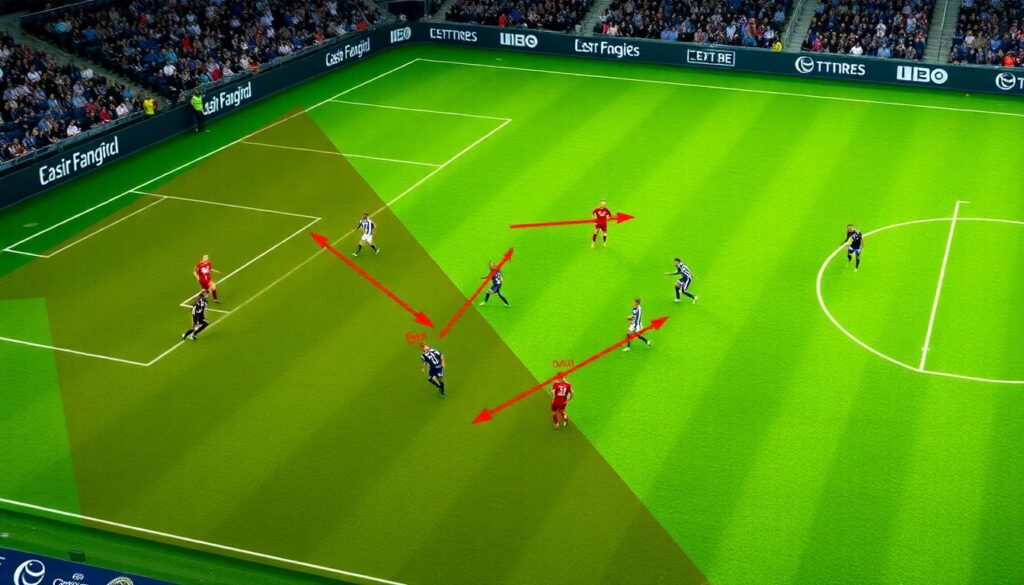
- Defensive lines are becoming more compact vertically, with better protection of half-spaces and coordinated roles for pivots and full-backs.
- Pressing is moving from pure man-orientation to clearer press triggers and lane-oriented cover, especially versus back-three build-ups.
- Transitional attacks focus more on pre-planned runs and zones than on improvised counter-attacks.
- Goalkeepers are expected to contribute to build-up, attract pressure and break lines with controlled risk.
- Clubs increasingly use video, tracking data and tactical analysis subscription for Champions League and Süper Lig matches to inform training.
- Recruitment is shifting toward press-resistant midfielders, versatile full-backs and forwards who can defend as the first line.
How Champions League Benchmarks Reshape Defensive Structures
Champions League benchmarks matter most for Süper Lig teams aiming for European qualification or regularly facing high-possession rivals like Galatasaray, Fenerbahçe or Başakşehir. For these sides, copying continental defensive structures without adapting to local realities can overload players and create more gaps than they close.
This influence usually appears in three areas:
- Vertical compactness and line distances – Lines stay closer together, especially between pivots and centre-backs, to close half-spaces where elite number 10s and inside forwards receive.
- Hybrid zonal schemes – Instead of pure man-marking, defenders protect zones while tracking runs, mirroring trends from 2019-2025 UCL campaigns.
- Asymmetrical full-back use – One full-back inverts towards midfield, the other pushes high, helping control transitions and wide overloads.
This approach suits squads that:
- Have centre-backs comfortable defending space behind them.
- Include at least one pivot with good positional awareness and scanning.
- Possess wide players willing to track runners for long phases.
It is usually a poor fit when:
- Your back line lacks pace and struggles with depth control against direct balls.
- Training time is limited (frequent coaching changes, congested fixture list) and automatisms cannot be drilled properly.
- The club identity is firmly deep-block and counter, and sudden change would destabilise results and dressing room trust.
Instead of chasing Champions League betting tips for Süper Lig teams or narratives around specific matches, base your defensive evolution on clear video evidence from your own games plus selected European references that fit your current personnel.
Adapting Pressing Triggers from Elite European Opponents
To implement pressing ideas inspired by European nights, you need more than motivation; you need tools, clarity and staff alignment.
Essential requirements and resources:
- Clear game model and pressing priorities
- Define where you want to regain the ball (high, mid, or low block) and what you want to protect (central lanes, half-spaces, wide zones).
- Create simple, verbal cues players can repeat: pass-back, slow switch, poor first touch, body orientation to touchline.
- Video access and coding capacity
- Collect clips of your press against back four and back three, plus references from Champions League matches with similar structures.
- Tag moments by trigger (back-pass, lateral CB-to-CB pass, bouncing pass into pivot) to show patterns in meetings.
- Physical and medical support
- Pressing like top UCL sides demands higher high-intensity volumes; coordinate with fitness staff to periodise loads.
- Track fatigue; aggressive press with tired forwards leads to late challenges and easy breaks for the opponent.
- Communication language on the pitch
- Agree on one-word or short codes (forwards, pivots, back line) to call presses or drops.
- Use the same terms in video, training and matches to build automatic reactions.
- Continuous learning ecosystem
- Consider attending Champions League style football coaching courses in Turkey to deepen your understanding of pressing structures.
- Use legal match footage; check where to watch Champions League and Süper Lig live streaming via official broadcasters for scout and analyst workflows.
- Risk governance from leadership
- Head coach and sporting director should agree acceptable risk levels (how high to press, how many players commit) depending on league context.
Avoid being distracted by commercial content such as best sportsbooks for UEFA Champions League and Turkish Süper Lig; decisions about pressing should come from tactical fit, not external narratives or odds.
Building Transitional Attacks Inspired by Continental Models
Before the step-by-step process, be aware of these key risks and constraints:
- Over-committing runners on counters can leave your pivots and centre-backs exposed to immediate re-transition.
- Copying elite patterns without judging your forwards’ speed and technical level leads to broken moves and frustration.
- Chasing fast transitions for 90 minutes without rotation and load management increases injury and burnout risk.
- Excessive focus on counters may weaken your settled possession and set-piece organisation.
- Define your primary transition route and target zones
Decide if your first option is vertical through the nine, diagonal to wingers in half-spaces, or wide to release overlapping full-backs. For many Süper Lig sides, a diagonal first pass into the far-side winger or number 10 is more realistic than constant balls in behind.
- Assign clear first and second runners
For each common regain zone (right half-space, central pivot area, left wide channel), define who sprints first, who offers the secure option, and who stays to protect rest defence.
- First runner: usually the nearest winger or striker attacking depth.
- Second runner: opposite winger or eight attacking the box edge or far post.
- Holding players: pivot and far full-back stabilising behind the ball.
- Create automatic patterns from specific regains
Choose 2-3 high-frequency regain situations from your matches and design repeatable moves, not twenty theoretical patterns.
- Example: regain in right half-space – immediate vertical pass to nine’s feet, lay-off to inside winger, far winger attacks far post.
- Example: interception by left-back – one-touch inside to pivot, long diagonal to right winger attacking behind full-back.
- Train transitions in constrained game formats
Use small-sided and positional games that start with a regain and require a timed counter within a limit (e.g., short attack windows) while ensuring health and safety.
- Regain-and-break games: 7v7+3 neutrals, team has a set number of seconds or passes to finish after winning the ball.
- Wave games: continuous attacks where defenders who win regain immediately counter the opposite direction.
- Integrate rest-defence rules into every drill
Every transition exercise must also train the players who stay to protect against the counter-counter. This mirrors how top Champions League sides secure central lanes while attacking.
- At least two players (often pivot plus far full-back or centre-back) must remain in positions to delay opponent counters.
- Reinforce body orientation and communication so holding players can guide opponents into less dangerous zones.
- Review clips and refine patterns monthly
Collect both successful and failed counters from Süper Lig and European matches, reviewing with players to adjust run timing and first-pass choices. Use a tactical analysis subscription for Champions League and Süper Lig matches if available, staying within your club’s legal and budget frameworks.
Goalkeeper Roles and Build-Up Evolution under UCL Influence
Use this checklist to evaluate whether your keeper-centric build-up, influenced by Champions League trends, is functioning safely and effectively:
- The goalkeeper’s starting positions adapt to opposition press (slightly higher versus mid-block, more conservative versus all-out high press).
- Centre-backs and pivots offer at least two safe passing lanes every time the keeper receives under pressure.
- The team can switch from short build-up to a pre-agreed longer outlet without panic when opponents close central lanes.
- Your “third-man” patterns involving the goalkeeper (GK-CB-pivot or GK-full-back-eight) are trained, not improvised.
- Turnovers in your first third from build-up occur rarely and are mostly linked to technical execution, not structural design.
- Wide players understand when to hold width to stretch the press and when to drop into half-spaces to support combination play.
- The goalkeeper’s risk profile (passing range, decision-making under pressure) was assessed before expanding his build-up responsibilities.
- Defensive transition after a lost build-up pass is rehearsed, with clear roles for immediate counter-press and emergency drop.
- Opponents in the Süper Lig are not consistently creating high-quality chances directly from pressing your keeper.
- Set-piece organisation (especially defending goal-kicks turned throw-ins or corners after blocked long balls) remains stable despite build-up changes.
Training, Data and Video Workflow to Translate Ideas to Pitch
Common mistakes when turning Champions League tactical inspiration into Süper Lig training content:
- Copying whole systems from elite clubs instead of extracting small, relevant principles that suit your squad.
- Overloading players with complex video sessions without linking clips directly to next-day drills.
- Ignoring load management when adding intense pressing or transitional games to already congested schedules.
- Using different terminology between analysts, coaches and players, creating confusion about roles and press triggers.
- Relying on isolated drills that look modern but never appear in your actual game model or match scenarios.
- Under-valuing feedback from players about what feels realistic or too demanding in the Süper Lig context.
- Allowing external narratives (for example, focus on European odds, media hype) to dictate tactical direction instead of performance evidence.
- Failing to evaluate whether new tactical layers genuinely improve chance creation and chance prevention, beyond aesthetic build-up.
- Not involving goalkeeping coach and fitness staff when changing build-up and pressing demands.
- Skipping regular cycle reviews (every few matchdays) that compare planned tactical evolution with match reality.
Recruitment and Squad Profiling for Continental Tactical Demands
If you cannot fully replicate the physical and technical demands of Champions League styles, consider these safer, context-appropriate alternatives:
- Pragmatic hybrid block instead of all-out high press
Rather than adopting a constant high press, use a compact mid-block with targeted high-press phases after specific triggers (e.g., back-pass to weaker-foot centre-back). This suits squads with mixed physical profiles and limited depth.
- Selective build-up games instead of universal short play
If your keeper or centre-backs are not yet comfortable under pressure, choose specific match phases or opponents for short build-up, while maintaining a more direct approach in other contexts. Recruit gradually for press-resistance instead of forcing unsuitable players into risky roles.
- Zone-based counter-attacking model instead of possession-dominant style
Some Süper Lig squads may be better off refining a structured counter-attacking game with clear rest-defence rules than chasing a full positional play model. This still draws on Champions League principles (compactness, coordinated runs) without requiring constant ball dominance.
- Incremental profile upgrades instead of full squad overhaul
Prioritise a few pivotal positions (pivot, left centre-back, pressing nine) for recruitment aligned with continental tactical demands. Use internal development and targeted coaching for existing players rather than pursuing risky, large-scale turnover in a single window.
Practical Answers on Applying Champions League Tactics
How quickly should a Süper Lig team try to implement Champions League-style pressing?
Introduce pressing changes gradually over several micro-cycles, starting with clear triggers in specific zones. Expand only when players show consistent understanding and physical readiness in both training and matches.
Can a team with a slower back line still adopt a higher defensive block?
Yes, but you must protect space behind the line with deeper starting positions for full-backs, aggressive sweeper-keeping and strong pressure on the ball carrier. Avoid extremely high lines against opponents with clear pace advantage.
What if my goalkeeper is not comfortable building from the back?
Limit back-pass frequency under pressure and build short-play routines only from uncontested restarts. Meanwhile, design technical and decision-making training for the keeper, and plan medium-term recruitment for a more build-up-friendly profile.
How many transitional patterns should we coach at intermediate level?
Focus on a small set of high-frequency scenarios, typically two to four patterns linked to your most common regain zones. Too many patterns confuse players and reduce the likelihood of automatic execution under pressure.
Do I need advanced data tools to copy Champions League tactical trends?
Advanced data helps but is not mandatory. Start with clear match footage, simple event data (shots, entries, regains) and consistent tagging of pressing and transition moments. Upgrade to more complex tools only when your workflow is stable.
How do we balance European-style risk with the realities of relegation battles?
In high-pressure contexts, prioritise structural stability and clarity over tactical fashion. Use European trends selectively, for example in rest-defence or set-pieces, while maintaining a game model that your players execute with confidence.
Is it useful to study Champions League games that do not resemble our style?
Yes, but treat them as principle libraries, not blueprints. Identify transferable concepts such as spacing, pressing triggers or rest-defence, then reframe them into drills and structures that fit your squad’s qualities and Süper Lig opponents.