
Data-driven football in Turkey means using match data, tracking, and contextual video to support coaching, scouting, and transfer decisions, not to replace human judgment. Start small: define 2-3 club questions, choose simple metrics, and connect them to training and recruitment workflows while managing privacy, bias, and budget risks.
Data-driven essentials for Turkish football
- Start from club strategy and game model; only then choose metrics, tools, and datasets.
- Combine event data, tracking data, and video for context; numbers alone are never enough.
- Integrate analysts into coaching and scouting routines instead of working in isolation.
- Use clear, stable KPIs for player evaluation and transfer shortlists over multiple windows.
- Control risks: misinterpreted metrics, biased datasets, privacy issues, and uncontrolled costs.
- Pilot with one team or age group before scaling across the academy and first team.
- Balance external football data analytics services Turkey with internal know-how and ownership.
Analytics landscape in Turkey: current state and adoption gaps
In Turkey, most professional clubs already have some form of data access: basic match statistics, video platforms, or simple dashboards. Adoption is uneven, though: a few clubs have dedicated analysts embedded with coaches, while many still use spreadsheets and highlight videos as their main decision tools.
This approach is suitable if your club:
- Has at least one staff member who can translate numbers into football language.
- Is ready to adjust training, selection, and scouting decisions based on evidence.
- Has minimal digital infrastructure (stable internet, shared cloud storage, video access).
It is better not to invest heavily yet if your situation is:
- No clear sporting strategy or game model; metrics will only create noise.
- Head coach or sporting director is openly hostile to analytics and will ignore outputs.
- Budget is extremely tight and basic needs (medical, nutrition, travel) are not covered.
Many Turkish clubs jump straight to buying advanced sports analytics software for football clubs or tracking systems without investing in people and processes. Prioritise hiring or upskilling one analyst and integrating them into daily routines before expanding technology spend.
Embedding performance analytics into coaching practice
To embed analytics safely and effectively into coaching in Turkey, focus on three pillars: people, tools, and workflows.
Core people and roles
- Performance analyst: prepares reports, builds simple dashboards, tags video, and supports training design.
- Assistant coach: acts as the translator, deciding which metrics matter for the game model.
- Goalkeeper and fitness coaches: use specific KPIs for load, positioning, and actions, aligned with medical staff.
Tools and data access you will need
- Event data and video
- Access to league event data with passes, shots, duels, and actions for your team and opponents.
- Video platform with tagging tools and playlist creation for team meetings and individual feedback.
- Simple reporting environment
- Spreadsheet (Excel, Google Sheets) or basic BI tool for dashboards.
- Shared cloud storage for reports and clips, organised by match and training cycle.
- Optional performance tracking
- GPS or optical tracking for physical metrics if budget allows.
- Clear protocol with medical staff to avoid overloading players based on numbers alone.
Workflows to connect data with coaching
- Pre-match preparation – Define 3-5 key tactical questions before each match (“How do they progress the ball on the right?”, “Which zones they press?”). Ask the analyst to answer using data and video, and prepare 2-3 simple visual slides for the players.
- Post-match review – Within 24 hours, generate a short report: expected goals, pressing intensity, build-up success, final-third entries. Attach 6-10 clips that illustrate the numbers. Discuss with staff before presenting 3-5 clips to the squad.
- Individual feedback loops – For each player, track small sets of metrics linked to role. Show progress monthly, never only after bad games. Pair charts with video clips to keep the conversation football-centred and constructive.
- Training design – Use analytics to identify recurring problems (e.g., defending cut-backs, losing second balls). Design exercises that target these issues and track simple training KPIs (number of shot attempts, entries into targeted zones) to see improvement over weeks.
- Seasonal review – At breaks, run a deeper analysis: which game plans work, which line-ups perform best, which players fit the style. Convert insights into concrete decisions: roles, recruitment needs, and academy pathways.
Designing a data-led scouting pipeline for Süper Lig and youth systems
A structured, data-led scouting pipeline reduces subjectivity, supports compliance, and protects clubs from rushed decisions. The steps below are designed to be safe, transparent, and realistic for Turkish budgets.
Risk and limitation checks before building the pipeline

- Data from foreign leagues may not translate to Turkish tempo, physicality, or tactical style; always add video and live scouting.
- Over-reliance on one provider or model can introduce hidden bias; compare at least two independent viewpoints (analyst, scout, coach).
- Be explicit about privacy and data usage when collecting internal data on academy players.
- Control vendor lock-in and long-term costs when you buy football scouting data Turkey from external providers.
- Ensure local regulations and federation rules are followed when storing and sharing player information.
- Define scouting objectives and constraints
Clarify what you are trying to achieve: survival, European qualification, promotion, or talent trading. Write down tactical requirements, age profiles, contract lengths, and salary limits for each position. Align sporting director, head coach, and chief scout on these targets.
- Standardise positional profiles and KPIs
Create templates for each role (e.g., Süper Lig number 6, wide forward, ball-playing centre-back). For every template, define 5-10 key metrics and video behaviours that matter in your game model.
- Example for full-back: progressive carries, deep completions, successful defensive duels, pressing actions in wide zones.
- Example for striker: shot quality, movement in box, link-up passes, pressing intensity.
- Set up your data and software stack
Choose affordable tools before you rush to premium sports analytics software for football clubs. Start with a provider that covers your target leagues and offers stable event data, video links, and basic filtering.
- Use one platform for longlists and another or your own reports for deeper shortlists.
- Document football performance analysis tools pricing and renewal dates to avoid uncontrolled cost growth.
- Generate and filter longlists
Using your KPIs, generate data-based longlists (for example top performers fitting age and contract criteria). Filter by tactical similarity to your team style, then pass the list to scouts with clear notes on why each player appears.
- Always include a “data-only” rating and leave space for live/video scout ratings.
- Flag data quality issues for small samples or players in very weak/strong leagues.
- Run video and live scouting in parallel
Analysts prepare video playlists showing strengths and weaknesses for each candidate. Scouts then confirm or challenge data signals. Disagreements trigger a deeper review rather than an automatic rejection or acceptance.
- Score, compare, and document shortlists
Build a simple scoring model combining data (performance and projection), scouting grades, injury history, and cost. Weight criteria according to your club’s priorities (e.g., resale value, immediate impact). Keep transparent notes so future staff understand why choices were made.
- Review outcomes after each window
Track how new signings actually perform relative to their pre-transfer scores. Adjust your models, KPIs, and league filters based on what worked and what failed in the Turkish context.
Transfer decisions: metrics, valuation models and negotiation inputs
Before approving a transfer, use the following checklist to ensure data is used safely and constructively.
- Confirm that at least one season of reliable data and video has been evaluated, with clear notes on small samples.
- Check that metrics are role-adjusted and style-adjusted, not naive comparisons across positions and leagues.
- Review medical and availability history alongside load and intensity data, not as a separate, last-minute document.
- Ensure at least two independent scouts (or one scout plus one analyst) agree on the player’s suitability.
- Validate that the projected contribution fits the coach’s tactical plan for the next one to two seasons.
- Compare salary, fee, and agent commissions to internal benchmarks and market comparables for similar players.
- Use scenario-based valuation models (optimistic, realistic, conservative), and avoid committing on best-case scenarios only.
- Document non-performance factors: leadership, language, adaptation risk, and cultural fit in the Turkish dressing room.
- When using player transfer analytics consulting for clubs, require clear methodology descriptions and assumptions.
- Log the final decision, key risks, and fallback options to review in future windows.
Technical stack and local data sources: what works in Turkey
The right technical stack balances capability, cost, and local support. The table below outlines typical options and trade-offs for Turkish clubs.
| Model | Datasets | Pros | Trade-offs and Risks |
|---|---|---|---|
| Basic in-house spreadsheets | Public stats, manual tagging, internal fitness data | Low cost, high flexibility, easy to understand for staff. | Time-consuming, error-prone, limited scalability, hard to maintain history. |
| External analytics platform | Provider event data, integrated video, some tracking | Fast filtering, visual dashboards, technical support, benchmarks across leagues. | Subscription costs, risk of vendor lock-in, must check data definitions and local league coverage. |
| Hybrid (club BI + APIs) | APIs from data providers, internal GPS, academy data | Custom dashboards, control over models, central data warehouse. | Requires IT/analyst capacity, higher initial setup complexity, privacy and security management. |
| Consultancy-led projects | Club data plus consultancy models and benchmarks | Access to advanced methods without hiring large team. | Intellectual property may stay with consultant, ongoing costs, risk of models not tailored to Turkish realities. |
Frequent mistakes to avoid when building your stack:
- Choosing tools based on marketing instead of clear club use cases.
- Ignoring total cost of ownership, including training and integration, when evaluating football performance analysis tools pricing.
- Relying only on external football data analytics services Turkey without building minimal internal expertise.
- Failing to secure and back up data, creating privacy, compliance, and continuity risks.
- Not documenting definitions of custom metrics, which leads to confusion when staff changes.
- Using too many platforms; staff become overwhelmed and data is scattered.
- Skipping quality checks on local league data or youth competitions before using them in models.
- Underestimating language and support needs when selecting international vendors.
Organizational change: aligning analysts, coaches and club leadership
Different organisational setups can still deliver strong analytics impact if they match your culture, budget, and risk appetite. Consider these alternatives.
- Lean in-house analyst team – One or two analysts serving first team, academy, and scouting. Suitable for clubs with limited budget but strong internal collaboration. Works best when the head coach is engaged and stable.
- Mixed in-house and external support – Small internal unit plus external providers for models or specific projects (for example, a consultancy to help buy football scouting data Turkey and build first scouting dashboards). Good for medium clubs seeking flexibility without long-term headcount growth.
- Centralised group model – Multi-club ownership or strong federation/academy network sharing data infrastructure and analysts across teams. Effective for spreading costs but requires clear governance to avoid conflicts of interest.
- Coach-driven, analyst-supported model – Analytics is closely tied to the head coach’s philosophy with analysts seconded to the technical staff. Works when the coach is analytically open; risk is disruption when coaching staff changes.
Practical answers for coaches, scouts and technical directors
How can a mid-table Süper Lig club start with limited budget?
Start with one part-time or full-time analyst, a basic data and video package for your league, and simple spreadsheets. Focus on match preparation and post-match reviews first, then expand to scouting after one season of experience.
Which metrics should coaches prioritise for team performance?
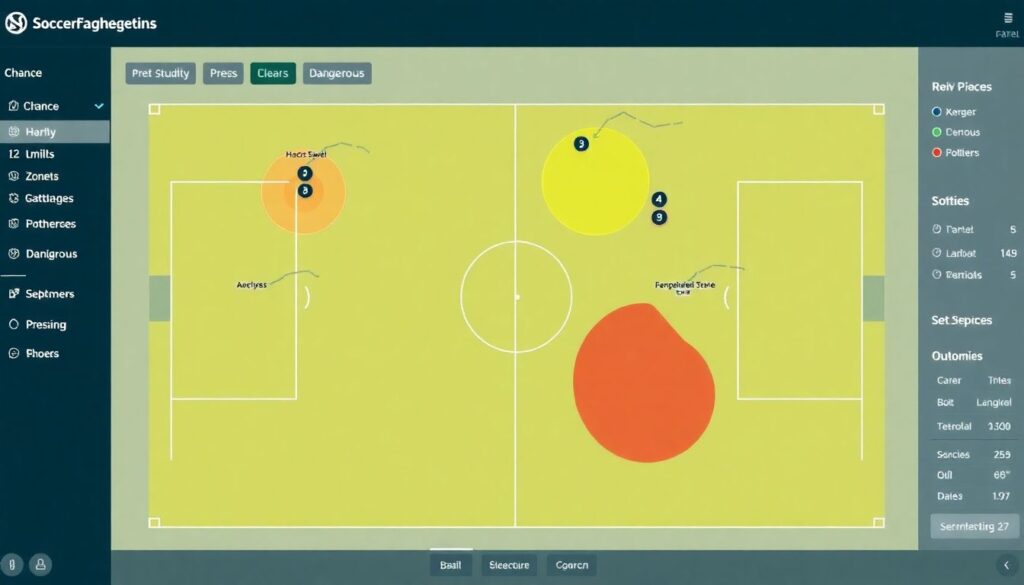
Choose a small set linked to your game model, such as chance quality, progression into dangerous zones, pressing effectiveness, and set-piece outcomes. Track them consistently instead of chasing every new statistic from platforms.
How do we convince sceptical coaches to use analytics?
Present insights in football language and with video context. Start by answering questions the coach already has, show how analytics can save time or clarify decisions, and avoid pushing complex models at the beginning.
How can youth academies use data without overloading staff?
Focus on availability, minutes played, basic technical involvement, and growth trends per player. Use simple dashboards for coaches and reserve deeper models for older age groups or top prospects.
Is it worth investing in tracking systems for lower-division clubs in Turkey?
Only after you have solid video, event data, and basic reporting in place. If resources are tight, collaborate with universities or other clubs before buying expensive hardware or long-term software licenses.
How should we work with external analytics consultants safely?
Define clear objectives, deliverables, and data ownership up front. Ask consultants to explain their methods in plain language and ensure any models can be maintained by your future staff, not only by the vendor.
What is the best way to evaluate analytics software demos?

Run test projects that mirror real club tasks, such as preparing an opponent report or building a shortlist. Evaluate usability for coaches and scouts, data coverage of Turkish and target leagues, and total costs before making a decision.
Комментарии