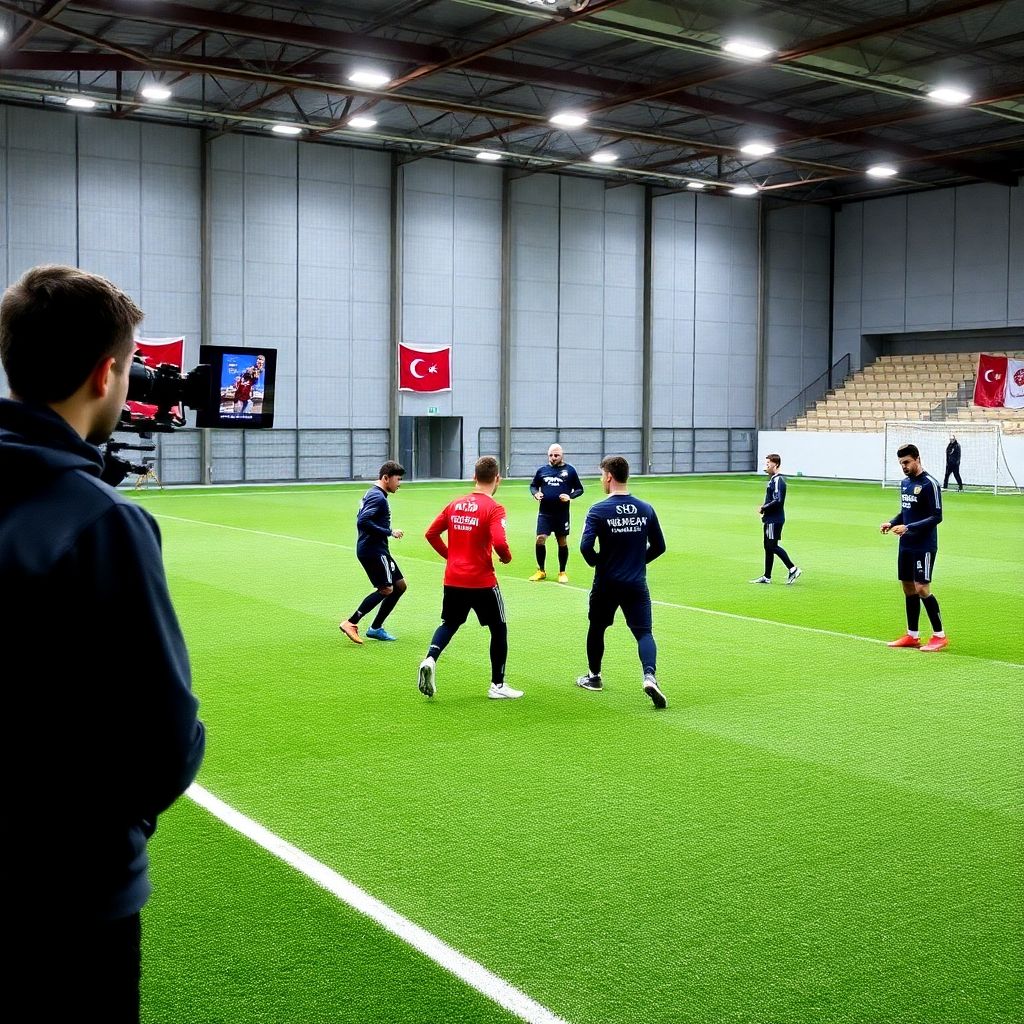
A perfect number 10 in Turkish academies is built through strict technical basics, constant game-like decision training and a supportive but demanding environment. Coaches blend tight-space ball mastery, scanning habits and creative freedom inside structured team tactics. Progress is tracked through objective drills, video feedback and gradual exposure to more competitive professional football training programs in Turkey.
Core Principles for Developing the Number 10
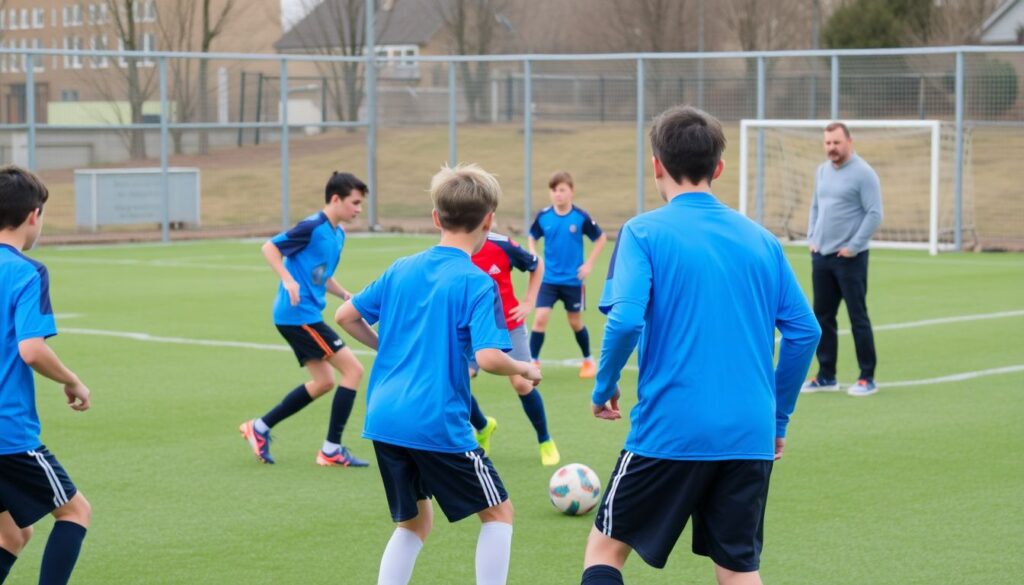
- Prioritise flawless first touch and ball mastery under pressure before complex tactics.
- Train scanning, body orientation and passing options in every drill, not only in games.
- Use small-sided games to force fast decisions, creativity and combination play in tight areas.
- Balance freedom and structure: clear tactical roles, but room to improvise in the final third.
- Develop physical robustness and mental resilience to handle contact, mistakes and crowd pressure.
- Track progress with simple, repeatable metrics: successful progressive passes, scans, sprints, duels.
- Align academy work with real talent pathways in Turkey so number 10s understand expectations of pro football.
Technical Foundations: Ball Mastery, First Touch and Passing Technique
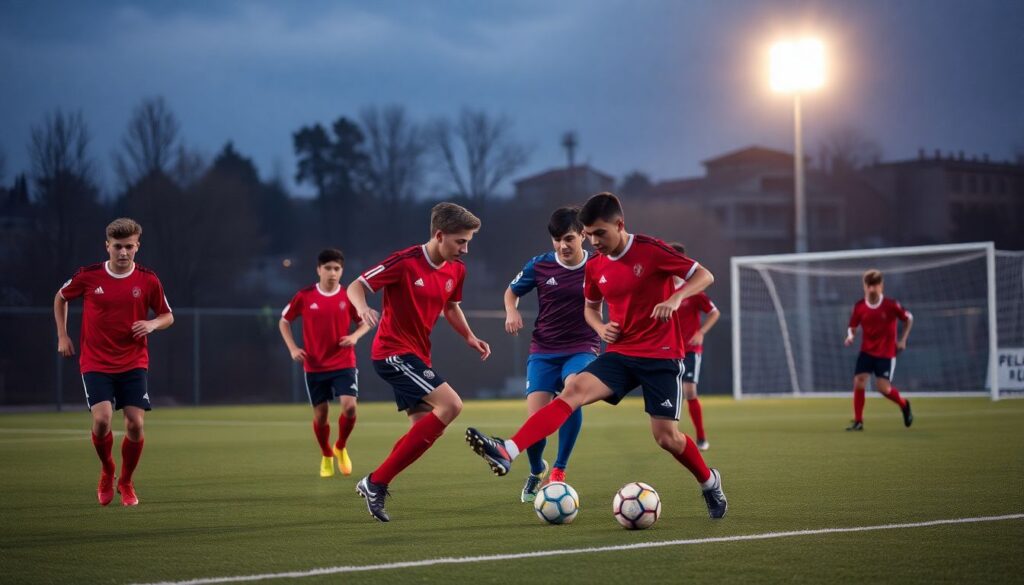
Training for the classic number 10 profile suits players who enjoy having the ball, see passes early and are willing to think one step ahead. In most football academies in Turkey for midfielders, coaches focus heavily on dominant-foot and weaker-foot control, quick combination play and disguised passing in crowded central zones.
It is better not to specialise a player as a pure number 10 when:
- The player clearly prefers open spaces and long sprints (may fit better as winger or box-to-box midfielder).
- They dislike receiving with back to goal and struggle with contact in tight spaces despite quality coaching.
- They resist tactical discipline, refusing to help in pressing or defensive structure.
- They show significant anxiety when given responsibility to create, even after gradual exposure and support.
For suitable players, a weekly base in many of the best Turkish soccer academies for youth development includes:
- Daily 10-15 minutes of ball mastery: sole rolls, inside-outside touches, V-moves, quick shifts around cones.
- First-touch drills from varied angles and heights, always orienting to play forward.
- Short and medium passing circuits with both feet, adding disguise, tempo change and combination patterns.
- Rondos (3v1, 4v2, 5v2) emphasising one-touch play and body orientation before receiving.
Tactical Intelligence: Positioning, Movement Between Lines and Reading the Game
To build tactical intelligence like top number 10 football training camps in Turkey, you need basic tools and structures around the player, not expensive technology.
Required resources and conditions:
- Pitch and space organisation
- Half-pitch or smaller area with clearly marked zones (defensive, midfield, attacking thirds; half-spaces).
- Cones or flat markers to show ideal pockets between opposition midfield and defence.
- Video recording and simple analysis
- Smartphone or basic camera to capture training games and matches.
- Simple drawing apps or whiteboard to mark where the number 10 receives and passes.
- Clear team game model
- Defined attacking structure (e.g., 4-2-3-1 or 4-3-3) with written responsibilities for the number 10.
- Principles such as: stay between lines, play in half-spaces, support both striker and wingers.
- Coach education and shared language
- Coaches using the same key words: scan, half-turn, fix defender, third-man run, switch side.
- Short theory sessions (10-15 minutes) to explain these concepts to players with simple drawings.
- Access to appropriate competition level
- Regular friendly matches versus different opposition styles (high press, low block, physical teams).
- Occasional participation in tournaments run by professional football training programs in Turkey to test decision-making under pressure.
Creative Skillsets: Improvisation, Vision and Varied Passing Repertoires
The following safe, step-by-step process is used, with variations, in many academies and number 10 football training camps in Turkey.
- Install constant scanning habits
Train the player to look over both shoulders before and after every touch. Start without pressure and gradually add opponents.
- Warm-up: 4 players in a square, one ball. Coach calls a colour cone; players must scan and shout where it is before passing.
- Coaching checkpoint: player scans at least twice between receiving and playing the ball.
- Shape the body to play forward
Teach open body position (half-turned) when receiving between lines, so the first touch faces the opponent’s goal.
- Drill: server plays into number 10 mannequin; player checks away, returns, receives on half-turn and passes forward to mini-goals.
- Coaching checkpoint: first touch carries the ball away from pressure into space, not back to where it came from.
- Develop a core passing palette
Build a toolkit of passes: straight, diagonal, through balls, wall passes, chipped passes and disguised slide-rule balls.
- Pattern play: 3-4 players in triangles; one-touch wall pass, then disguised reverse pass through a gate.
- Coaching checkpoint: player attempts at least one riskier vertical pass in each short game.
- Connect creativity to clear triggers
Link improvisation to what the player sees: full-back high, defender on heels, winger inside. Creativity should respond to the picture, not be random.
- Conditioned game: if winger stays wide and full-back follows, the number 10 must look for underlap or through ball into vacated channel.
- Coaching checkpoint: player explains afterward why a specific creative action was chosen.
- Use small-sided games for risky passes
Encourage bold decisions in 4v4 or 5v5 with end zones or mini-goals. Reward forward passes breaking lines, not sideways safety.
- Scoring rule: goals only count if the previous pass broke a line (into a new zone or between opponents).
- Coaching checkpoint: increasing number of line-breaking passes per game over the month.
- Rehearse final-third improvisation safely
In the last 25-30 meters, allow more dribbles, one-twos and off-the-cuff combinations but with clear risk boundaries.
- Drill: 3v2+GK in the box; the number 10 must create a shot within five seconds, using any combination or feint.
- Coaching checkpoint: player keeps head up when dribbling, using feints to move defenders, not just the ball.
- Replay and reflect with video
Use 5-10 minute video clips to review successful and failed creative actions. Focus on what the player saw and what other options existed.
- Session: once per week, sit with player and pause before key decisions, asking: “What were your options?”
- Coaching checkpoint: over time, player starts naming options in real time during training.
Fast-Track Mode for Building Creative Number 10 Skills
Use this short routine 2-3 times per week when time is limited:
- 10 minutes of rondos with strict scanning and one-touch rules.
- 15 minutes of positional receiving between lines with half-turn and immediate forward pass.
- 20 minutes of 4v4 or 5v5 small-sided games, counting only line-breaking passes toward the score.
- 5-10 minutes of quick video recap or verbal reflection on two or three key decisions.
Physical and Mental Attributes: Stamina, Agility and Decision Resilience
Use this checklist monthly to verify if the number 10 is progressing in safe, realistic ways.
- Maintains high-intensity involvement (pressing, offering passing options, counter-press) for most of each half without clear drop in effort.
- Shows quick first steps to escape pressure and adjust to sudden rebounds or deflections.
- Receives contact from behind or side and keeps balance often enough to make the next pass.
- After mistakes (lost ball, missed pass), actively seeks the ball again within the next one or two actions, rather than hiding.
- Makes generally good decisions even when tired, avoiding risky dribbles in own half or forced passes through three defenders.
- Verbal communication improves: points, calls names, gives simple instructions like “turn”, “man on”, “switch”.
- Handles coach feedback and substitutions without emotional collapse or visible frustration toward teammates.
- Shows basic injury-prevention habits: proper warm-up, cool-down, hydration and respect for rest days.
- Between matches, keeps a consistent sleep schedule and does not show chronic fatigue signs in training.
Turkish Academy Practices: Daily Routines, Small-Sided Games and Cultural Emphases
Many Turkish academies use strong football culture and passion positively, but a number of recurring mistakes slow number 10 development.
- Overloading young players with matches and tournaments while undertraining core technical skills.
- Allowing parents or agents to push for early position specialisation without patient all-round midfield training.
- Focusing on spectacular long shots instead of building short combination play and line-breaking passes.
- Using only big-pitch 11v11 games, neglecting small-sided formats where number 10s see more touches and decisions.
- Shouting emotional, unclear instructions from the sideline that confuse the player in key moments.
- Ignoring weaker foot development because of short-term match results, limiting future passing angles.
- Not linking academy training to the expectations of first-team coaches in Turkey, creating a style gap.
- Underusing video and simple statistics, relying purely on “feeling” to judge creative midfielders.
- Failing to explain to the number 10 how to balance defensive responsibility with creative freedom.
Talent Pathways: Assessment, Individualised Plans and Transition to Professional Football
Not every player will go directly from academy to Super Lig. These alternative pathways can still build a serious career or long-term football involvement.
- Regional and semi-professional clubs – Suitable when a player is technically strong but physically late-maturing or needs more time. Lower divisions offer more minutes, with a clearer route back into pro structures via performance.
- School and university football programs – Good for players who value education highly or face uncertainty about professional contracts. Competitive university teams, especially those linked with professional football training programs in Turkey, allow continued development and exposure.
- Position flexibility (8/10 hybrid or wide playmaker) – For number 10s who struggle near goal but read the game well deeper or from wide areas. Switching to an advanced 8 or inverted winger role can unlock new opportunities at clubs that do not use a classic 10.
- International academy or camp experiences – Short stays abroad or in specialised number 10 football training camps in Turkey create fresh perspectives and raise standards. This option fits motivated families ready to handle travel and schedule changes.
For players wondering how to join a Turkish football academy as a midfielder, these alternatives can run in parallel: trial at local academies, keep playing in school teams, and consider seasonal camps to show talent in different environments.
Common Practical Questions About Training Creative Playmakers
At what age should a player be trained specifically as a number 10?
Before age 13-14, it is safer to develop all-round midfield skills in different roles. From around early teens, if a player clearly prefers tight spaces, combination play and creative passing, you can start to invest more sessions in number 10 responsibilities.
How many individual sessions per week are ideal for a young number 10?
Two to three focused technical-tactical sessions in addition to normal team training work well for most players. Quality and consistency matter more than adding extra days that cause fatigue and reduce enjoyment.
What is the biggest difference between a central midfielder and a number 10 in Turkish academies?
The number 10 in Turkey is often judged more on creativity and final-third impact: assists, key passes, combinations. Central midfielders are evaluated more on control of tempo, pressing and balance. A good academy still teaches both sets of skills to every midfielder.
Can a physically small player succeed as a number 10 in Turkey?
Yes, if they have strong balance, courage and quick decision-making. Many smaller players thrive between lines because they can hide from defenders and turn quickly. Coaches must protect them from excessive contact and teach smart body use.
How do I choose between several football academies in Turkey for midfielders?
Watch training, not just matches. Prefer academies that use regular small-sided games, emphasise scanning and decision-making, and communicate with players calmly. Ask how they track progress for midfielders and how often number 10s are reviewed individually.
What metrics should be tracked for a developing number 10?
Simple metrics like successful forward passes, line-breaking passes, entries into the final third, ball losses in dangerous areas and pressing efforts per game give a clear picture. Combine numbers with video examples so the player understands context.
How important are short-term results in youth competitions for a number 10?
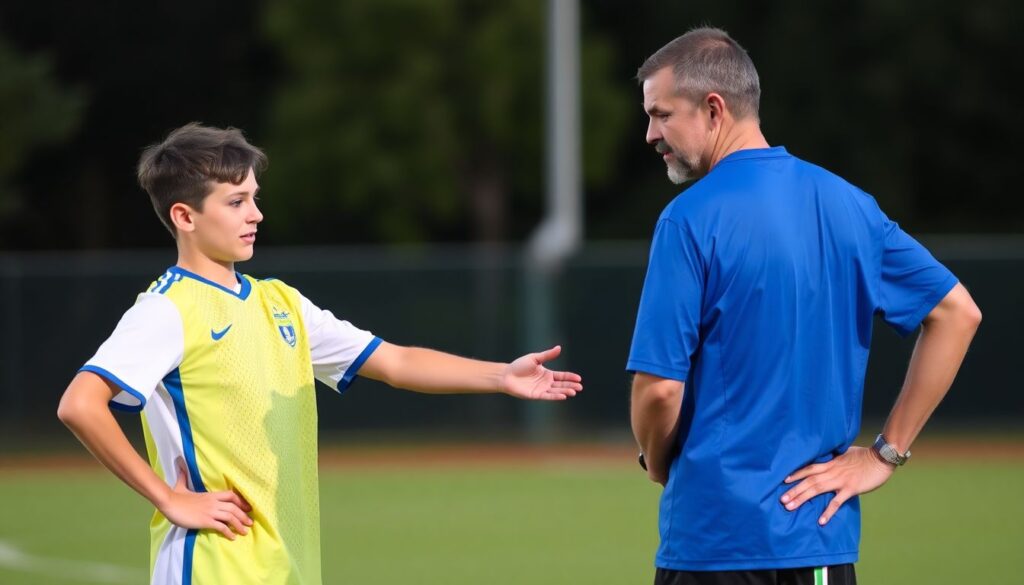
Short-term results are less important than consistent development of decisions, vision and resilience. A creative midfielder will sometimes lose the ball trying risky passes; coaches and parents should judge progress over months, not one tournament.