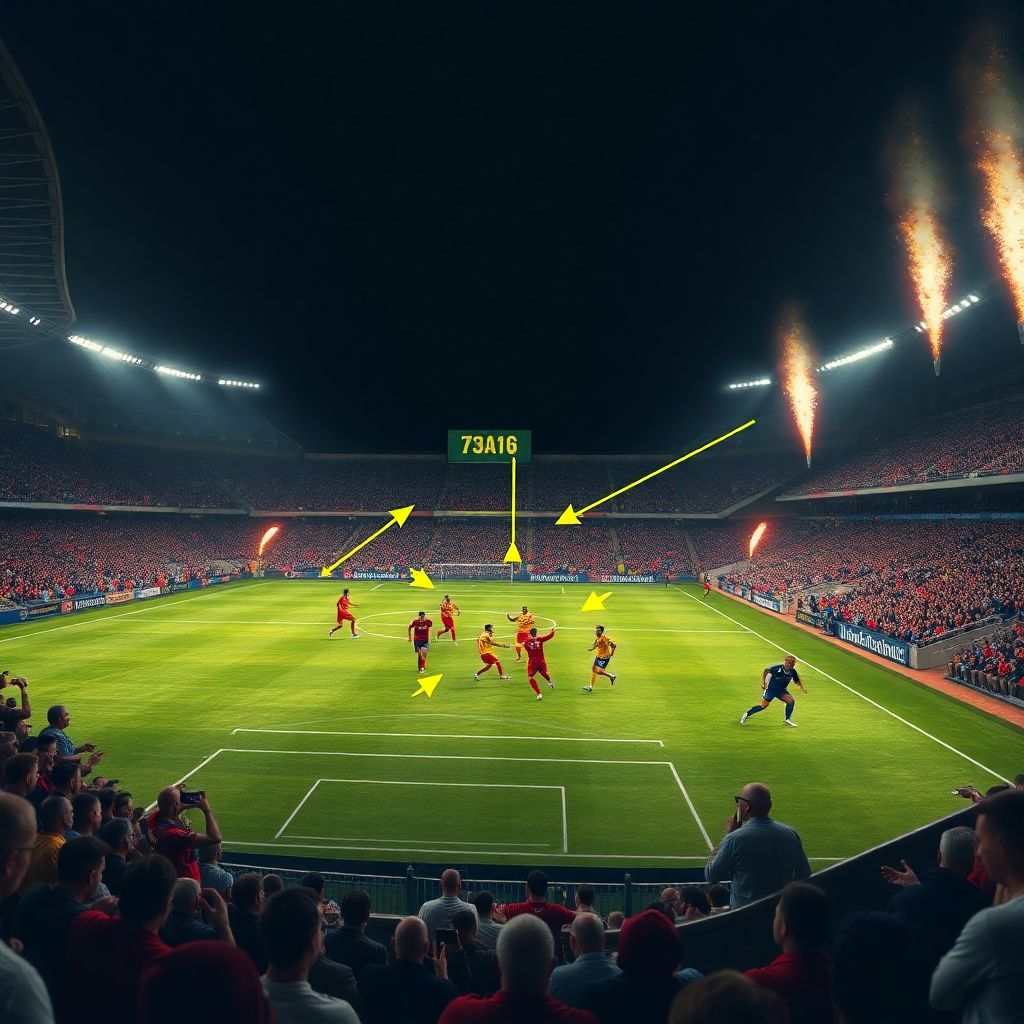
Why Everyone in the Süper Lig Suddenly Presses Like Maniacs
If you’ve watched the Turkish league over the last few seasons, you’ve probably noticed the same thing: nobody lets anyone breathe on the ball anymore. The pace is higher, rest defence is tighter, and counter‑pressing is no longer just a buzzword from Klopp interviews – it’s a weekly reality in Istanbul, Trabzon and beyond.
That’s the starting point for understanding modern pressing systems in Turkish Süper Lig football in 2026: the game has shifted from “wait and see” to “hunt and steal, right now”.
—
Key Terms: Getting the Jargon Out of the Way
What Gegenpressing Actually Means
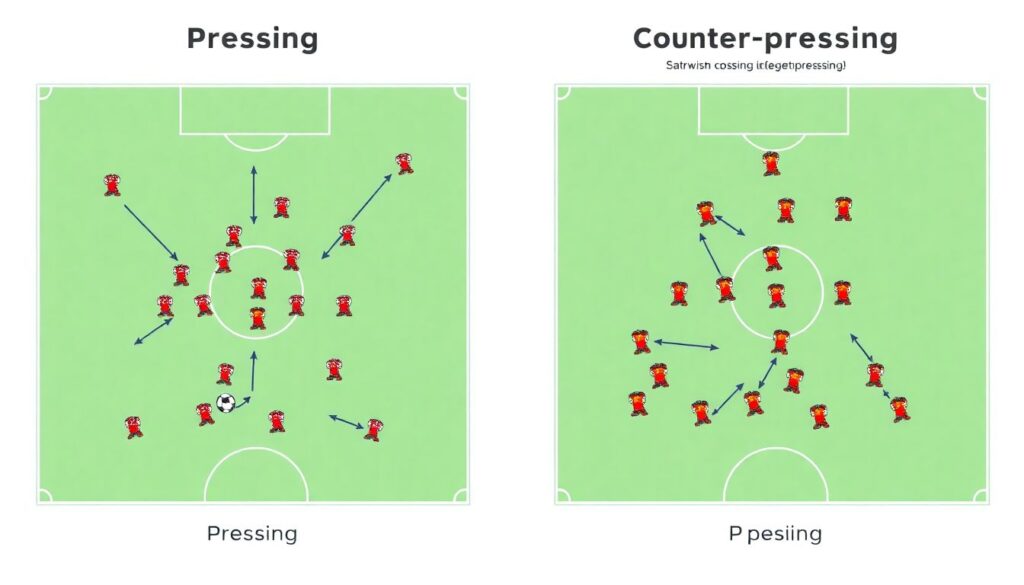
Let’s keep it simple:
– Pressing – putting coordinated pressure on the opponent when *they* have the ball.
– Counter‑pressing (gegenpressing) – putting *immediate* pressure on the opponent right after you lose the ball, usually in the zone where you just attacked.
So gegenpressing is less about chasing like crazy for 90 minutes, and more about *what happens in the first 3–5 seconds after losing possession*. That’s the “golden window” where the opponent is disorganised and vulnerable.
You’ll see the phrase *tactical analysis of gegenpressing in football* everywhere now, but in practice it boils down to three coordinated things:
1. Reaction speed – who sprints first and in which direction.
2. Access – how many defenders are close enough to actually challenge.
3. Cover – who stays behind to protect the space if the press is broken.
Without all three, it’s not gegenpressing. It’s just running.
High Press vs Mid‑Block vs Gegenpressing
A quick comparison so we don’t mix concepts:
– High press – you push the whole team up and press their build‑up, usually around their box or the first third.
– Mid‑block press – you let them come a bit, then press aggressively around the middle third.
– Gegenpressing – you don’t care *where* you are; you care *when* you lost the ball. The trigger is the turnover, not the field zone.
In practice, top sides blend them. The best gegenpressing teams in Süper Lig use a high press when the opponent starts attacks and gegenpress when they lose the ball while attacking themselves.
—
Why Gegenpressing Works So Well in the Süper Lig Context
League DNA: Chaos, Transitions, and Open Games
The Süper Lig has long had a reputation: emotional crowds, wild tempo, and games that can turn 3–2 in five minutes. That chaotic profile is *perfect* for gegenpressing tactics Süper Lig teams now favour.
Why? Because gegenpressing is designed to *weaponise chaos*:
– Turkish games already had lots of turnovers.
– Lines were often stretched, gaps between defence and midfield were big.
– Counter‑attacks decided titles.
Modern coaches simply decided: “If the game is end‑to‑end anyway, let’s control those transitions instead of suffering them.”
From Man‑Marking to Space‑Oriented Pressing
Traditionally, many Turkish sides leaned on aggressive man‑oriented defending. Chase your guy, win the duel, repeat. Modern approaches look different: more space‑oriented and more structured.
Think of the evolution like this:
[Diagram: Three opposition midfielders are staggered. Instead of each Süper Lig midfielder marking a single man, they stand in a narrow triangle, blocking passing lanes and ready to jump diagonals. The arrows are not straight to men, but into lanes and pressing angles.]
The goal shifts from “winning the duel” to “steering the ball where we want it, then trapping.” That’s the backbone of modern pressing systems in Turkish Süper Lig sides that compete in Europe.
—
How Süper Lig Teams Actually Organise Their Press
Base Shapes: 4‑4‑2 and 4‑2‑3‑1 as Pressing Platforms
In possession you’ll often see 4‑2‑3‑1 morph into a 2‑3‑5. Out of possession, though, most coaches in the league still rely on familiar structures:
– 4‑4‑2 pressing shell – the “10” joins the striker, wingers drop a bit.
– 4‑1‑4‑1 / 4‑5‑1 – more conservative but with clear triggers to jump.
Why these shapes? Because their lines are easy to shift horizontally. When the ball goes to one flank, the whole block can slide, compressing the zone where they want to counter‑press if they win it and then lose it again.
[Diagram: A 4‑4‑2 block shifted to the right side. Distances between players are tight (8–12 m). A turnover is shown with an X near the right touchline; three nearest players have arrows closing in, two central midfielders have arrows covering passing lanes back inside.]
Pressing Triggers You See Every Weekend
Süper Lig coaches may speak different languages, but their pressing triggers are remarkably similar:
1. Back pass to the centre‑back – front line jumps, wingers clamp fullbacks.
2. Horizontal pass into a fullback under pressure – instant trap on the sideline.
3. Loose first touch in midfield – nearest player presses, others close passing angles.
4. Goalkeeper receives facing his own goal – striker sprints diagonally to cut off the centre.
These patterns are drilled to the point of habit. That’s how to play gegenpressing like the pros: you don’t “decide” to press, you just *trigger* what you’ve trained a hundred times this month.
—
From Europe Back to Istanbul: How Ideas Travel
Imported Models, Local Adjustments
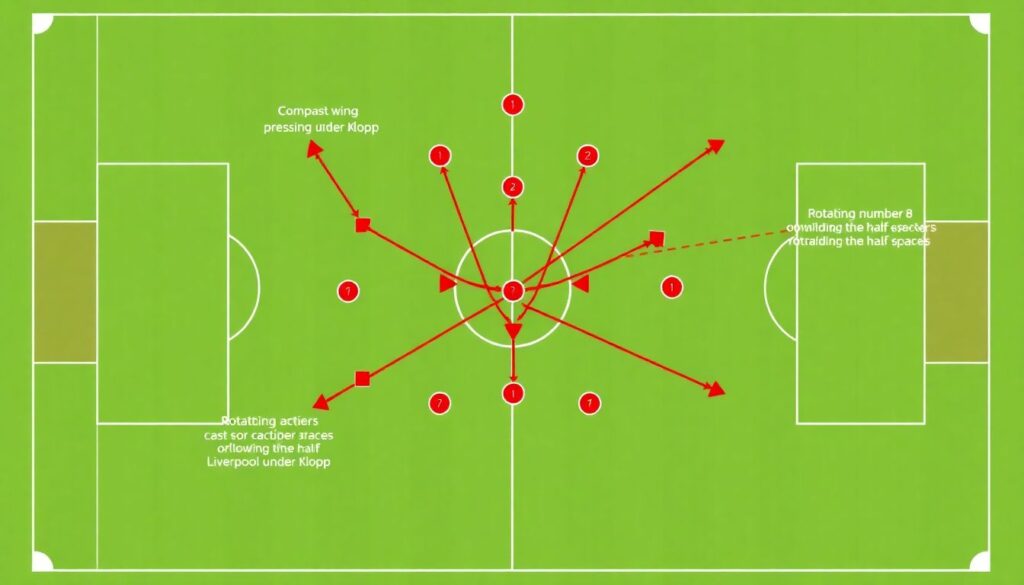
Over the last decade, Süper Lig clubs have hired coaches influenced by German, Austrian, and Spanish pressing schools. The inspiration is obvious:
– Compact centre like RB Leipzig and Salzburg.
– Wing traps reminiscent of Liverpool under Klopp.
– Rotating 8s to overload half‑spaces like Bayer Leverkusen under Alonso.
But the adaptation is local. The league’s tempo, the climate in summer months, and the emotional game state swings force tweaks:
– Blocks start high, then drop to a more compact mid‑press after the 60th minute.
– Rotations are slightly simpler to keep structure under pressure.
– More emphasis on second balls, because clearances and duels are constant.
In contrast to the Bundesliga, where gegenpressing can be almost robotic, Turkish teams live with a bit more risk and individuality. That risk is partly why games remain entertaining.
—
Comparing Süper Lig Pressing to Other Big Leagues
Süper Lig vs Premier League
– Premier League: pressing is deeply integrated with multi‑year squad planning, athletic profiles, and huge depth – almost every team can press for 90 minutes.
– Süper Lig: pressing tends to be more phase‑based. Teams have periods of intense pressure followed by managing energy in a mid‑block.
Where the Turkish league catches up is organisation in transition. Top clubs now:
– Leave two or three players staggered behind the ball to control counters.
– Use more deliberate rest defence (how many stay back when attacking).
The result: instead of 5v4 counters every ten minutes, you see more 3v3s where the pressing team is actually prepared.
Süper Lig vs Bundesliga and Serie A
– Bundesliga is still the reference for relentless gegenpressing. The distances between lines are tiny, and almost every side trains it from academy level.
– Serie A mixes selective high pressing with carefully designed traps and deep blocks.
The Süper Lig sits somewhere in between:
– More vertical and chaotic than Serie A.
– Less synchronised than the Bundesliga, but rapidly closing the gap in top clubs’ training environments.
Where Turkey is unique: the emotional factor. Crowd noise pushes teams to press higher and chase “one more ball”, even when the rational choice might be to drop. Coaches have to plan around that reality.
—
Concrete Examples: What It Looks Like on the Pitch
Typical Süper Lig Gegenpressing Scene
Picture this:
– Galatasaray attack down the left. The fullback overlaps, the winger tucks inside, the 8 joins the box.
– A cross gets blocked and half‑cleared centrally.
[Diagram: Ball pops out at the edge of the box. Three Gala players form a triangle around the nearest opponent; arrows show them closing in. Behind them, two midfielders are positioned centrally, arrows pointing backward to control counters.]
Instead of jogging back, three players crash toward the recovery zone, while two sit deeper to block the through ball. If they win the ball back, the opponent is still unorganised. One quick pass and they’re attacking a broken line again.
Teams like Fenerbahçe and Trabzonspor have similar patterns: funnel the ball into zones where they have nearest player superiority, then swarm.
Failure Case: When the Press Breaks
Of course, when gegenpressing fails, it fails loudly:
– The first man jumps late or at the wrong angle.
– The opponent breaks the immediate pressure with a wall pass.
– Suddenly, the pressing team’s fullbacks are high, 6 is isolated, and one vertical ball kills the structure.
In 2026, the top Süper Lig teams are finally treating these moments with the same seriousness as their attacking schemes: drilling *“what if we miss the first duel?”* scenarios in training and rewiring defenders to retreat diagonally instead of flat runs backwards.
—
Modern Tendencies in 2026: What’s Actually New?
1. Pressing as a Load Management Tool, Not Just a Weapon
Counter‑intuitively, coaches now use pressing to control physical load. Instead of sprinting randomly all game, teams:
1. Define pressing phases (e.g., first 15 minutes of each half full throttle).
2. Switch to a slightly deeper structure once the lead is secured.
3. Use the ball to “rest” – longer passing sequences after taxing presses.
The idea is that structured, collective sprints are *less* exhausting than constant, reactive chasing.
2. Micro‑Pressing: Local Traps Inside a Bigger Block
Another 2026 trend: teams no longer think in just “high” or “mid‑block”. They think in micro‑zones:
– Right‑side trap when the opposition right‑back receives facing his own goal.
– Central trap when the 6 receives on his weaker foot.
– Backward‑pass trap when a winger is forced to recycle.
[Diagram: Team in a 4‑1‑4‑1. Only the right winger and right 8 jump hard toward the ball, the rest of the team shifts but doesn’t fully commit. Small circle around the pressing zone indicates a “local” press, not a whole‑team charge.]
You’ll see a compact team, then suddenly three players explode toward a single area. That’s deliberate – it keeps overall structure intact while still generating high‑value recoveries.
3. Hybrid Marking: Man‑Orientations Within a Zonal Shell
In Turkey, pure zonal systems used to be hard to sell to players raised on man‑marking duels. The compromise is hybrid marking:
– The block is clearly zonal.
– But within that zone, certain players have “preferred opponents” they step out to press more aggressively.
This fits the Süper Lig’s culture of individual battles, while maintaining a modern shape. You’ll often see an 8 stepping far out to lock onto the rival playmaker, while the rest of the midfield rotates behind him to close gaps.
—
How to Learn from Süper Lig Teams: Practical Takeaways
If You’re a Coach: Building a Pressing Identity
To borrow from how gegenpressing tactics Süper Lig clubs are evolving, you’d start with:
1. Distances
Train your team to stay compact: 25–30 m top to bottom, 8–12 m side to side between players. Pressing dies when distances grow.
2. First 3 Seconds Rule
Every turnover triggers one clear command: step toward the ball or step into the nearest passing lane. No walking, no waving arms.
3. Rest Defence Design
When your fullbacks bomb forward, decide in advance: which midfielder drops? Who guards the winger ready to counter? Copy what the big Istanbul teams do: hold at least two players in conservative roles whenever both fullbacks advance.
4. Pressing Triggers Library
Don’t improvise. Pick 3–4 triggers and hammer them in training: back pass to CB, bad touch to 6, touch to fullback on his weak foot, goalkeeper under pressure.
If You’re a Player: How to Play Gegenpressing Like the Pros
For players, the key lessons are more individual:
– Body orientation – always half‑open to see both man and passing lane.
– Pre‑sprint positioning – stand close enough that one step gets you into the duel.
– Communication – shout “go” or “hold” early; pressing fails when two hesitate.
– Mental reset after losing the ball – the moment you mis‑control or mis‑pass, you’re *not* out of the action; you’re the first presser.
This mentality is exactly what separates top Süper Lig midfielders in 2026 from their predecessors.
—
Where Süper Lig Pressing Might Go Next
Data, Tracking and Smarter Chaos
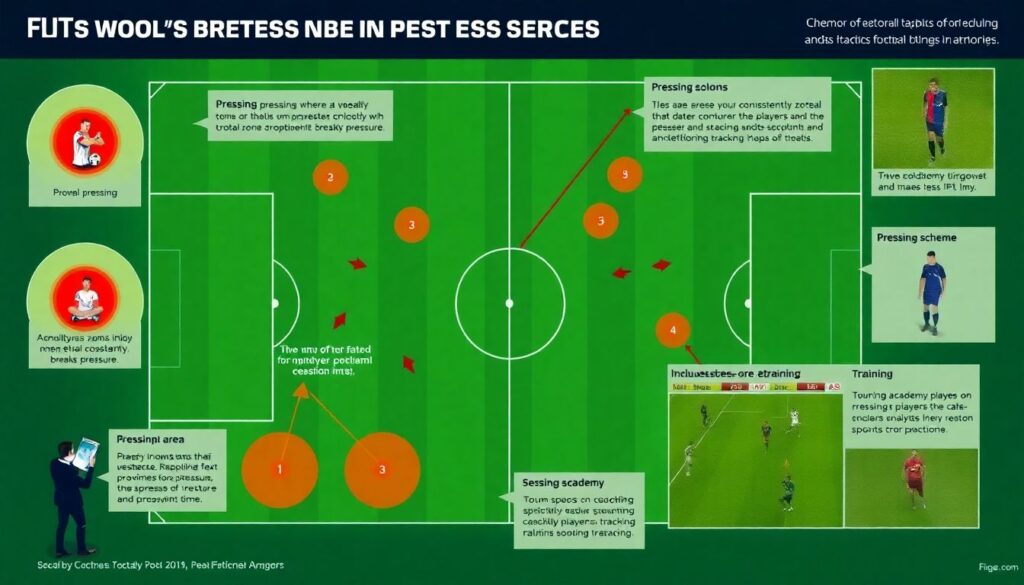
With more clubs investing in tracking data and modern analysis, expect pressing to become even more targeted:
– Pressing maps will show which opponent zones consistently break pressure.
– Coaches will tweak who jumps and from where, based on actual speed and reaction metrics.
– Young academy players will grow up with pressing language and habits, not just 1v1 defending.
So when we talk about gegenpressing tactics Süper Lig clubs use now, we’re only seeing the middle of the story, not the end. As tools improve, the chaotic, emotional style of the league is likely to be layered with even more structure.
What won’t change is the essence: the Süper Lig will always be about high tempo and dramatic swings. The difference now is that the best gegenpressing teams in Süper Lig are trying to control *when* those swings happen – and to make sure they’re the ones who profit every time the ball turns over.