
Step 1. Understand Who the “Next Generation” of Turkish Managers Really Are
Forget the stereotype of the rigid, top‑down Turkish boss barking orders. The new wave of Turkish managers looks very different.
They tend to be multilingual, digitally fluent, comfortable with ambiguity, and far more collaborative. Many have one foot in Istanbul and the other in London, Berlin, Dubai, or Silicon Valley—at least mentally, sometimes literally. They read global business books, but they also grew up with strong family and community values, which still shape how they lead.
These managers usually share three profile traits:
1. Hybrid identity – They mix Western management methods with local cultural intelligence.
2. Experimental mindset – They will try new tools and frameworks rather than “doing things the way we always did”.
3. Network‑centric thinking – Instead of just building “departments”, they build ecosystems: between companies, startups, universities, and even NGOs.
If you’re a newcomer aiming to join this cohort, think less about memorising theories and more about becoming a bridge: between generations, markets, and mindsets.
—
Step 2. Map the Main Profiles of Emerging Turkish Managers

Not all next‑gen Turkish managers look alike. But several distinct archetypes are already visible in corporations, scale‑ups, and even family businesses.
Here are five of the most common profiles you’ll meet—or become.
1. The Global Corporate Integrator
This manager works in a multinational or a big local group. They translate global strategy into something that actually works in Turkey and nearby markets. They are fluent in PowerPoint and performance dashboards, but they also know how to navigate local bureaucracy and informal networks.
2. The Tech‑Driven Operator
Usually from SaaS, fintech, e‑commerce, or logistics. They build teams around metrics, automation, and product experiments. For them, management is less about hierarchy and more about flows: of data, decisions, and customer feedback.
3. The Reformer in Family Businesses
A son, daughter, niece, or “adopted” professional manager in a traditional family firm. Their mission: modernise without breaking the family’s social fabric. They bring in OKRs, CRM, and budgeting discipline—while managing uncles, aunts, and founders who may distrust change.
4. The Ecosystem Builder
Found often in accelerators, chambers of commerce, or as founders‑turned‑managers. They connect startups, corporates, government programmes, and foreign investors. Their management style is more about influence than authority.
5. The Social‑Impact Strategist
These managers work in NGOs, social enterprises, or CSR divisions. They combine business tools with a mission around education, environment, or inclusion. They care about KPIs and SDGs in the same sentence.
Tip for newcomers:
Don’t panic if you don’t “fit” one profile. In reality, careers blend these archetypes over time. Start by recognising which one is your *current default* and which one you want to grow into.
—
Step 3. Decode Their Management Philosophies
The next generation of Turkish managers doesn’t just copy Western management jargon; they reinterpret it. Their philosophies usually emerge from three tensions they have to balance every single day.
First, respect vs. debate. Turkish culture values respect for elders and authority figures, but modern business requires questioning and challenging ideas. New managers try to keep politeness while saying, “This doesn’t make sense; let’s fix it.”
Second, loyalty vs. mobility. Older generations often stayed with one company for decades. Younger managers may switch jobs every 2–4 years, but they still value long‑term relationships. They stay loyal to people and networks, not necessarily to a single employer.
Third, speed vs. thoroughness. Fast growth is trendy—startups, scale‑ups, unicorns—but Turkey’s economic volatility punishes sloppy risk management. The best emerging leaders learn to move fast while still planning for devaluation, regulatory shifts, and political risk.
Their underlying philosophy sounds roughly like this:
– “We want Western‑level professionalism.”
– “…without losing Eastern‑style human connection.”
– “…and with enough flexibility to survive volatility.”
—
Step 4. Look at How They Actually Learn to Manage
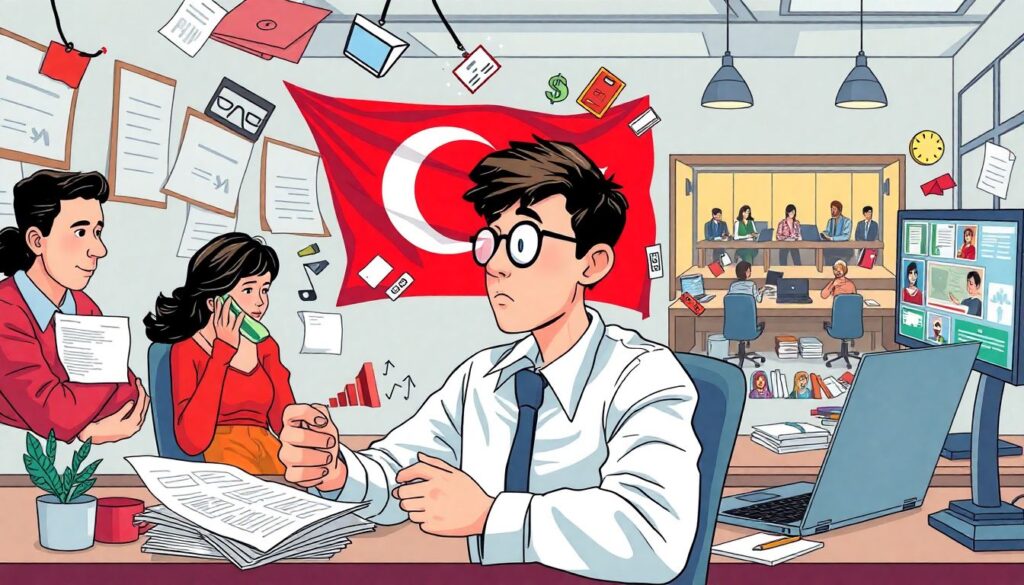
Contrary to what glossy brochures suggest, new Turkish managers don’t learn management only in classrooms. They learn in messy contexts: family expectations, rapid promotions, unstable markets, and hybrid workplaces.
That said, formal education still plays a big role. Many young professionals join Turkish management training programs offered by large corporations or business schools. These programs help them move from “star employee” to “first‑time manager” by covering feedback skills, basic finance, and project execution.
For deeper development, MBA programs in Turkey for managers are evolving. The better ones now emphasise case studies from emerging markets, entrepreneurship, and digital transformation instead of just copying US curricula. They also attract international students, which pushes Turkish managers to operate in English and deal with more diverse viewpoints.
On top of that, there is a growing ecosystem of executive leadership courses in Turkey aimed at mid‑career managers who don’t want a full MBA but do want sharper strategic thinking and people‑skills. These short, intense formats are popular because careers move fast: few can afford to step out for two years.
Warning:
A common mistake is to collect certificates instead of capabilities. Hanging diplomas on LinkedIn doesn’t automatically make you a better manager. If you walk out of a program without at least one concrete change in how you run meetings, make decisions, or develop people, you’ve mostly wasted time and money.
—
Step 5. Use the Hidden Teachers: Consultants, Recruiters, and Peers
Formal education is visible. Informal education is where much of the real transformation happens, especially in Turkey’s relationship‑driven business environment.
Many rising managers learn how the “next level” of leadership works by collaborating with Turkish management consulting firms. Good consultants don’t just deliver slides; they expose you to more advanced ways of structuring organisations, measuring performance, or designing strategy. If you’re curious instead of defensive, every consulting project becomes a free mini‑MBA.
Similarly, recruitment agencies for Turkish managers are quietly reshaping leadership standards. Headhunters see dozens of CVs and success/failure stories. When they tell you “Clients now expect X, Y, Z from managers,” listen carefully. It’s real‑time market intelligence about what “future‑ready” leadership means.
Most underestimated teacher of all? Your peers.
Join cross‑company communities, industry associations, or product/tech meetups. Next‑gen leadership skills—like managing remote teams, handling cross‑border projects, or navigating burnout—are often discussed more honestly in those semi‑informal circles than in any official training.
—
Step 6. Common Mistakes Next‑Gen Turkish Managers Keep Repeating
You can save yourself years if you avoid some very predictable errors.
1. Trying to be too “Western” too fast
Suddenly switching to radical transparency and blunt feedback in a conservative team can backfire. You are not managing in Silicon Valley; you’re operating in a specific Turkish context. Adopt best practices, yes, but translate them culturally.
2. Ignoring informal power structures
New managers sometimes assume that the org chart is reality. In Turkey, relationships often beat job titles. If you neglect the informal influencers—veteran assistants, long‑serving engineers, older relatives in family firms—you’ll face invisible resistance.
3. Over‑indexing on tools instead of conversations
There’s a temptation to buy new software, adopt OKR platforms, or redesign dashboards and call that “transformation”. Without deep conversations about fears, incentives, and habits, no tool will rescue a broken culture.
4. Avoiding tough feedback to “protect harmony”
Many managers delay frank conversations out of fear of conflict. The result: underperformers stay, high performers leave. True harmony comes from clarity, not from pretending everything is fine.
5. Underestimating global standards
Some feel that because Turkey is a challenging environment, “good enough” is enough. But if you want regional or global roles, you’re not just compared to local peers—you’re compared to managers from Poland, India, Brazil, and beyond.
Quick rule of thumb:
If you catch yourself saying “This is Turkey, it doesn’t work like that here” every time someone suggests improvement, you’re probably using culture as an excuse, not as a resource.
—
Step 7. Practical Advice for New and Aspiring Turkish Managers
Here’s a concrete roadmap you can start using immediately, whether you’re a fresh team lead or aiming for your first managerial role.
1. Master one core domain, but speak three “languages”
Be genuinely strong in something—finance, marketing, product, operations. Then learn to speak the language of technology, people, and business outcomes. Without this tri‑lingual mindset, you’ll get stuck in middle management.
2. Build a personal “learning stack”
Combine one formal program (like a short leadership course) with a curated set of books, podcasts, and two or three mentors. Don’t rely on your company to design your growth plan; own it.
3. Practice micro‑experiments in your current job
Want to introduce agile methods or better one‑to‑ones? Don’t wait for “permission”. Try on a small project with a small team. Measure results, then scale what works. This makes you the person associated with progress, not theory.
4. Develop cross‑cultural muscles early
Volunteer for projects involving foreign partners or remote offices. Even if your English is imperfect, use it. The future of Turkish management is regional and global; staying fully local is a strategic risk.
5. Design your own ethical guardrails
Turkey’s volatility can create grey zones—regulations, payments, contracts, political sensitivities. Define in advance what you won’t compromise on. Your reputation is your longest‑lasting asset.
6. Grow your “horizontal network” rather than only chasing bosses
Great careers are often built with the help of peers who later become founders, directors, or investors. Invest in relationships across companies, not just up your own hierarchy.
—
Step 8. Future Potential: Where Turkish Managers Can Lead, Not Just Catch Up
The new generation isn’t condemned to playing “follow the West”. In several areas, Turkish managers are uniquely positioned to innovate and even set global examples.
One field is resilience under volatility. Managers here learn to operate amid inflation, currency risk, regulatory shifts, and geopolitical tension. If they systematise this knowledge, they can teach others how to build organisations that survive shocks.
Another advantage is managing in high‑context cultures. In Turkey, what’s unsaid can matter more than what’s on the slide. Managers who can read subtle cues, build trust through hospitality, and still push for performance have skills that are extremely valuable across the Middle East, Central Asia, and parts of Europe.
There’s also near‑shoring and regional hub potential. As companies reconsider supply chains and remote work, Turkish managers fluent in English and regional languages can run distributed teams that span multiple countries and cultures.
To unlock this future potential, though, three shifts are non‑negotiable:
– From short‑term firefighting to long‑term capability building.
– From closed, family‑centric networks to open, merit‑based ecosystems.
– From copying imported models to designing context‑aware, Turkey‑born management frameworks.
—
Step 9. Three Non‑Obvious, “Non‑Standard” Moves You Can Make Today
If you want to stand out from the average next‑gen manager, consider these less typical, but highly effective steps.
1. Run your own “shadow board”
Invite three to five younger colleagues (even interns) to form an informal advisory board for your decisions. Share a challenge each month and listen to their raw, unfiltered ideas. This keeps you close to generational shifts and makes you better at reverse mentoring.
2. Document your management experiments publicly
Start a low‑key blog, LinkedIn series, or internal newsletter where you write short reflections on what you tried in your team: what worked, what failed, what surprised you. Over time this becomes your portfolio as a learning‑oriented leader—and a magnet for opportunities.
3. Co‑create “team contracts” instead of imposing rules
Instead of announcing policies on working hours, communication norms, or meeting culture, sit with your team and design those rules together. When people help write the contract, they enforce it themselves. This is especially powerful in hybrid and remote setups.
—
Step 10. Putting It All Together
The next generation of Turkish managers is emerging in a unique crucible: economically unstable yet full of opportunity, culturally rich yet globally exposed, digitally connected yet deeply personal.
If you want to be part of this wave—not as a passenger but as a driver—focus on three things:
– Clarify your profile, but stay adaptable. You can start as a tech‑driven operator and later become an ecosystem builder.
– Anchor your philosophy, so you’re not blown around by every trend. Decide what kind of leader you refuse to become.
– Invest in your future potential, not just your current role. Learn beyond your job description, engage with consultants and recruiters as partners in your development, and create your own, very Turkish, version of world‑class management.
In other words, don’t just ask, “How do I become a manager in Turkey today?”
Ask, “What kind of Turkish manager will the region need in ten years—and how do I start acting like that now?”