Historical background: how the leagues grew apart
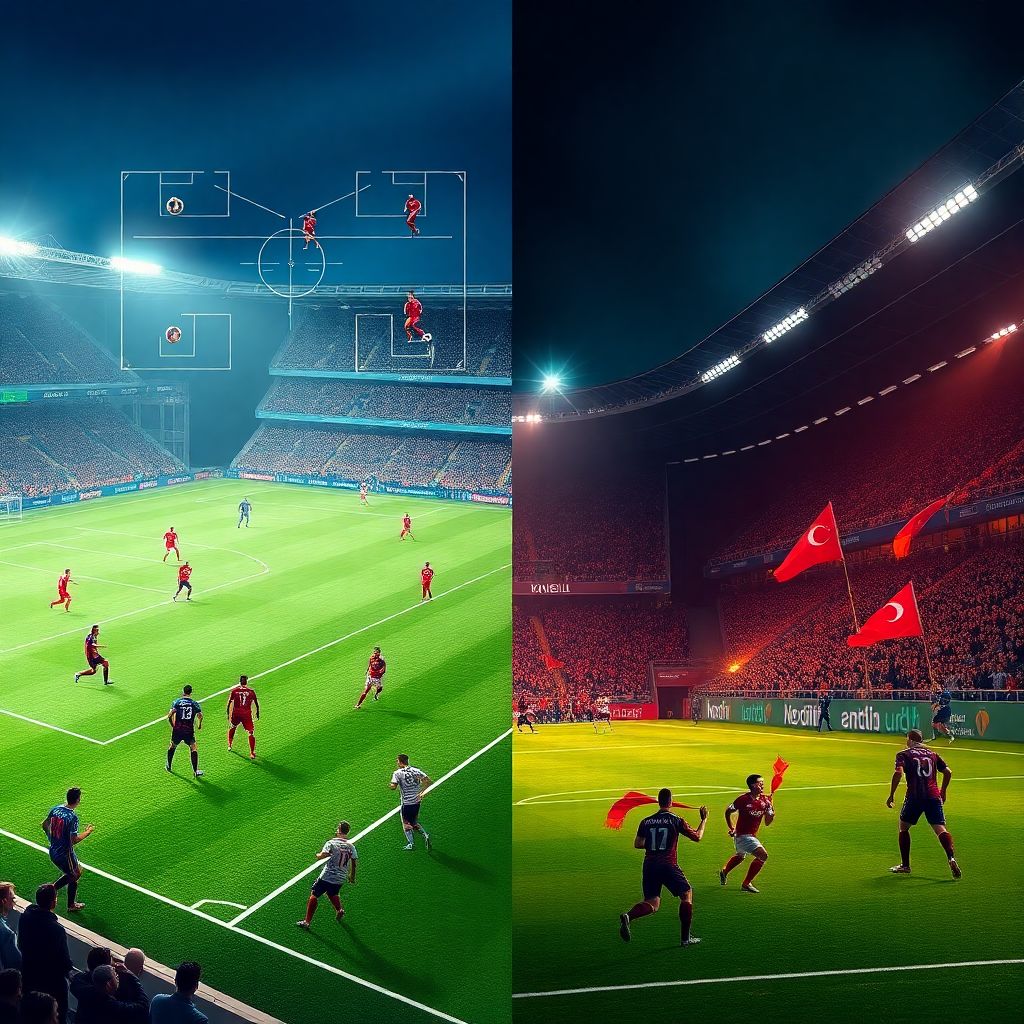
If you put the English Premier League of the early 90s next to the Turkish Süper Lig of the same period, they actually looked surprisingly similar: a lot of long balls, big target forwards, rugged defending and coaches who loved 4‑4‑2. The real divergence started when the Premier League money boom kicked in after the Bosman ruling and the TV deals exploded. That cash brought in foreign managers and analysts, which pushed the league towards a more modern, data‑driven style and a faster tactical evolution than in Turkey.
In Turkey, the rise of the “big three” — Galatasaray, Fenerbahçe, Beşiktaş — defined the Süper Lig’s tactical development. They were influenced by European campaigns, but the league as a whole evolved unevenly: top clubs experimented with pressing and possession models, while mid‑table teams often stuck to more conservative shapes. This is where the first major difference between Premier League and Turkish Süper Lig appears: in England, even teams near the bottom are under pressure to adopt modern tactical trends, while in Turkey the gap between elite and mid‑tier approaches is still much wider.
Basic principles: what both leagues try to achieve
At the most fundamental level, both competitions want the same tactical outcome: control space, create overloads and generate high‑quality chances. So any serious premier league vs super lig tactics analysis shows overlapping core ideas — pressing in zones rather than chasing the ball, coordinated movements between lines, and flexible buildup that can switch flanks quickly. On paper, the principles are similar; the real differences are in how consistently and how aggressively these ideas are applied week after week.
In the Premier League, the baseline now is high tempo, collective pressing and sophisticated rest‑defence — the structure your team keeps when it has the ball so it’s ready for counter‑pressing. Even mid‑table sides know how to shift from a 4‑2‑3‑1 in possession into a 4‑4‑2 or 4‑5‑1 block without losing compactness. In the Süper Lig, principles are the same in theory, but coaches often have to adapt to more chaotic game states: louder atmospheres, frequent momentum swings and, frankly, less consistent refereeing. That pushes many Turkish coaches to prioritize emotional control and game management over rigid tactical frameworks.
Different approaches to solving the same tactical problems
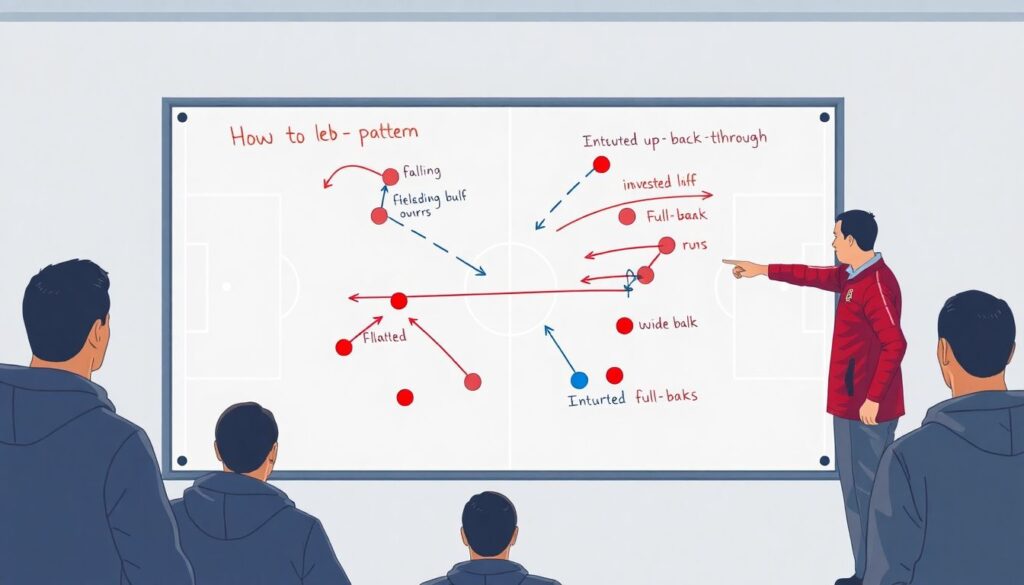
Let’s take a concrete problem: how do you break down a deep, low defensive block? In England, the first instinct today is usually structured: positional play, precise occupation of half‑spaces, inverted full‑backs and a lot of third‑man runs. Coaches talk in patterns — “up‑back‑through”, “wide‑over‑underlap” — and training sessions are packed with rehearsed movements. The idea is to win the game through repeatable mechanisms rather than individual genius alone.
In the Süper Lig, the same problem is often attacked more directly. A coach might still talk about occupying half‑spaces, but he’s far more likely to lean on the decisive skills of his number 10 or a winger who can beat two men one‑on‑one. Instead of carefully rotating positions for ten minutes, a team may accept a scrappier rhythm, throw more crosses into the box and trust the crowd to push them through pressure phases. It’s not that Turkish coaches don’t know modern concepts; it’s that the context rewards quicker, sometimes riskier solutions, especially in the big Istanbul derbies where the game can turn chaotic in a couple of minutes.
Pressing and counter‑pressing: tempo vs control
Pressing is where the premier league vs super lig comparison becomes really sharp. In England, sustained high pressing has become almost non‑negotiable for ambitious sides. Triggers are finely tuned: a back‑pass to the keeper, a bad first touch from the centre‑back, a pass into the full‑back’s weaker foot. Teams try to compress the field so much that turnovers happen close to goal, turning defence into attack in seconds. Fitness levels and squad depth help maintain this intensity over 90 minutes.
In Turkey, you’ll see aggressive pressing, but more in specific moments than as a constant identity. A Süper Lig side might start with a big early press to ride the stadium energy, then drop into a mid‑block to save legs and avoid getting picked apart. When they counter‑press, it’s often more instinctive than choreographed: a cluster of players surrounds the ball, but the back line may stay deeper, respecting the danger of pace in behind. This reflects the difference between Premier League and Turkish Süper Lig in terms of physical demands and squad rotation depth — English teams usually have more options to keep intensity high.
Build‑up play and use of defenders
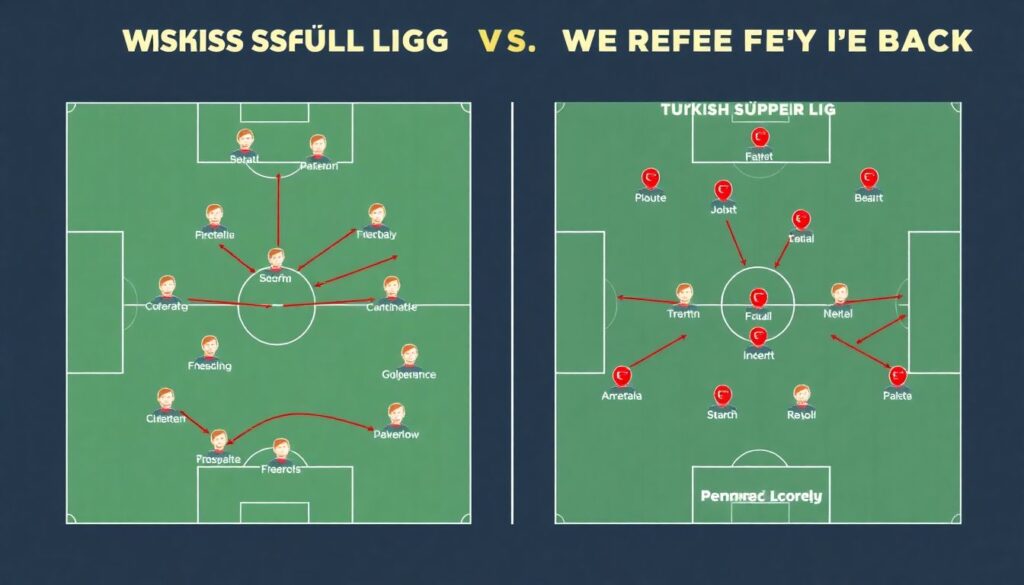
Modern build‑up from the back is another good lens for turkish super lig vs premier league quality. In the Premier League, centre‑backs are expected to break lines with passes, step into midfield and even provoke pressure to open space elsewhere. Full‑backs invert into central areas, or underlap inside wingers, with holding midfielders dropping into the back line to form temporary back threes. The whole mechanism is about luring opponents out and then finding the free man between the lines.
In the Süper Lig, there’s noticeably more variation and, at times, more caution. Big clubs might try similar patterns, but many coaches still prefer a simpler first phase: centre‑backs keep it safer, and full‑backs overlap rather than invert. Risky passes into the middle third can be punished hard in a league where transitions are wild and referees let a lot of physical play go. So instead of inviting pressure and playing through it, some Turkish sides solve the build‑up “problem” by bypassing it: longer balls towards a target forward, then fighting for second balls higher up the pitch. It’s a different, but rational response to the same tactical question.
Implementation examples: how it looks on the pitch
Think about a top English club facing a stubborn underdog at home. The favorite will stretch the pitch horizontally, use rotations between winger, full‑back and central midfielder, and patiently recycle possession until a channel opens. You’ll see numerical triangles everywhere, constant scanning from midfielders and a coach shouting about “rest defence” and “counter‑pressing shape” more than about individual dribbles. The structure itself is designed to keep the game under control even if chances are slow to arrive.
Now picture a top Süper Lig side in a similar scenario. The first twenty minutes might be frantic: quick switches of play, early crosses, frequent shots from distance just to test the keeper and crank up the crowd. If the opponent refuses to open up, the Turkish side may start throwing more players forward, accepting that defensive stability will suffer. Here, emotional momentum is part of the tactical toolkit. Where many English teams are obsessed with “control”, Turkish teams are often comfortable living with a higher degree of volatility, hoping that their star attackers can exploit those stretched phases of play.
Game management and substitutions
Coaches in both leagues wrestle with the same late‑game problem: how do you protect a narrow lead without inviting too much pressure? In England, substitutions tend to follow clear tactical logic — fresh legs for pressing, a ball‑carrying midfielder to break pressure, or an extra centre‑back to switch into a back five. Even time‑wasting, while present, is usually wrapped in talk about “game state management” and “controlling territory through possession”. It’s still calculated, tied to expected goals and spatial control.
In Turkey, the last 20 minutes feel more like a separate sport sometimes. You’ll see more emotional substitutions: a hard‑tackling midfielder brought on mainly to send a message, or a veteran forward trusted to win fouls and slow the tempo. Tactical shape can bend and wobble under crowd pressure and referee decisions. Coaches often mix classic tactics with very human tricks — exaggerated reactions, constant communication with the fourth official — as part of their strategy. It’s still game management, just much less sterilised than in England.
Common misconceptions and lazy narratives
One tired question that pops up online is “premier league vs turkish league which is better?”, as if quality were some single, universal rating. That mindset leads to lazy takes like “the Premier League is tactical, the Süper Lig is chaotic and emotional”. Reality is far more nuanced. Turkish coaches study in the same UEFA courses, use the same analysis tools and often speak the same tactical language. The difference is not about knowledge; it’s about how those ideas survive contact with specific stadium cultures, budgets and squad profiles.
Another misconception is that every premier league vs super lig comparison must end with England miles ahead in every category. Yes, financially and in overall squad depth, the Premier League is superior. But in short‑term cup ties and intense two‑legged ties, Turkish sides have repeatedly shown they can out‑fight and out‑think English opponents, especially at home. So when people talk about turkish super lig vs premier league quality, they often ignore context: travel, atmosphere, pressure on referees and the simple fact that players are human and react to environments.
What “quality” really means in tactical debates
When fans argue about the difference between Premier League and Turkish Süper Lig, they usually lump everything into one word: “quality”. That can hide the real tactical discussion. Quality can mean better athletes, cleaner first touches, or deeper benches. But tactically, quality often shows in details like compactness between lines, how well pressing is coordinated, or how consistently teams can repeat complex patterns under fatigue. On those micro‑details, English teams generally score higher, yet individual Süper Lig matches can hit an intensity that surprises neutral viewers.
In the end, premier league vs turkish league which is better is the wrong question if you care about tactics. A better framing is: how do two different football ecosystems solve similar on‑field problems with the tools and constraints they have? The Premier League leans on science, depth and relentless tempo. The Süper Lig adds a layer of volatility, emotion and individualism that changes how strategies are applied. Understanding both makes watching either league more enjoyable — you start seeing the logic behind choices that at first glance just look like “chaos” or “over‑control”.