Why compare Turkey’s academies with Europe’s elite – and who actually needs this?
If you’re a young player, a parent, или even a coach trying to map out a real career path, you’re probably torn between two ideas:
– Stay local in Turkey and push through a club system you know.
– Or aim for the best youth football academies in europe and chase that “Champions League” badge on your training kit.
The reality sits somewhere in between. Turkey’s youth academies are better structured than many people think, but they are not carbon copies of Ajax, Benfica or Leipzig. Understanding the gaps – and the hidden advantages – is the only way to make smart, practical decisions.
This is not a romantic story about “following your dream”. It’s a how‑it‑works guide so that you don’t burn years in the wrong environment.
—
Key terms: speaking the same language before we compare
What is a “youth academy” in practical terms?
Let’s strip it down to what matters to a player:
– Youth academy – a long‑term training system inside or linked to a professional club, starting around 8–9 years old and going up to U19/U21, with a clear idea:
> Turn kids into first‑team players or sellable assets.
– Elite talent factory – same thing, but with a proven, repeatable track record of producing top‑level players and transferring them for serious money. Think:
Ajax, Benfica, Sporting CP, RB Leipzig, Dinamo Zagreb.
– Pathway – the visible and realistic sequence from:
`U13 → U15 → U17 → U19 → B team / loans → first team minutes`.
If any of these steps is missing or fake (e.g. “we have U19 but they never train near the first team”), the pathway is broken.
—
Text-based diagram: what a functional academy looks like
Imagine a good pathway as a simple pipeline:
Academy intake
→ Age-group training (U10–U15)
→ Phase of specialization (U16–U19)
→ B team / reserve league
→ Controlled loans
→ First team integration
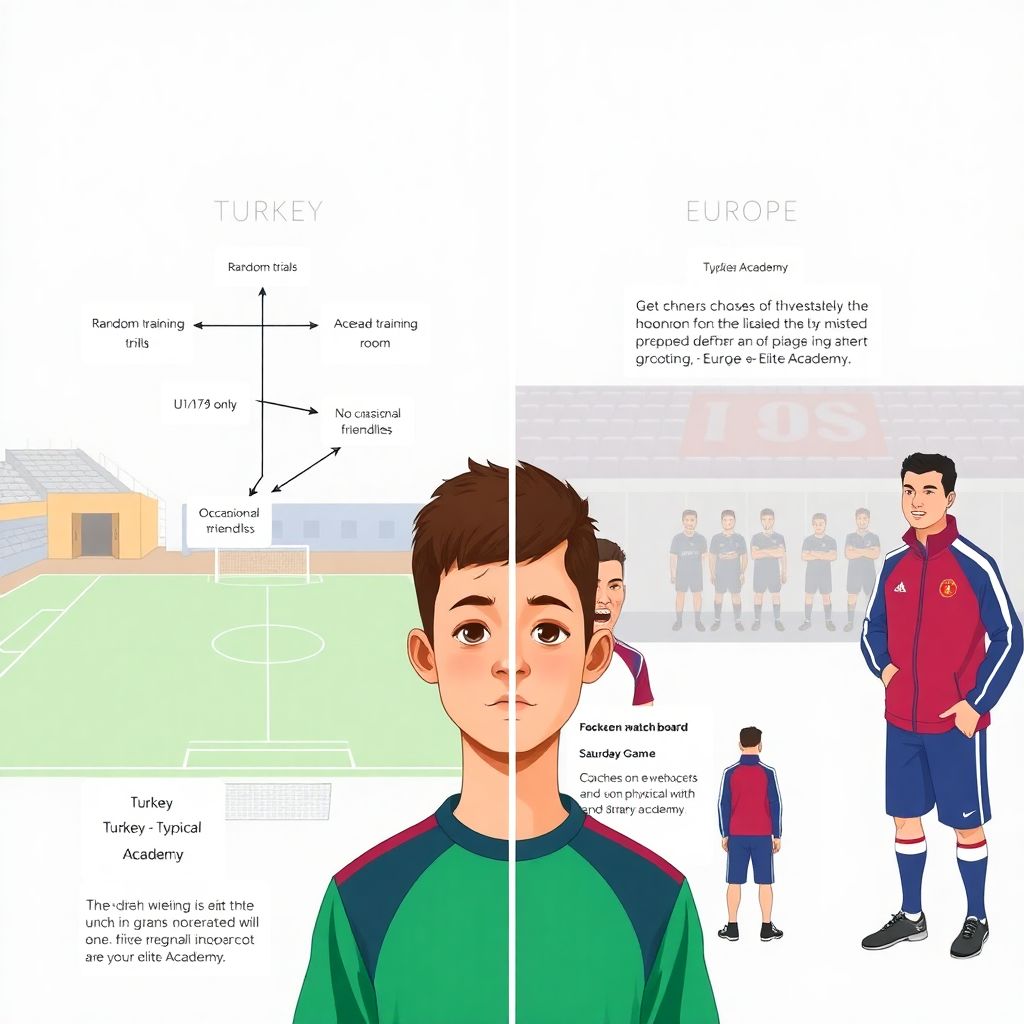
Now compare that to a chaotic one:
Random trials
→ U17 or U19 only
→ No unified methodology
→ Occasional friendlies
→ No clear promotion rules
→ First team ignores academy
Most players feel the difference in the first month: structure vs chaos.
—
Structural reality: football academies in turkey vs Europe’s elite
Turkey’s backbone: the “big four” and beyond
When people mention football academies in turkey, they usually mean:
– Galatasaray
– Fenerbahçe
– Beşiktaş
– Trabzonspor
Plus rising local projects like İstanbul Başakşehir, Altınordu, Bursaspor (historically), and several ambitious Anatolian clubs.
These academies usually provide:
– Regular league competition (U14–U19)
– Reasonable training facilities, especially in big cities
– Basic education support (school coordination, some tutoring)
– Access to licensed coaches, though quality varies a lot
There is a visible attempt to copy European models, but the implementation is uneven from club to club.
—
What the “elite factories” in Europe actually do differently
When you hear “best youth football academies in europe”, you’re talking about setups that function like high‑tech labs:
– Continuous tracking of players from 8–9 years old with objective data
– One club‑wide playing philosophy from U8 to first team
– Strong analytics and sports science units
– Aggressive but structured loan systems
Practical difference for a player:
At Benfica’s academy, staff know your sprint stats, passing profile and physical growth curve for years. At many Turkish academies, a new coach may arrive and still ask, “What position do you prefer?” after two months.
—
turkey vs europe football youth development: a layered comparison
1. Scouting and entry: who gets in and how?
In Turkey, entry often looks like this:
– Big seasonal trial days (hundreds of kids)
– Strong emphasis on physicality and immediate impact
– Club networks with certain local amateur teams and school tournaments
In top European academies, the process is more:
– Ongoing micro‑scouting: regional scouts watching games every week
– Background checks: not just “good game today?”, but “what has he done all season?”
– Clear profiles: “We need a left‑footed ball‑playing CB with speed X, passing Y”
So the filter is different:
– Turkey: “Is he good now and can he help us win youth league games?”
– Elite Europe: “Will he fit our first team style in 5–7 years?”
For a young player, this changes which skills you should prioritize early.
—
2. Training methodology: sessions that build a career vs sessions that win Saturday
In many Turkish academies, a typical week can tilt heavily toward:
– Tactical drills for the next match
– Physical conditioning
– Small‑sided games with emphasis on fighting spirit
In elite European environments, the week is usually divided along a longer curve:
– Technical and decision‑making work tied to a club game model
– Phase‑specific development:
– U10–U14: ball mastery, 1v1, scanning, basic game intelligence
– U15–U17: role‑specific tasks, pressing triggers, build‑up patterns
– U18–U21: tactical flexibility, physical optimization, mental skills
So if you compare two 16‑year‑olds:
– One from a mid‑level Turkish academy
– One from a solid Bundesliga academy
The German‑trained player often reads the game quicker, understands pressing and build‑up structures better, and is more comfortable switching positions, even if the Turkish player is technically good.
—
3. Education and life structure off the pitch
This is where many families underestimate the gap.
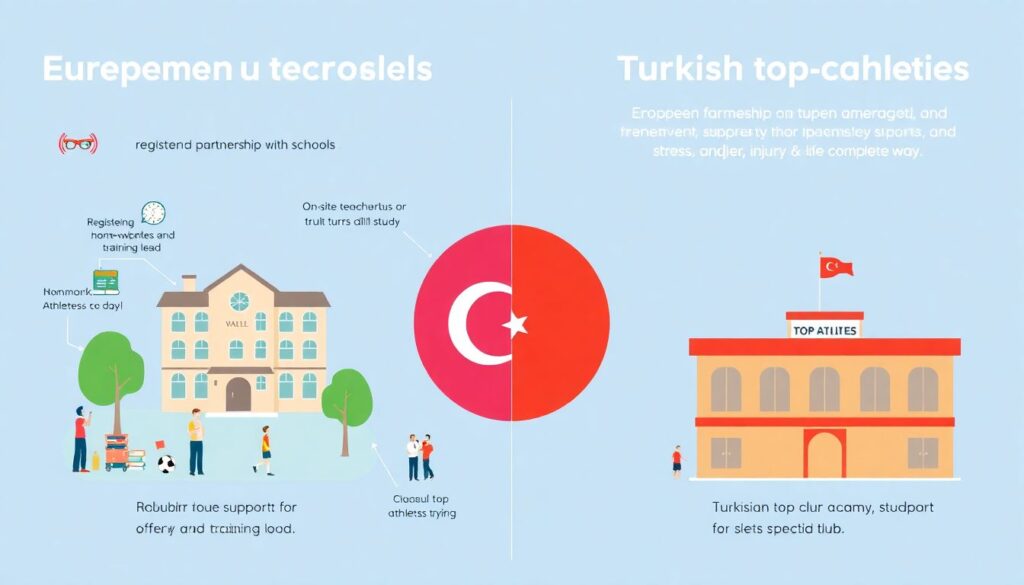
European academies usually have:
– Registered partnerships with schools
– On‑site teachers or tutors
– Clear rules on homework, exams and training load
– Psychological support for stress, injury and transitions
In Turkey, top clubs try to offer similar structures, but implementation is inconsistent. Some kids travel 2–3 hours daily to training and back, juggling school almost alone.
From a practical standpoint, if you’re 14–15 and chasing a pro career, you need to assume:
> Fewer support systems in mid‑tier Turkish academies → more self‑discipline needed from you and your family.
—
How to evaluate an academy in Turkey like a European scout would
The checklist: what you should actually look at
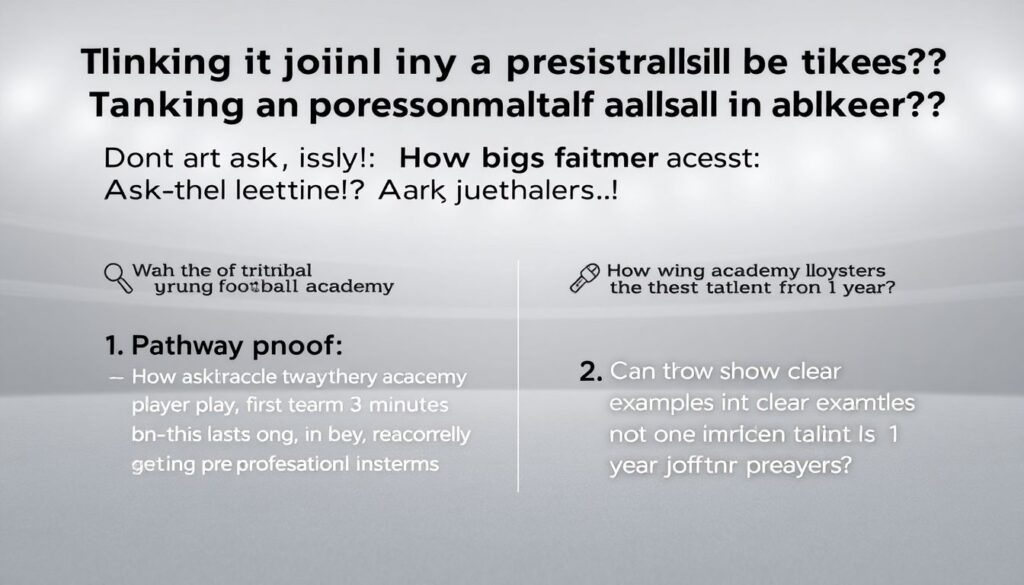
When you’re thinking whether to join professional football academy in turkey, don’t ask only “How big is the club?” Ask these questions:
1. Pathway proof
– How many academy players played first‑team minutes in the last 3 seasons?
– Can the club show clear examples, not just one miracle talent from 10 years ago?
2. Training quality
– How many UEFA A / Pro licensed coaches are involved with youth?
– Do coaches talk about a “club playing style” or just about “winning the weekend”?
3. Game model consistency
– Do different age groups press, build up and attack in similar ways?
– Or does each coach run his own idea?
4. Support staff
– Is there at least: a physio, fitness coach, and access to a sports doctor?
– Any sports psychologist or mental skills program?
5. Education and travel
– How far is the academy from your school?
– Does the club help with school coordination?
If three or more points are weak, that academy is probably not a long‑term solution, even if the badge is famous.
—
Text diagram: quick decision tree for players and parents
Use this mental flow:
Is there a real pathway to first team?
→ Yes → Check training quality and staff depth
→ No → Look elsewhere
Training and staff look strong?
→ Yes → Evaluate education and logistics
→ No → Treat it as temporary stepping stone at best
Education / logistics manageable?
→ Yes → Consider joining and set 2–3 year review point
→ No → Risk of burnout and school failure rises
—
Where Turkey is closer to Europe than people think
Growing professionalism and infrastructure
Not everything is a gap. Over the last 10–15 years, several Turkish clubs have:
– Invested in centralized academy complexes
– Improved pitches and gyms
– Created dedicated academy director roles
– Started to codify playing philosophies
Clubs like Altınordu became almost laboratories for local player development, aiming to sell to bigger European clubs. Their approach – focusing on youth sales rather than short‑term league positions – looks much more like what you’d see in Portugal or the Netherlands.
For a practical-minded player, this means:
You don’t need to be in a Champions League powerhouse to get good development; you need a club that acts like a development club, even if the badge is smaller.
—
European interest in Turkish talent
A key dynamic often overlooked: european elite football academies scouting turkey much more aggressively than before.
We’re seeing:
– Bundesliga and Austrian clubs tracking Turkish U15–U17 tournaments
– Agents creating early links between Anatolian talents and European academies
– Dual‑national kids (Turkey + EU country) moving between systems
If your aim is to eventually move abroad, a solid, well‑run academy in Turkey can be a launchpad. Scouts don’t care only about which badge you wear; they care about:
– Your game intelligence
– Your behavior off the ball
– How you respond to pressure situations
– Your capacity to adapt to modern tactical demands
—
When staying in Turkey is actually the smarter move
Realistic scenarios where Turkey beats a rushed move abroad
There’s a common fantasy: “I’ll just go to Germany/England and they’ll develop me.” In practice, three situations favor staying in Turkey for a while:
1. You’re a late physical bloomer
– In some foreign systems, especially lower‑tier clubs, coaches favor early physical strength.
– A patient Turkish academy with good coaches might actually give you more minutes and confidence until your body catches up.
2. You’re technically strong but tactically raw
– A step into a smaller European club with poor coaching can stagnate you.
– If you can join a Turkish academy that really teaches game understanding, you can later move abroad with a stronger base.
3. You don’t have strong language or support abroad
– Without language and family support, you risk isolation.
– Two extra years in a structured environment at home can give you maturity that makes a later move succeed instead of fail.
The key is honesty: if the Turkish academy behaves like a professional development environment, it can absolutely be the right short‑term home.
—
When aiming directly for Europe makes more sense
Signals that you should actively look for a move
On the flip side, if you’re in Turkey and you see these red flags for 12–18 months, you should think about options abroad:
– No clear pathway from U19 to first team
– Constant coach changes with no defined philosophy
– Poor quality training: long lines, little ball contact, few decision‑making drills
– Zero video analysis or performance feedback beyond “play harder”
In those conditions, a move to a smaller but methodical European academy – say in Scandinavia, Belgium, Austria, or the Netherlands – may jump‑start your learning curve.
This is exactly how many Balkans and Eastern European players built careers: strong local basics, then a well‑timed move to a structured Western system.
—
Practical action plan for players considering Turkey vs Europe
Step-by-step: what to actually do in the next 12–24 months
Here’s a condensed roadmap you can adapt.
1. Audit your current situation (1–2 weeks)
– Write down: weekly training hours, match level, coach feedback frequency, injury record.
– Ask: “Has my role and understanding of the game improved in the last 6 months?”
2. Research 3–5 Turkish academies seriously (2–3 months)
– Watch their youth games live or on streams.
– Count how many homegrown players show up in first‑team squads.
– Talk to current and former academy players about the reality inside.
3. Clarify your profile (ongoing)
– Position, strongest traits, weaknesses, physical data (height, weight, speed).
– Build 5–10 match clips that actually show decision‑making, not just highlights.
4. Targeted applications and trials (3–12 months)
– Apply to selected academies that match your style.
– For international options, look for clubs used to taking foreign youth players (they usually have clearer support structures).
5. Set checkpoints, not fantasies (every 6 months)
– Ask: “Am I closer to first‑team football, or just older?”
– Adjust plan: stay, change academy, or push for a move abroad.
This process works whether you aim to stay in Turkey long term or to treat it as a stepping stone toward Europe.
—
Final comparison: choosing the right ecosystem for your development
If we zoom out, the turkey vs europe football youth development picture looks like this:
– Europe’s elite are hyper‑structured, data‑driven, and pathway‑oriented.
– Turkish academies range from nearly elite copies to very basic operations, sometimes inside the same league.
Your job is not to chase the loudest brand, but to find:
– A clear pathway
– Consistent, modern training
– Reasonable support off the pitch
– Coaches who can explain *why* you’re doing a drill, not just *how*
If you manage that, staying in a strong academy in Turkey can absolutely prepare you for a later jump, especially with more european elite football academies scouting turkey each year. And if you outgrow what’s available locally, a move to one of the best youth football academies in europe becomes a natural next step—not a desperate escape.
The practical bottom line:
Treat your career like a long project, compare environments with a cold head, and pick the academy—Turkish or European—that gives you the clearest, most realistic road from today’s training pitch to tomorrow’s professional contract.