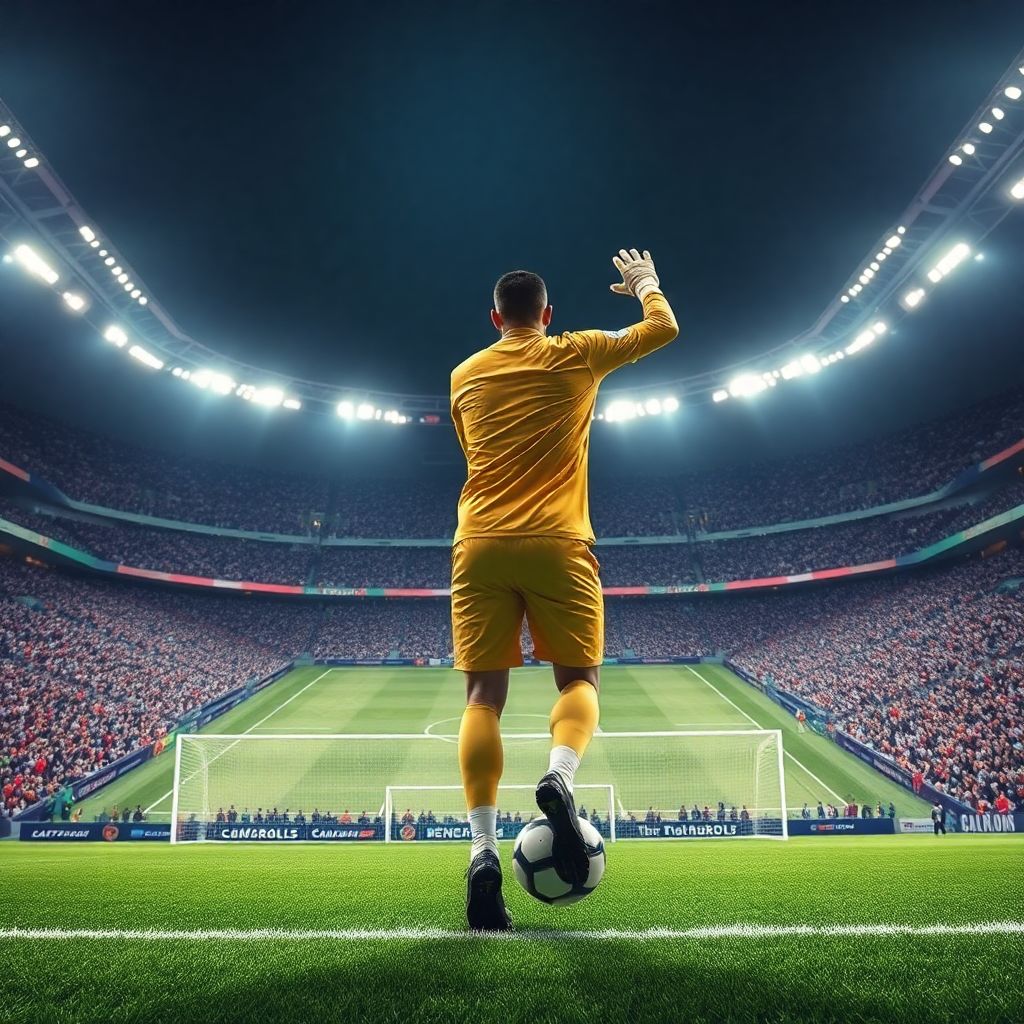
Sweeper-Keeper Revolution: Why This Role Matters Now
What Exactly Is a Sweeper-Keeper?
The sweeper-keeper is a goalkeeper who actively defends the space *behind* the back line, not just the goal line. Instead of waiting on the line for shots, they step high, intercept through balls, start counters and help their team build from the back. Think of it as a hybrid between classic keeper and defender. In modern football, this role is less about showy dribbles and more about reading the game, angles, timing and calm passing under pressure.
—
How Europe Redefined the Goalkeeper
From Shot-Stoppers to Playmakers
In Europe, the trend started when high pressing systems demanded one extra player in the first build-up line. Coaches like Guardiola, Klopp и Nagelsmann pushed keepers to join possession. The best modern goalkeepers in Europe now get judged not only by saves, but by line-breaking passes, defensive actions outside the box and decision quality in tight spaces. If ten years ago a risky pass was a crime, now not being able to play short is often a transfer red flag.
—
Turkey’s Take on the Sweeper-Keeper
Tactical Shift in the Turkish Super Lig
Turkey picked up the trend later but very actively. High-tempo, transition-heavy games in Istanbul and beyond forced keepers to leave the line more often. When you look at Turkish Super Lig goalkeeper stats over the last seasons, you see clear growth in passes received, touches outside the box and long distribution attempts. Clubs chasing European competitions demand keepers who can handle pressing, command a high defensive line and still deal with aerial chaos typical for the league.
—
Core Skills of a Sweeper-Keeper
Reading the Game and Positioning
The first upgrade is not technical, it’s cognitive. A sweeper-keeper constantly scans: ball, opponents, teammates, free space. Instead of reacting late to through balls, you start moving *early*, shortening the distance and closing angles. Good starting positions are usually a few meters higher than traditional keepers, but adjusted to the speed of your defenders and the opponent’s runners. Newcomers often step up blindly; pros move with micro-adjustments every second.
—
How to Train: From Basics to Advanced
Designing Effective Sweeper Keeper Training Drills
Good sweeper keeper training drills combine passing, pressing and depth control. Simple example: coach plays balls behind a high defensive line, you decide whether to sweep, stay or force the striker wide, then immediately start a counter-pass. Add constraints: one-touch clearances, weaker foot only, or a mandatory short pass after interception. The key is repetition with changing scenarios, so your decisions become automatic rather than heroic gambles that work once in ten.
Learning from Goalkeeper Coaching Courses in Europe
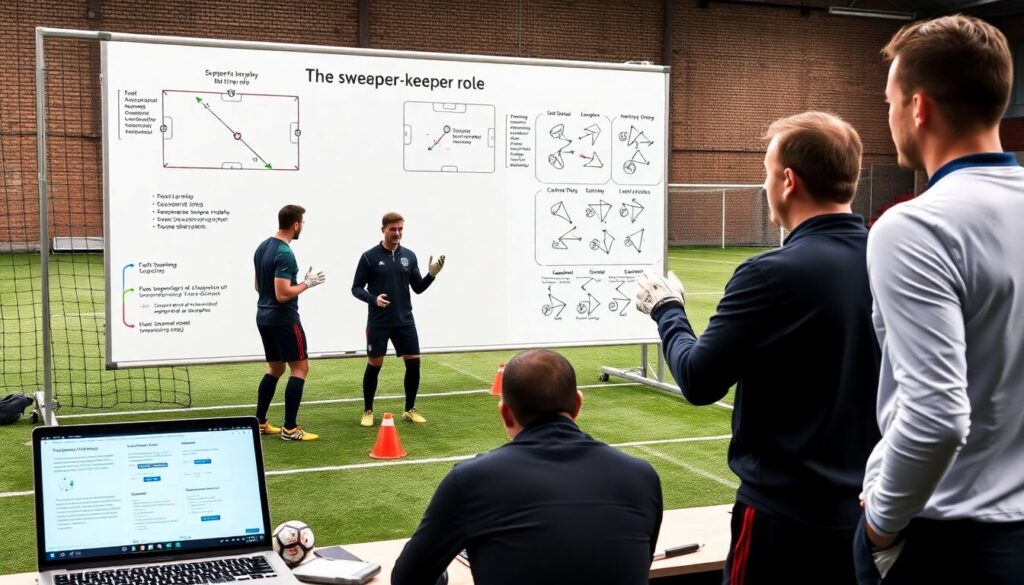
Many goalkeeper coaching courses in Europe now include modules dedicated specifically to the sweeper role: support angles in build-up, communication with centre-backs, and decision “trees” in transition. Even if you can’t attend physically, follow their curricula, webinars and session examples. Notice how they integrate the keeper into full-team tactical work instead of isolating him or her in the corner doing only crosses and shots. That integration mindset is what you should copy in your own training.
—
Gear Matters: Gloves and Comfort
Choosing Goalkeeper Gloves for Sweeper Keepers
For an active sweeper-keeper, gloves aren’t just about shot-stopping grip; they must also support clean passing and quick handling on the ground. When you’re constantly receiving back-passes and playing firm, driven balls, bulky gloves can slow your wrist action. Look for goalkeeper gloves for sweeper keepers with a snug cut, stable wrist support and durable palms that handle frequent contact with turf. Comfort in catching low through balls and fast throws is more important than looking flashy.
—
Frequent Beginner Mistakes (And How to Fix Them)
Tactical and Technical Errors
New sweeper-keepers often make the same set of errors. They push the defensive line too high without reading the opponent’s pace; they rush out on every long ball “just to prove” they are modern; or they insist on short passes when a simple long clearance is safer. Many also overdribble, turning simple clearances into risky showboating. Another classic problem: poor first touch under pressure, leading to panic and rushed kicks straight into midfield traffic.
Psychological and Communication Pitfalls
Mentally, beginners either fear leaving the line or become adrenaline junkies. Both extremes are harmful. Fear means you stay glued to the goal and arrive late to through balls; recklessness means red cards and empty-net goals. Communication is another blind spot: young goalkeepers often stay silent, expecting defenders to read their mind. In a sweeper role you *must* call line height, turn directions, “leave” or “keeper’s” early and loudly, otherwise your courage just confuses teammates.
—
Step-by-Step Path to Becoming a Sweeper-Keeper
Practical Roadmap for Players and Coaches
1. Stabilise basics
First, you need reliable handling, footwork and set-position. A sweeper-keeper without basic goalkeeping fundamentals is just a reckless defender. Work on classic catching, diving technique and 1v1 blocks.
2. Upgrade passing and first touch
Train receiving back-passes under light, then increasing pressure. Use both feet, different body orientations and targets. Aim for crisp, driven passes, not random clearances.
3. Train starting positions
In sessions, freeze play and check your height relative to the back line. Adjust based on ball location and opponents’ runners. Build a habit of tiny steps rather than big, late sprints.
4. Add decision-making games
Use small-sided games where you always play as an extra outfield player in build-up. Coaches should alternate triggers: sometimes you must stay, sometimes sweep, sometimes drop, so the keeper learns context, not just bravery.
5. Integrate match simulations
Recreate likely game scenarios for your league: counters, set-piece second balls, chaotic clearances. Video your actions and compare them to top models from European leagues. Over time, your choices will become calmer and more efficient.
—
Looking Ahead: Turkey and Europe Converge
Where the Role Is Heading
The gap between Turkish and Western European approaches is shrinking. Clubs in Istanbul, Ankara and Trabzon now study models from the Champions League and adapt them to local realities. With data analysis, video and higher standards for keepers, the revolution is no longer a trend; it’s a baseline. If you’re starting today, understand: you’re not just a shot-stopper. You’re a defender, a playmaker and a leader rolled into one – and your evolution is central to how modern football is played.