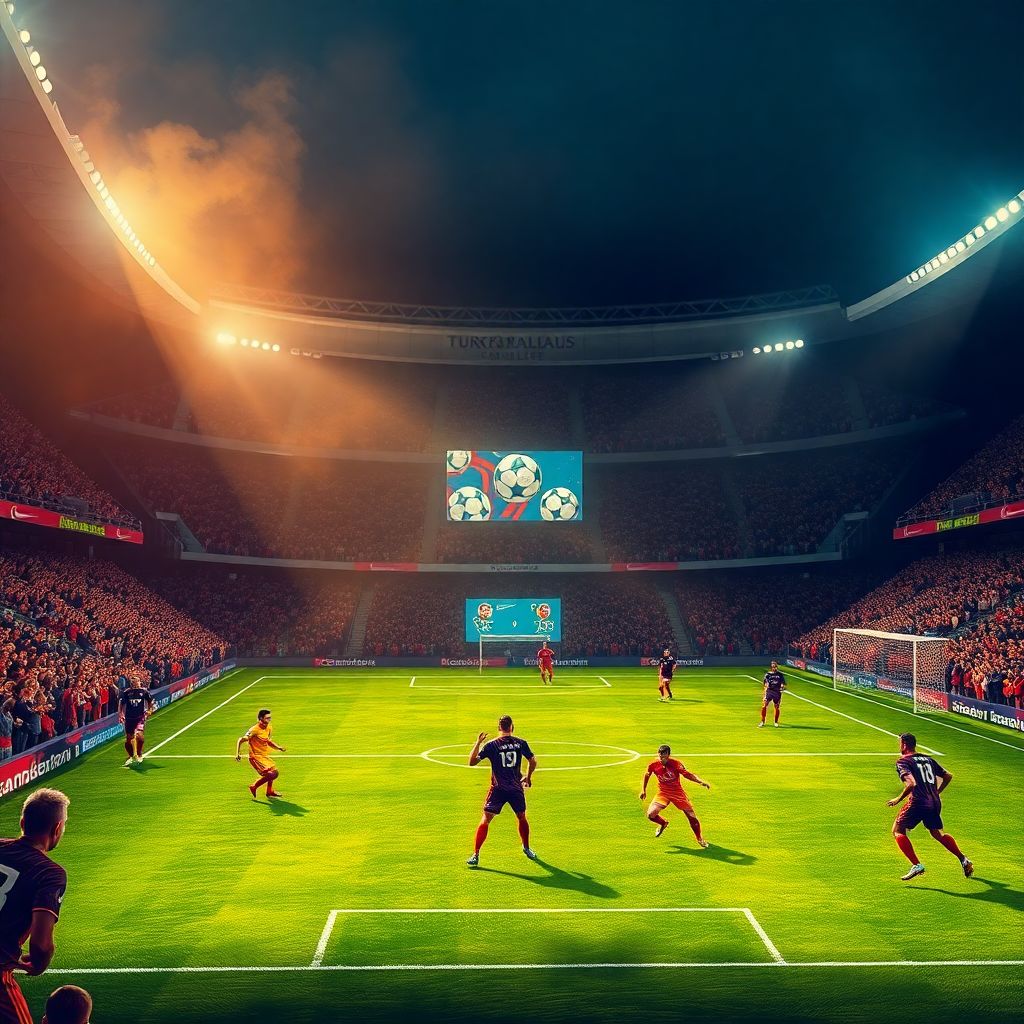
Context: why “building from the back” matters in Turkey
If you watch a random Süper Lig game on a Sunday night, you’ll notice something: a lot of teams still treat the first pass from the goalkeeper as a way to get rid of danger, not as the start of an attack. Yet the league also imports coaches and players raised on Guardiola style football tactics, where every goal kick is a mini‑chess problem. That collision of ideas is exactly why the question “are Süper Lig teams ready for building from the back?” is so sharp. The league has the technical players, noisy stadiums, big‑club pressure and a chaotic tempo that punishes bad decisions. Playing calmly out of the back in that environment is less about fashion and more about whether you can control games instead of surviving them for ninety minutes.
On paper, Turkey should be a great lab for this style: technically gifted No. 10s, ball‑playing full‑backs, and clubs desperate for European visibility. But the culture of patience on the ball is still catching up with the ambition.
Super Lig tactical analysis: what the numbers actually say
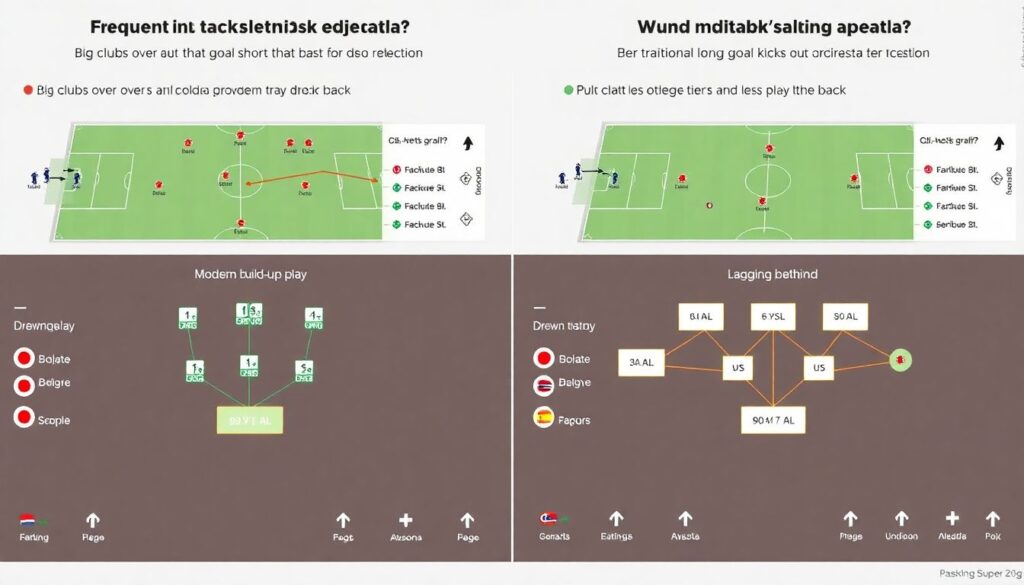
Look at any recent Super Lig tactical analysis based on tracking data and a pattern pops out. Big clubs have dramatically increased short goal kicks and structured restarts over the last three to four seasons, while mid‑table teams lag behind. Roughly speaking, only a minority of sides try to build consistently through the first phase; the rest mix it with a heavy dose of long balls, especially under pressure or when protecting a lead. Pressing intensity has gone up, but pressing coordination hasn’t always kept pace, which is why you see so many chaotic turnovers near the box. When top teams try to construct attacks from deep, they often look brilliant for two or three passes, then lose clarity and default to a hopeful diagonal. The data tells a simple story: the intent to build is growing, but the execution is patchy and highly opponent‑dependent.
Defensively, many coaches still prefer mid‑blocks, which paradoxically makes it easier to experiment with playing out, but also hides structural weaknesses that appear in European matches.
Guardiola style football tactics vs Süper Lig reality
Guardiola’s model is brutally demanding: the goalkeeper must act as an extra centre‑back, the centre‑backs must be comfortable defending 40 metres of open space, and midfielders need to offer constant passing angles under pressure. In the Süper Lig, you often get this system in “demo mode”. Teams copy the shape but not the underlying detail. Centre‑backs split, full‑backs push high, the No. 6 drops, it looks like Manchester City for two seconds… and then the goalkeeper chips a 50‑metre ball to a marked winger. Or worse, the pivot receives with his back closed to the pitch and gets tackled from behind because he has no pre‑scan habit. The reality is that the league’s tempo, media pressure and frequent coaching changes punish half‑baked versions of positional play. Clubs want the style and the status it brings, but don’t always invest in the boring repetition needed to make it safe.
From the stands it can look like “the system doesn’t work in Turkey”, but often it’s just not applied with enough discipline or patience.
Frequent beginner mistakes when building from the back
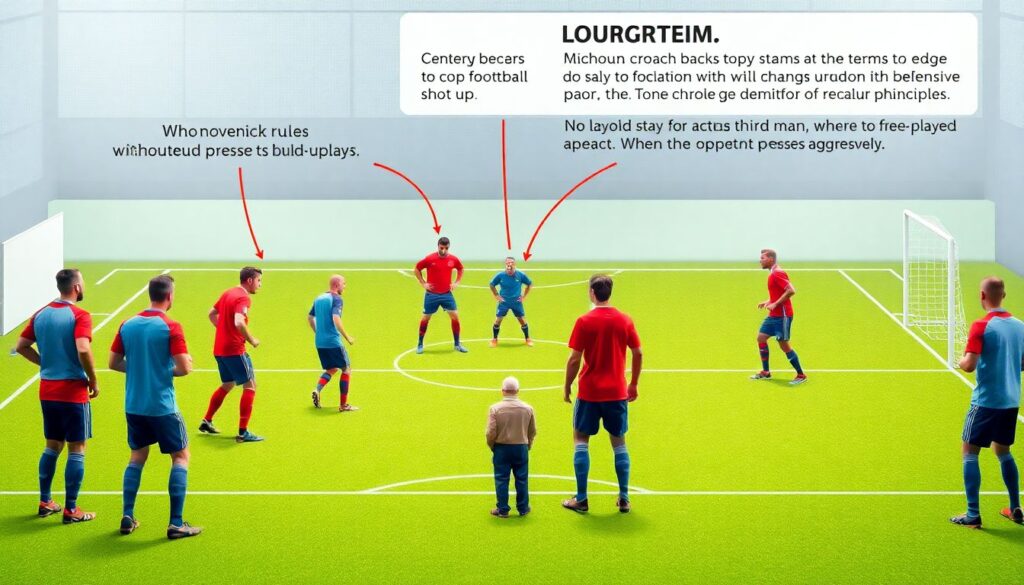
The first big beginner mistake is copying the shape, not the principles. Young coaches put centre‑backs on the edge of the box and tell the keeper to pass short, but they never define clear rules: who offers the third man, where the free player usually appears, how to react if the opponent jumps with three forwards. Players learn patterns, not just positions, and those are often missing. The second typical error is mis‑casting players. A goalkeeper with shaky first touch is suddenly asked to thread passes through a press; a physically dominant but stiff centre‑back is told to dribble into midfield. When it fails, the conclusion is “Turkey isn’t ready for this”, instead of “our squad isn’t built for this yet”. The third trap is skipping the risk‑management part. Elite sides know exactly when to abandon the short build‑up and hit long to reset; beginners confuse bravery with stubbornness and keep forcing short passes even when the press has completely locked them in.
Another common flaw: training only the “ideal” scenario. In matches, sequences are messy; if you’ve never rehearsed bad touches, deflections and half‑clearances, panic appears the first time the pattern breaks.
Coaching and player development: from theory to training pitch
To make building from the back normal rather than risky, you need a coherent playing out from the back coaching plan that runs from youth teams to the first XI. In many Süper Lig academies, defenders are still judged mainly on duels and clearances, not on line‑breaking passes or body orientation when receiving. So you end up with 23‑year‑old centre‑backs who are tactically mature in defending the box but “late starters” in possession play. The good news is that methodology is slowly changing: more clubs hire analysts, use drone footage, train small‑sided games with strict positional rules and introduce simple build‑up automations like “if the full‑back is pressed, the near‑side eight sprints wide and the winger inverts.” The key is incremental difficulty. Start with unopposed rondos, then add passive, then active pressing, and finally scenario‑based drills that mimic real match chaos. Without that graded ladder, players feel exposed and revert to safety under pressure.
Communication is just as vital: keepers and centre‑backs need common vocabulary—“set”, “turn”, “back foot”—so they can solve problems with one shout instead of three panicked touches.
Economics: how possession football changes club finances
There’s also a money angle that clubs can’t ignore. Centre‑backs and goalkeepers comfortable in structured build‑up carry a transfer premium across Europe, and Turkish sides are increasingly aware of this. A defender who can survive in high‑pressure Süper Lig stadiums while initiating attacks is easier to sell to Bundesliga or Premier League buyers than a pure stopper. Developing that profile in‑house instead of importing it saves transfer fees and creates assets. However, the economic risk is real: to install a possession game, you often need to replace key spine players—keeper, centre‑backs, pivot—which is expensive and takes time. If results dip during the transition, broadcast and prize money suffer. That’s why some presidents demand “Guardiola ball” cosmetically—one or two short passes, then long—without committing to the full squad rebuild. The trade‑off is clear: either accept a medium‑term dip to raise the squad’s technical ceiling, or stay pragmatic and limit resale potential.
Sponsorship value ties in as well; clubs that play attractive, recognisable football are easier to market abroad, especially via streaming and social media highlight culture.
Future scenarios and wider industry impact
From a broader Turkish Super Lig football analysis perspective, the shift toward controlled build‑up is going to reshape not just tactics, but the entire ecosystem. Agents will push ball‑playing defenders into the league because they know coaches now value them; academies will adjust scouting profiles towards technically secure centre‑backs and press‑resistant midfielders; even lower‑division clubs will copy training methods to keep up. Refereeing standards and pitch quality will quietly become strategic issues—modern possession based football tactics are much harder to execute on uneven winter surfaces and with lenient protection for goalkeepers under pressure. Looking five to seven years ahead, the teams that commit early, align recruitment with game model and tolerate short‑term turbulence are likely to dominate both domestically and in European qualifiers. The rest will still occasionally upset bigger sides with intensity and transition, but the structural gap in control and resale value will keep growing.
In simple terms: the league is moving towards building from the back whether everyone is ready or not; the real choice for clubs is whether they want to lead that change or chase it from behind.
Комментарии