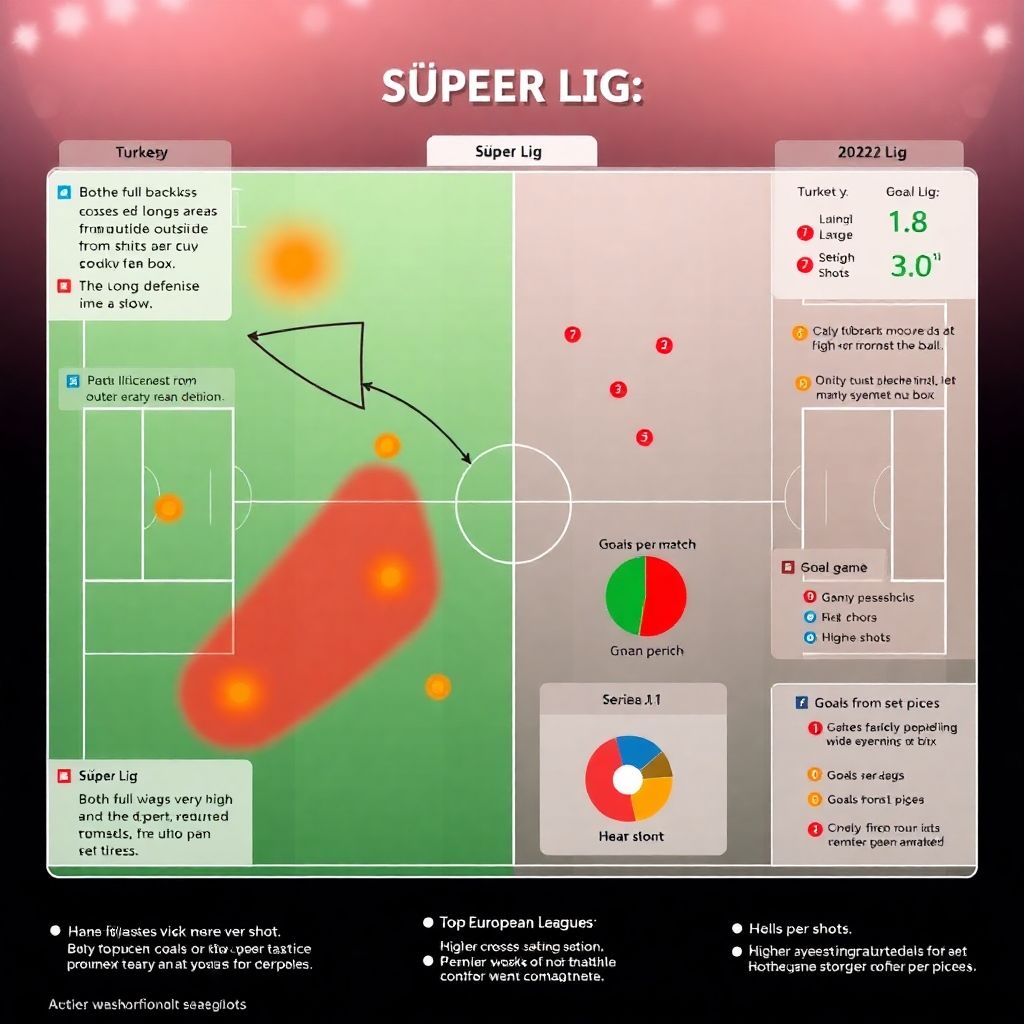
Most fans can feel that Turkish football “looks” different from the Champions League elite—but putting that into clear tactical language is trickier. Let’s turn that intuition into a structured, evidence‑based comparison of Süper Lig managers and top European coaches.
Below is a practical, semi‑“how to” guide: what tools you need, a step‑by‑step process to compare styles, where the numbers point over the last three seasons, and how to avoid the usual analytical traps.
—
Framing the Tactical Question: What Are We Actually Comparing?

Before diving in, it helps to define the core question:
Are Süper Lig managers really more reactive and emotion‑driven than their European counterparts, or is that just a stereotype created by noisy stadiums and spicy touchline interviews?
To unpack this, we’ll mostly compare the Turkish Süper Lig (2021‑22, 2022‑23, 2023‑24 seasons) with the “Big 5” European leagues (Premier League, La Liga, Bundesliga, Serie A, Ligue 1). Data is based on public sources available up to mid‑2024, so anything labeled “last three years” refers to those seasons, not 2024‑26.
—
Necessary Tools for a Serious Comparison
1. Data Sources (Stats, Not Vibes)
To go beyond gut feelings, you need numbers. At minimum:
– Event data: shots, passes, xG, pressing metrics from providers like Opta, Wyscout, StatsBomb or FBref.
– Tracking data (if possible): player positions and movement, at least for big games.
– Public dashboards: Understat, FBref, and various fan‑made models help if you don’t have paid access.
Even for a conversational turkish super lig tactics analysis vs europe comparison, you need to see if perceptions of “chaos” and “romantic attacking” show up in metrics like goals per game, PPDA, and possession.
2. Video and Software

Data tells you *what* happens; video tells you *how* and *why*.
– Full‑match replays for context (not just highlight reels).
– Simple video‑analysis tools (even free ones) to draw lines, zones, and freeze frames.
– Spreadsheet or Python/R notebook for basic calculations and visualizations.
You don’t need a professional scouting room, but you do need something more than Twitter clips.
3. Conceptual Tools: A Shared Tactical Vocabulary
To compare philosophies coherently, you should be consistent with terms:
– Pressing intensity: PPDA, defensive height, press triggers.
– Build‑up structure: 3+1, 2+3, “rest defense,” use of the goalkeeper.
– Chance creation: crosses vs cutbacks, central overloads, set pieces.
– Defensive strategy: mid‑block vs high press vs low block.
Many modern football coaching courses Europe vs Turkey now explicitly teach these frameworks, which makes it easier to line up a Süper Lig coach with, say, Xabi Alonso or Guardiola on the same conceptual map.
—
Step‑by‑Step Process: How to Compare Tactical Philosophies
1. Pick Comparable Teams and Coaches
Don’t compare a relegation struggler in Turkey with Manchester City.
For each of the last three seasons, choose:
1. 2–3 top Süper Lig teams (title contenders, usually in Europe).
2. 2–3 “peer” European clubs: similar budget or competition level (Europa League/Conference League sides).
3. Identify the main coaches and their tenure to avoid mixing different regimes.
This already cleans up a lot of noise.
2. Look at Macro Numbers First
Over 2021‑22 to 2023‑24, several broad patterns stand out:
– Goals per game
– Süper Lig: generally around 2.8–3.0 goals per match.
– Big 5 average: closer to 2.7–2.9 (Premier League and Bundesliga on the higher side, La Liga lower).
The league’s attacking “feel” isn’t imagined; the numbers support it.
– Pressing intensity (PPDA)
– Top Süper Lig sides tend to have moderately aggressive pressing, but on average, the league’s PPDA is higher (i.e., less intense pressing) than the Bundesliga or Premier League.
– High‑pressing extremes—like Liverpool or Leverkusen—are rarer.
– Possession and build‑up
– Galatasaray, Fenerbahçe, Trabzonspor (depending on the coach) often sit in the 55–60% possession range domestically, but drop closer to 45–50% in Europe.
– By contrast, top European possession sides maintain 55–65% even in Champions League games.
So, Süper Lig title contenders often dominate the ball at home but morph into more reactive teams against European giants.
3. Dive Into Chance Creation and Defensive Structure
Once you have league‑wide context, pick 5–10 matches per team and track:
1. Where chances come from
Over the last three seasons:
– Turkish leaders still rely more on crosses and long shots than top European elites, which lean heavily on cutbacks, central combinations, and third‑man runs.
– In European competitions, Süper Lig clubs often see their shot quality (xG per shot) drop, even when shot volume looks similar.
2. Rest defense and transition control
In the Süper Lig, many sides push both full‑backs high simultaneously with just two players behind the ball. In the Big 5, top coaches usually insist on a 3+2 or 2+3 rest defense, giving them better control of counter‑attacks.
3. Set pieces
Turkish teams lean on set pieces heavily; the league consistently shows a high share of goals from corners and free kicks. That’s not uniquely Turkish, but it reinforces a pragmatic, high‑variance streak: if you can’t control phases, you attack restarts.
Across 2021‑24, the numbers show Süper Lig clubs conceding more transition chances per game than their top European counterparts—especially away and in high‑intensity fixtures.
4. Pair Numbers with Game‑State Context
A Süper Lig side chasing a win at home might launch endless crosses and throw numbers into the box, inflating shot counts and open‑play xG but also exposing them to transitions.
In European games, similar managers often:
– Drop deeper earlier when leading.
– Change from aggressive 4‑2‑3‑1 pressing to more conservative 4‑4‑1‑1.
– Swap an attacking 8 for a destroyer to protect the box.
Same coach, different risk profile because the opponent is stronger and the away goal context (before it was abolished) or knockout nature forces prudence.
This duality is a key philosophical difference: many top European coaches try to stabilize their game model regardless of opponent; several Süper Lig managers are more comfortable with big tactical swings from week to week.
—
What the Last Three Seasons Tell Us: Trends, Not Just Snapshots
1. 2021‑22: Chaos With a Purpose
In 2021‑22:
– Süper Lig had one of its higher scoring seasons of the decade.
– Defensive structure lagged behind attack: top sides posted strong xG for, but middling xG against.
– Pressing was selective, often triggered in specific zones or after backward passes, not a constant gegenpress like in the Bundesliga.
Tactically, you see:
– A lot of 4‑2‑3‑1 and 4‑1‑4‑1 shapes.
– Heavy use of experienced 10s and wide playmakers.
– Less obsession with strict positional play in the final third—players have more freedom to attack space instinctively.
2. 2022‑23: Gradual “Europeanization”
By 2022‑23, a few noticeable shifts:
– Leading Turkish clubs improved their build‑up patterns: more use of the goalkeeper, more 3‑man first lines in possession.
– Some PPDA values for top contenders edged closer to the aggressive pressing norms of mid‑table Bundesliga teams.
– European results were still mixed, but underlying metrics (xG difference, field tilt) were often less negative than raw scorelines suggested.
You can see influence from modern online course European football tactics for coaches and imported backroom staff: analysts from Spain, Germany, and the UK helping local staffs structure pressing traps and rest defense better.
3. 2023‑24: Divergence at the Top, Status Quo Below
By 2023‑24, there’s a tactical split:
– Top 2–3 clubs: increasingly structured, with:
– Preset build‑up automations.
– Clear roles for 6/8s in both presses and rest defense.
– More modern set‑piece routines borrowed from Europe.
– Mid‑table and lower clubs: still very results‑driven week to week; they switch from possession to deep‑block football based on opponent, with less coherent long‑term identity.
Compared with the Big 5, this gap is larger: in those leagues, even relegation‑threatened teams often have a strong tactical identity (e.g., aggressive pressing minnows or deep‑block counter teams with consistent principles).
—
Top European Coaches: What Makes Their Philosophies Different?
1. Obsession With Control
At the top European level, most elite coaches share a common obsession: control, especially without the ball.
– They aim to limit game volatility by:
– High rest‑defense numbers.
– Strict zone occupation.
– Calculated shot selection (fewer long shots, more box touches).
Over 2021‑24, top Champions League sides generally:
– Concede fewer shots per game and fewer big chances than domestic peers.
– Maintain similar tactical structures from league to Europe, adjusting less than Süper Lig teams do.
This is a philosophical stance: “We impose our model first, adapt second.”
2. Training Methods and Staff Depth
Elite European clubs back their philosophies with:
– Huge backroom staffs: analysts, data scientists, set‑piece coaches.
– Micro‑periodization of pressing drills and build‑up patterns.
– Continuous development via tactical analysis services for Super Lig clubs–style consultancies, but at a higher scale and budget.
Süper Lig clubs are catching up, but the resource gap is significant. Many Turkish teams now hire external analysts or short‑term consultants, yet they often rotate coaches so fast that philosophies don’t fully mature.
—
Doing Your Own Comparison: A Practical Workflow
1. A Simple 5‑Step Method
If you’re a coach, analyst, or just a curious fan, here’s a basic process:
1. Choose 2–3 Süper Lig coaches and 2–3 European coaches you want to compare.
2. Collect data from the last 30–40 matches for each coach: possession, PPDA, xG for/against, shot zones.
3. Watch at least 5 full matches per coach, mixing domestic and European fixtures where relevant.
4. Map their principles: build‑up structure, pressing approach, rest defense, chance creation patterns.
5. Write a short tactical profile for each, then look for common patterns and differences.
This is essentially a mini consulting tactical philosophy development for football clubs workflow, just in a simplified, DIY version.
2. What to Focus on in the Footage
When you watch games, ask:
– How many players stay behind the ball when attacking?
– What happens after they lose the ball in the final third?
– Are wide players more about 1v1s and early crosses, or about underlaps and cutbacks?
– Does the team’s behavior drastically change between league and European matches?
Answering these questions consistently will tell you more about philosophy than any pre‑match press conference.
—
Troubleshooting Your Analysis: Common Pitfalls
1. Mistaking Budget for Philosophy
If a Turkish side struggles in the Champions League, it’s easy to blame tactics alone. But:
– Wage bills and squad depth heavily shape what’s tactically feasible.
– A coach may *want* a high‑pressing game but not trust his back line in big spaces against elite forwards.
When comparing, always normalize expectations: a mid‑budget Süper Lig club losing to a top‑6 Premier League side is not a “philosophical failure” by default.
2. Overrating Short‑Term Results
Cup runs and single knockout ties are volatile.
– One red card or penalty can flip a tactical story.
– xG and shot quality over 20–30 matches reveal far more than a single two‑legged tie.
If your analysis leans heavily on 1–2 games, you’re reading narrative, not philosophy.
3. Language, Media, and Narrative Bias
European coaches are often framed as “professors” or “architects,” while Süper Lig coaches get cast as “motivators” or “firefighters.” A lot of that is narrative, not substance.
To counter this, ground your judgments in:
– Training‑ground evidence where available (interviews, open‑training clips).
– Consistency across seasons and teams.
– Measurable effects: pressing intensity, compactness, shot quality, transition control.
—
How Education and Consultancy Are Shaping Future Philosophies
1. Coaching Courses and the Convergence Effect
Over the last decade, the gap in theoretical knowledge has shrunk dramatically:
– UEFA‑licensed football coaching courses Europe vs Turkey share more and more content and lecturers.
– Turkish coaches increasingly spend time in European environments (internships, study visits, club exchanges).
– Analytical tools once reserved for big clubs are becoming standard in mid‑tier teams.
This doesn’t erase cultural differences, but it does mean that a young Turkish coach now speaks roughly the same tactical “language” as his counterparts in Germany or Spain.
2. Online Education and Niche Expertise
The spread of specialized education matters:
– An online course European football tactics for coaches can now break down, in detail, how Leverkusen’s rest defense works or how City structure their 3‑2 build‑up.
– Smaller Süper Lig clubs can contract tactical analysis services for super lig clubs on a project basis: opponent scouting in Europe, set‑piece redesign, pressing diagnostics.
All of this pushes the league toward more coherent, long‑term tactical thinking—if club boards give coaches enough time to implement it.
—
So, Where Do Süper Lig Managers Stand vs Top European Coaches?
1. Core Similarities
Across the last three seasons, the similarities have grown:
– Shared vocabulary: half‑spaces, rest defense, pressing traps, overloads.
– Increasingly structured build‑up and pressing from top Turkish clubs.
– More staff roles dedicated to analysis and transitions.
On paper, many top Süper Lig managers now design game models that wouldn’t look out of place in a mid‑to‑high‑level European club.
2. Persistent Differences
Yet some gaps remain:
– Risk tolerance: Turkish teams often accept higher game volatility—more transitions, more chaos—especially in domestic play.
– Stability of philosophy: frequent coaching changes disrupt long‑term tactical projects more in Turkey than at many peer clubs.
– Control vs emotion: crowd culture and club politics push coaches toward short‑term, emotionally charged decisions, sometimes at the expense of long‑term structure.
In other words: the knowledge and tools are converging, but the environment remains different—and that environment still shapes tactical philosophy in powerful ways.
—
If you want to go deeper, the best next step is to pick two clubs—one from the Süper Lig and one from a Big 5 league—and walk through the 5‑step method above using real matches. By forcing yourself to write down principles rather than just impressions, you’ll start to see very clearly where Turkish football is “catching up,” where it’s already on par, and where it deliberately chooses another path.