Setting the Scene: Passion at Home, Frustration in Europe
If you watch turkish football clubs in european competitions every season, the pattern feels painfully familiar. Big talk in August, crazy atmospheres in September, a heroic home win here and there… and then an early exit by winter.
The question practically asks itself: why do turkish teams fail in europe so consistently, despite massive fan bases, emotional stadiums and some genuinely talented players?
Let’s unpack this calmly and technically, but in plain language. We’ll define what we’re talking about, look at numbers and structures rather than just “passion” and “mentality”, and compare different approaches Turkish clubs have tried to fix the problem.
—
Key Terms – What Exactly Are We Talking About?
Before we go deep, it helps to align on a few terms. No jargon clouds, just clear meanings.
– European competitions – Primarily UEFA Champions League, UEFA Europa League, and the UEFA Europa Conference League. When we say *Europe*, we usually mean performance from the group stage onwards.
– Coefficient – A numerical rating UEFA uses to rank clubs and leagues, based on results over five seasons. Higher coefficients mean better seedings and more spots in tournaments.
– Sustainable model – A club strategy where costs (wages, transfers) are balanced over time by revenues (broadcasts, ticket sales, player trading, sponsorship), so the club doesn’t depend on constant bailouts or risky loans.
– High-intensity football – A style relying on fast transitions, pressing, running without the ball and structured collective movement, not just individual flair.
When we talk about the turkish super lig performance in uefa champions league, we’re mostly discussing group-stage and knockout-round results measured against these ideas.
—
A Quick Timeline: History of Highs and Lows
The history of turkish clubs in european cups is not just failure. There are peak moments that created high expectations:
– Galatasaray winning the UEFA Cup and UEFA Super Cup in 2000
– Galatasaray and Fenerbahçe reaching Champions League quarter-finals in different eras
– Beşiktaş’s unbeaten Europa League group campaign in 2016–17
But zoom out and those moments look like spikes on a flat line.
Imagine a simple text diagram of impact over time:
1990s:
`—–*——` (few deep runs, mostly mid)
2000–2002:
`———-***` (Galatasaray peak)
2003–2010:
`—–*–*—` (occasional runs, lots of early exits)
2011–2018:
`—-**–*-*-` (some progress, especially in Europa League, but no real European heavyweight status)
2019–2024:
`—*——–` (more inconsistency, drop in coefficients, Conference League appearances)
So the story isn’t “never good enough”. It’s “rare peaks, no sustained level”. The real question: why can’t that peak be repeated in a structured, predictable way?
—
Structural Problem #1: Financial Chaos vs. Strategic Planning
The Spending Trap
Many Turkish clubs chase quick success with short-term spending instead of long-term planning. The logic is simple: “We qualify for Champions League → we earn big money → we buy stars → we go further in Europe.”
But it often flips:
1. Take big loans and sign aging or overpriced players.
2. Fail to qualify for group stages or get knocked out early.
3. Revenues don’t match expenses → debt balloons.
4. Panic, change coach, repeat.
Contrast that with clubs like Porto, Benfica, or even Ajax. Their model:
– Buy younger players at reasonable prices
– Develop and showcase them in Europe
– Sell high, reinvest, repeat
In text-form diagram:
Short-term Turkish model:
`Loan → Big wages → Short contract → No resale value → Debt`
Sustainable model:
`Scouting → Development → European exposure → Big sale → Reinvest`
This mismatch directly impacts turkish football clubs in european competitions: underfunded squads, constant turnover and nervous boards don’t build teams capable of handling top-level intensity.
—
Different Solutions Tried – and Their Limits
Turkish clubs have tried several approaches:
– Big-name veteran signings (e.g., stars at the tail end of their careers)
– Frequent coaching changes to “shock” the team into better results
– Occasional youth projects that rarely last beyond one presidential term
Each has pros and cons:
– Veterans bring experience but often lack the physical edge needed for Europe.
– Coaching changes may give a short bounce, but kill tactical continuity.
– Youth projects feel great in theory, but pressure for instant trophies often crushes them.
The approach that works in stable European clubs is a hybrid:
– 1–2 experienced leaders
– 4–5 core players in peak age (24–29)
– A continuous stream of 2–3 academy or scouted youngsters integrated every season
Turkish clubs usually over-invest in the first category and neglect the last.
—
Structural Problem #2: Tactical Identity vs. Chaos
Domestic Football vs. European Reality
The Süper Lig often rewards something very different from what is needed in the Champions League. Domestically, big clubs can win many games through:
– Individual skill outshining opponents
– Slow tempo, especially away
– Home advantage and emotional pushes
In Europe, especially in the Champions League, the baseline is different:
– Higher tempo for 90 minutes
– More coordinated pressing and off-ball structure
– Opponents who punish half-mistakes instantly
This is where the turkish super lig performance in uefa champions league collapses. Teams built to dominate slower domestic games arrive in Europe and suddenly face:
`Faster transitions + Smarter pressing + Less space`
If your team is not drilled for these conditions weekly, the gap is brutal.
—
Comparing Tactical Approaches
Let’s compare three simplified approaches Turkish clubs have used when stepping into Europe:
1. Reactive, deep defending
– “Let’s park the bus and counter.”
– Works for one-off games; fails when the team can’t keep compact structure for long spells.
– Requires disciplined lines and coordination, which is hard when squads are rebuilt every summer.
2. Domestic-style domination
– “Play like at home: attack, attack, attack.”
– Leads to chaotic games; fun to watch, but leaves huge spaces for top European forwards.
– Looks brave but can be tactically naive.
3. Hybrid European style
– Adjust pressing height, manage tempo, prioritize compactness without abandoning attack.
– Requires a coach with time and backing to install detailed patterns.
The third option is what successful “smaller” European clubs (e.g., RB Salzburg, Porto, Sporting, Atalanta) have mastered.
Turkish clubs *start* seasons talking about this hybrid style, but panic results often trigger a return to option 1 or 2.
—
Case Study: Analysis of Galatasaray, Fenerbahçe, Beşiktaş in Europe
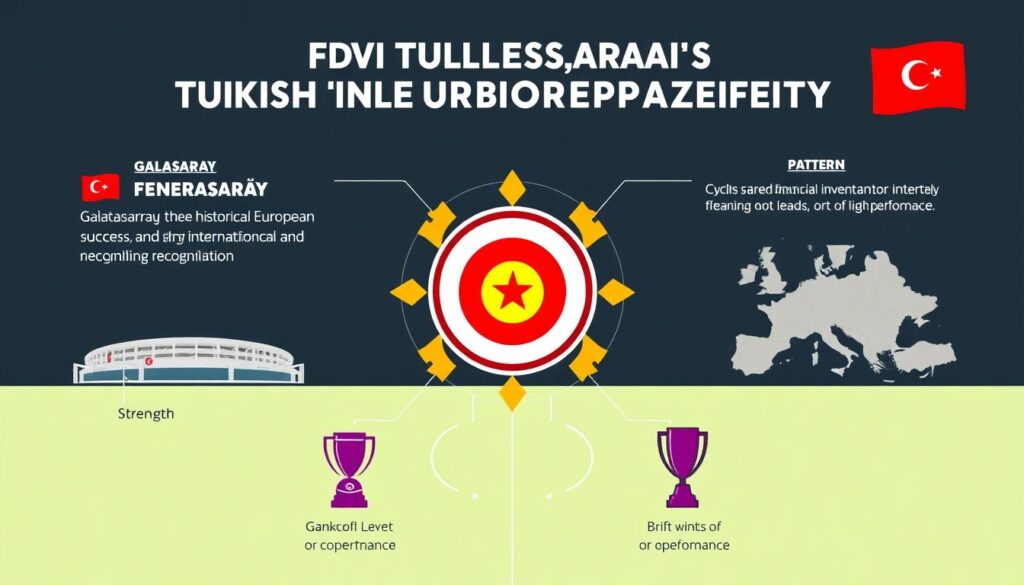
When people discuss problems, analysis of galatasaray fenerbahce besiktas in europe is unavoidable, because they represent the bulk of Turkey’s European identity.
– Galatasaray
– Strength: biggest historical European success; brand recognition.
– Pattern: cycles of heavy investment, short windows of competitiveness, followed by financial strain.
– Tactical habit: trying to combine ball control with direct attacks, but often switching style under pressure.
– Fenerbahçe
– Strength: huge fan base, strong commercial potential.
– Pattern: strong squads on paper, but internal politics and coaching turmoil.
– Tactical habit: changing coaches and philosophies too often to keep a stable European identity.
– Beşiktaş
– Strength: some of the best recent Europa League performances from Turkey.
– Pattern: one or two well-structured seasons, then wage inflation and over-aged squads.
– Tactical habit: occasionally modern, pressing-based football; difficult to sustain.
These clubs know how to create a big match atmosphere. But atmosphere doesn’t replace:
`Stable scouting → Coaching continuity → Physical preparation → Clear tactical identity`
Without that chain, even the “Big Three” can’t turn European appearances into consistent quarterfinal-level seasons.
—
Problem #3: Physical and Mental Preparation
Intensity and Conditioning
Modern European football is ruthless physically. Teams like Leipzig, Atalanta or even mid-table Bundesliga sides operate with:
– High sprint counts per game
– Relentless pressing cycles
– Minimal drop in intensity after 70 minutes
Many Turkish teams hit a visible wall around minute 60–70 in European games. Part of this is scheduling, part is training culture, part is squad age profile.
When you rely on older stars plus domestic players not used to such intensity, the outcome is predictable:
`Strong first half → Early second-half drop → Late goals conceded`
This is not about “lack of heart”. It’s about conditioning, squad building, and sports science.
—
Psychological Factors
There’s also the mental side. In the Süper Lig, big clubs are expected to win almost every week.
In Europe, they’re often underdogs. Some handle that freedom well; others panic when they don’t control the game.
Common patterns:
– Overreacting to referee decisions instead of staying focused.
– Losing shape after conceding once.
– Switching to long balls under minimal pressure.
Clubs that succeed in Europe treat each match like a process: stick to plan A, have a real plan B, don’t emotionally implode after setbacks. Turkish clubs often get dragged into emotional chaos instead.
—
Comparing Solutions: What Could Actually Work?
Approach 1: Double Down on Stars
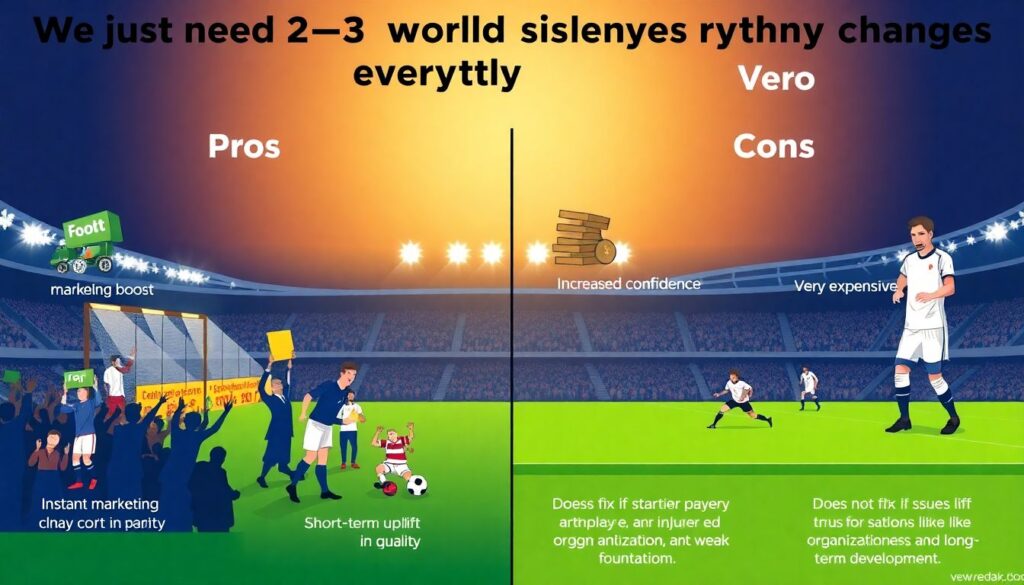
Some argue: “We just need 2–3 world-class players and everything changes.”
Pros:
– Instant marketing boost
– Short-term uplift in quality and confidence
Cons:
– Very expensive, especially with a weak currency
– High risk if star players are injured or unmotivated
– Does not fix structural issues like scouting, fitness or tactical training
Verdict: A short-lived sugar rush. Helps, but only *if* the foundation is already sound. Currently, it isn’t.
—
Approach 2: Full Rebuild Around Youth and Data
Another camp says: “Copy Porto, Benfica, Ajax, Brighton. Focus on data-driven recruitment, younger profiles and resale value.”
Key elements:
– Hire a strong sporting director with real authority
– Build a global scouting network (especially in undervalued regions)
– Use data to identify players who fit a high-intensity, modern style
– Accept that some seasons will be transitional
Pros:
– Financial sustainability
– Growing squad value
– Better physical profile for European games
Cons:
– Requires patience from fans and boards
– Domestic titles may be less frequent during early years
– Mistakes in the first phase can be costly and demoralizing
Verdict: This is the only approach proven to work *long term* across various leagues. But it clashes with the short-term culture of many Turkish clubs.
—
Approach 3: Hybrid Model Adapted to Turkish Reality
The most realistic solution is a hybrid between “star chasing” and “youth rebuild”, tuned to Turkey’s specific context.
This might look like:
– Keep 2–3 leaders with European experience and high professionalism, not just big names.
– Gradually lower the average squad age, year by year.
– Invest in sports science, analytics and coaching education as seriously as in transfers.
– Commit to a coach and a playing philosophy for at least 2–3 seasons, barring disaster.
In text diagram:
`Year 1: Clean up finances + define style`
`Year 2: Adjust squad profile (younger, fitter) + European qualification`
`Year 3: Compete in Europe with a stable core + sell smartly, reinvest`
This is not fantasy. Clubs in Portugal, Netherlands, Belgium and now even some in Scotland have followed similar paths and improved their results in UEFA competitions.
—
Role of Governance and League Structure
Finally, individual clubs don’t exist in a vacuum. League-wide issues matter:
– Refereeing standards and consistency
– Fixture congestion and pitch quality
– Financial Fair Play enforcement domestically
If the domestic league doesn’t reward:
– Long-term planning
– Youth development
– Financial responsibility
then clubs are constantly pushed toward quick fixes. Over time, that shows up as poor collective turkish football clubs in european competitions performance, not just one-off bad years.
—
So, Why Do Turkish Teams Fail in Europe – Summarized
Pulling everything together, the reasons are interconnected:
– Short-term financial strategy and high debt
– Lack of consistent tactical identity and frequent coaching changes
– Squads built for domestic dominance, not European intensity
– Insufficient investment in scouting, data and sports science
– Emotional and political pressure leading to reactive decision-making
And on the flip side, the pathways to improvement also connect:
– Move from star-chasing to a mixed model (leaders + young talent)
– Back a coach and a football philosophy over multiple seasons
– Align fitness work and recruitment around high-intensity football
– Improve league-level governance and reward sustainable behaviour
If Turkish clubs can shift the conversation from “one big signing” to “one coherent plan”, the next chapter in the history of turkish clubs in european cups doesn’t have to be another cycle of hype and heartbreak.
It can be a slow, steady climb toward being that annoying, well-organised team nobody wants to draw—then eventually, again, the one lifting a European trophy.
Комментарии