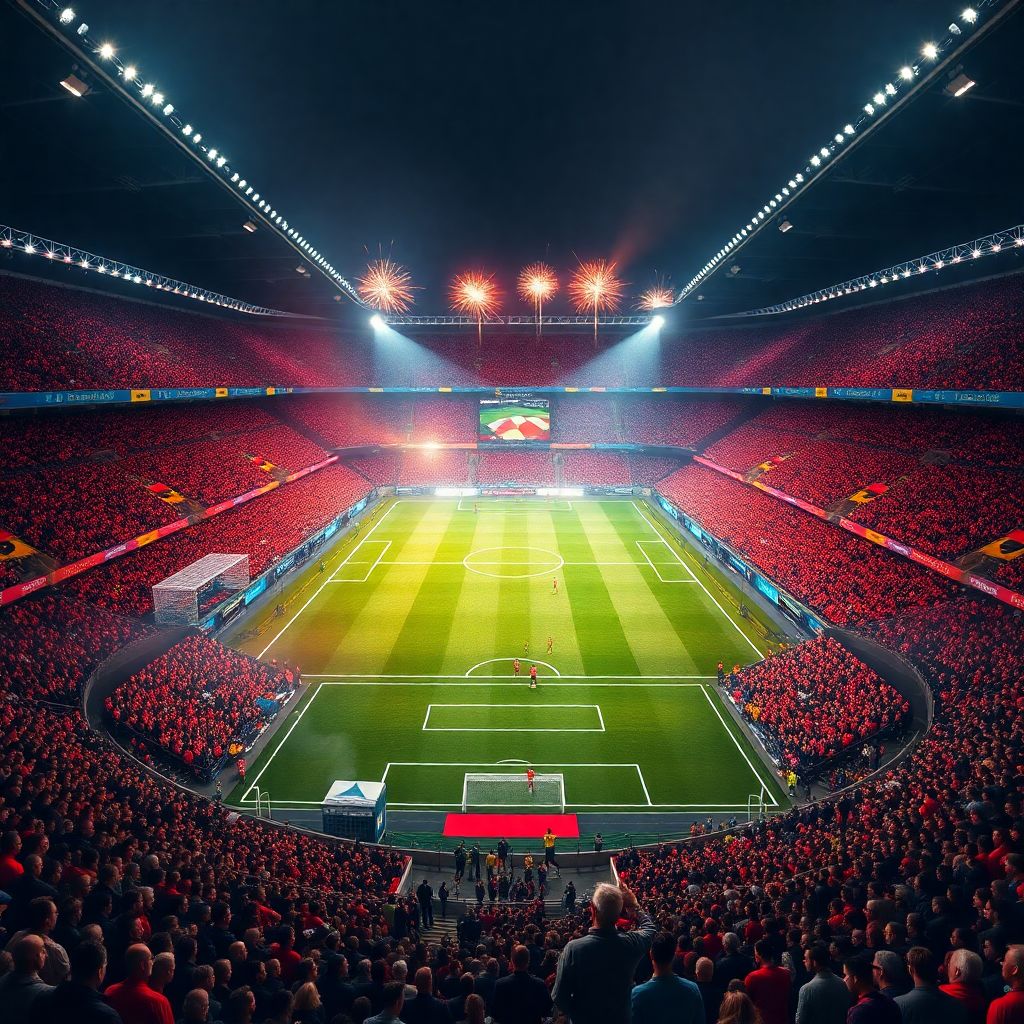
Tactical DNA of the Istanbul Derby
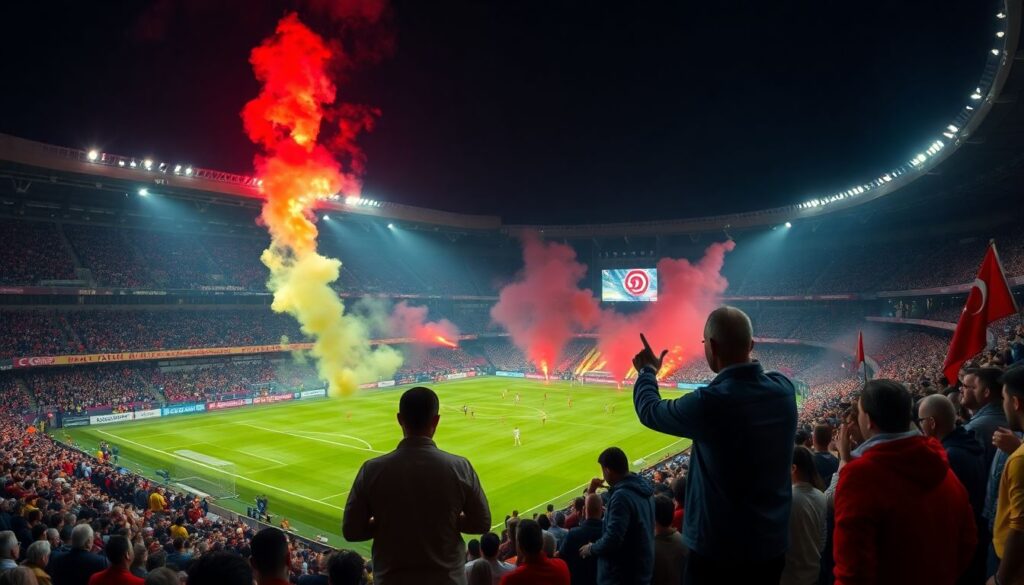
At first glance, Galatasaray vs Fenerbahce looks like chaos: flares, banners, non‑stop chanting. Underneath that noise lives a very precise tactical battle. Coaches arrive knowing that a single press trigger, a mistimed tackle or an emotional rush can flip the night. In pre‑match briefings, staff break down dozens of clips: how the rival full‑backs react under pressure, which centre‑back panics when pressed by a forward, who loses focus after conceding a foul. The crowd magnifies every error, so managers design gameplans that are simple enough to survive the storm but detailed enough to exploit microscopic weaknesses.
—
Pressing vs Control: Two Philosophies Collide
Historically, Fenerbahce often leaned toward aggressive pressing and vertical play, while Galatasaray tended to prefer controlled progression and patient possession, especially in recent eras. In derby weeks, these identities sharpen. One common scenario: Fenerbahce press high in the opening 20 minutes, hunting an early goal while Galatasaray tries to draw the press in, then break through the second line with quick combinations.
Real case: In the 2011–12 title decider at Türk Telekom Arena, Galatasaray were conservative with the ball, accepting long Fenerbahce spells of possession, yet defended in compact blocks. When transition moments appeared, they committed numbers forward in short, pre‑planned waves. The match finished 0–0, but Galatasaray “won the league in Kadiköy” thanks to that balance between patience and selective aggression.
—
Case Study: Kadiköy, 2012 – Defending Under Siege
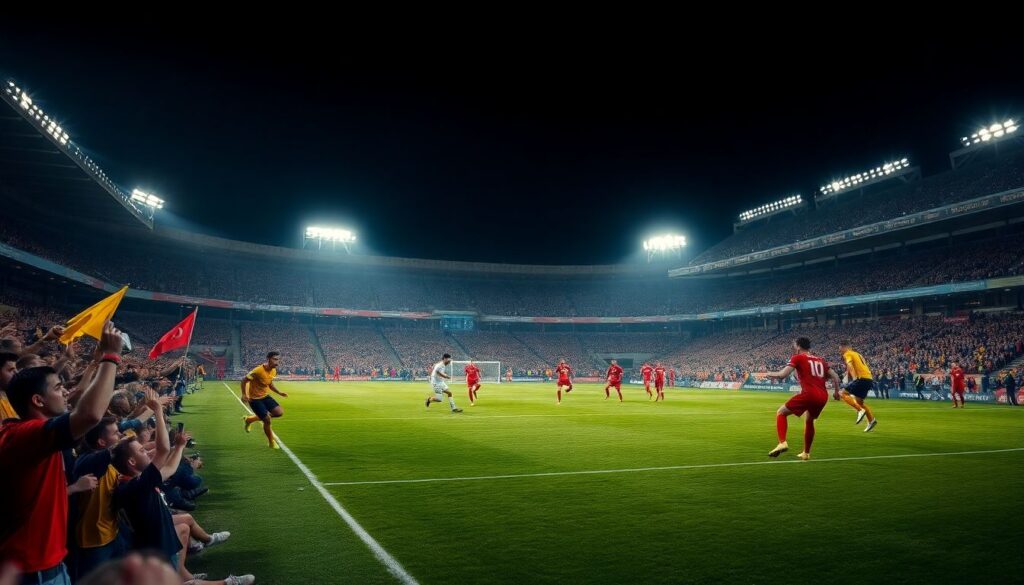
That night in Kadiköy is a masterclass in what derby tactics look like under maximum emotional load. The context: Galatasaray needed to avoid defeat to secure the title at their rival’s stadium. Fenerbahce’s plan was to suffocate them with territorial pressure, diagonal balls behind full‑backs and intense wing play. Instead of matching fire with fire, Galatasaray manoeuvred into a low‑to‑mid block, compressing central spaces and forcing Fenerbahce to cross from less dangerous zones.
Look closely at that game and you see micro‑details: second‑line midfielders constantly adjusting their body angle to block passing lanes into the No. 10; full‑backs staying a metre deeper than usual to defend the back post. Emotionally, the visitors had to fight the urge to chase every counterattack. Staff on the bench kept repeating one mantra: “Don’t lose our distances.” In a derby, discipline becomes a psychological skill, not just a tactical rule.
—
Emotional Thermostat: Players as Heat Managers
In most leagues, captains lead; in Istanbul derbies, they also act as emotional thermostats. They shout less about tactics and more about temperature: calm this player down, fire that one up, slow the throw‑in, speed up the restart. Coaches identify “emotion managers” before the game: usually a veteran centre‑back, a deep midfielder, and one attacker who can draw fouls when the game overheats.
Bulletproof preparation often focuses on:
– Pre‑rehearsed reactions to injustice (a bad call, a red card, a goal conceded)
– Silent signals between players to switch from high press to medium block
– Set routines after scoring to stop adrenaline from pushing the team too deep
Over the years, squads with more internal leaders – not just one star – tend to survive the rollercoaster better. Talent matters, but emotional regulation keeps the structure intact.
—
Data vs Intuition: Modern Scouting of a Derby
By 2026, Istanbul giants and even analysts who travel with the best Istanbul football derby tours and travel packages are used to a hybrid approach: marry numbers with gut feeling. Clubs use tracking data from domestic matches to map how players react under derby‑like pressure: sprint frequency after conceding, long‑ball ratios in final 15 minutes, pressing intensity when the stadium roars after a big chance.
Advantages of data‑driven prep:
– Objective view of which zones are genuinely dangerous, not just emotionally charged
– Ability to simulate rival patterns in training with GPS‑based drills
– Clear benchmarks for when to substitute tired or over‑charged players
Limitations appear quickly: the algorithm doesn’t understand a banner insulting your family, or how a young goalkeeper reacts to 50,000 phones’ flashlights behind his net. That’s where intuition, video sessions and one‑on‑one talks still dominate.
—
Technology on the Touchline: Pros and Cons
Even in this visceral rivalry, technology now sits next to the tactics board. From 4K tactical cams to live xG feeds on the bench, staff get a second‑by‑second picture of the match. You can literally see how a pressing trap fails by a metre on a tablet seconds after it happens.
Pros:
– Faster in‑game corrections when a flank is repeatedly overloaded
– Objective feedback for players at half‑time, not just emotional speeches
– More precise set‑piece tweaks, based on real‑time marking mismatches
Cons:
– Risk of paralysis: too many numbers, not enough clear messages
– Over‑reliance on screens can disconnect staff from the raw stadium energy
– Tech issues or VAR decisions can fuel paranoia and emotional spirals
The most successful staffs in derbies use technology to confirm what their eyes and ears already feel, not to replace that human sensing.
—
Case Study: VAR, Red Cards and Momentum Swings
Recent derbies have shown how VAR adds a new psychological layer. Picture a scenario: a crunching tackle in the box, the referee waves play on, then stops the game as players sprint to surround him. The stadium screen shows “CHECKING PENALTY.” Heart rates spike; coaches slam water bottles; substitutes warm up nervously.
From a tactical standpoint, both teams must be ready for either outcome:
– If the penalty is given and scored, the leading side might switch to a compact 4‑5‑1 with immediate substitutions to add legs in midfield.
– If the decision is overturned, the “wronged” team often gain a wave of emotional energy and press furiously for the next five minutes.
Coaches now rehearse these turning points in training, including how to reposition after a red card so that they don’t mentally collapse while reorganising their shape.
—
Fan Energy as a Tactical Variable
No derby on earth weaponises supporters quite like this one. Choreographies, pyrotechnics, and sound levels are not just theatre; they change player behaviour. That’s one reason Istanbul is a magnet for neutrals, many of whom plan trips months in advance, hunting Istanbul derby tickets Galatasaray vs Fenerbahce or packages that combine stadium access with city tours.
From a tactical lens, crowd pressure:
– Increases long‑ball frequency from defenders under hostile chanting
– Pushes wingers to attempt riskier dribbles they might avoid elsewhere
– Encourages referees, subconsciously, to protect the “flow” rather than whistle every contact
The smartest teams use this by intentionally slowing the tempo at key moments: taking longer on throw‑ins, over‑communicating before free‑kicks, and using short passes to “mute” the stadium by frustrating its rhythm.
—
Travel, Comfort and Micro‑Edges
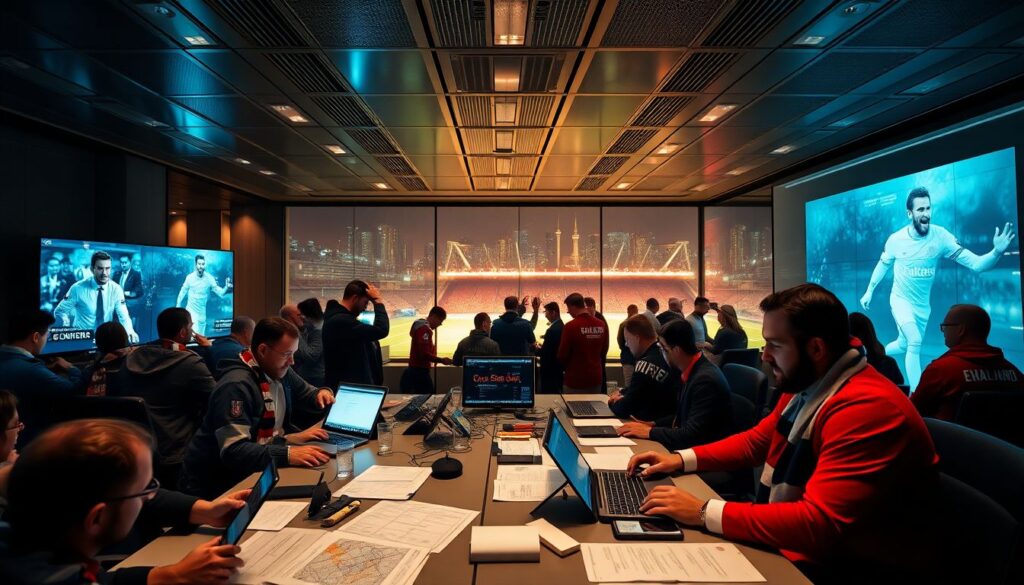
In such fine‑margin games, even travel logistics matter. Clubs and fans both treat these trips like military operations. Supporters chase Istanbul derby match hotel and flight deals, while clubs obsess over bus routes, meal timings and room allocations. Scientific staff minimise circadian disruption and monitor hydration; the idea is simple: no extra stressors.
Teams with calmer logistics usually show:
– Lower pre‑match heart‑rate variability deviations
– Better second‑half running metrics
– Fewer concentration errors in late stages
Interestingly, visiting teams sometimes book hotels slightly further away to avoid late‑night fireworks or “welcome parties” from rival fans. This is not superstition; it’s risk management baked into performance planning.
—
Choosing Your Derby Experience: Stadium, VIP or Screen?
From a fan’s perspective, “tactical choices” also exist. Some want to stand among ultras, others prefer a safer, more analytic angle. That’s where people decide whether to buy Istanbul derby VIP hospitality packages, opting for a controlled environment with good sightlines and pre‑match briefings, or to immerse themselves in raw, noisy sections behind the goal.
Similarly, not everyone can make the trip. High‑quality coverage via a Galatasaray vs Fenerbahce live stream HD subscription allows viewers to pause, rewind and focus on tactical details: how wide the back four spreads in build‑up, or how a holding midfielder “screens” passing lanes by shuffling side to side. For students of the game, a clear broadcast with multiple angles can sometimes reveal more structure than the naked eye in a chaotic stadium.
—
Comparing Coaching Approaches: Firestarters vs Ice Sculptors
Looking across the last two decades, you can roughly divide derby coaches into two archetypes. “Firestarters” use the occasion to ignite intensity, encouraging early tackles, hard pressing and emotional crowd connection. “Ice sculptors” treat the derby like a chess problem, trying to drain emotion and turn it into any other league match.
Firestarter approach:
– Pros: Can overwhelm the opponent with tempo and courage; crowd fully engaged.
– Cons: Prone to early red cards, tactical disorganisation and emotional burn‑out.
Ice sculptor approach:
– Pros: More stable structure, better suited for away games or title deciders.
– Cons: Fans sometimes perceive the team as “cold,” and players may lack spark.
The most successful managers in Istanbul find a hybrid: they script the first 15 minutes aggressively, then impose a calmer, possession‑based rhythm once the adrenaline spikes pass.
—
2026 Trends: Where the Derby Is Heading
By 2026, several tactical and technological trends are shaping the rivalry:
– Positionless attacking: Wingers invert, full‑backs tuck into midfield, classic No. 9s float wide. This fluidity makes man‑marking in derbies harder and increases the importance of communication.
– Micro‑coaching via wearables: Live biometric data helps staff spot which players are emotionally “overcooked” and need a breather, even if they look fine from the stands.
– Smarter fan travel ecosystems: Agencies bundle best Istanbul football derby tours and travel packages that include mini‑tactical workshops, museum visits and moderated fan meet‑ups, turning the derby into a kind of football pilgrimage with an educational twist.
The essence remains unchanged: two clubs, one city, and a rivalry that refuses to cool down. What evolves is how finely both sides now measure and manipulate the emotional temperature.
—
Practical Takeaways for Coaches, Players and Fans
For people inside the game, the Istanbul derby offers a laboratory of high‑pressure football. Patterns emerge:
– Simplicity beats complexity under stress; the best gameplans are built on 2–3 clear non‑negotiables.
– Emotional rehearsal – simulating noise, bad calls and setbacks in training – is as crucial as tactical drills.
– Leaders must be identified not just by talent, but by how they speak and behave when the stadium feels like it’s vibrating.
For fans, whether you’re booking Istanbul derby match hotel and flight deals months in advance or analysing the match from home, understanding the tactical and emotional layers makes every foul, press and clearance richer. The derby isn’t just played between the boxes; it’s played between ears and inside chests – and that’s what keeps drawing the world back to Istanbul.