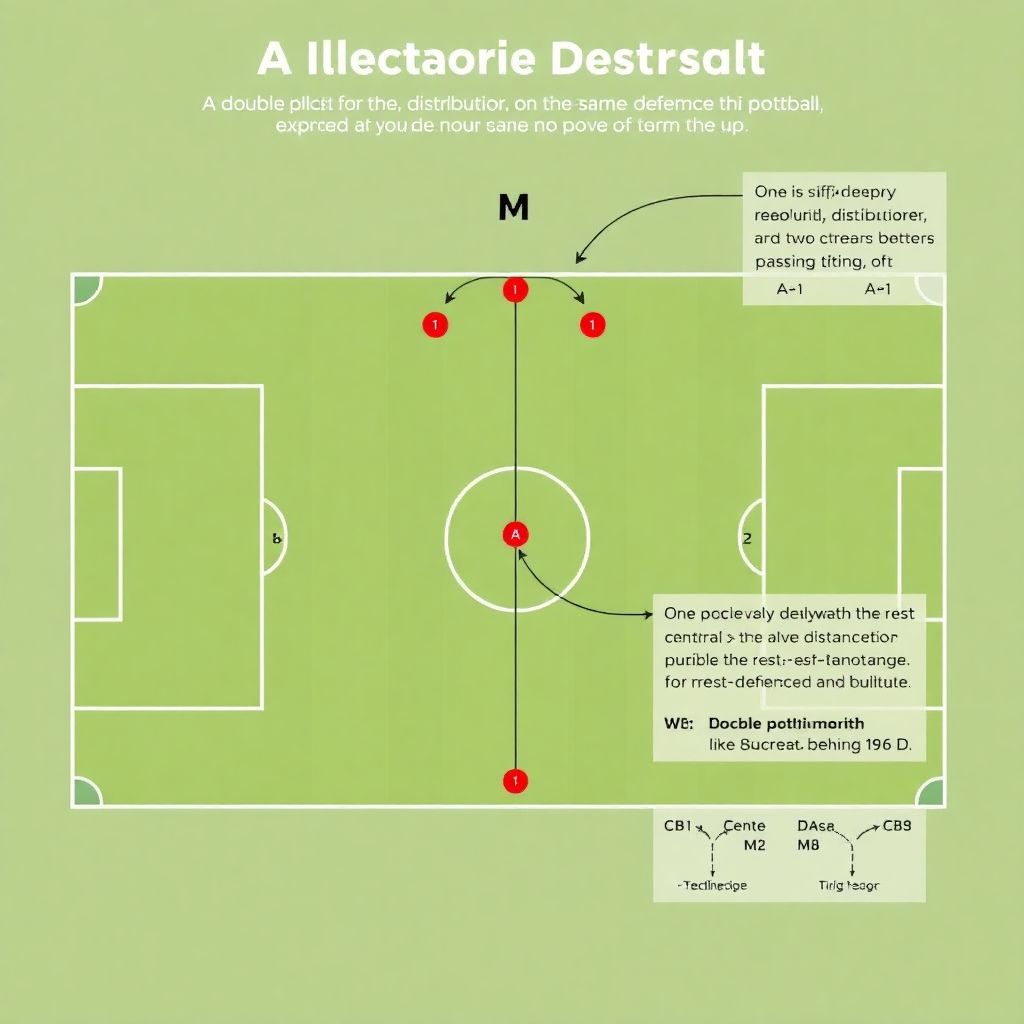
If you watch enough European football, you start to notice a pattern: the teams that control games almost always have a well‑drilled double pivot. It’s the quiet two‑man engine room under all the fireworks. The funny thing is, a lot of people use the term without really unpacking how specific and demanding this structure is. Building the perfect double pivot is less about finding two “good midfielders” and more about creating a balanced system of roles, distances and decisions. Let’s break it down так, как это обсуждают аналитики и тренеры, но в человеческом, разговорном стиле, без тумана вокруг терминов.
What a double pivot actually is (and what it isn’t)
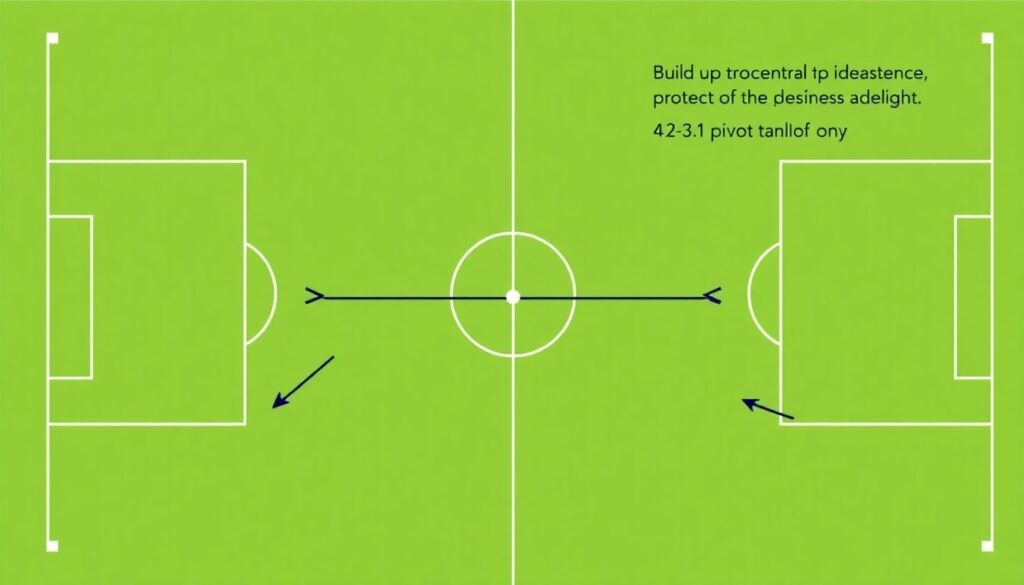
In simple terms, a double pivot is a pair of central midfielders who form the base of a team’s midfield in possession and often out of possession. If you imagine a 4‑2‑3‑1, the “2” in front of the defence are the double pivot: two players on roughly the same horizontal line, sharing build‑up and protective duties. Diagram in text: back four as “D D D D”, then “M M” just ahead, then “A A A” and a striker “9”. So: D‑line: D D D D → Pivot line: M M → Attack line: A A A → 9. Crucially, this is different from a single pivot (one holder plus two advanced 8s) or a flat three, because responsibility and spacing are more tightly coordinated between just two players.
Key roles: distributor, destroyer and everything in between
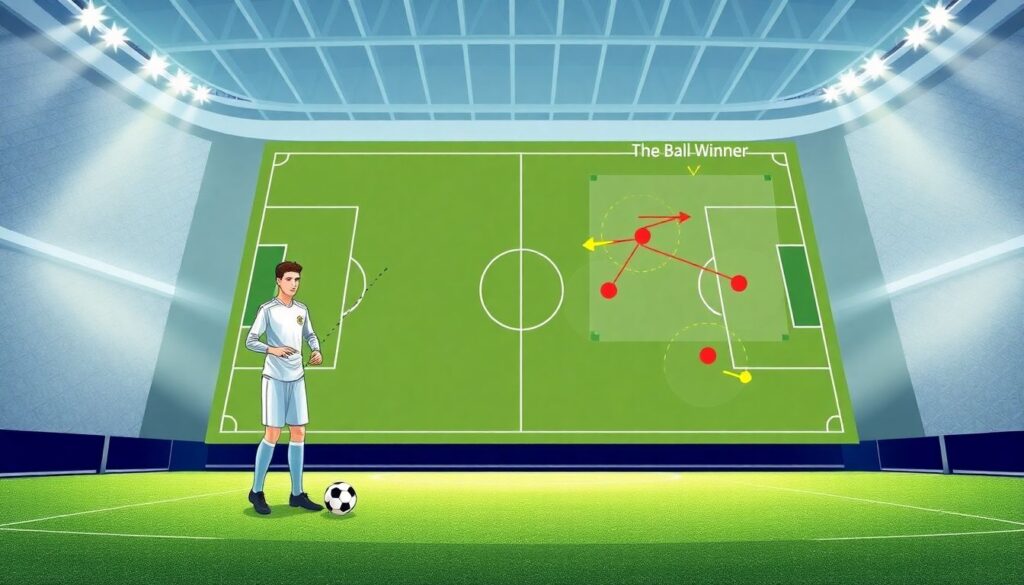
In practice, the “ideal” double pivot is rarely two identical players. Most top European midfield duos are built on complementary strengths. One tends to lean more toward circulating the ball and progressing play (the distributor), the other more toward regaining possession, covering space and helping the centre‑backs (the destroyer). Think of Casemiro and Kroos at Real Madrid: Casemiro sliding across to plug gaps, Kroos dropping into the left half‑space to quarterback the build‑up. Yet the modern game is ruthless: at Champions League level, both must be reasonably press‑resistant, both must scan constantly, and both must be able to switch the ball under pressure. The magic comes when these roles are clear, but not rigid, so they can swap when the game demands.
Spacing, angles and “invisible” rules of movement
The most underrated part of a double pivot is geometry. Good pairs obey a few “invisible rules”. First, vertical staggering: even though they’re called a double pivot, they’re rarely exactly side by side. Typically, one sits a few metres deeper to offer a safe outlet, the other steps a line higher to pin opposition midfielders. Imagine a simple diagram: CBs on the ball, one pivot shown slightly closer (“M1”), the partner (“M2”) five metres higher and a bit wider. So: CB → M1 (safe) or CB → M2 (progressive). Second, lateral distances: too close and you’re easy to press; too wide and the centre becomes a highway for counters. Top pairs constantly “slide” together, keeping a flexible rectangle with the two centre‑backs. Watching Kimmich and Goretzka, you’ll see that when one jumps to press wide, the partner drops in, almost becoming an auxiliary centre‑back.
Comparing the double pivot to other midfield structures
It’s useful to compare a double pivot with a single pivot plus two 8s, like Busquets behind Xavi and Iniesta at peak Barcelona. A lone pivot gives you an extra man between the lines and more vertical passing options, but it places enormous defensive and build‑up responsibility on one player. In contrast, a double pivot spreads that load. You get better rest‑defence, more passing angles in deep build‑up and usually more stability in transition. However, the trade‑off is one fewer dedicated player high between the lines, so your 10 and wingers have to be clever about occupying pockets. Tactical analysts often highlight this in their tactical analysis subscription european football midfield breakdowns: teams facing extreme high pressing or frequent counters tend to prefer the security of a double pivot, while teams chasing maximal positional superiority between the lines might stick to a single pivot or a box midfield.
Lessons from elite European midfield duos
Let’s steal a few ideas from recent European masters. Take Rodri and Gündogan at Manchester City. Rodri is the reference point: he holds the central lane, acting as a stabiliser. Gündogan times his jumps forward, arriving into the box rather than standing in it, but he always leaves behind a clear “pivot picture” for Rodri. Diagram: when Gündogan goes, one full‑back tucks inside, forming a new temporary pair next to Rodri. Another example is Jorginho and Kanté at Chelsea under Tuchel. Jorginho controlled rhythm and short passing, Kanté expanded the defensive radius, covering wide channels and leading the counter‑press. Expert coaches often mention this pair in football coaching courses double pivot midfield modules: the key teaching point is how the “runner” (Kanté‑type) never abandons the central lane for long; he presses out but snaps back to keep the two‑man shield intact.
What expert coaches actually train in practice
If you talk to high‑level coaches, they’ll tell you the double pivot is built on habits, not slogans. One common exercise: 6v4 build‑up with two pivots against a front three plus a 10. The aim is simple – create a free man – but the rules are strict: pivots must constantly adjust depth, never blocking each other’s passing lane from the centre‑backs. A lot of modern online soccer tactics course for midfielders double pivot scenarios emphasise scanning: coaches literally shout “check shoulders” as the ball travels, forcing players to build the habit of seeing pressure before receiving. Another staple drill is “pressured bounce”: one pivot under pressure lays the ball off, then immediately sprints to a new lane, while the partner fills the vacated space. Over time, this trains the intuition that when one is squeezed, the other must become the new pivot reference, without emotional panic or huge positional overreactions.
Data, video and the rise of “smart” pivots
The next big jump in quality comes from better feedback. Top clubs lean heavily on professional football data analysis tools midfield duos monitoring to see how often each pivot offers a passing lane, how well they protect the central corridor, and how quickly they react to transitions. Analysts map “heat ribbons” rather than just heat maps: not only where the players stand, but how they move relative to each other. If you subscribe to an advanced coaching clinic european midfield tactics series, you’ll notice a shift from counting tackles and passes towards analysing connection density: how many teammates can each pivot find within two touches, under pressure. This statistic correlates surprisingly well with a team’s ability to control games. Combined with targeted video sessions, it helps players see that being two metres off in spacing can be the difference between calm circulation and a catastrophic turnover.
How to build your own double pivot: expert recommendations
Coaches who work with both pros and youth have a few consistent recommendations. First, profile balance beats star power. Don’t force two “quarterbacks” or two pure destroyers together; aim for at least one player comfortable turning under pressure and one with high defensive range, then develop secondary skills so they overlap. Second, define simple shared rules: when ball is on our right, who is the “anchor” and who steps higher? Who covers behind full‑backs when they bomb on? Literally write these principles down and revisit them after games. Third, train under stress. Friendly rondos are not enough; build high‑intensity, directional games where bad spacing is punished immediately by counters. Finally, stay curious: many coaches quietly use a tactical analysis subscription european football midfield library and targeted football coaching courses double pivot midfield content to keep updating their ideas. The double pivot is not a fashion; it’s a long‑term platform for controlling modern matches.