
Why the Süper Lig Is So Close to a Breakthrough
If you look at the turkish super lig young talents of the mid‑2020s, it feels like the league is standing on the threshold of something bigger. Salaries and TV deals are no longer competitive with the Premier League or even La Liga, so clubs are shifting from “buy finished stars” to “develop and sell at a profit”. Tactically, the league has become more pressing‑oriented and transition‑heavy, which suits modern player profiles that European scouts want. The question isn’t “can” the Süper Lig become a Portugal‑ or Netherlands‑style export hub, but rather what tools and processes are still missing to systematise that evolution instead of relying on occasional breakout stars.
Necessary Tools: Infrastructure, Data and Governance
To function as a talent export league, Turkey needs a full stack of infrastructure, from facilities to financial rules. The best football academies in turkey are already investing in GPS‑tracking, video analysis and dedicated physical development coaches, but the gap between the top four clubs and the rest remains large. Without league‑wide minimum standards for pitches, gyms and medical support, many prospects hit a development ceiling too early. On top of that, federation‑level governance must stabilise calendar planning, foreign player quotas and youth registration rules so that long‑term investment decisions become predictable rather than a gamble on shifting regulations.
Digital Scouting and Performance Analytics

Modern export leagues live on data. Portugal and the Netherlands use integrated tracking systems where every touch, sprint and pressure action is logged. For scouting Turkish super lig players to reach that level, clubs need unified data providers, standardised tagging and analysts able to translate raw stats into actionable profiles. Today, some Istanbul clubs are working with event + tracking data, while provincial teams still rely heavily on a coach’s intuition. To upgrade, the league should co‑finance centralised data access, create shared benchmarks by position and age, and train analysts who can contextualise numbers with tactical roles and opposition strength.
Financial and Legal Tools for Sustainable Selling
Export models depend on contracts, not just coaching. Clubs must adopt standard clauses: sell‑on percentages, buy‑back options, performance bonuses and appearance‑based escalators. This is what turns super lig player transfers to europe from one‑off cash injections into recurring revenue streams. Transparent agent policies and capped intermediary fees reduce leakage and keep more value inside the system. At league and federation level, stricter financial controls, akin to soft salary caps and squad cost ratios, can redirect resources from short‑term veteran signings to structured academy spending and targeted scouting networks in under‑explored markets such as North Africa, the Balkans or Central Asia.
Step‑by‑Step Process: From Chaos to Export Machine
The transition to an export league can’t be solved in one transfer window; it’s a multi‑cycle process. Clubs should build a roadmap that ties sporting goals to market positioning: finish in European spots, increase minutes for U‑23 players, then leverage continental visibility to raise transfer fees. The league’s role is to synchronise incentives through youth‑focused regulations and solidarity payments. Instead of random waves of foreign imports, the Süper Lig needs a clear age pyramid, with well‑defined development pathways and loan networks. Think of it as industrialising what used to be accidental individual success stories.
1. Standardise Academy Pipelines
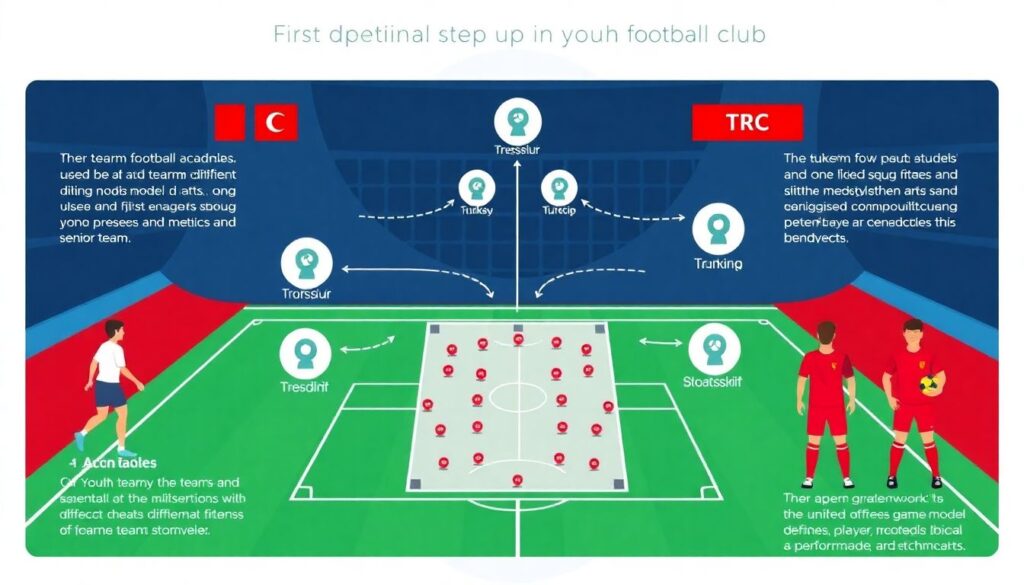
The first operational step is to synchronise how academies work. Even the best football academies in turkey often use different playing models and fitness benchmarks than their senior teams, creating friction when prospects jump to the first squad. A common framework should define game model, position‑specific competencies, physical milestones and psychological support from U‑15 to U‑21. Clubs can still keep tactical nuances, but core principles—pressing triggers, build‑up patterns, rest defence—must align. Once this is in place, coaches can slot youngsters into senior roles without a steep tactical learning curve that slows down their market‑ready exposure.
2. Professionalise Scouting and Recruitment
Next comes recruitment alignment. Export leagues maintain a constant flow of undervalued prospects. For Turkey, that means connecting domestic academies with targeted external markets, supported by integrated data. A robust process for scouting Turkish super lig players also has to include internal scouting: loan monitoring, reserve team tracking and an updated depth chart by age and contract length. When a U‑19 full‑back hits key metrics, his pathway to senior minutes should be pre‑planned, not improvised. By treating the whole league as a distributed talent pool, Turkish clubs can trade smartly among themselves before selling to higher‑tier competitions.
3. Maximise Game Time and Visibility for Young Players
Minutes in a high‑intensity environment are the real currency that raises valuations. Portugal and the Netherlands ensure that U‑23 players receive consistent league and European exposure. The Süper Lig can adopt similar mechanisms: incentives for clubs that hit thresholds of minutes for turkish super lig young talents, plus relaxed squad registration rules for home‑grown players. Broadcasting partners can highlight these prospects with dedicated segments and digital content, feeding the global scouting narrative. When a 20‑year‑old winger combines domestic starts with Conference League or Europa League games, his tracking data draws attention from mid‑table Bundesliga or Serie A sides.
4. Turn Transfers Into a Repeatable Business Model
Once prospects are visible, the focus shifts to conversion: structuring super lig player transfers to europe as a predictable revenue stream. That means using data‑backed valuations, identifying ideal destination leagues by playing style, and negotiating step‑wise moves rather than gambling on direct jumps to elite clubs. A 19‑year‑old centre‑back might be better off joining Belgium or Austria first, with a sell‑on clause, than sitting on the bench in England. If multiple Turkish clubs adopt similar models, buyers start to trust the “Made in Süper Lig” label, which in turn pushes initial bids up and compresses negotiation cycles.
Troubleshooting: Typical Bottlenecks and How to Fix Them

Even with a roadmap, conversion to an export league will run into recurring issues: short‑termism, political interference, fan pressure and uneven coaching quality. Many clubs still fire managers after a few bad results, which disrupts development plans for youth. To counter this, boards need KPI frameworks that go beyond league position: minutes for U‑21s, academy call‑ups, resale value growth and squad age balance. Communicating these metrics to supporters and local media can reframe success, so playing a 19‑year‑old full‑back instead of a 30‑year‑old veteran is seen as an investment in the club’s future, not as a lack of ambition.
Handling Financial Instability
Another persistent problem is liquidity. Some clubs rely on late‑summer sales just to pay wages, forcing them to accept under‑priced deals. To stabilise, they must separate tactical planning from cash‑flow management. Short‑term credit lines tied to expected transfer income, centralised league advances and stricter budgeting rules can prevent panic selling. At the same time, when clubs invest in Turkish football talent, they should use internal cost‑benefit models to compare a veteran’s short‑term impact with a youngster’s potential appreciation. Over three to five seasons, a balanced portfolio of low‑cost prospects tends to outperform high‑salary, low‑resale signings.
Avoiding Development Dead Ends
Talents often stagnate because they’re promoted too late, loaned to tactically incompatible teams, or stuck behind big‑name signings. To troubleshoot this, clubs should treat squad building like pipeline engineering. For each key position, map: 1) current starter, 2) immediate backup, 3) academy prospect, 4) external scouting targets. Then model scenarios: injuries, sales, tactical shifts. If a pathway looks blocked for more than two seasons, a strategic loan or internal transfer should be triggered automatically. This reduces the number of promising players who disappear from radars justo when European clubs start serious tracking, typically between ages 18 and 22.
What the Next Five Years Could Look Like
If these tools and processes are deployed consistently, the Süper Lig can realistically approach the status of Portugal or the Netherlands as a recognised export league in the early 2030s. The key indicators to watch are: average age of starting line‑ups, cumulative fees from outbound deals, number of Turkish‑developed players in top‑five leagues and the breadth of buying clubs. As super lig player transfers to europe become more structured, feedback loops will emerge: returning buy‑back players, shared scouting ventures, and foreign academies partnering with Turkish clubs. The crucial factor will be discipline—resisting the temptation to abandon the model after one or two disappointing seasons.
Practical Checklist for Clubs and League Officials
To make this less abstract, here’s a condensed action checklist that any Süper Lig stakeholder can adapt:
1. Define a unified development philosophy linking academy, reserves and first team.
2. Implement centralised data infrastructure for performance tracking and scouting.
3. Create financial rules that reward youth minutes and sustainable wage structures.
4. Develop strategic relationships with stepping‑stone leagues for outbound transfers.
5. Establish clear communication with fans about the long‑term benefits of an export model.
Followed methodically, these steps can transform the league from a destination for aging stars into a dynamic platform where Turkish‑developed players are systematically prepared, showcased and exported at premium value.