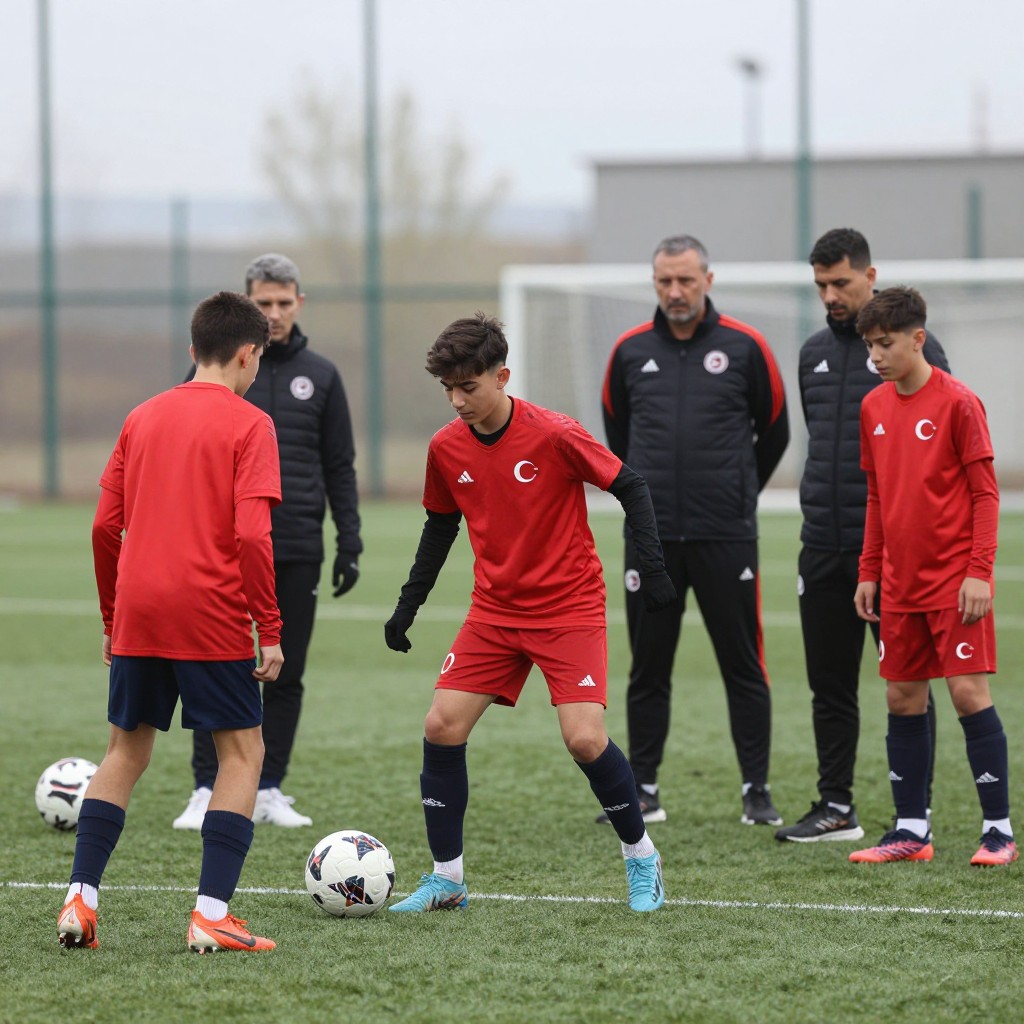
A Turkish club academy is a structured youth-development programme linked to a football club, not a guarantee that every promising child will become a professional. It combines recruitment, coaching, education and competitive matches, then tries to bridge the gap to senior football. Its success depends on whether players receive a coherent pathway and meaningful opportunities-not simply access to training facilities.
The Academy’s Real Development Contract
- An academy develops players over time; it cannot promise a professional career or first-team place.
- Recruitment is only the starting point: coaching, match experience and individual support shape progress.
- The transition to senior football is a separate challenge, often requiring loans, reserve competition or gradual first-team exposure.
- Club priorities, squad competition and short-term results can limit opportunities for young players.
- Judge an academy by player development and progression, not only by transfers or sale fees.
First, the Myth: A Training Ground Is Not a Talent Factory
A well-equipped training ground can support development, but facilities alone do not make an academy effective. The term refers to an organised programme that identifies young players, coaches them over time and gives them age-appropriate opportunities to compete. In Turkey, as elsewhere, club academies differ in resources, staffing and the routes they can offer toward senior football.
An academy is also not a promise of selection, a professional contract or a debut. A player may improve significantly and still face a crowded position, a change in coaching staff or a club decision to recruit an experienced senior player. Development and promotion are related, but they are not the same outcome.
For families comparing football academies in Turkey, the useful question is not simply whether a club has an academy. Ask how it supports players at different stages, communicates selection decisions and plans the transition beyond youth football.
What Counts as a Turkish Club Academy-and Who Runs It
A club academy usually brings together coaches, player recruitment, age-group teams and support for the move toward senior football. The exact structure varies by club. A typical pathway may involve the following:
- Identification: Scouts, coaches or club staff notice players through local football, school or youth-team competition. A trial may be one way to assess a player, but it is only a snapshot.
- Selection and placement: The club considers a player’s current level, position and development needs before placing them in an age group or squad.
- Regular coaching: Training works on technical, tactical, physical and decision-making skills appropriate to the player’s stage.
- Competitive matches: Coaches use match performance to assess progress and provide experience under pressure.
- Individual feedback: Clear communication helps players understand what they are doing well and what they need to improve.
- Progression planning: Staff consider whether a player should move up, remain at the same level, get different match experience or be considered for senior training.
In practice, responsibilities can be shared among academy coaches, recruitment staff and senior-team decision-makers. For anyone considering Turkish football academy trials, the practical priority is to confirm who runs the assessment, what level of football it covers and what follows if the trial does not lead to selection.
From Recruitment to First-Team Minutes: The Development Path
The route from youth football to a senior squad is not identical for every player. These common scenarios show why development needs to be assessed as a sequence rather than a single selection decision:
- A younger player with room to grow: Coaches may prioritise regular age-group matches and skill development rather than an early move into an older squad.
- A physically advanced player: Early success can bring faster promotion, but coaches still need to assess decision-making and technical progress against stronger opponents.
- A player blocked in their position: A loan or a move to another team may offer more competitive minutes than remaining on the bench, if the new setting suits the player.
- A late-developing player: A slow start does not by itself settle a player’s prospects; continued assessment can reveal progress that early selection missed.
- A young player near the first team: Training with senior players can be useful, but match minutes and clear feedback help show whether the step is translating into progress.
These situations apply across youth football academies Turkey offers, but the options available depend on the club and its competition structure. A pathway should be judged by whether each next step gives the player a suitable challenge and a chance to play.
Why Promising Players Stall: Coaching, Playing Time, and Club Pressure
Academy football can provide consistent coaching, regular competition and a clear development setting. When those elements work together, players can build skills over several seasons and receive guidance as they approach senior football.
- Consistent training can help players practise technique and tactical decisions in a structured environment.
- Age-group matches provide repeated opportunities to apply skills under competitive pressure.
- Individual feedback can make development goals more specific and easier to review.
- Links to senior training or a suitable loan can help players test themselves beyond youth football.
Progress can also stall when the club’s needs and a player’s development needs do not align. A short-term push for results may favour established players, while a coaching change can alter how the squad is used.
- Limited minutes: Training well does not replace the experience of playing regularly in competitive matches.
- Unclear feedback: Without specific guidance, players may not know what is preventing progression.
- Position congestion: Several players competing for the same role can reduce opportunities even when a player is developing.
- Premature promotion: Moving up too soon can leave a player short of match experience or confidence.
- Pressure for immediate results: Coaches may have less room to give young players time to learn through mistakes.
When evaluating football training academies Turkey, ask how staff respond when a player is not getting minutes. A credible development conversation should address the next step, not only repeat that the player needs to wait.
Balancing Local Identity with Foreign Competition
Turkish clubs may want to develop locally connected talent while building squads capable of competing for immediate results. Those aims can sit alongside one another, but they do not automatically produce opportunities for academy players. Avoid these common assumptions:
- Myth: local identity guarantees local minutes. A club’s connection to its community does not by itself determine team selection.
- Myth: foreign signings always block young players. Competition can narrow opportunities, but the effect depends on squad needs, coaching decisions and a young player’s readiness.
- Myth: every talented teenager should be promoted early. The right timing depends on the player’s current abilities and the level of challenge available.
- Myth: a successful academy must produce a star every season. Development is uneven; one player’s breakthrough does not capture every player’s progress.
- Myth: a trial is a verdict on long-term potential. A trial assesses a player in a limited setting and should not be treated as a complete measure of future development.
A practical measure is whether the club can explain how young players compete for places and what alternative development routes exist when a direct first-team opening is unavailable.
Measuring Success Beyond Transfers and Sale Fees
Transfers and sale fees are visible outcomes, but they do not show the whole development picture. A more useful review also considers whether players improve, receive suitable match experience, progress to stronger competition and understand the feedback they are given.
Mini-scenario: A club’s under-age midfielder is training well but rarely plays because the squad is crowded. Instead of treating senior training sessions as proof of progress, the academy reviews the player’s match minutes and role, agrees a specific development target with the coach, and considers a suitable team where regular competition is possible. The test is whether the next arrangement helps the player improve and compete-not whether it sounds like a promotion.
Questions That Test the Academy Model
Does joining a Turkish club academy guarantee a professional career?
No. An academy provides a development setting, but selection, progress and senior opportunities depend on many factors, including performance, squad needs and available pathways.
What should families ask before a trial?
Ask who will assess the player, what age group or level is involved, how the decision will be communicated and what the next step would be if the player is not selected.
Is first-team training the same as first-team progress?
No. Training with senior players can be useful, but regular competitive minutes, feedback and a suitable level of challenge also matter.
Can a loan help an academy player?
It can, if the new team offers an appropriate role and meaningful playing opportunities. A loan should be assessed by what the player can learn and play, not by the move alone.
How can parents assess an academy’s approach?
Look for clear communication, age-appropriate coaching, a plan for match experience and honest discussion of progression. Be cautious of treating facilities or a single trial outcome as proof of long-term prospects.
What counts as academy success besides producing a transfer?
Player improvement, useful competitive experience, progression to higher levels and a well-managed transition toward senior football are all relevant signs of development.