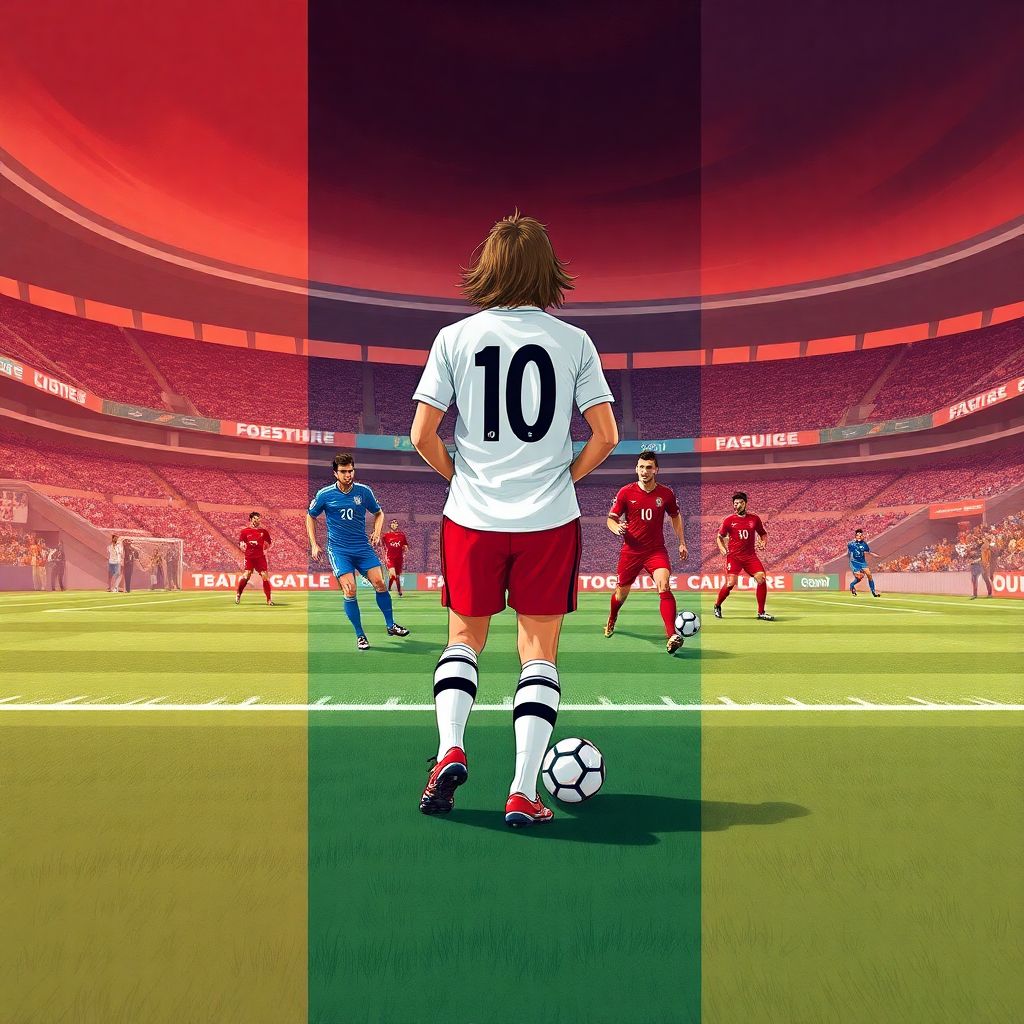
The story of the classic No. 10 is really a story about how football itself has changed. From slow, methodical games with one clear on‑ball genius to today’s hyper‑athletic, data‑driven football, the playmaker has had to constantly reinvent himself. In Turkey and across Europe, the number on the back stayed the same, but the responsibilities behind it transformed dramatically, especially visible now, in 2026, when “pure” No. 10s are almost a luxury rather than the starting point of a system.
Historical background: from on‑field artist to tactical problem
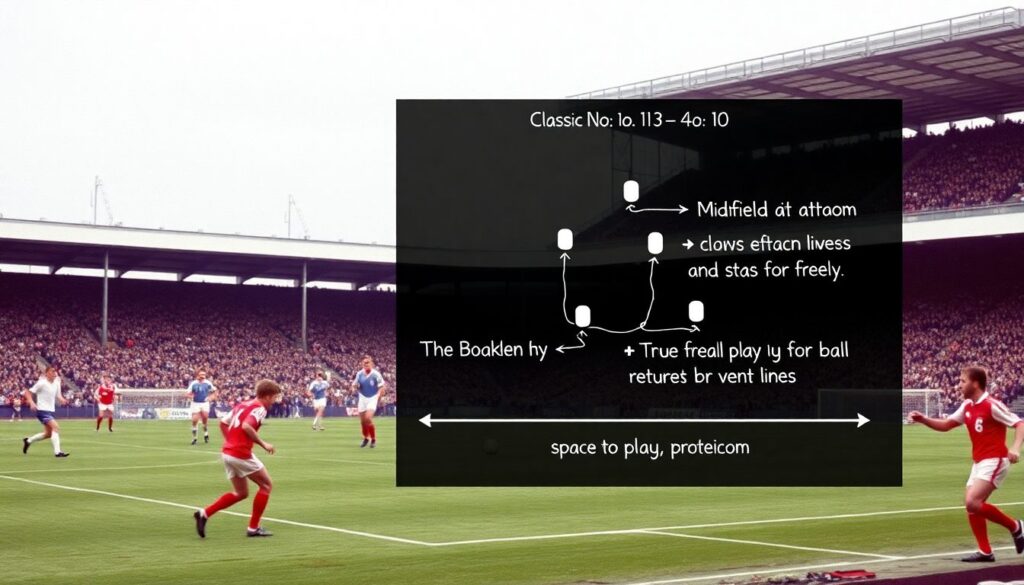
If you rewind to the 1960s–1980s, the classic No. 10 role in European football was built around the idea of a designated creator between midfield and attack. The old 4‑3‑1‑2 or 4‑4‑1‑1 shapes gave this player space to roam, receive between the lines and dictate tempo with minimal defensive tracking. In Turkey, this archetype came a bit later but landed hard: by the 1990s and early 2000s, Süper Lig teams were importing South American enganches and giving them full creative freedom. Fans fell in love with this romantic image of the oyun kurucu, the guy everybody trusted to do the unexpected when the game got stuck.
In Europe, the 1990s and early 2000s were the golden age of the advanced playmaker. Serie A built whole teams around a No. 10, La Liga made them superstars, and even more direct English sides carved out a “second striker” spot that functioned similarly. If someone had told fans then that, a couple of decades later, coaches would debate whether you could even carry a classic 10 in elite pressing systems, they would have laughed. Yet once pressing, compact mid‑blocks and the obsession with “rest defence” took over, that luxury man between the lines started to look like a defensive risk rather than a non‑negotiable asset.
For Turkey, the shift became obvious around the 2010s. When the national team faced high‑level European opponents at Euros and World Cups, coaches realised that a free‑roaming, defensively passive No. 10 got targeted relentlessly. The evolution of the role can be traced by looking at who wore the symbolic shirt: from elegant, often slower creators to more dynamic forwards and midfielders who pressed, sprinted in behind and covered ground. The modern turkey national team number 10 jersey 2024 and beyond is as much about work rate and tactical intelligence as it is about silky first touches.
Basic principles of the classic No. 10 – and how they’ve been rewritten
Underneath all the tactical fashions, the core of the No. 10 role has always rested on a few principles: finding pockets of space, scanning before receiving, and turning that half‑space into danger with quick, vertical decisions. Traditionally, the 10 was the team’s main problem‑solver against low blocks: they manipulated centre‑backs and defensive midfielders with subtle movements, then used disguised passes or shots from zone 14 to break games open. In both Turkish and European football, coaches once assumed that if you didn’t have that kind of player, you had to fake it by pushing a striker deeper or giving a central midfielder more licence.
In the 2020s, these basics are still relevant, but the way we demand they be executed has changed. The modern No. 10 has to think like a playmaker, run like an 8 and finish like a 9. Pressing schemes mean you don’t get to “hide” in the hole anymore; you have to trigger the press on opposition build‑up, close passing lanes and still be in position to receive the first pass in transition. Many coaches now talk about the role in terms of “zones” rather than shirt numbers, which is why the european football tactics evolution of no 10 course style of education that analysts promote focuses less on nostalgia and more on how these creative actions are distributed among positional 8s, inverted wingers and false 9s.
If you try to define the modern principles in simple terms, they might look like this:
1. Constant scanning to receive on the half‑turn between the lines, not waiting for the ball to come but actively shaping passing angles.
2. Vertical decision‑making: playing forward as the default, whether by progressive passing, dribbling through pressure or making a penetrating run beyond the defence.
3. Two‑phase responsibility: contributing meaningfully both in high pressing and in the team’s rest‑defence shape, rather than switching off after a pass.
This shift has been particularly sharp in Turkey, where many academies historically focused on technique but not always on high‑intensity work off the ball. Modern Turkish playmakers who want to move to top European clubs now need to tick physical and tactical boxes that old‑school tens often ignored. The romantic image of the No. 10 living off pure talent is replaced by a more complete profile that blends creativity with stamina and game intelligence.
Examples of implementation in Turkish and European football
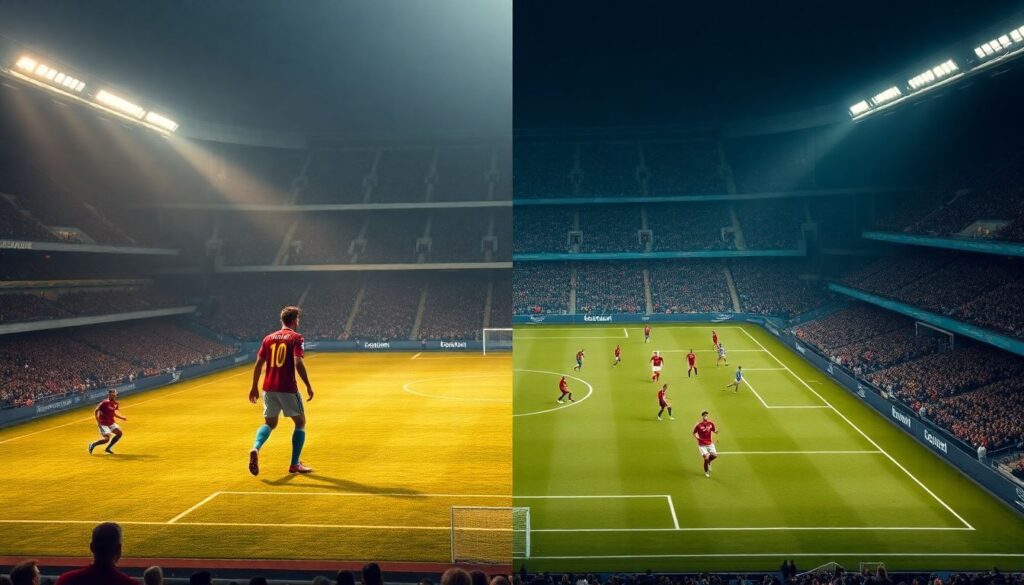
To see how this evolution looks on the pitch, you only need to compare the kinds of players who used to be the face of their teams with those who are now considered central playmakers. In older European systems, the 10 received from deep midfielders facing forwards, turned in acres of space and had time for that Hollywood pass. Today, playmaking actions are spread: an interior midfielder might break lines, an inverted winger might act as the primary ball‑carrier, and the centre‑forward could be the one dropping off to wall‑pass and connect moves. The role still exists, but it’s cut into pieces and shared among 3–4 players.
In Turkish club football, this mix‑and‑match approach has produced some interesting hybrids. Instead of a classic 10 who rarely leaves the central zone, you now see wide playmakers who drift inside, or box‑to‑box midfielders with licence to overload the half‑spaces. A coach might register a player as an 8 on paper, but give him 10‑like freedom in possession while demanding intense counter‑pressing on turnovers. The Süper Lig has also been a kind of laboratory for aging European number 10s adapting to slower leagues, forced to reinvent themselves as deeper playmakers or more disciplined pressers to stay relevant.
On the European stage, you can track the pattern in Champions League campaigns. The last decade has been dominated by teams that either hid their 10 in ultra‑organised systems or redefined the position entirely. The so‑called “free role” is heavily choreographed now: when the ball is on the left, the former 10 might have to pin the opposition pivot; when it’s on the right, he has to form a pressing triangle. This is why so many players who wear the 10 shirt in marketing campaigns play, in reality, as inside forwards or versatile attacking midfielders. Even the popularity of a custom retro number 10 football kit shop culture speaks to this paradox: fans buy nostalgia, while coaches demand multifunctional athletes.
The Turkish national team offers a good microcosm of this trend. Where once the 10 was a slow‑tempo maestro, modern coaches prefer someone who can press from the front, attack the box and still thread passes in transition. The shirt still carries symbolic weight, and you can feel that when new generations look up old clips or even browse a classic number 10 football shirt buy online, but on the pitch, that same number may now be leading counter‑presses and sprinting 60 metres back to help full‑backs. The function has changed more than the aesthetics.
Learning and re‑learning the role: how players and coaches adapt
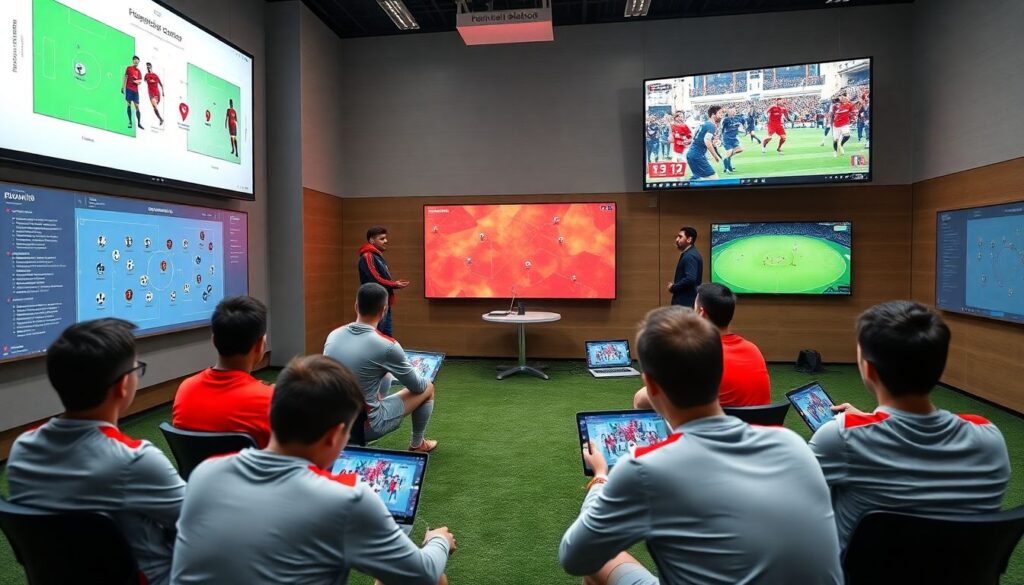
By 2026, the education around the No. 10 role has become noticeably more structured. Young players in Turkey and across Europe are encouraged to study not just the highlight reels of legendary tens, but the deeper tactical frameworks they operated in. Analysts, podcasts and video platforms break down how space is created for the would‑be playmaker, how rotations in midfield open passing lanes and why the classical “stand between the lines and wait” approach dies against modern pressing. Coaches see the role as an output of the system, not a free‑floating exception to it.
This is where resources matter. The best books about football playmaker number 10 role don’t romanticise the position as pure artistry; they dive into pressing triggers, body orientation, and how to scan in crowded central zones. In Turkey, where tactical literature traditionally lagged behind the big five leagues, there’s been a push in the last few years to translate and locally produce material that talks about game models, not just individual genius. Online platforms now offer simulations where a midfielder can repeatedly practice receiving under pressure in the half‑spaces, mirroring what they actually face in European competitions.
The commercial side tells its own story. Fans worldwide still obsess over the number 10 as a symbol of creativity, which is why merchandising around that digit remains strong. You can order a retro Turkish playmaker’s shirt or design your own via a classic number 10 football shirt buy online, but young players wearing it are often taught something quite different from what those idols lived. Modern academies emphasise three‑zone contribution: build‑up assistance, final‑third impact and defensive transitions. The shirt is the same, the expectations behind it have multiplied.
Common misconceptions about the No. 10 in modern football
Despite all these changes, a bunch of myths about the playmaker role still hang around, especially in discussions among fans. One common misconception is that the classic 10 has “disappeared” completely. In reality, his tasks have been redistributed rather than erased. When a false 9 drops between the lines, or when a left winger moves inside to act as a creative hub, they’re essentially doing No. 10 work under a different job title. The tactical board might list them as a 9 or an 11, but their responsibility for connecting midfield and attack remains very similar to the traditional enganche.
Another persistent myth is that modern football has no room for luxury players at all. The truth is more nuanced: top teams still carry specialists, but they make sure the system compensates for any weaknesses. A slightly less intense presser might be protected by staggering the midfield line behind him or by instructing full‑backs to jump aggressively when the ball enters his zone. In Turkey, some clubs have successfully integrated technically brilliant but defensively imperfect creators by surrounding them with high‑volume runners. The key difference from the past is that you need a clear plan; simply “giving the 10 freedom” without a structure is a fast track to being overrun.
Fans also often underestimate how much the position depends on context. A player who looks invisible as a 10 for a mid‑table Süper Lig side might suddenly appear world‑class when given clearer automatisms and better movement around him in a European club. The individual skill set matters, but the system decides which attributes are amplified. As tactical education spreads, including through things like an online european football tactics evolution of no 10 course or video breakdowns aimed at grassroots coaches, this contextual view is slowly replacing the old narrative of the playmaker as a standalone genius who can drag any random XI to success.
Finally, there’s the idea that bringing back a pure 10 is simply a matter of “being brave” or “loving attacking football.” That ignores how much physical and tactical demands have increased. If a coach in 2026 decides to field a defensively passive No. 10 in a major European game, that decision has ripple effects: someone else must cover more ground, the back line needs different spacing, and the pressing structure has to be redesigned. Nostalgia is powerful – and you can see it in how people flock to a custom retro number 10 football kit shop for throwback designs – but at elite level, trade‑offs are brutal. Coaches don’t refuse a classic 10 because they dislike beauty; they do it because they’re accounting for a game that moves quicker, presses smarter and punishes weaknesses more ruthlessly than ever.
So the evolution of the classic No. 10 in Turkish and European football isn’t a neat before‑and‑after story. It’s more like a long, ongoing negotiation between tradition and modernity. The shirt number still sparks the imagination, but underneath it, the role continues to fragment, adapt and reassemble as tactics shift. In 2026, if you see a 10 jogging instead of pressing, it feels like an anachronism. Yet when a modern playmaker receives between the lines, spins past pressure and threads the decisive pass, you’re watching the same old idea expressed in a new language.