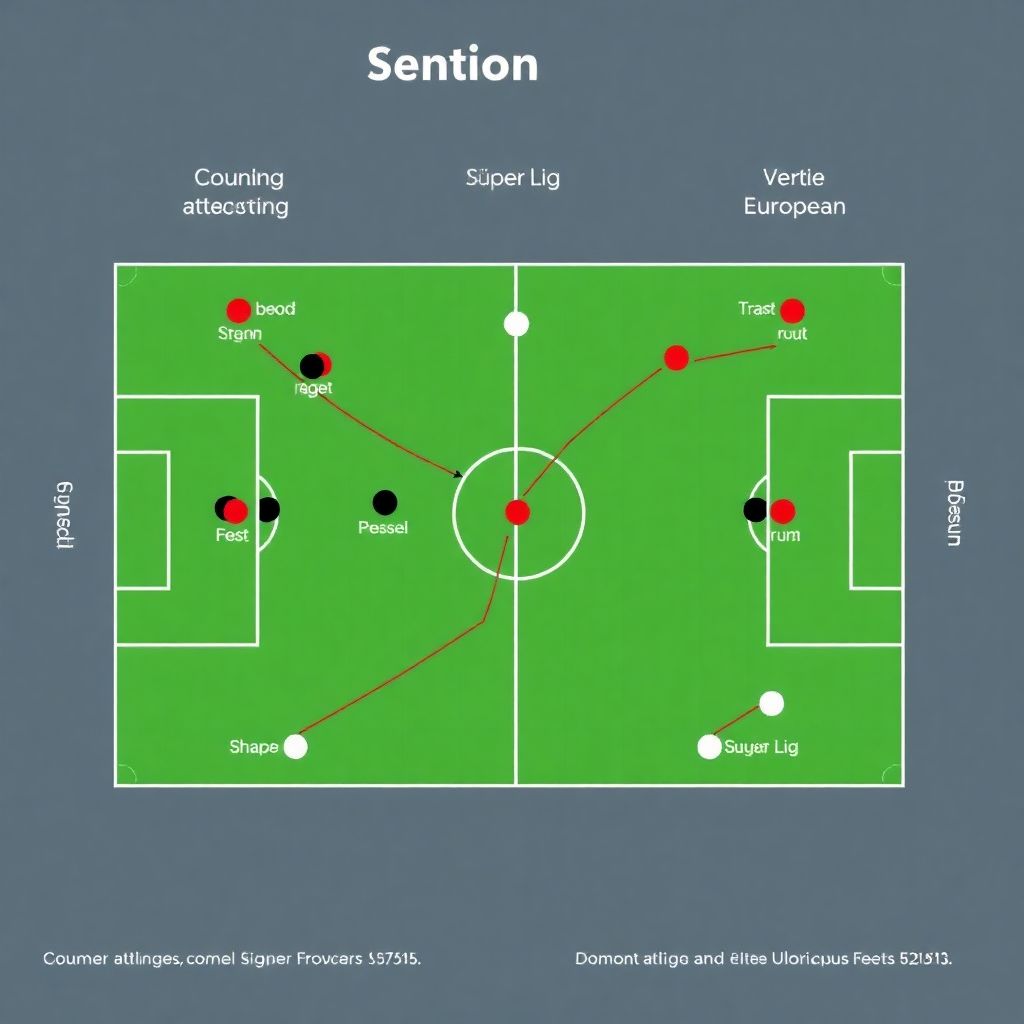
The best counter-attacking setup for your team depends on three factors: ball-winning zone, sprint capacity of your front line, and how bravely you defend space. Süper Lig sides offer direct, vertical templates; elite European clubs add refined pressing traps, rotations and control of transitions on both winning and losing the ball.
How the Counter‑Attack Wins Matches
- Counter-attacks punish disorganised defensive shapes faster than most positional attacks.
- Clear pressing and counter-pressing triggers decide whether you survive or score in transition.
- Running power and timing of forward runs often matter more than pure technical quality.
- Compact defensive blocks shorten passing distances for the first two counter passes.
- Wide players who attack the blind side of defenders create the highest-value chances.
- Training transition moments under fatigue brings match-like speed and decision making.
Defining Counter‑Attack Metrics: What to Measure
To compare transitional sides in the Süper Lig and the best counter attacking teams in europe, use consistent, practical criteria rather than only highlight clips. Below are metrics and coaching questions that help you decide which model fits your squad and league context.
- Ball recovery zone – Where do you want to win the ball: deep block, mid-block, or high press? This drives your starting shape, line height, and distance to the opponent’s goal after regain.
- Time from regain to shot – How quickly do you look for goal after recovering the ball? Ultra-direct teams attack in very few passes; more controlled counter sides secure the second pass before risking the killer ball.
- Vertical passing intent – How often is the first or second pass played forward into space or into a runner’s feet on the half-turn? Safe square passes give the opponent time to reorganise.
- Support distances and running lanes – Do the nearest three players to the ball provide clear depth, width, and a central option? Overly long distances kill the chance; overly short distances crowd the ball carrier.
- Speed of the front line – How many attackers can win footraces in open space? Your choice between early through balls versus carry-and-link patterns depends directly on this.
- Defensive compactness before regain – How tight are your lines when the opponent loses the ball? Compact teams naturally create shorter, cleaner counter-pass options.
- Counter-press resistance – Can your players receive under pressure, roll opponents, or play first-time passes when the opponent counter-presses? This decides whether your counter-attack survives the first two seconds.
- Turnover risk and rest defence – When your counter fails, is your structure ready to defend the next transition? Good counter teams prepare a “rest defence” that protects against immediate counters.
- Coaching and repetition load – How much training time can you invest in patterns similar to those covered in transition play football coaching courses, including both attacking and defensive transition drills?
Süper Lig Masters: Teams Built Around Rapid Transition
Several clubs often included among the super lig best teams 2024 have built strong identities around rapid transitions. Below is a stylised comparison of five common Süper Lig counter-attack models and when they are most appropriate.
| Variant | Ideal For | Strengths | Limitations | When to Choose |
|---|---|---|---|---|
| Vertical Galatasaray Model | Teams with powerful target striker and aggressive wingers | Immediate vertical balls, strong aerial duels, second-ball dominance, rapid wide overloads after the first pass forward | Can become predictable; requires physical forwards; risk of long clearances instead of controlled counters | Use against high defensive lines and full-backs who advance very high, leaving space behind |
| High-Press Fenerbahçe Model | Squads with high work-rate, pressing forwards, and mobile midfielders | Regains the ball close to goal, creates frequent shots from turnovers, keeps opponents under constant mental pressure | Demanding physically; risky if the press is broken; back line often exposed in big spaces | Use against opponents who insist on building short from the goalkeeper and struggle under pressure |
| Compact Trabzonspor Mid-Block | Balanced squads with good central defenders and counter-running wingers | Solid defensively, short distances between lines, clear first pass options on regain, flexible for different opponents | Fewer regains close to the opponent’s box; counter-attacks start deeper and require more running | Use against possession teams that circulate the ball but lack real speed in behind your defence |
| Başakşehir Control-to-Counter Setup | Technically strong midfielders with calm decision making | Secure first and second passes, waits for the right moment to accelerate, can switch between possession and transition focus | Less explosive; can appear slow or passive if players do not recognise triggers to break forward | Use against opponents that over-commit numbers forward but leave central pockets unprotected |
| Adana Demirspor Wide Break Model | Teams with very fast wingers and full-backs willing to overlap in transition | Attacks the flanks at pace, stretches back lines horizontally, creates low crosses and cut-backs | Relies heavily on wide players’ fitness and quality; central areas can be underused | Use against narrow defences and centre-backs who struggle when dragged into wide channels |
Elite European Models: Contrasting Philosophies and Outcomes
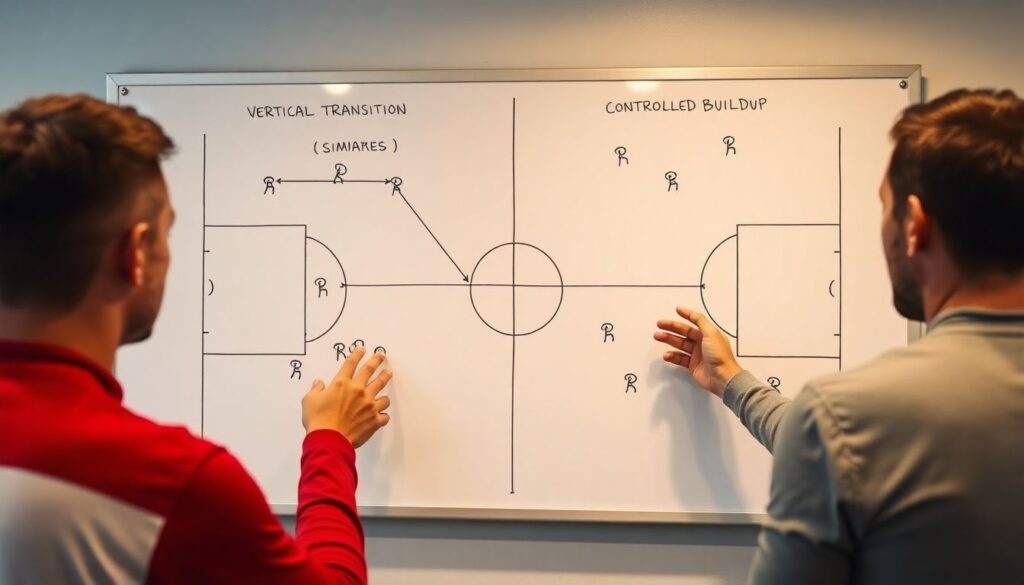
Looking at european football statistics counter attacks, elite clubs show different approaches, from pure verticality to more controlled transition play. These scenario-based guidelines help you choose a blueprint that fits your players and domestic context.
- If your team lacks pace but has smart passers, then follow a “control-to-counter” model similar to certain European possession sides: focus on recovering the ball in midfield, securing short passes, then releasing late runners rather than playing early through balls.
- If your team has explosive wingers and a mobile nine, then copy the fast-break approach used by many best counter attacking teams in europe: defend compact, spring diagonally into wide spaces, and encourage forwards to attack defenders’ blind sides instead of checking to feet.
- If your defenders are excellent in duels but weak in build-up, then favour a direct, deep-block model: accept long defending phases, invite pressure, and trigger counters from clearances and tackles rather than elaborate pressing traps.
- If your midfield is energetic and positionally intelligent, then adopt a mid-to-high press hybrid: guide opponents into specific zones, win the ball facing forward, and create frequent transition shots just outside or inside the box.
- If your league opponents mostly sit in a deep block against you, then do not rely only on transitions; blend structured positional attacks with an aggressive counter-press to create short counters whenever you lose the ball in the final third.
- If you expect European competition, then develop two models: one more aggressive for home games and one more conservative for strong away opponents, switching emphasis between pressing-to-counter and deep defending with rare but very direct counters.
Player Archetypes That Power the Break
Choosing the right player types for transition football is as important as your overall structure. Use this checklist to align recruitment and training with your desired counter-attack model.
- Define your primary ball winners: one or two midfielders or defenders who reliably regain possession and can play a clean first pass under pressure.
- Identify at least one vertical passer: a centre-back, pivot, or number ten who consistently finds runners early with forward-facing passes.
- Secure two sprint threats: wingers or inside forwards who can attack space repeatedly, changing tempo from jogging to full sprint in an instant.
- Select the right centre-forward profile: target striker for long, direct play; mobile connector for combination counters; deep-running poacher for through-ball attacks.
- Include a carrier between the lines: a player who can drive forward on the dribble after regain, forcing defenders to step out and freeing runners.
- Ensure supportive full-backs: at least one who can overlap or underlap in transition, creating width or interior passing lanes without unbalancing the team.
- Choose a goalkeeper comfortable with long and medium distribution, starting counters with throws or passes into advanced spaces when the opponent is stretched.
Triggers, Structure and In‑Game Adaptations
Even with the right model, coaches often repeat similar errors when implementing counter-attacking strategies. Recognising these patterns helps refine both match preparation and live adjustments.
- Unclear pressing and counter triggers that leave players hesitating between holding shape and jumping to press, slowing down transition opportunities.
- Lines too stretched vertically before losing the ball, creating impossible distances for the first and second passes of the counter.
- Overloading the ball side in possession without preparing rest defence on the far side, leading to dangerous counters against your own team.
- Relying on one star runner for all breaks instead of coaching coordinated movements from at least three players after each regain.
- Substitutions that remove running power or ball-winning ability, unintentionally turning a counter-attacking side into a passive block with no outlet.
- Ignoring momentum shifts, continuing to press high when the team is tired and no longer able to sprint back in transition.
- Underestimating the role of set-pieces in transition, failing to organise both attacking corner structures and immediate counter-press or retreat plans.
- Training transitions only in large, open-pitch exercises rather than including tight, realistic game situations with limited touches and specific zones.
- Copying famous european models without adapting them to local refereeing tendencies, pitch quality, climate, and fixture congestion.
Decision-tree guide for choosing your counter-attack setup
- If your opponent presses high and leaves space behind, choose a vertical or wide-break model with early forward passes and aggressive winger runs.
- If your opponent sits in a deep block and rarely commits players forward, focus on controlled possession plus strong counter-pressing to create short counters in the final third.
- If your opponent is a balanced, possession-oriented side with moderate pressing, select a compact mid-block, forcing them wide and breaking into the channels after regains.
- If your opponent relies heavily on one creative midfielder, design pressing traps around that player, winning the ball near them and countering into the area they vacate.
- If your opponent is superior in individual quality, defend deeper with clear counter lanes and prioritise fast, low-risk transitions rather than frequent but chaotic presses.
Side‑by‑Side Data Table: Süper Lig vs Top European Counter‑Attackers
For pure open-field transitions and emotional swings, many Süper Lig sides offer the best laboratory for applied counter-attacking, while elite European clubs provide cleaner structures and more consistent execution. The optimal choice depends on whether your priority is learning chaos management or replicating high-control, high-efficiency transitions.
| Aspect | Typical Süper Lig Counter Teams | Typical Elite European Counter Teams |
|---|---|---|
| Primary recovery zone | Deeper and mid-block, with frequent tackles and interceptions near the box | Higher up the pitch, including advanced presses and structured traps |
| Transition style | Highly vertical, fast and often direct into the channels or target striker | Balanced between quick breaks and controlled, multi-pass transitions |
| Risk management | More open games, greater acceptance of end-to-end phases | More compact rest defence, stronger control of second transitions |
| Coaching focus | Individual duels, mentality, and exploiting emotional momentum | Detailed pressing schemes, synchronised movements, data-supported analysis |
| Best use case | Developing adaptability to chaos and teaching players to attack space bravely | Refining structured pressing, timing, and decision making under clear frameworks |
Decisions, Doubts and Tactical Clarifications
How do I decide between a high-press and deep-block counter-attacking style?
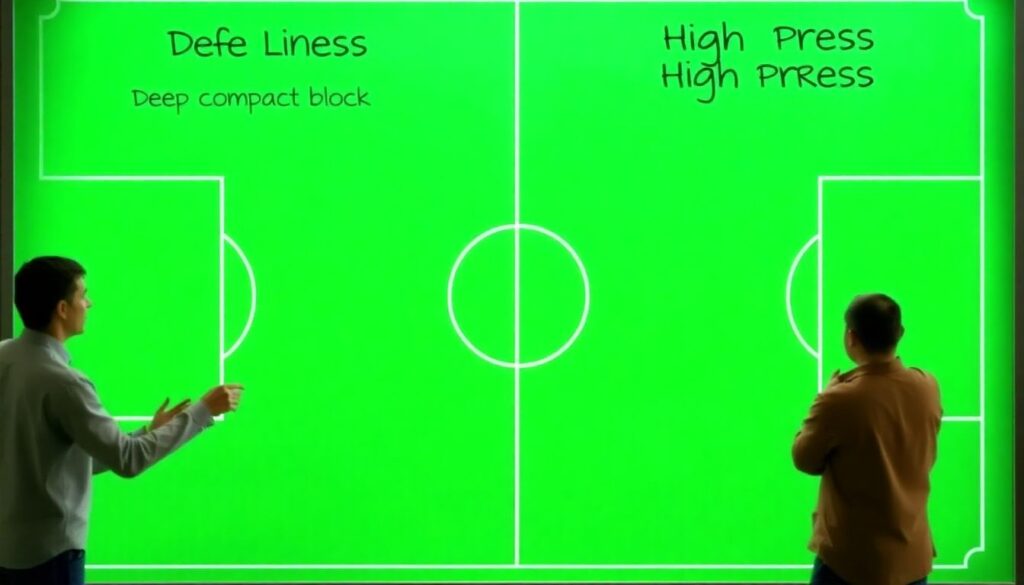
Match your style to your players’ running power and defensive quality. If your back line struggles in big spaces, favour a deeper block. If your forwards press well and recover quickly, a higher press creates more counters near the opponent’s goal.
Can I combine possession football with strong counter-attacks?
Yes, if you prepare your rest defence and counter-press carefully. Possession sides can still be deadly in transition by reacting immediately on loss, surrounding the ball, and attacking disorganised opponents after regains in advanced zones.
What should I prioritise first in training counter-attacks?
Start with clear triggers for when to break, then rehearse the first two passes after regain. Once players know who runs, who passes, and who secures the second ball, you can add more complex patterns and finishing variations.
How many players should join each counter-attack?
Aim for three to five, depending on your risk appetite and scoreline. Too few runners make the attack easy to defend; too many leave you exposed if the move breaks down and the opponent counters back.
Are counter-attacks sustainable across a full season?
They are sustainable if you manage loading, rotations, and squad depth. Counter-attacking demands repeated high-intensity sprints, so monitor fatigue and adjust pressing height and volume across congested periods.
Do I need detailed video and data to improve transitions?
Video and data from football tactics counter attack analysis are helpful but not mandatory. Even simple clip reviews and basic transition statistics can highlight patterns in your recoveries, first passes, and shot locations after counters.
Which coaching education helps most with transition play?
Look for transition play football coaching courses or modules that cover both attacking and defensive transitions, including pressing traps, rest defence structures, and game-specific counter-attacking drills rather than only generic fitness work.