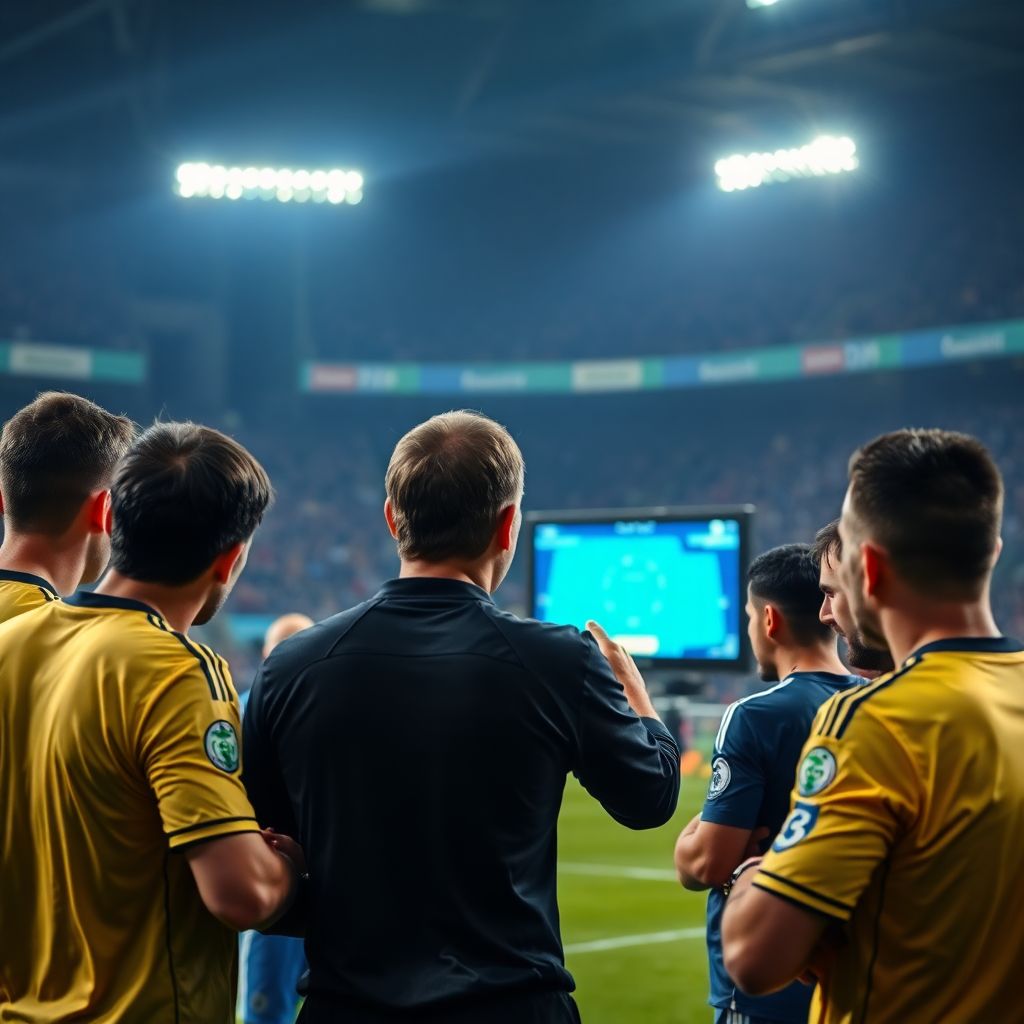
Video Assistant Referee (VAR) has shifted refereeing from pure on‑field perception to a hybrid of live judgment and remote video support. In the Süper Lig and across Europe, this change mainly affects goal decisions, penalties, offsides and serious misconduct, altering how referees manage risk, time, player behaviour and match control.
Refereeing at a Glance: VAR’s Core Effects
- Moves crucial decisions from single-angle perception to multi-angle video review, reducing clear and obvious errors.
- Changes referee risk management: officials can delay whistles and “wait for VAR” on tight offsides and penalty incidents.
- Introduces new stoppages and review protocols that affect match rhythm and added time calculation.
- Shifts coaching tactics, with deliberate pressure on VAR during high-stakes moments and planned reactions to checks.
- Raises transparency expectations, especially during VAR controversies Super Lig fans follow closely every week.
- Aligns Süper Lig practice more closely with how VAR changed football refereeing in Europe in UEFA club competitions.
Technical Anatomy of VAR in the Süper Lig
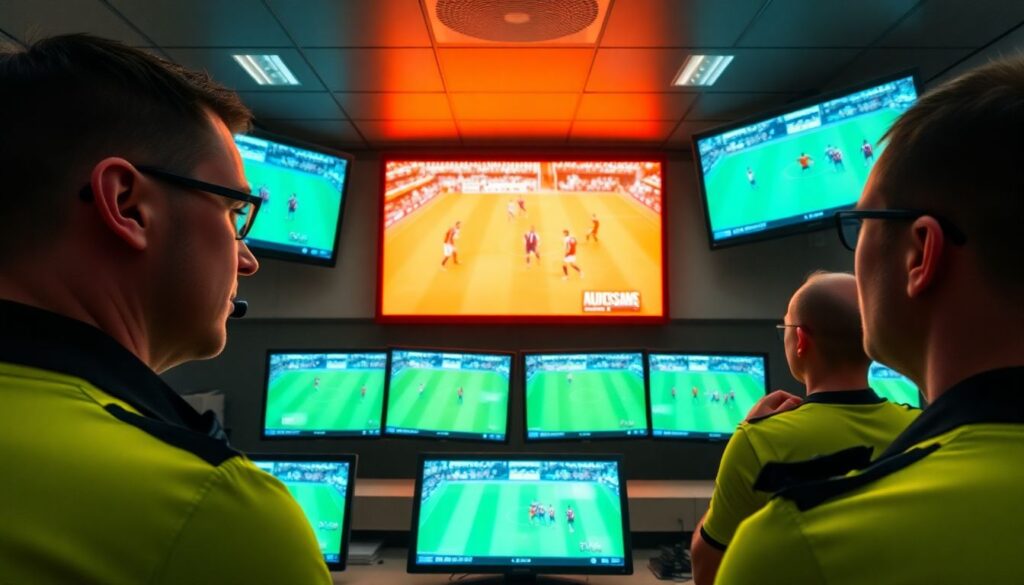
In the Turkish Süper Lig, VAR is a dedicated video assistant referee system operating from a centralized replay room with direct communication to the on‑field referee. Multiple high‑definition cameras, offside lines and replay tools allow the VAR team to review specific match-changing incidents in real time.
The protocol is deliberately narrow. VAR can intervene only for four categories: goals, penalties, direct red cards and cases of mistaken identity in disciplinary sanctions. Within those categories, the threshold is “clear and obvious error” or “serious missed incident”, not simply “better decision after replay”.
The same technology stack is broadly aligned with video assistant referee technology in Super Lig and UEFA competitions, although camera counts and angles may differ between league, cup and European fixtures. UEFA matches often benefit from more broadcast cameras, which can influence how conclusive an offside or handball review becomes.
For clubs, understanding this technical anatomy matters because tactical expectations should be calibrated to what VAR can not do: it does not re‑referee the game, it only repairs major errors in specific zones.
- Remember VAR only covers goals, penalties, direct reds and mistaken identity; everything else remains standard refereeing.
- Camera quantity and angle quality influence what VAR can prove; borderline contacts may stay in the “grey zone”.
- Do not expect identical outcomes between domestic and UEFA games, because technical setups and crews can differ.
Decision-Making Workflow: On-field Officials and VAR Teams
The VAR workflow is a structured sequence that defines who decides what and when. Understanding this helps coaches and players predict likely outcomes and manage their reactions during tense moments.
- On-field decision first: The referee and assistants make their live decision (goal, no goal, penalty, offside, card) based on what they see, including delayed flagging on tight offsides.
- Silent VAR check: Every such incident is automatically reviewed in the background by the VAR team while play is stopped or continues.
- Recommendation phase: If the VAR sees a potential clear and obvious error, they recommend an on‑field review (OFR) or, in objective cases like offside position, may advise a change without pitch-side monitor use.
- On-field review: The referee goes to the screen, watches specific angles and speeds, and then makes the final decision. VAR is advisory, not superior.
- Communication and restart: Once decided, the referee signals clearly, explains to captains if needed, and restarts with the correct method (kick-off, penalty, dropped ball etc.).
This sequence is broadly the same in the Süper Lig, other major European leagues and UEFA competitions, with small differences in communication style and how often on‑field reviews are preferred.
- Coach staff to watch the referee, not the VAR monitor; the key moment is when the on‑field referee finishes the OFR.
- Use the delay during a check to organise defensive or attacking shape for the likely restart.
- Accept that the referee keeps ultimate authority; arguing with the fourth official rarely influences a VAR-based decision.
Impact on Game Management: Time, Flow and Tactical Responses
VAR has measurable influence on how the game flows and how teams manage time. Even without quoting exact statistics on VAR decisions in European football, patterns are clear to players, coaches and analysts across leagues.
Firstly, there are more structured stoppages. Long checks for penalties or offside lines can break momentum, especially in high-tempo Süper Lig matches. Coaches must anticipate emotional swings: a celebrated goal may be disallowed after review, or a seemingly harmless cross can result in a VAR-generated penalty.
Secondly, “play to the whistle” now includes “play through the possible VAR”. Defenders must finish actions even if they see a flag delayed, and attackers are encouraged to continue runs, trusting that incorrect calls can be corrected later.
Thirdly, the impact of VAR on match results in Super Lig means late-game management is more volatile. A stoppage-time goal or handball review can flip a match outcome, so substitution and time-wasting strategies must consider potential lengthy VAR delays and extended added time.
- Prepare players for emotional control during long checks; rehearsed breathing or captain-led huddles can maintain focus.
- Plan set-piece options for both outcomes of a key VAR decision (penalty given vs. corner/free-kick instead).
- Assume more added time; condition players for high-intensity efforts deep into stoppage time.
Statistical Shifts: Penalties, Offsides and Disciplinary Patterns
Across Europe, analysts use statistics on VAR decisions in European football to track how penalties, offsides and red cards change with technology. Even without precise numbers, consistent tendencies emerge that also appear in the Süper Lig.
More penalties for handball or contact in the box are awarded when replays expose details that were hard to see live. Marginal offsides, especially with line-drawing technology, are given with greater confidence, leading to more disallowed goals but also some goals reinstated after wrongly raised flags. Serious foul play and off-the-ball incidents are less likely to be missed completely, as VAR can review them retrospectively within protocol limits.
However, VAR cannot solve every ambiguity. Many handball and foul decisions remain subjective, even with slow motion, and leagues differ in how strictly they instruct video assistants to intervene. Comparisons between the Süper Lig and other European leagues show variance in intervention thresholds and communication styles as much as in raw decision counts.
- Expect a slightly higher risk of penalties and disallowed goals for careless defensive positioning and late tackles.
- Train defenders on body shape in the box to reduce involuntary handball risks that VAR will detect.
- Review your own matches with a “VAR lens” to spot repeat behaviours that are likely to be punished on video.
- Do not assume VAR eliminates subjectivity; contact thresholds and accidental vs. deliberate handball remain interpretative.
- Accept league-to-league differences; what triggers VAR in a UEFA game may not in a domestic match, and vice versa.
- Beware over-relying on VAR to “save” you; off-the-ball tactical fouls can still slip outside its practical scope.
Communication, Transparency and Stakeholder Trust
VAR has changed how referees communicate and how much transparency fans, players and coaches expect. In Turkey, as elsewhere, communication quality often shapes the perception of fairness more than the underlying decision itself.
VAR controversies Super Lig fans debate weekly often stem from unclear explanations, inconsistent on‑field review usage or perceived differences between “big club” and “small club” treatment. When spectators cannot hear referee-VAR conversations and broadcasters show selective replays, suspicion grows even if protocol was followed correctly.
In UEFA club matches, some competitions have experimented with more detailed post‑match reports or brief referee explanations, which improves acceptance even among disappointed teams. For the Süper Lig, consistent signals, clear body language and post‑game clarification through official channels are key to building trust around the system.
- Myth: VAR makes refereeing fully objective. Reality: it adds tools but does not remove human interpretation.
- Myth: VAR favours big clubs by design. Reality: bias debates usually reflect communication gaps and existing trust issues.
- Myth: Every contact is now a penalty. Reality: the “clear and obvious” standard still applies, even with slow motion.
Implementation Challenges: Consistency, Training and Infrastructure
Implementing VAR is as much about people and processes as about cameras. Consistency between matches, training quality of VAR officials and reliability of technical infrastructure all influence outcomes in the Süper Lig and across Europe.
A practical mini-case: imagine a Süper Lig match where two similar handball situations occur in different halves. In the first half, VAR recommends a penalty after an OFR; in the second, the referee is not sent to the monitor. From a club perspective this looks inconsistent, but the internal logic might be that the second incident did not reach the “clear and obvious” threshold based on the available angle.
Where infrastructure is weaker (fewer camera angles, transmission delays), VAR teams are understandably more cautious. Training must therefore focus not only on laws of the game, but on shared intervention criteria, replay selection skills and communication discipline, so that decision patterns feel predictable to teams.
// Simplified VAR intervention logic
if (incident.type in [GOAL, PENALTY, RED_CARD, IDENTITY]
    && error_is_clear_and_obvious(incident, replays)
) {
    recommend_on_field_review();
} else {
    "check complete" // no intervention
}
- Push for regular briefings between refereeing bodies and clubs to align expectations on VAR thresholds.
- Understand that borderline calls may differ between stadiums with richer vs. poorer camera coverage.
- Support referee education; well-trained officials manage VAR more confidently and explain decisions better.
Practical Pitch-Side Tips for Working With VAR
Coaches and analysts in Turkey and Europe must integrate VAR awareness into match preparation, especially given how VAR changed football refereeing in Europe over recent seasons.
- Assign one staff member to track VAR signals and relay likely outcomes, so the head coach can focus on tactics.
- Rehearse specific “VAR scenarios” in training: disallowed goal reaction, sudden penalty award, last‑minute red card.
- Use half-time to quickly review any first-half VAR clips available on broadcast to adjust player behaviour.
- Educate players on acceptable protest limits; repeated dissent after VAR decisions often leads to needless bookings.
End-of-Match VAR Awareness Checklist
- Have you reviewed all VAR-related incidents from the match with players, focusing on controllable behaviours?
- Did your tactical plan include contingencies for sudden penalties, red cards and disallowed goals?
- Are your defenders trained in box behaviour that minimises VAR-detected fouls and handballs?
- Do staff and players clearly understand what VAR can and cannot review under current Süper Lig and UEFA rules?
- Have you logged any recurring VAR patterns (for or against) to address in future training sessions?
Quick Answers to Practical VAR Operational Questions
When can VAR intervene in a Süper Lig match?
VAR can intervene only for goals, penalty incidents, direct red cards and mistaken identity in disciplinary sanctions. Outside these four categories, on‑field decisions stand unless changed by the referee based on input from assistants or additional information.
Does VAR check every goal and penalty automatically?
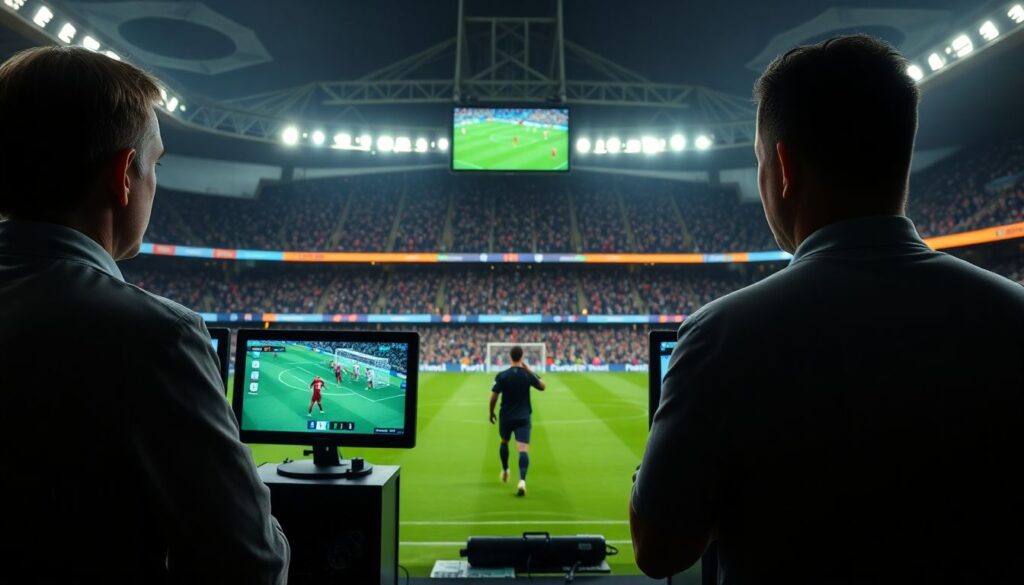
Yes, every goal, potential penalty and red-card incident is checked silently by the VAR team. However, only situations judged as clear and obvious errors or serious misses trigger an on‑field review or recommendation to change the decision.
Why do some similar incidents lead to VAR reviews and others do not?
The key factor is the “clear and obvious” threshold and available camera evidence. If replays do not clearly show an error, or if contact is considered within normal football tolerance, VAR will usually confirm the on‑field decision.
Can VAR overrule the referee directly?
No. VAR is purely advisory. The referee on the pitch always makes the final decision, whether after an on‑field review at the monitor or based on information relayed by the VAR team for objective facts like offside position.
Why do VAR checks sometimes take so long?
Lengthy checks usually involve complex incidents with multiple elements: possible offside, foul, handball or interference. The VAR team must review several angles and speeds, agree internally and then communicate clearly to the referee before any change is recommended.
Are VAR standards the same in the Süper Lig and UEFA competitions?
The core principles are aligned, but competition organisers can issue different guidelines on intervention thresholds and handball interpretations. Also, more cameras in UEFA matches can make some decisions easier to judge conclusively than in domestic fixtures.