
Data-driven football scouting uses structured match and tracking data to support, not replace, traditional eyes-on scouting. In Turkey and across Europe, clubs combine video, statistics and live reports to filter targets, compare options and manage risk, while staying compliant with data regulations and realistic about model limitations.
Headline Insights: How Analytics Reshape Scouting Decisions
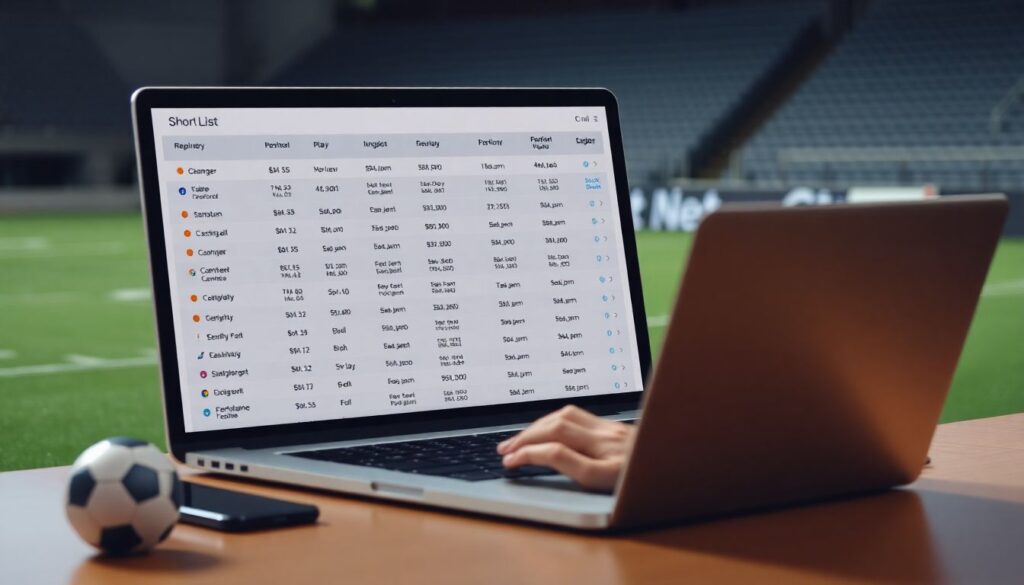
- Analytics speed up shortlist creation by filtering thousands of players into 20-50 realistic options per position and budget.
- Contextual metrics (league strength, role, minutes, age) matter more than any single performance number.
- Scouting models work best as a triage layer; final decisions still rely on live scouting, medical checks and character due diligence.
- Turkish clubs can close information gaps versus Western Europe by using the same event and tracking data, even with smaller budgets.
- Risk management means tracking model errors, respecting data privacy laws and limiting how widely internal insights are shared.
- Impact should be measured on transfer outcomes over several windows, not on one or two “hits”.
From Gut Feel to Data Streams: The Evolution of Scouting in Europe and Turkey
Modern scouting in Europe evolved from handwritten notes and VHS tapes to integrated video, tracking and event-data platforms. Clubs like Liverpool or Brentford use analytics to systematically search markets, compare profiles and quantify risk, then send scouts with precise briefs instead of open-ended trips.
In Turkey, leading Süper Lig clubs such as Galatasaray and Fenerbahçe increasingly rely on a data-driven football scouting platform to monitor secondary leagues, manage foreign-player limits and benchmark local talent against wider markets. Smaller clubs use targeted subscriptions to focus on key regions rather than global coverage.
This approach suits clubs that already have at least one analyst, a clear playing model and the discipline to log all scouting decisions. It is less suitable when ownership expects instant “magic” results, when budgets cannot cover even basic data, or when the head coach rejects analytics outright.
You should also delay big investments if your internal scouting process is chaotic, undocumented or constantly changing structure; data will only amplify that confusion. Start with stabilising roles, reporting formats and decision rights, then embed analytics gradually as an additional lens.
Which Metrics Matter: Performance, Context and Predictive Models
Before buying football scouting analytics software or any other tool, define which metrics fit your playing style, risk appetite and league context. For most clubs, three layers of information are needed: performance metrics, contextual modifiers and predictive flags.
Performance metrics include actions like shots, passes and defensive duels, but the key is how they are adjusted and grouped:
- Volume and efficiency: shots per 90, xG per shot, final-third entries, duel success rate.
- Role-adjusted output: full-backs judged by progressive runs and crosses; pivots by press resistance and coverage; strikers by shot quality and movement.
- Stability over time: how often a player maintains or improves output across seasons, leagues or coaches.
Context metrics turn raw numbers into realistic expectations:
- League strength and tempo: anchor your view of player performance data statistics football Europe by adjusting for pace and competitiveness of each league.
- Team style: high-press vs low-block, wing-focused vs central progression, possession vs transition, set-piece dependence.
- Usage pattern: minutes per start, schedule density, travel, typical partners in midfield or defence.
Predictive indicators help estimate future value rather than only describing the past:
- Age and development curve: projection windows for 18-21 vs 25-28-year-olds.
- Injury and load signals: minutes spikes, frequent short appearances, role changes after injuries.
- Adaptation risk: past moves between countries or leagues, language factors, climate and travel differences (especially relevant when moving into or out of Turkey).
To work with these metrics you will typically need:
- Access to an event-data provider or football data analysis service Turkey that covers your target leagues.
- Video-on-demand and tagging tools to verify numbers via clips.
- Simple database or BI tools (even spreadsheets at first) to store, filter and visualise players.
- Governance rules: who can create shortlists, who approves models, how disagreements between scouts and analysts are resolved.
Building a Scouting Data Pipeline: Sources, Tools and Integration
Before setting up your pipeline, be clear about key risks and boundaries:
- Do not store sensitive personal data beyond what your contracts and local laws allow.
- Avoid overfitting models on small samples (few matches, short tournaments) and treating rankings as truth.
- Limit access to internal valuations and algorithms to a small, trusted group.
- Make sure every algorithmic recommendation is traceable and reviewable by humans.
- Define scouting questions and constraints – List the positions, age ranges, contract situations and markets you care about most. Translate your playing model into observable requirements (e.g., “left-footed centre-back comfortable defending wide spaces”). This will guide which data and filters you actually need.
- Choose safe and reliable data sources – Evaluate at least two vendors before you buy football scouting data subscription access. Ask about league coverage, historical depth, update speed, data collection methods and legal compliance. For Turkey, prioritise providers that combine Süper Lig, 1. Lig and key European feeder leagues.
- Select core tools and platforms – Decide what lives in commercial tools vs in-house spreadsheets or databases.
- Use a stable football scouting analytics software or data-driven football scouting platform for searching players, running filters and watching video clips.
- Keep a simple internal database (even a shared spreadsheet) for club-specific ratings, notes and colour codes.
- Ensure you can export data if you ever switch provider.
- Design data intake and standardisation – Fix a weekly or bi-weekly rhythm for importing fresh data and updating lists. Standardise player IDs, league names and positions so you can safely merge data from different systems.
- Build role-specific scorecards – For each position, create 5-10 key indicators and weights rather than hundreds of columns.
- Full-backs: progressive carries, deep crosses, high-intensity runs, duel success.
- Strikers: xG per 90, touches in box, pressing actions, link-up passes.
- Centre-backs: aerial wins, line-breaking passes, pressed actions, recoveries.
- Integrate video and live scouting feedback – Every time a scout attends a match or prepares a video report, link their notes to the same player ID used in your data. Require scouts to mark which data-derived strengths/weaknesses they could confirm, adjust or reject.
- Establish decision and documentation rules – For any major signing, require a minimal package: data profile, video report, at least one live report and medical review. Store final decisions alongside rationale so you can later compare outcomes with model expectations.
- Monitor errors and refine models – Track cases where the model was enthusiastic but the player failed (false positives) and where the model was sceptical but the player thrived (false negatives). Adjust weights and thresholds after each transfer window instead of constantly tweaking mid-season.
Scouting Workflows in Practice: Case Examples from Turkish and European Clubs
Use this checklist to test whether your workflow looks more like successful Turkish and Western European examples than ad-hoc decision making:
- Each transfer target passes through a clear sequence: data filter → video assessment → live report → medical and character checks.
- Analysts and scouts share one central list of active targets rather than separate, conflicting spreadsheets.
- For a player in Scandinavia or Central Europe, your team can quickly produce player performance data statistics football Europe to benchmark him against Süper Lig options.
- At least one person is responsible for liaising with every football data analysis service Turkey you use, ensuring contracts, coverage and updates are understood.
- Coaches receive short, visual reports instead of raw tables; they can challenge assumptions and request specific additional views.
- Board members see a simplified view of risk: injury history, adaptation risk, salary impact and resale potential.
- Post-transfer reviews are standard: for hits and misses, you formally document what the model saw, what scouts saw and what actually happened.
- When a head coach changes, you adjust model weights and scouting filters rather than discarding the whole data infrastructure.
- Your approach for a big Istanbul club or a mid-table European side of similar size looks consistent: patient, documented, with clear ownership and timelines.
Risks and Constraints: Data Quality, Legal Limits and Competitive Leakage
Misusing analytics in scouting can easily backfire. These are frequent mistakes and how to think about them:
- Over-trusting small samples: Signing players on the back of a few high-xG games or a short tournament, without checking long-term trends or role changes.
- Ignoring league and team context: Assuming numbers from a dominant possession side in a weaker league will transfer directly to a mid-table Süper Lig or top-5 European league.
- Chasing novelty for its own sake: Building complex models with advanced metrics nobody in the club understands, which erodes trust instead of creating it.
- Data privacy and legal breaches: Storing medical data or personal information without explicit consent or outside secure systems, or mishandling contract details.
- Competitive leakage: Sharing dashboards, exports or even screenshots with external agents, friends or media, revealing your priority targets and valuation methods.
- Vendor lock-in without exit plan: Relying entirely on one vendor and not planning how to move if pricing or coverage changes, or if their reliability drops.
- Marginalising scouts: Using data to “prove” scouts wrong instead of integrating their expertise, which leads to resistance and underuse of the system.
- Poor internal communication: Presenting analytics as guarantees rather than probabilities, which sets unrealistic expectations at board and fan level.
Assessing Impact: KPIs, Transfer Outcomes and Continuous Validation
To judge impact honestly, compare realistic alternatives rather than an imaginary perfect world. Pragmatic options include:
- Baseline vs data-enhanced scouting: Compare transfer outcomes from the last pre-data seasons to current windows after implementing analytics, adjusting for budget and league position.
- Different data-intensity levels: For minor signings or youth loans, use lighter screening; for core starters, require full data, video and live assessment. See where additional effort truly adds value.
- Vendor and model comparisons: Periodically compare shortlists generated by different platforms or by adjusted vs unadjusted models. Focus on how many realistic, club-fit options each method surfaces.
- Scenario without internal platform: For very small clubs, consider relying on a single, well-chosen external provider plus disciplined manual work instead of building complex internal infrastructure that you cannot maintain.
By tracking these alternatives consistently, you can show boards and coaches how analytics support better decisions, even if they do not win every individual debate. Over time, trust grows when you transparently highlight both successes and failures and refine processes accordingly.
Targeted Answers for Implementation and Risk Management
How should a mid-sized Turkish club start with analytics without overspending?
Begin with one reliable event-data provider covering Turkey and your main target markets, plus a basic video tool. Focus on two or three key positions, build simple scorecards, and run pilot processes for one transfer window before scaling budgets or complexity.
How do we convince traditional scouts that analytics will not replace them?
Involve scouts early in designing metrics and filters, and ask them to validate or challenge data-based shortlists. Emphasise that analytics narrow the search and reveal hidden names, while live observation and context remain decisive for final sign-off.
What safety checks should we run before trusting a model for major signings?
Test the model on past transfer windows, comparing its top recommendations with actual outcomes and prices. Check sensitivity to small data changes, make sure all inputs are well-documented, and require at least one human review step before any recommendation goes to the board.
How often should we update scouting models and weights?
Adjust weights no more than once per season, ideally around off-season review, unless a major tactical shift forces a change. Frequent tweaks create noise and distrust; instead, log model errors during the season and use that evidence to guide structured updates.
Is it risky to depend on a single football scouting analytics software vendor?
Yes, full dependence is risky. Maintain local copies of key data, document your metrics and scorecards independently, and periodically test an alternative platform so you have options if pricing, coverage or service quality decline.
How can smaller European clubs compete with richer teams using analytics?

Focus on narrower markets or age bands that bigger clubs ignore, and exploit quicker decision cycles. Use affordable tools to spot undervalued profiles early, then rely on strong coaching and development to add value after signing.
What internal policies reduce the chance of leaks and misuse of scouting data?

Limit platform access to staff who need it, use named accounts instead of shared logins, and forbid exporting or forwarding full target lists outside the club. Provide clear written rules on how data and insights may be shared with agents or external partners.
Комментарии
Обратите внимание на сервис https://www.partytime78.ru — у них свой парк оборудования с 2010 года, привозят, монтируют и забирают всё сами. Формат подходит и для свадеб, и для юбилеев, и для тимбилдингов, и для семейных праздников на природе. Для тех, кто не хочет тратить кучу времени на организацию, это прям рабочее решение.