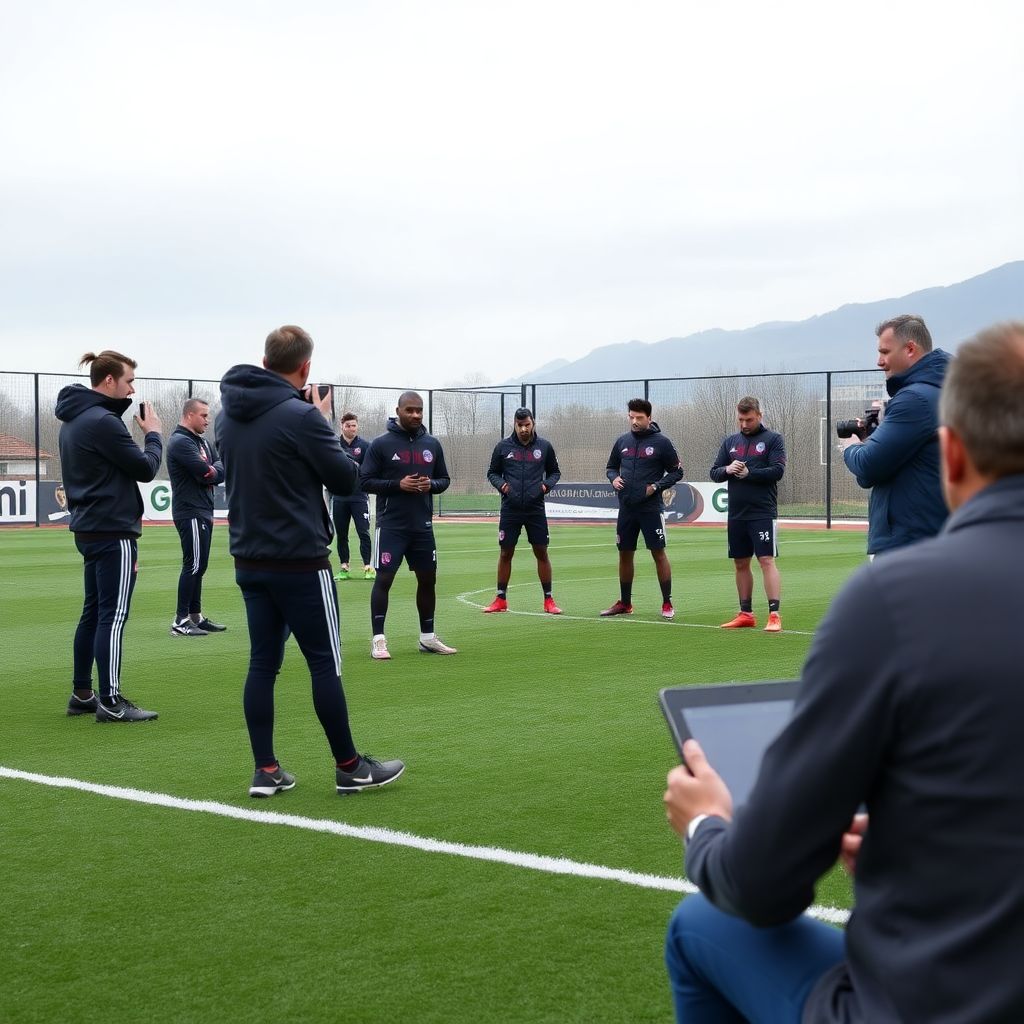
Turkish clubs are adapting to European high-intensity pressing by hiring press-oriented coaches, reshaping recruitment toward aggressive runners, and redesigning training around coordinated, collective pressure. Video and data analysis now target pressing triggers and compactness, while academies slowly align game models so teams can sustain a structured press across domestic and European calendars.
Snapshot: how Turkish clubs are shifting toward press-oriented football
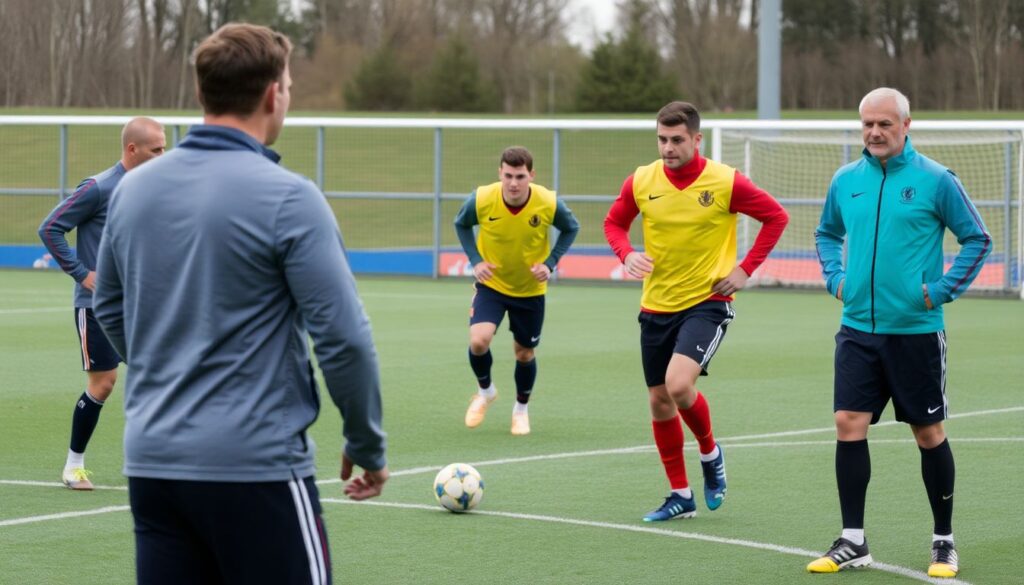
- Growing preference for coaches whose game model is built on proactive, high pressing and counter-pressing.
- Recruitment filters now value repeat sprint capacity, pressing intelligence and 1v1 defending in wide areas.
- Training weeks are restructured around pressing schemes, rest‑defence and recovery management.
- Clubs invest more in professional analysis of Turkish clubs European football performances, especially out-of-possession phases.
- Youth and B teams are asked to mirror the first-team pressing identity to create long‑term alignment.
- Data teams track pressing-related KPIs to justify tactical choices and player selection.
Common myths about high-intensity pressing in Turkish football
High-intensity pressing in Turkish football is often misunderstood as simply “running more” or “chasing the ball”. In reality it is a structured, collective behaviour where the whole block moves as one, manipulating opponents into predictable zones and winning the ball in pre-planned areas of the pitch.
Myth 1: “You cannot press with Turkish Super Lig players because they are too emotional and undisciplined.” In practice, several clubs have shown that when the game model is crystal clear and the roles are repeated every week in training, players adapt quickly. The problem is usually inconsistency of coaching ideas, not “mentality”.
Myth 2: “A high press will always leave you open and naïve in Europe.” The issue is not pressing high, but pressing badly. Turkish teams struggle when they jump without cover, or when the back line does not squeeze behind the forwards. Once distances become compact and rest-defence is organised, the press can actually reduce European exposure.
Myth 3: “The domestic calendar and travel make European-style pressing impossible.” While the Turkish calendar is demanding, smart rotation and periodisation allow clubs to peak in key league and European fixtures. Even smaller squads can implement a high press if the model is simplified and training loads are controlled, rather than copying the most complex European blueprints.
Why European pressing trends matter for Süper Lig tactics
- Benchmarking against European opponents. Clubs now analyse how leading teams press in UEFA competitions to understand where Turkish sides are being outplayed. This includes how top sides press goal-kicks, defend half-spaces and organise their counter-press after losing the ball.
- Translating ideas into realistic Süper Lig contexts. Rather than imitating elite clubs, Turkish coaches adapt pressing principles to the local tempo, officiating style and pitch conditions. For example, they might press more aggressively at home, where the crowd supports high energy, and manage risk more conservatively away.
- Aligning recruitment with pressing demands. Once a club decides to press higher, it stops signing static forwards who only finish moves. Instead it looks for strikers and wingers who trigger presses, close passing lanes and attack depth. Midfielders must cover large spaces, and centre-backs must defend high and be comfortable in big 1v1 duels.
- Using analysis platforms to study pressing. More staffs rely on subscription to European football tactical analysis platforms to break down pressing schemes frame by frame. This helps Turkish analysts collect practical clips that coaches can present in video meetings and then replicate on the training pitch.
- Responding to fan expectations and matchday reality. Supporters who buy Turkish Super Lig match tickets online or at stadiums now expect front-foot football similar to what they watch in European competitions. This social pressure pushes boards and coaches to build teams that can press high while still controlling games with the ball.
- Improving European away performances. A structured press gives Turkish sides a way to survive long periods without the ball abroad. Instead of sitting passively in a deep block, they can choose specific moments and zones to jump, making it harder for opponents to build comfortable rhythm.
Club-level restructuring: coaching hires, recruitment and youth pathways
For a Turkish club, moving towards high-intensity pressing is not just a tactical tweak; it is an organisational decision. The board, sporting director, head coach, academy director and performance staff all have to pull in the same direction to create a coherent, long-term identity.
- Press-oriented coaching appointments. Boards increasingly prioritise candidates with clear tracks in proactive play and high pressing. Interview questions go deep into pressing triggers, rest-defence and out-of-possession structures. This is often informed by professional analysis of Turkish clubs European football matches, showing where previous coaches fell short.
- Recruitment profiles aligned with the game model. Scouting departments shift from “best available player” to “best fit for our press”. They look for wingers who track back aggressively, midfielders with scanning habits, and defenders who are brave to defend space. Video and live scouting both focus on reactions immediately after ball loss.
- Physical and medical collaboration. High-intensity pressing demands coordination between coaches, fitness staff and medical teams. Clubs that adapt well hold integrated meetings: the tactical plan for the next block of matches shapes conditioning plans, recovery days and individual load management.
- Academy game model alignment. Youth teams are encouraged to adopt the same pressing principles as the first team: pressing cues, line heights, body orientations and communication habits. This means that when an academy player steps into the senior squad, he already speaks the same “pressing language”.
- Bridge structures: B teams and loans. Some clubs use B teams or carefully chosen loans to develop pressing habits in competitive environments. Partner clubs agree to use certain structures, allowing loanees to practice pressing roles similar to what they will play when recalled.
- Commercial and fan engagement. As high pressing becomes a part of club identity, it is reflected in media content and ticket campaigns. Fans who search for Turkish football tickets European competitions often see messaging about aggressive, modern football, reinforcing the culture around this style.
Training design and periodisation to sustain a coordinated high press
Once the organisational decision is made, the weekly micro-cycle must convert theory into habits. Well-adapted Turkish clubs do not just demand high energy; they script when, where and how to press, using drills that reproduce exact match contexts and the emotional pressure of Süper Lig stadiums.
Practical advantages clubs gain from structured pressing work
- Clear pressing triggers (back-pass, sideways pass, poor first touch) shared by the entire team, reducing confusion and late jumps.
- Improved compactness between lines, so that when one line presses, the others squeeze and protect central spaces.
- Faster transition from attack to defence, as forwards are trained to react instantly after loss instead of protesting or stopping.
- Better fitness specific to the game model: short, repeated sprints with decelerations, not just long-distance running.
- Greater tactical flexibility to adjust between high, mid and situational low presses within the same match.
Constraints and risks coaches must manage in the Turkish context
- Overloading players physically if every session is high intensity; sessions must alternate between tactical speed and lower-intensity pattern work.
- Copying complex European pressing schemes without simplifying them for local player profiles and schedule realities.
- Insufficient communication between staff members, causing mismatch between tactical demands and conditioning loads.
- Ignoring emotional momentum in heated derbies, where players may abandon structure and press chaotically.
- Underestimating recovery time after European away trips, then insisting on maximal pressing at the weekend.
Analytics and KPIs: what Turkish teams measure and why
Data and video analysis are now central to how Turkish clubs refine their pressing. However, the numbers only help when they are interpreted within the game model. Misreading pressing KPIs easily leads to wrong tactical conclusions and poor selection decisions.
- Confusing volume with quality. Counting total “pressures” without context is misleading. A team can have many chaotic presses and still defend poorly. Effective staffs combine metrics like PPDA, high turnovers and field tilt with video clips that show structure and distances.
- Ignoring the opponent and match state. High pressing numbers when chasing the game are not the same as a controlled press from minute one. Analysts assess pressing performance differently when a team is protecting a lead, chasing a result or playing with ten men.
- Overrating individual running data. GPS metrics like total distance and number of sprints are useful, but they do not prove that a player presses intelligently. Coaches cross-check runs with video: was the run on the pressing trigger, in the right lane, with the right body orientation?
- Underusing external benchmarks. Many clubs now complement internal data with insight from subscription to European football tactical analysis platforms, comparing their pressing metrics and structures to those of similar-level European teams instead of only looking at the domestic league.
- Neglecting communication KPIs. Some staffs track qualitative markers such as verbal cues, leadership in the press and reaction time after loss. These “soft” elements, coded in video, often explain why a technically sound press works one week and collapses the next.
- Failing to educate players on KPIs. Metrics are most powerful when simplified and shared with players. Short visual reports, not complex dashboards, help squads understand why specific pressing phases were judged successful or not.
Operational constraints: finances, player profiles and the domestic calendar
The shift toward high-intensity pressing happens under real-world limitations: budgets, squad depth, climate, travel distances and fixture congestion. Turkish clubs that adapt well accept these constraints and design practical solutions instead of chasing idealised European models.
Consider a mid-table club with limited funds but a clear ambition to press higher, especially at home and in European qualifiers. Below is a typical one-season adaptation blueprint used by such clubs.
- Summer: define a realistic pressing identity. The head coach and sporting director agree key principles: high pressing on goal-kicks, aggressive counter-press in the attacking third, and a more compact mid-block after minute 70. They avoid overpromising a full-game, all-out press that the squad cannot physically sustain.
- Targeted recruitment instead of full rebuild. With a tight budget, they sign only three players: a pressing forward, a dynamic box-to-box midfielder and a mobile centre-back. Scouting emphasises game clips where these players react after lost possession, not only their attacking highlights.
- Pre-season: adapt training and education. Pre-season friendlies are used to implement pressing cues against different build-up shapes. Staff members who attended football coaching courses high pressing tactics share simplified concepts with players through short video sessions and practical drills.
- Domestic and European rotation strategy. When the club qualifies for early European rounds, the coach identifies league matches where a slightly lower press is acceptable to protect energy. Internal rules specify which players start three games a week and which rotate, based on physical profiles and roles in the press.
- Mid-season review using internal and external analysis. At the winter break, analysts present data and video trends. They may use external professional analysis of Turkish clubs European football campaigns to show how similar teams balanced risk. The staff then adjusts line height or pressing triggers for the second half of the season.
- Fan and commercial communication. The club markets its “aggressive, front-foot” style to supporters looking for Turkish football tickets European competitions, setting expectations honestly: high energy at home, smarter game management away. This helps fans understand why pressing intensity may vary while the core identity remains proactive.
Practical doubts and concise clarifications
Can a Turkish club with a small squad still play high-intensity pressing?
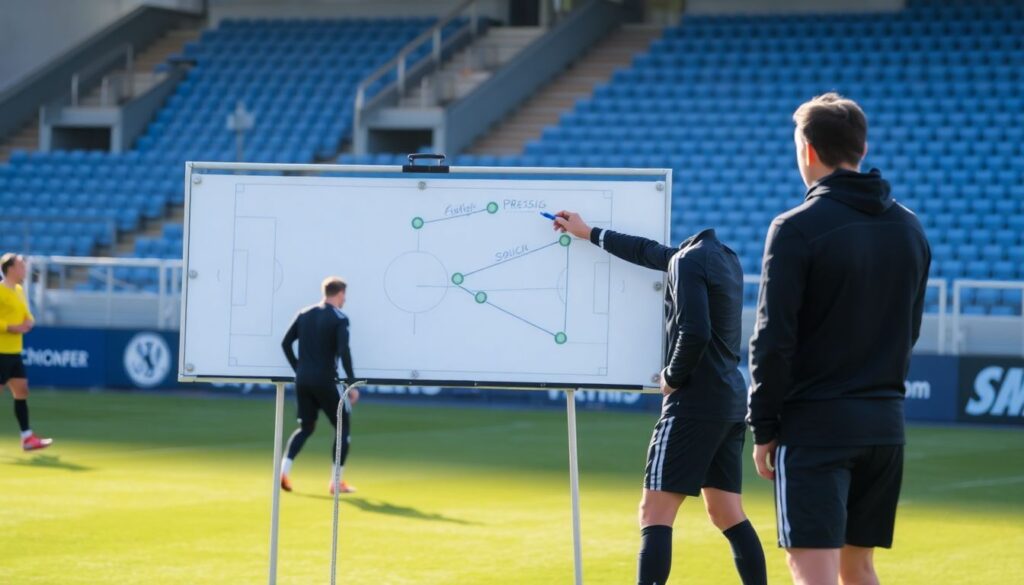
Yes, if the coach limits full-field pressing to specific phases and matches. The key is to define clear pressing zones, rotate intelligently and control training loads so that players can repeat high-intensity efforts without breaking down.
How many weeks does it take to implement a basic pressing structure?
A clear basic structure can be introduced over one pre-season if the coach repeats principles daily. Deeper automatisms and instinctive reactions usually require at least a half-season of consistent work with stable line-ups.
Do Turkish climatic conditions make pressing harder?
Summer heat and early-season humidity do increase physical stress. Successful clubs respond with shorter, more intense sessions, careful hydration and selective use of full-field pressing during the hottest periods of the season.
Is it necessary to copy a specific European club’s pressing style?
No. It is better to understand general principles and then adapt them to local player profiles, budget and the Süper Lig schedule. Copying a famous model without adaptation usually creates confusion and fatigue.
How should amateur coaches in Turkey start teaching pressing?

Begin with small-sided games that reward immediate pressure after loss and compact defensive shapes. Coaches can also use material from football coaching courses high pressing tactics, simplifying terminology and focusing on a few clear pressing triggers.
Does high pressing always mean playing attacking football?
High pressing is an attacking way of defending, but it does not automatically guarantee attractive possession play. Teams still need structured build-up and chance creation; the press mainly improves ball recoveries in dangerous zones.
Will fans be patient while a new pressing system is implemented?
Patience increases when clubs communicate the plan clearly and show visible intensity on the pitch. Even if results are inconsistent at first, supporters tend to appreciate effort and organisation, especially in high-profile home and European matches.