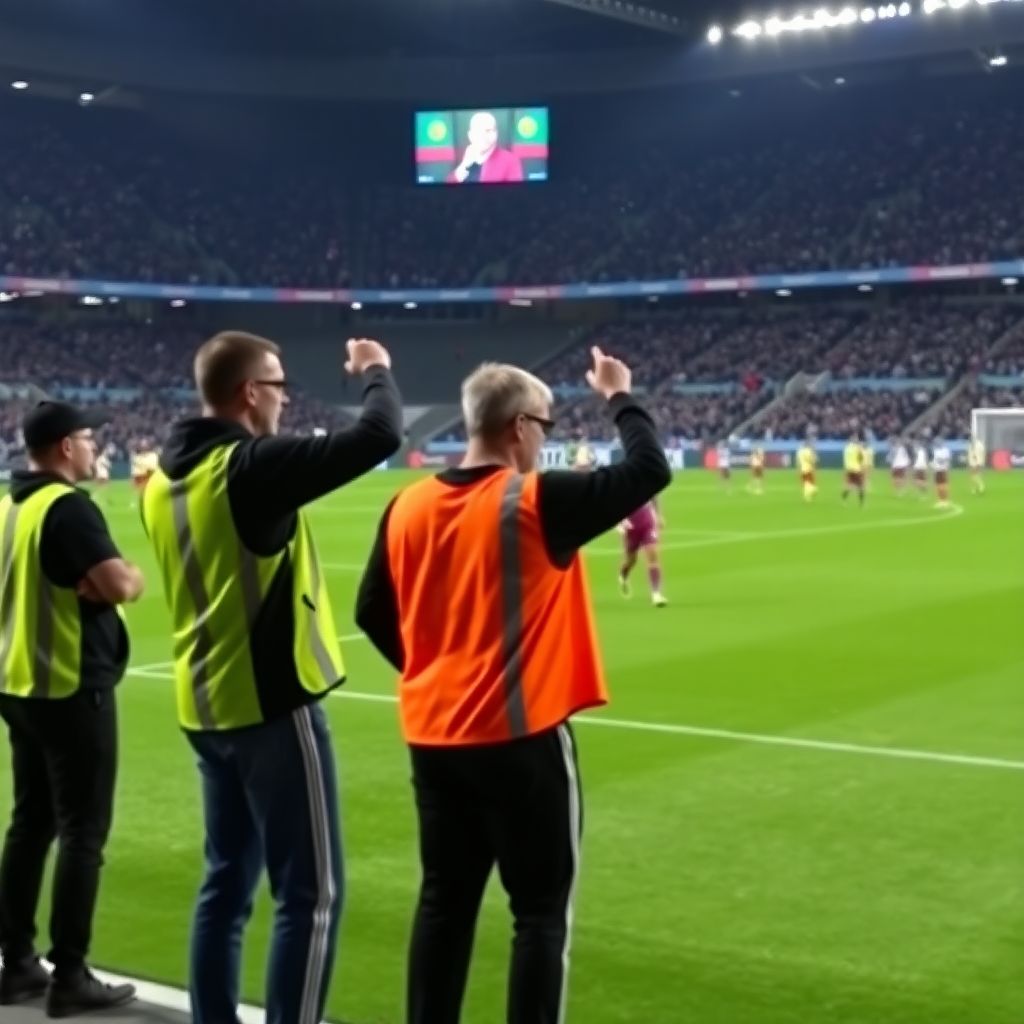
VAR in the Süper Lig slows and fragments tempo, forces higher defensive lines to be more precise, and pushes players into more calculated, less chaotic football. Common errors are emotional reactions during checks, poorly coached offside traps and penalty habits. These are quickly prevented with clear protocols, rehearsed routines, and mental preparation.
Snapshot of VAR’s Immediate Effects on Süper Lig Matches
- Match rhythm is more stop-start, with long checks followed by intense, short bursts of play.
- Defensive lines and offside traps are calibrated to centimetres, punishing lazy positioning.
- Set pieces and penalty behaviour are more choreographed and less improvised.
- Coaches delay or adjust substitutions around potential VAR interventions.
- Players’ emotional control is tested, especially after overturned goals or penalties.
- Referees must manage communication, stadium atmosphere and added time more transparently.
Match Tempo: Clock Management, Stoppages, and Rhythmic Shifts
In the Süper Lig, VAR has turned match tempo into a pattern of pulses instead of a smooth flow. Long checks for goals, handballs or offside can break momentum, then restarts create short, highly intense phases. This especially affects big derbies where emotions, crowd pressure and time wasting already challenge control.
The most common tempo-related mistake is treating VAR stoppages as “dead time”. Many Turkish teams let concentration drop, argue with the referee, or surround opponents. Meanwhile, smarter sides calmly reorganise rest defence, discuss the next pressing trigger, or set up a rehearsed restart pattern.
Another frequent issue is poor added-time management. Because checks can be long, referees may add generous stoppage time. Teams that assume “the game is done” at 90 minutes are punished late. This connects directly to the Super Lig VAR controversy today narratives, where fans complain about decisive goals deep into added time.
To prevent these errors quickly, staff should pre-assign roles for every stoppage: one player regroups the back line, another leads a short tactical huddle, and captains handle communication with the referee only. Treat every VAR pause as a mini time-out instead of a chance to complain.
Tactical Adaptations: Defensive Lines, Offside Traps and Pressing Triggers
VAR’s precise offside lines have reshaped Süper Lig tactics. Teams can no longer rely on “benefit of the doubt” for close calls. Defensive units that move late, or without clear reference points, concede goals that are then confirmed by replay rather than rescued by an assistant’s flag.
- Higher, stricter defensive lines. Coaches now push lines up but demand strict body orientation, constant checking of the ball and the nearest defender, and clear last-man communication to avoid marginal offsides being given against them.
- Reworked offside traps. Old “rush out and hope” traps are punished. Modern traps in the Süper Lig use clear triggers (bad touch, back pass, pressure on the ball carrier) and require all four or five defenders to jump together.
- Smarter pressing triggers. Because a regained ball plus one pass can lead to a VAR-checked goal, pressing is often focused on precise moments: goalkeeper under pressure, weak-foot centre-back, or isolated full-back.
- Risk-managed defending in the box. Defenders avoid grabbing shirts and clumsy pushes; instead they focus on body positioning and blocking lines, fully aware that VAR catches slight tugs on corners and free-kicks.
- Structured transitions. After losing the ball, teams immediately drop into a compact shape to avoid conceding in chaotic phases that can be tidied up and validated by VAR.
- Data-driven analysis. Technical staffs run their own analysis of VAR decisions in Turkish Super Lig matches to see patterns: which defenders commit most reviewable fouls, which pressing situations often lead to reviewed goals.
Mini match scenarios that show tactical changes in practice
Scenario 1: A full-back steps up half a second late, playing an opponent onside. Before VAR, an assistant might miss it. Now, the replay confirms a goal. The fix: daily line-stepping drills, strict verbal cues (“step!”) and video feedback for that full-back.
Scenario 2: A team presses wildly after losing the ball, leaving gaps. One through ball, goal, VAR check: onside and valid. Quick prevention: condition pressing to clear triggers only, and install a default “drop” call so that when triggers are absent, everyone falls into a compact block.
Scenario 3: At corners, a centre-back holds attackers by the shirt. Cameras catch it; VAR recommends a penalty. Rapid fix: replace grabbing with front-foot defending, zoning, and training defenders to track runs with body position and arm discipline.
Set Pieces and Penalty Dynamics Since VAR Implementation
Set pieces are among the biggest beneficiaries of VAR scrutiny in the Süper Lig. Corners and attacking free-kicks now receive multi-angle review, so grappling, blocking runs and off-the-ball fouls are more likely to be punished, even if the referee initially misses them.
- Penalty box wrestling on corners. Habitual shirt-pulling and subtle pushes that were part of Süper Lig folklore now often lead to review. Coaches must redesign marking schemes to rely less on holding and more on positioning and timing.
- Refined penalty routines. Goalkeepers cannot step far off the line early, and kick-takers’ feints are analysed in slow motion. Players rehearse their run-ups and target zones, while analysts clip every penalty from Super Lig live streaming with VAR replays to fine-tune habits.
- Second-phase organisation. Because VAR may confirm or overturn goals after rebounds or deflections, teams have to be organised not only for the first cross, but for loose balls that follow, staying switched on until the whistle.
- Attacking blocking schemes. Legal blocks to free team-mates must be cleaner. Illegal “screens” are spotted on replay, so coaches work on angles and distances that disrupt markers without provoking a VAR check.
- Psychological preparation for retakes. Players must expect penalties to be retaken for encroachment or goalkeeper movement, and have a pre-planned response rather than panicking after a decision from the booth.
The biggest mistake on set pieces is coaching “dark arts” that cameras cannot miss anymore. The fast prevention method is to audit your own corner and penalty footage like a VAR team would, removing routines that depend on hidden fouls.
Managerial Decisions: Substitutions, Time Management and Tactical Delays
Coaches in the Süper Lig now make decisions under an extra layer of uncertainty: the scoreboard can change several minutes after a goal due to VAR. This directly affects substitution timing, risk levels late in games, and how benches react to close offside or handball calls.
Match-going fans who buy Super Lig tickets big matches VAR decisions often expect drama around long reviews in title races and derbies. Coaches have to anticipate this tension rather than react emotionally, using that window to send clear tactical messages instead of arguing on the touchline.
Main advantages coaches can leverage
- Free “time-outs”. VAR pauses give benches time to adjust shape, explain new roles to substitutes, and cool down emotionally overheated players.
- More accurate risk-reward calls. Knowing that clear errors can be corrected, coaches may attack more aggressively late in games, trusting that wrongful decisions against them are less likely to stand.
- Better game-state planning. Staff can budget energy and substitutions assuming longer matches because of added time after reviews.
Key limitations and hidden risks for managers
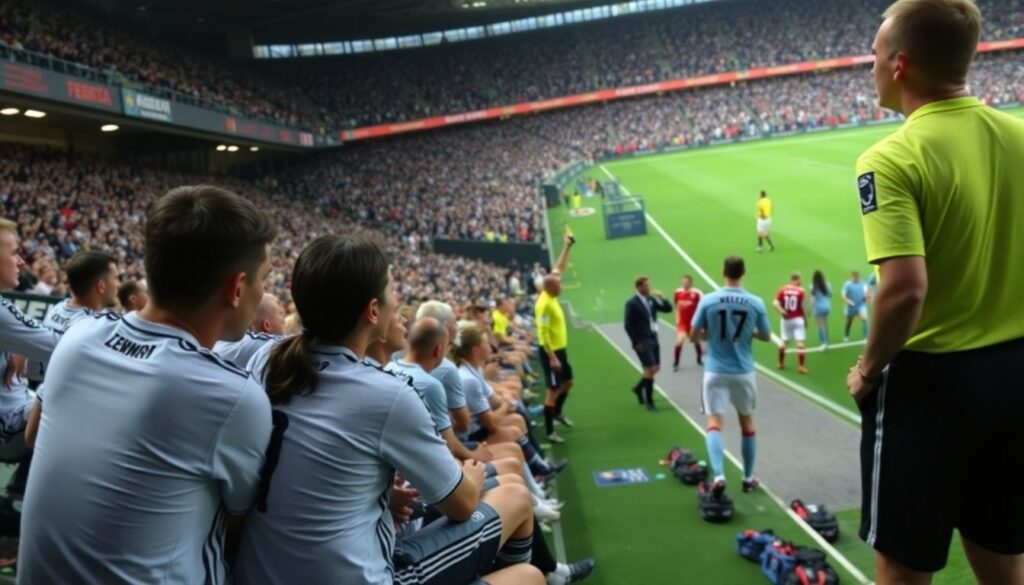
- Uncertain game state during reviews. Substituting a striker while a possible goal is reviewed can backfire if the goal is cancelled and your team is still chasing the match.
- Emotional contagion to players. Benches that visibly explode over reviews encourage players to lose focus and collect cards for dissent.
- Over-reliance on VAR “bailouts”. Assuming that “VAR will fix it” leads to lazy defending and sloppy box discipline.
To quickly reduce these errors, staff should pre-plan substitution scripts for three scenarios: goal confirmed, goal cancelled, and penalty awarded. One assistant tracks VAR possibilities, while another prepares tactical boards so the head coach stays calm and clear.
Player Psychology: Risk Aversion, Confidence Swings and Split-Second Choices
VAR magnifies every emotional swing in the Süper Lig. Goals are celebrated, then cancelled; penalties are awarded, then overturned. Players who are not mentally coached for this rollercoaster lose composure, either becoming ultra-cautious or reckless in response to perceived injustice.
- Mistake: Over-celebrating before confirmation. Players sprint to the corner flag, remove shirts, or provoke opponents before a goal is checked. Quick fix: team rule that celebrations stay controlled until the referee clearly signals “goal stands”.
- Mistake: Switching off during reviews. Many players mentally leave the match, chatting with rivals or arguing with fans. Prevention: captains enforce a “reset huddle” during every review to prepare for the next phase (kick-off, penalty, or drop ball).
- Mistake: Playing for VAR instead of football. Some attackers seek contact and fall, assuming VAR will find something. This slows attacks and frustrates team-mates. Fix: analytical feedback that rewards chance creation and expected goals, not just fouls drawn.
- Mistake: Carrying conspiracy narratives. Constant talk about Super Lig VAR controversy today creates a victim mindset. Coaches can counter this by focusing on controllables: body shape, discipline, and tactical execution.
- Mistake: Ignoring personal penalty routines. Under the camera’s eye, hesitant penalties are exposed. Quick prevention: each designated taker has a rehearsed, simple pattern usable under pressure, documented in training logs.
Sports psychologists and analysts should work together: review key clips, remove dramatic commentary, and train players to interpret VAR events as neutral “information updates” instead of attacks on their identity.
Refereeing Processes: VAR Interventions, Communication and Their Impact on Flow
Referees in the Süper Lig juggle on-field authority with unseen colleagues in the VAR room. Every intervention must be justified to players and coaches, shown to fans on the big screen, and, indirectly, to audiences following Super Lig live streaming with VAR replays from home or on mobile.
A common officiating error is unclear body language: players are left unsure if a goal is under review, which incident is checked, or whether play will restart with a penalty or free-kick. Another is inconsistent added time after lengthy checks, feeding perceptions of bias that fuel more protests.
Meanwhile, neutrals and punters on the best Super Lig betting sites VAR impact discussions often scrutinise these patterns, trying to understand how long reviews and added time might influence late goals and markets. Transparent, repeatable processes reduce such suspicion and help everyone trust the outcome.
Illustrative mini-case of a VAR process in a Süper Lig match
Consider a late derby goal:
- On-field: Referee awards the goal; assistant keeps the flag down.
- VAR room: Checks for offside, foul in the build-up, and handball with multiple angles.
- Communication: Referee signals “TV screen” gesture, explaining to captains that only possible offside is under review.
- Decision: Offside line shows attacker’s knee marginally ahead; goal is disallowed.
- Management: Referee calmly explains the decision to both captains and clearly signals an indirect free-kick restart and appropriate added time.
This standardised sequence, explained clearly, avoids chaos on the pitch and in the stands, and aligns with how broadcasters present the analysis of VAR decisions in Turkish Super Lig coverage.
Fast fixes: common VAR-era errors and how to prevent them
The table below summarises recurring errors and simple, quick interventions for Süper Lig teams adapting to VAR.
| Area | Typical VAR-era mistake | Quick prevention method |
|---|---|---|
| Tempo & clock | Treating VAR stoppages as rest time; losing structure before restarts. | Pre-planned “stoppage routines”: regroup shape, assign one communicator, rehearse next restart pattern. |
| Defensive tactics | Late step-ups and improvised offside traps punished by precise lines. | Daily line-stepping drills, clear triggers, and a designated last-man caller. |
| Set pieces | Relying on grabbing and blocking that cameras expose. | Audit all set-piece clips; replace illegal contact with zonal concepts and body positioning. |
| Coaching decisions | Making substitutions while the game state is under review. | Substitution scripts for goal confirmed/cancelled/penalty; wait for decision when possible. |
| Player mindset | Emotional overreaction to overturned goals or penalties. | Team rules for calm celebrations, captain-led reset huddles, and brief breathing routines. |
| Refereeing | Poor signalling and inconsistent added time after reviews. | Standardised gestures, brief explanations to captains, and clear added-time guidelines. |
For coaches, players, and officials in Turkey, the fastest competitive advantage comes from treating VAR not as an enemy, but as a predictable constraint: train around its patterns, communicate clearly, and remove behaviours that cameras and replays inevitably punish.
Practical Clarifications and Common Concerns about VAR in the Süper Lig
Does VAR in the Süper Lig check every single incident during a match?
No. VAR focuses on four areas: goals, penalties, direct red cards, and mistaken identity. Many fouls and yellow cards are still strictly the referee’s responsibility, so teams must not expect every contact to be re-checked.
Why do some VAR checks in the Süper Lig take so long?
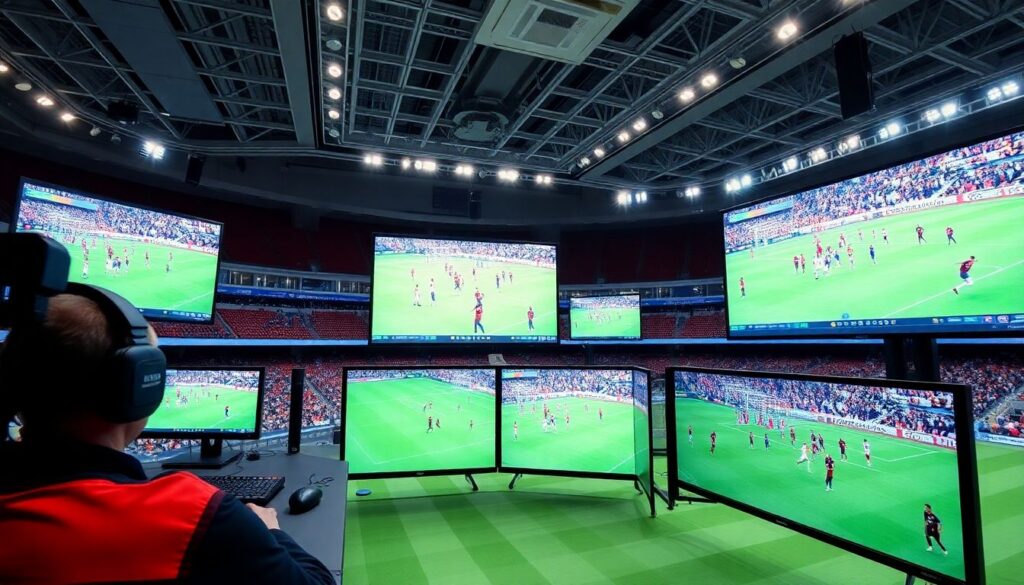
Complex situations require several angles and slow-motion replays. Offside lines, potential handballs and fouls in crowded boxes are especially time-consuming. Clearer camera coverage and more efficient communication help shorten these delays, but some reviews will always take time.
Can fans in the stadium see what is being checked by VAR?
This depends on the stadium’s screen policies and broadcasting setup. Usually, a short text or icon appears on the big screen to show that a check is happening, but not every angle is displayed live to avoid further controversy or safety issues.
How should players behave while a VAR check is in progress?
Players should stay away from the referee, avoid surrounding officials, and focus on the next tactical phase. Captains can calmly request clarification after the decision, but aggressive protests risk yellow cards and break their team’s concentration.
Does VAR remove all mistakes from Süper Lig matches?
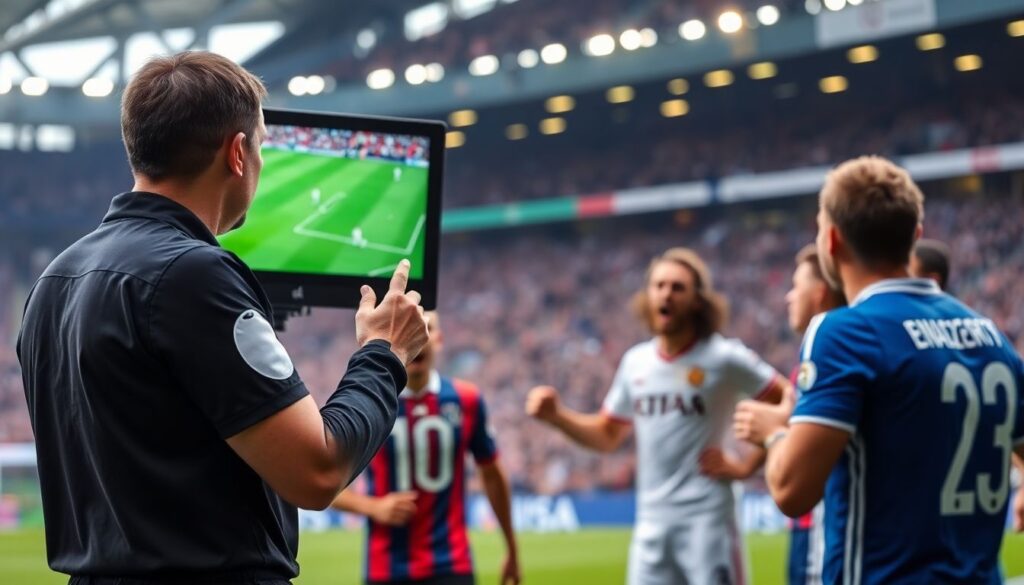
No. VAR reduces clear and obvious errors but does not eliminate subjective judgments. Grey-area handballs, small contacts and interpretation of “impact” still involve human opinion, so some decisions will remain debatable.
How can coaches prepare their teams better for VAR-influenced games?
Include VAR scenarios in video sessions, rehearse set-piece behaviour under camera scrutiny, and define emotional rules for checks and overturned decisions. Treat VAR stoppages as mini time-outs for tactical resets instead of moments to complain.
Is there any advantage for bettors or analysts in understanding VAR patterns?
Yes. Anyone studying VAR trends, such as added time after reviews or frequency of overturned goals, can better interpret momentum swings. However, even detailed knowledge cannot guarantee outcomes, it only improves understanding of match dynamics.