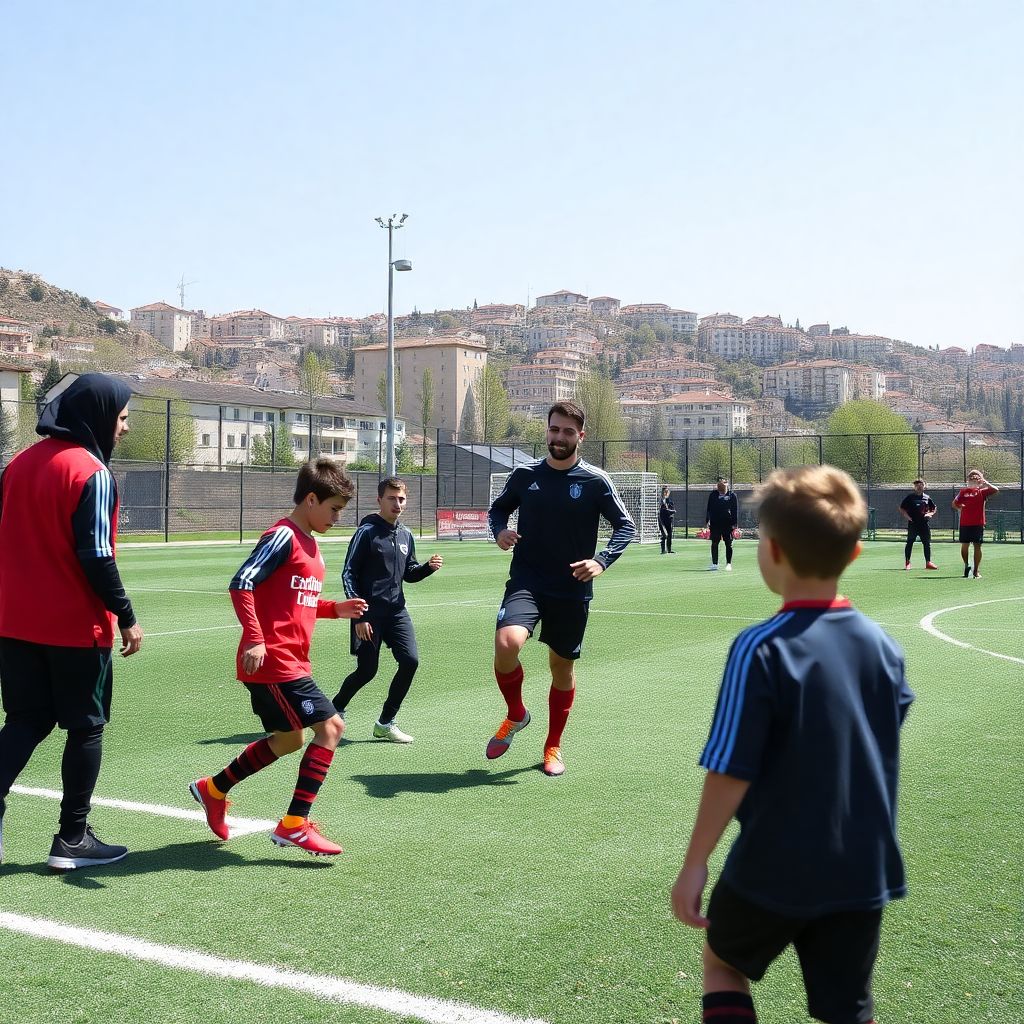
Foreign players in Türkiye can accelerate youngsters’ technical, tactical and mental growth when clubs use them as structured mentors, not just short‑term solutions. Safe steps include clear playing‑time plans, mixed training groups and monitored cultural integration. Limits appear when transfers block pathways, copy unsuitable tactics or reduce investment in local coaching.
How Foreign Players Shape Youth Development: Core Insights
- Foreign pros are most valuable when embedded in long‑term youth plans, not driven only by the turkish super lig foreign players transfer market.
- They import modern training habits, positional details and tactical flexibility if language and communication are managed.
- Uncontrolled recruitment can cut playing time for Turkish prospects and slow their decision‑making development.
- Clear mentoring roles and blended training groups protect local pathways while using imported know‑how.
- Federation rules, loan strategies and coach education decide whether foreign influence becomes leverage or dependency.
Historical patterns of foreign presence in Turkish youth systems
In Turkish football, foreign players first influenced youth indirectly through senior team performances rather than structured academy work. For many years, imported stars arrived mainly to win immediately in the Süper Lig, with limited contact with U19 or reserve squads beyond occasional friendly matches or informal advice.
Over time, clubs began to see that copying elements from the best european football academies for turkish players required more than stadium transfers and big salaries. Some Istanbul and Anatolian clubs started to include selected foreign pros in joint training with U17-U19 teams, video‑analysis sessions and position‑specific workshops. Yet these efforts often depended on individual coaches, not written club policy.
Recently, foreign presence in youth systems has taken three main forms. First, long‑term foreign players who adopt Türkiye as a second home and naturally mentor youngsters. Second, short‑term signings who offer high quality but minimal continuity. Third, foreign academy staff, analysts and fitness coaches who bring structured methodologies into club pipelines.
For youth development, the safe boundary is clear: the senior squad may be internationally diverse, but the pathway from U14 to first team must remain predictable for Turkish youngsters. When foreign recruitment disrupts that pathway with constant tactical overhauls or blocking positions, the benefits of imported knowledge are neutralised by lost development minutes.
Technical and tactical competencies imported by foreign pros
Foreign professionals shape Turkish youngsters mostly through daily training behaviours and real‑match problem solving, not only through big moments on TV. When structured correctly, they become living case studies of modern football demands that local coaches can reference and dissect with academy players.
- Position‑specific micro‑details. A foreign full‑back used to high‑press systems can model body orientation, trigger recognition and pressing angles. Youngsters learn not just to run, but when and how to press without breaking compactness.
- Tempo control and game rhythm. Playmakers from possession‑heavy leagues teach how to manage match tempo-slowing build‑up, drawing the press, then accelerating. Turkish U19 midfielders see how to avoid rushed vertical balls and instead create better passing lanes.
- Defensive organisation and communication. Experienced centre‑backs import clear line‑management habits: calling the offside line, handling crosses with pre‑agreed zones, and setting rest defence in counter‑press systems.
- Press‑resistant first touch. Forwards and wingers from top leagues often display superior first touch under pressure. Repeated one‑v‑one drills against them force academy defenders to improve timing and body contact, while attackers copy first‑touch angles.
- Professional routines. Nutrition, gym work, recovery, video analysis and self‑scouting habits are frequently stronger among seasoned foreigners. Youngsters learn how a full professional week looks, beyond the 90 minutes.
Mechanically, these competencies enter the youth system through mixed training sessions, shadow‑play with U19s mirroring first‑team patterns, and shared video rooms. For safe impact, coaches must translate every imported behaviour into age‑appropriate drills, rather than asking U16s to perform complex tactical schemes designed for elite adults.
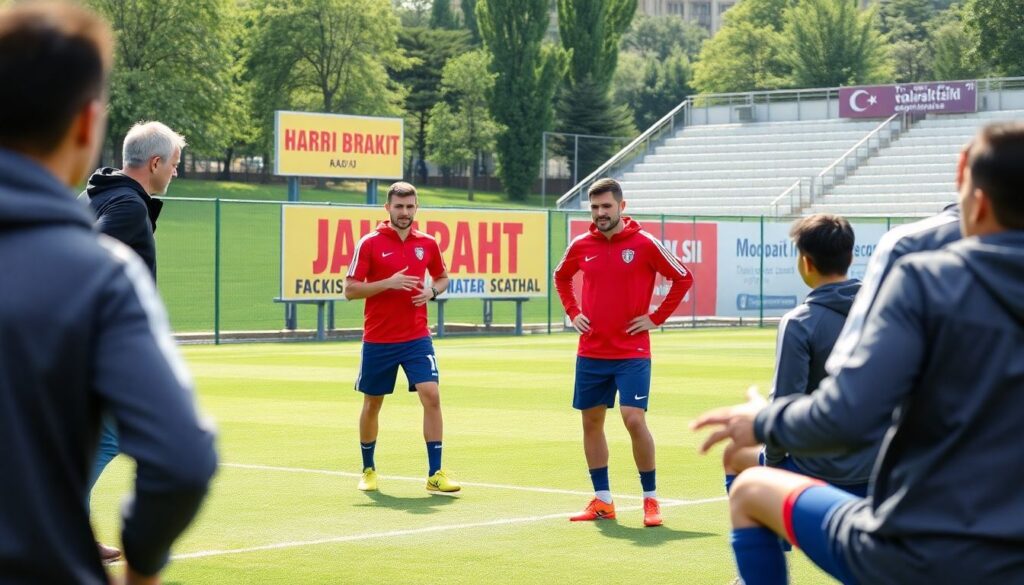
A simple application scenario: a club signs a veteran foreign defensive midfielder. Once a week, he joins U19 tactical work. Coaches freeze play to highlight his scanning before receiving, body shape when offering a passing lane and pressing triggers when the ball enters the half‑space. The same week, U17 coaches design a small‑sided game where players score double if they turn forward after a scan, turning his habits into measurable training goals.
Negative externalities: playing time, cultural friction and adaptation
Foreign influence becomes harmful when it blocks playing time for promising Turkish youngsters without offering compensating learning experiences. This often happens when several imports occupy the same positions where the academy is strongest, forcing local players into unfamiliar roles or constant loans without a clear plan.
Typical problematic scenarios include:
- Short‑term stacking of the same role. A club signs two foreign wingers and a foreign No.10 in one window. The best domestic U21 attackers drop from matchday squads. Training intensity rises, but competitive minutes fall, slowing real decision‑making development under pressure.
- Reactive tactical overhauls. A new foreign coach arrives mid‑season, brings three compatriots and changes formation to suit them. Youth sides are forced to copy the shape overnight, even if academy age groups lack the physical or cognitive profile to execute it.
- Cultural cliques. Foreign players who do not engage with local language or culture may form closed groups. Youngsters hesitate to ask questions, limiting mentoring value. Misunderstandings on pressing calls or set‑piece code words can even cause match‑deciding errors.
- Adaptation load on youngsters. When turnover is high, academy players constantly adjust to new leaders, accents and tactical instructions. Instead of deepening one game model, they survive chaos, which can create confusion and reduce confidence.
- Shadowing local leaders. Foreign captains or vice‑captains can unintentionally prevent emerging Turkish leaders from practising communication, organising the press or managing referees-crucial steps in their psychological development.
Safe practice requires a simple rule: every foreign signing in a key academy pathway position must come with a written plan for how at least one Turkish youngster will benefit-through mentoring, shared minutes, or a structured loan with regular feedback.
Tactical innovations introduced through foreign personnel
Foreign players, analysts and coaches often introduce tactical concepts that were previously rare in Turkish youth setups. Examples include coordinated high pressing with clear triggers, inverted full‑backs to overload midfield, or flexible 3-2-5 structures in possession that many youngsters otherwise only see when watching European competitions.
At club level, this innovation typically appears first in the Süper Lig squad, then trickles down. For instance, a foreign coach might implement strict rest‑defence structures behind the ball. When academy staff are involved in the design, U17-U19 teams adopt simplified versions, meaning youngsters reach Türkiye U21 camps already comfortable in modern shapes and pressing cues.
Benefits of tactically innovative foreign influence
- Earlier exposure of Turkish youngsters to complex game models used in top competitions.
- Better preparation for trials at the best european football academies for turkish players, where these patterns are standard.
- Richer internal competition for tactical spots (e.g., hybrid full‑back/central midfielder roles).
- Opportunities for local coaches to upgrade through observing, then formalising what foreign staff implement.
Limitations and risk factors in tactical adoption
- Copying systems that do not fit the physical or cognitive profile of academy age groups.
- Overloading sessions with complex jargon instead of clear, repeated principles.
- Relying on individual foreign leaders; when they leave, the tactical structure collapses.
- Under‑investing in local coach education, instead of sending staff to football tactics training courses for coaches in turkey that contextualise these ideas.
A safe approach is to treat each imported tactical idea as a pilot project. Test a simplified version in one youth age group, with clear metrics like successful high‑press regains or controlled build‑up sequences, before expanding across the academy.
Concrete development pathways: mentorship, loans and shared programs
To move from concept to practice, clubs must design clear pathways where foreign pros directly accelerate Turkish youngsters’ growth. Three tools stand out: structured mentoring, planned loans and shared development programs such as combined camps or blended training weeks.
Common mistakes and myths include:
- Assuming mentoring happens automatically. Simply putting a foreign veteran next to a teenager in the dressing room does not guarantee knowledge transfer. Safe practice is to schedule monthly one‑to‑one reviews where they analyse clips together with a coach.
- Random loan decisions. Sending a youngster on loan without a role‑specific plan-linked to how he will later partner with or replace a foreign player-wastes time. Loans should mirror tactical roles used in the parent club.
- Ignoring domestic development options. Some parents and agents chase the best european football academies for turkish players while underusing professional football camps in turkey for youth development that already integrate foreign coaches and game models in a culturally familiar environment.
- Over‑romanticising foreign environments. A move abroad or to a foreign‑dominated squad is not always an upgrade. If the youngster barely plays or cannot communicate, development may stagnate compared to a strong local club with clear mentoring.
- Not documenting progress. Without defined targets-minutes played, tactical responsibilities, physical benchmarks-paths built around foreign role models become stories rather than measurable development plans.
Safe pathways connect each foreign signing to one or two named Turkish youngsters, tracking how shared sessions, shadow roles in training and loans gradually shift responsibility from the foreign pro to the domestic talent.
Club and federation policies to harmonize foreign talent with youth growth
Long‑term balance between imported quality and local development requires coordinated policies from clubs and the federation. The goal is not to restrict learning from abroad, but to ensure that every foreign influence becomes a multiplier for Turkish coaching and player pathways, not a substitute.
At club level, sporting directors can link their turkish super lig foreign players transfer market strategy with academy planning. Before approving signings, they ask: which Turkish prospects are blocked, which can learn directly from this player, and how will coaches integrate him into mixed training or mentoring? Written answers become part of the contract file.
The federation can support safe integration by accrediting turkey football scouting services for young talents that report both on foreign players and domestic prospects using the same tactical criteria. This prevents short‑term hype around imports and gives objective comparisons for selection decisions in youth national teams.
A brief example: a club decides to sign a foreign ball‑playing centre‑back. Policy requires a three‑step plan:
- Assign a U19 Turkish centre‑back as “shadow” in all build‑up drills for six months.
- Guarantee targeted minutes for the youngster in domestic cups or late‑game scenarios.
- Send academy and assistant coaches to football tactics training courses for coaches in turkey focused on build‑up from the back, so knowledge survives if the foreign player leaves.
This kind of simple, written framework keeps foreign arrivals aligned with the long‑term aim: more tactically intelligent, resilient Turkish youngsters ready to perform at Süper Lig and international level.
Practical queries coaches and parents commonly raise
How many foreign players are too many for healthy youth development?
The number matters less than the structure behind it. If each foreign player has a defined developmental role for at least one Turkish youngster and does not block all pathways in a key position, squads can remain balanced even with a high foreign share.
Should my child aim for a foreign academy as early as possible?
Not necessarily. Early moves are risky if language, schooling and playing time are uncertain. Strong local clubs, supported by professional football camps in turkey for youth development and regular exposure to foreign‑influenced tactics, can offer safer, more stable progress before a later move abroad.
How can a youth coach use foreign first‑team players without losing authority?
Set clear boundaries: the coach designs the session, the foreign pro acts as a demonstrator or discussion partner. Involve them in pre‑planned segments-like showing pressing cues-while keeping all final decisions and feedback centralised through the coaching staff.
What if foreign players are not interested in mentoring youngsters?
Then the club should not rely on them for development roles. Focus mentorship on those who naturally communicate and model good habits, regardless of nationality, and supplement gaps with external specialists or video resources showing top‑level examples.
Can heavy foreign influence confuse young players tactically?
It can, when different coaches and imports promote conflicting ideas without a clear club game model. Youth departments need a written framework of core principles; foreign contributions should be mapped into that framework, not allowed to redesign it every season.
How do scouting services fit into this balance of foreign and local talent?
Quality turkey football scouting services for young talents should evaluate domestic and foreign players with the same tactical and physical criteria. This helps clubs avoid overvaluing imports simply because they come from abroad and ensures Turkish prospects receive fair consideration.
Комментарии