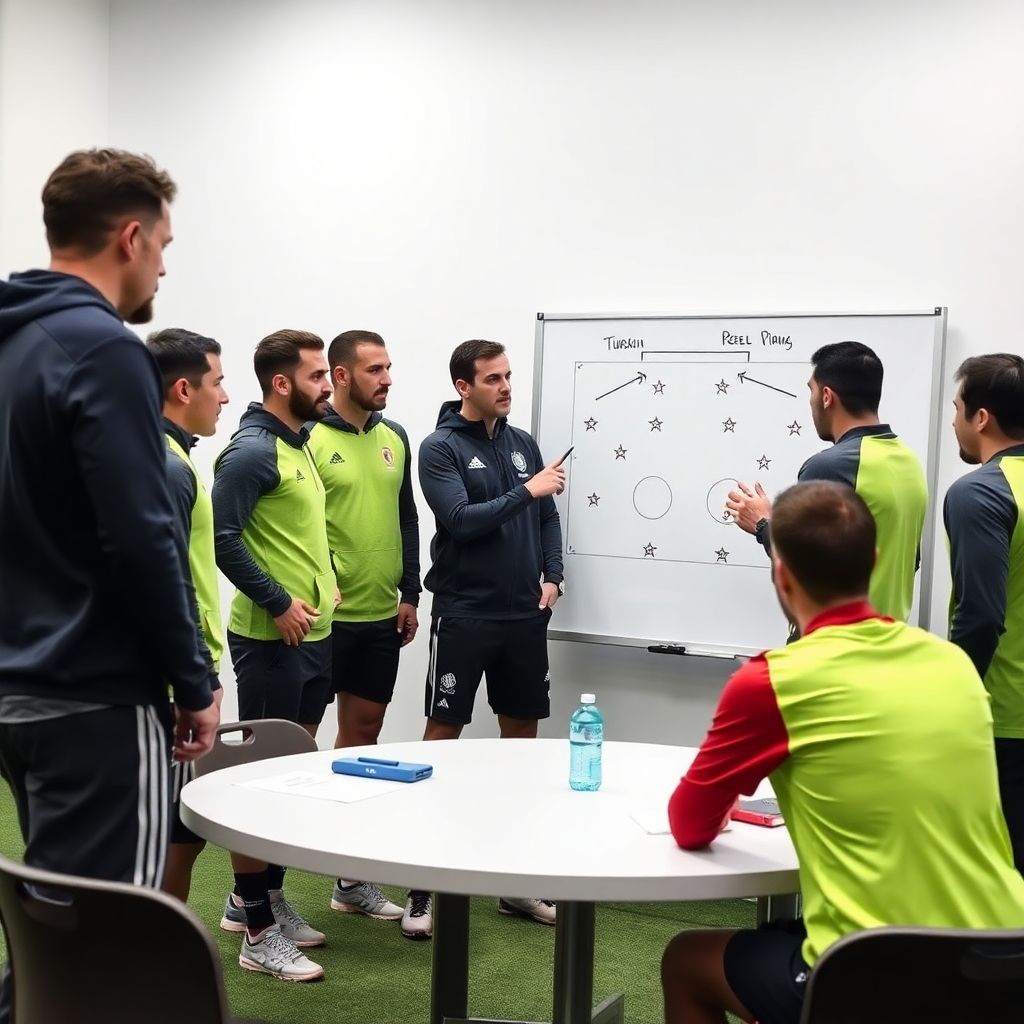
A standard Süper Lig match week runs from post-game recovery on Monday to detailed game plan execution on matchday. You combine super lig tactical analysis, controlled physical load, and clear communication. The structure below works for professional clubs and academies, and it is safe, adaptable, and realistic for Turkish calendar constraints.
Tactical roadmap for the week
- Anchor the week in a clear football match preparation training program linked to physical load.
- Use simple post-match audits to define three learning priorities, not twenty.
- Install one main attacking pattern and one transition rule on Tuesday.
- Rehearse pressing, team shape, and set pieces at match intensity on Wednesday.
- Use Thursday for opponent-specific plans built from video and super lig tactical analysis.
- Polish, simulate scenarios, and unload physically on Friday.
- On matchday, keep messages short, manage in-game scenarios, and prepare contingency plans.
Monday: Post-match audit, recovery protocols and learning priorities
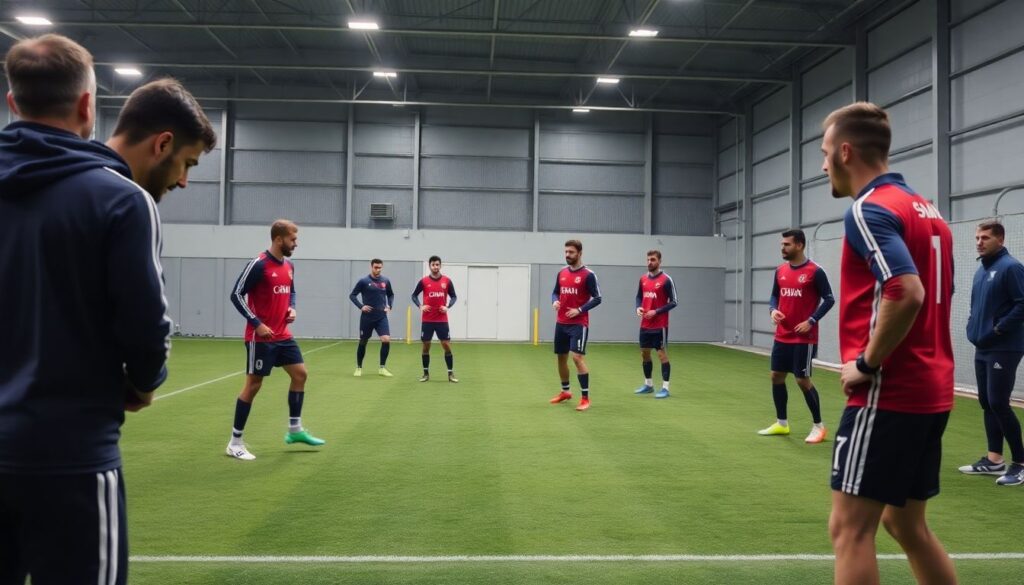
Use this structure for professional teams, semi-pro clubs, and advanced academies that follow a weekly league rhythm. It is especially suited to Turkish teams playing one official match per week in the Süper Lig or TFF divisions.
- Do light, safe recovery only for players who logged major minutes: mobility, cycling, easy rondos, short passing.
- For non-starters, run a shorter, controlled intensity session (small-sided games, finishing) staying away from maximal volume.
- Run a post-match audit:
- 3 things we did well (keep).
- 3 critical issues (change).
- 1-2 statistics you actually use (e.g., box entries, counterpress success).
- Define three learning priorities for the whole week, e.g.:
- Improve high press coordination vs back three.
- Speed up wide overloads in final third.
- Defend cut-backs with better box occupation.
When you should not copy this Monday: avoid any pitch work if players have abnormal fatigue, travel stress, or minor knocks. Then use pure regeneration: pool, massage, mobility, short video only.
Tuesday: Installing core tactical patterns and transition drills
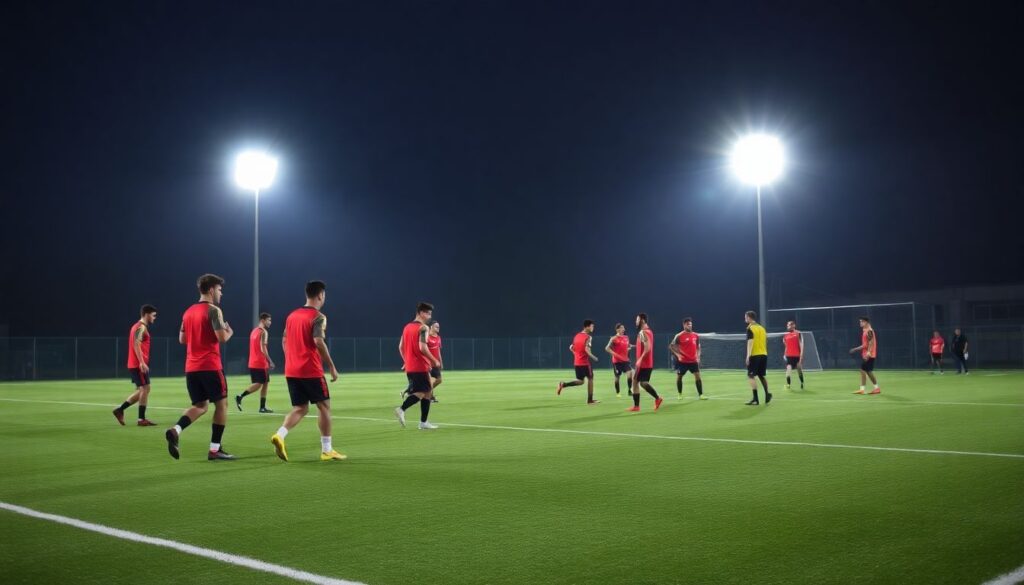
Tuesday is the main teaching day in most soccer coaching course tactical periodization models. You connect your game model with safe but intense football match preparation training program content.
- People
- All available first-team players (limit minutes for those flagged as high-risk by medical/fitness staff).
- 1-2 staff focused on professional football analysis software and video support on the side of the session.
- Tools and spaces
- Full pitch or at least ¾ pitch for team-tactical work.
- Wide channels marked with cones for wing play patterns.
- Portable goals for transition games.
- Data and analysis inputs
- Clipped moments from the last match that show your three learning priorities.
- Basic opponent tendencies already tagged inside your professional football analysis software (pressing height, wing focus, set-piece schemes).
- Session structure template (80-90 minutes)
- 10-15 minutes: dynamic warm-up plus positional rondos tied to pressing or build-up rules.
- 25-30 minutes: pattern play (e.g., 7v4 build-up, full-back overlaps, third-man runs).
- 25-30 minutes: directional game (8v8/10v10) with constraints that reward your tactical principles.
- 10-15 minutes: transitions-only game (3-5 seconds to finish after regain).
- One simple pattern example
- Objective: speed up wide overloads.
- Drill: 6v4 on the flank – winger, full-back, and #8 combine vs back four; finish in mini-goals; rotate sides every 2-3 repetitions.
Wednesday: High-intensity rehearsal of pressing, shape and set pieces
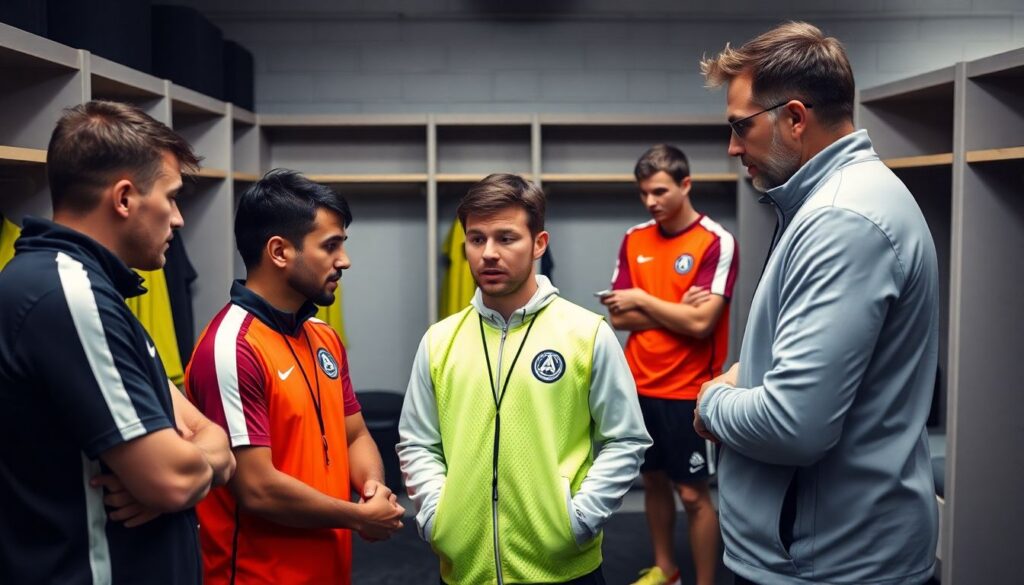
- Confirm physical readiness and safety thresholds
Brief check with fitness and medical staff:- Exclude or limit any player with muscle tightness or high fatigue markers.
- Cap total intense minutes (e.g., main games within a safe duration decided with staff).
- Stress proper warm-up and hydration before high-intensity pressing drills.
- Rehearse team defensive shape in structured waves
Use 11v0 or 11v5 shadow play to walk through pressing and mid-block starting positions.- Freeze often to correct distances (horizontal and vertical spacing).
- Re-start actions from goal-kick, central build, and wide build channels.
- Call out cues: when striker jumps, when winger tucks in, when pivot screens.
- Pressing game at match intensity
Organise a 10v10 or 11v11 on ¾ pitch focused on pressing rules.- Two teams: A (your system), B (mimics next opponent basic structure).
- Coaching rule: you can only score after recovering in the opponent half or within a set time after regain.
- Play short bouts (4-6 minutes) with full commitment, then rest and coach between bouts.
- Transition-focused block: from press to attack safely
Reduce to 7v7+goalkeepers to train fast but controlled transitions.- Start with coach pass to back line; trigger press on a specific cue (back pass, wide pass).
- After regain, 6 seconds to finish, but emphasise decision quality over reckless sprints.
- Rotate roles frequently to avoid overloading specific players.
- Set-piece rehearsal with clear roles
Allocate a dedicated block for corners, wide free-kicks, and key defensive set pieces.- Attack: rehearse 2-3 corner routines you will actually use, assigning fixed blockers, runners, and rebound players.
- Defence: practice zonal or mixed scheme against the opponent’s main delivery zones.
- Stop and ask players to repeat role descriptions out loud to check understanding.
- Cool down and micro-feedback
Close with 8-10 minutes of low-intensity running, stretching, and breathing work.- In small groups, ask: one pressing cue that felt clear, one that felt confusing.
- Note 2-3 misunderstandings to clean up on Thursday’s video.
Быстрый режим: compressed Wednesday structure
- 10 minutes: warm-up plus directional rondo with pressing cue (press on back pass).
- 20 minutes: 10v10 pressing game on ¾ pitch, two short bouts with clear scoring rule.
- 15 minutes: 7v7 transition game (regain and finish quickly, no reckless sprints).
- 15 minutes: main attacking and defensive set-piece routines only, 3-5 repetitions each.
- 10 minutes: cool-down and quick debrief on one pressing rule per line (forwards, midfield, defence).
Thursday: Opponent-specific adjustments, video review and phase plans
Thursday translates super lig tactical analysis and scouting into concrete, simple behaviour for players. Use this checklist to verify you are ready for the weekend opponent.
- You can describe the opponent in one sentence for each phase:
- Build-up behaviour.
- Attacking third patterns.
- Defensive block (height and compactness).
- Transitions (what they do immediately after loss and regain).
- You have shown short video clips (5-12 actions) that match what you will train on the pitch.
- Players can answer:
- Where we want to win the ball back.
- Which channel we want to attack most (left, right, half-spaces).
- Which opponent player we must limit (e.g., playmaker, target man).
- Your phase plans are written down in simple language:
- Out of possession: press high / mid-block / low block, with one or two triggers.
- In possession: 2-3 main patterns you will insist on.
- Set pieces: 2 attacking and 2 defensive routines prioritised.
- Training games mirror the opponent:
- One team copies their structure (e.g., 4-2-3-1, 3-4-3) and favourite patterns.
- You start actions from zones they like (e.g., full-back build-up, central pivot).
- Every line (defence, midfield, attack) has one key message written and communicated.
- You avoid information overload: no more than three main tactical points in your Thursday talk.
- Safety check: session length and intensity fit between Wednesday’s load and Friday’s lighter work.
Friday: Light tactical polish, scenario simulation and load management
Friday is about clarity, confidence, and freshness. These are the most common mistakes to avoid.
- Overloading intensity – running a long, intense game that leaves players heavy on matchday instead of sharp.
- Introducing new concepts – adding fresh patterns or a new system instead of reinforcing what was trained Tuesday-Thursday.
- Talking too much – long meetings that drain focus; keep messages short and concrete.
- Skipping scenarios – not practising scoreline situations (0-0, leading, chasing) that often decide matches.
- Ignoring set-piece refresh – failing to quickly walk through deliveries, runs, and marks one last time.
- Poor load management for key players – letting stars take full part in all games instead of partially shielding them.
- No link to mental routine – neglecting breathing, confidence cues, and role reminders that reduce anxiety.
- Changing lineup too late – leaving selection doubts to Friday evening so players cannot mentally prepare.
Use a short, controlled session: rondos, positional games at moderate speed, 11v0 or 11v4 walk-throughs, and set-piece rehearsal, always keeping players within safe load agreed with fitness staff.
Matchday: Game plan delivery, in-game management and contingency triggers
Matchday itself can follow several safe, effective formats depending on your context, match time, and travel demands. These alternative structures are useful for Turkish teams at different levels.
- Standard pro routine (home match, normal kick-off)
- Short activation in the morning: mobility, ball feeling, no heavy running.
- Pre-match meeting with three key game plan reminders plus set-piece review.
- Warm-up structured by line (defenders, midfielders, attackers) to reinforce specific roles.
- Compressed routine (tight travel schedule)
- Skip morning field activation; use stretching and breathing in the hotel.
- Deliver the main tactical talk on the bus or hotel using simple visuals from professional football analysis software.
- Use a slightly longer pre-game warm-up to compensate for reduced earlier movement.
- Youth and academy focus
- Emphasise learning objectives (e.g., applying one pressing cue) over result-only talk.
- Provide individual role cards: where to press, where to receive, who to mark at set pieces.
- Use short, simple language rather than complex tactical jargon.
- Data-informed bettors and analysts
- Link your understanding of team routines to super lig match previews and betting tips, but always separate coaching decisions from betting interests.
- Use matchday observations to refine future super lig tactical analysis without disturbing team focus.
In all variants, prepare clear contingency triggers: what you change if you concede early, face ten men, or must protect a lead, and communicate them in 1-2 simple sentences for each scenario.
Common tactical pitfalls and quick fixes
How many main tactical points should I emphasise in a typical week?
Limit yourself to three main tactical priorities for the whole week. This keeps players focused and allows enough repetition in training. Additional micro-details can exist, but your talks and drills should revolve around a small, consistent core.
How do I adapt this plan when we have two matches in one week?
Cut volume and reduce separate teaching days. Merge Tuesday and Wednesday concepts into one mixed-intensity session, use very light work between games, and base corrections mostly on video. Keep safety first: avoid heavy loads 48 hours before either match.
What if my squad’s fitness level is low for high-intensity pressing on Wednesday?
Shorten game durations, enlarge the pitch, and reduce player numbers to lower density. Prioritise correct positioning and cues over maximum sprinting. Gradually build intensity across several weeks instead of forcing full-pressing volumes immediately.
How much video should I show players during the week?
Use brief, targeted clips: 5-10 minutes on your team and 5-10 minutes on the opponent, split across Monday, Tuesday, and Thursday. Show only actions that directly connect to the drills and behaviors you will train on the pitch.
Can this structure work for youth or amateur teams with fewer training days?
Yes, but you need to merge days. For example, combine Monday review with Tuesday teaching, and fold Wednesday intensity and Thursday opponent work into one focused session. Keep safety and clarity: less volume, fewer principles, more repetition.
How do I keep players mentally fresh during a structured week?
Use short, varied exercises, clear daily objectives, and brief team talks. Include light, fun elements in warm-ups, protect rest time, and offer individual feedback in small doses. Mental freshness comes from feeling prepared without being overloaded.
Where does tactical periodization fit into this weekly plan?
This structure is compatible with any soccer coaching course tactical periodization approach. You simply map your game model priorities onto the days: main tactical load early in the week, intensity peak around Wednesday, and unloading plus clarity by Friday.
Комментарии