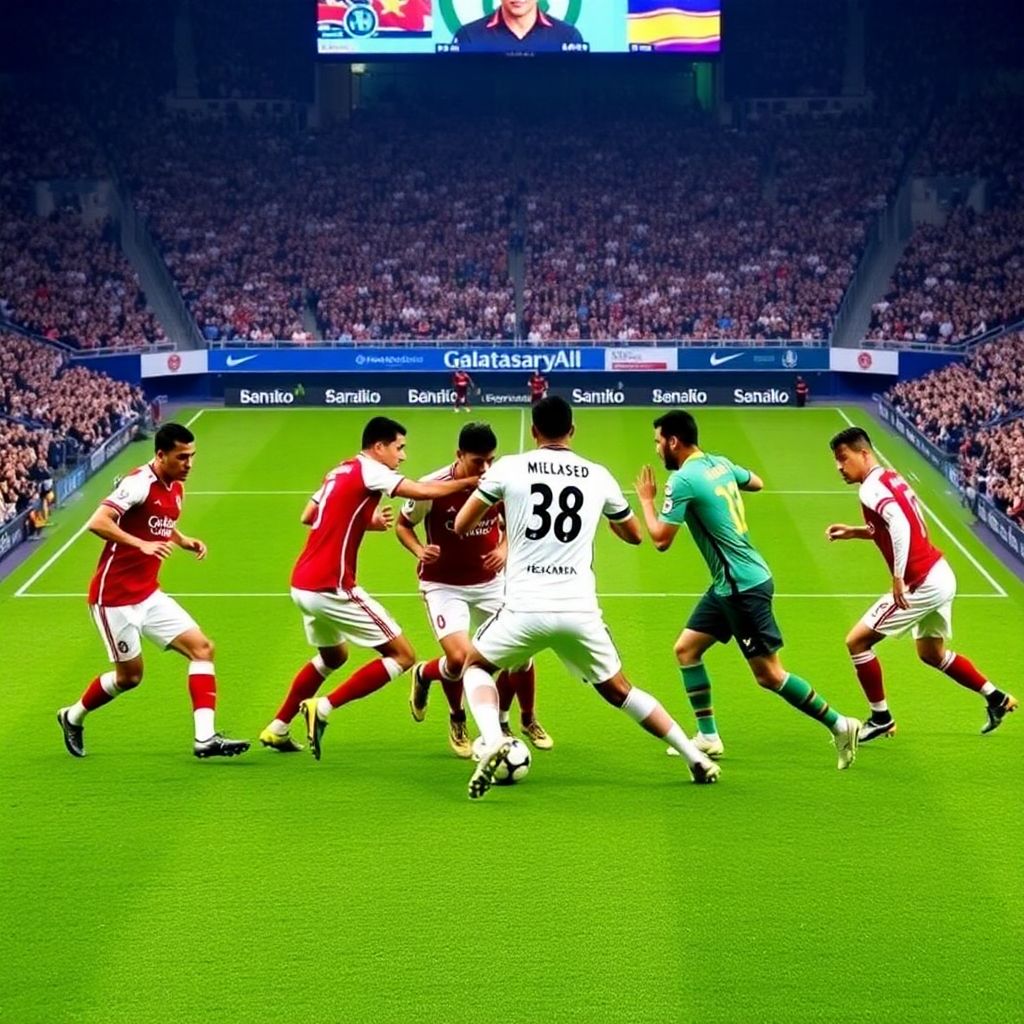
Galatasaray’s high press is a coordinated, ball‑oriented system that compresses space around the ball, forces rushed decisions, and creates immediate chances after regain. It is effective because of synchronised lines, clear pressing triggers, defined player roles, and training that repeats match‑realistic scenarios rather than relying on individual running or chaotic aggression.
Essentials Behind Galatasaray’s Pressing Identity
- Press built on compact, vertically connected lines rather than isolated sprints.
- Clear triggers: back passes, poor first touches, and forced play into pre-set traps.
- Role clarity: strikers, wingers, eights, and full-backs all have distinct pressing tasks.
- Ball-oriented shifting that still protects the central lane and half-spaces.
- Training micro-games that copy real match distances, angles, and decisions.
- Flexible responses when opponents use long balls, box midfield, or three-at-the-back.
- Continuous feedback from video and data, including every detailed Galatasaray tactical analysis.
Debunking Myths About Galatasaray’s High Press
Galatasaray’s high press is often described as pure aggression and running, but this is misleading. The system is positional and highly pre-planned. Distances between players, body orientation, and the angles of approach are coached so that one press opens the next, like a chain, rather than a random chase.
Another myth is that the team presses all the time. In reality, the staff choose moments based on opponent build-up structure, game state, and physical condition. There are phases of mid-block or rest in possession, during which the next wave of pressing is prepared instead of constant sprinting.
The idea that the high press is only about the front three is also inaccurate. The back line and goalkeeper are crucial: their starting positions allow Galatasaray to hold a high block and still defend depth. Without brave, compact defending behind the ball, the press would be easy to bypass.
For coaches looking for a Galatasaray pressing tactics breakdown, it is more accurate to think about it as controlled chaos: the chaos appears to opponents, but inside the team the roles, triggers, and risk zones are tightly defined and rehearsed with clear verbal and visual cues.
Collective Shape: How Lines and Zones Interact
The shape is what makes the press sustainable. It is less about the nominal 4-2-3-1 or 4-3-3, and more about how the three main lines compress around the ball and guard access to the centre and weak side.
- First line (striker + close winger). One player curves the run to shut the passing lane into midfield while pressing the centre-back; the near winger locks the full-back. Example: vs a back four, striker angles run from outside to inside to hide the pivot, winger jumps onto the right-back.
- Second line (two eights/10s + far winger). They protect the pivot, half-spaces, and any dropping forwards. The far winger tucks inside to keep compactness, ready to sprint out only if the ball is safely switched with height and time.
- Third line (back four). The defensive line squeezes up to keep vertical distance short, often only a few metres behind the midfield. Full-backs are allowed to step into midfield when the near winger jumps, creating a temporary back three behind the press.
- Horizontal compactness. The block narrows toward the ball side. The weak side full-back and winger move inside to close the far half-space so that even a successful switch arrives into a crowded lane.
- Goalkeeper as sweeper-cover. The keeper’s starting position is advanced to sweep long balls behind the high line. This allows the back line to hold their position during the press instead of dropping early.
- Mini-scenario for training. In a 7v7+keeper game starting from opponent’s goal kicks, coach freezes play when the ball is wide and checks: gaps between lines, distances between nearest three to the ball, and whether the pivot is screened. Play then restarts from that freeze-frame.
Trigger Moments: When and Why the Press Activates
Pressing triggers are specific, repeatable moments. They give players a shared language: when one sees the trigger, everyone knows the next move. This is where many coaches benefit from a galatasaray high press analysis video, because body cues and timing matter more than the static shape.
- Back pass from full-back to centre-back. Signal for the winger and striker to go together. Winger jumps toward the full-back’s blind side; striker curves toward the ball-carrying centre-back, hiding the pass into midfield.
- Closed body orientation of the centre-back. When a centre-back receives facing their own goal or sideline, near forward explodes to press while the closest eight moves up to lock the pivot. Aim: steal or force a rushed long ball.
- Heavy first touch from goalkeeper. If the keeper’s touch travels too far, the striker leaves the centre-back to attack the goalkeeper, while winger marks the near full-back tightly. Back line squeezes to stay ready for the second ball.
- Opponent playing into a marked pivot. Once the pass into pivot is telegraphed, the near eight anticipates and jumps through the back of the pivot, while striker covers the return pass and winger blocks the wide outlet.
- Slow, floated switch to the far full-back. Far winger uses the flight time to sprint and arrive as the ball lands; far eight shifts across early. This trap is rehearsed with long diagonal passes during training games.
- Use-case scenario. In a domestic match where Galatasaray lead and the opponent starts building short, the coach can call an agreed cue word. For five minutes, players hunt every back pass with maximum intensity, trying to kill the game with a second goal.
Player Archetypes and Role Allocation in the System
Different roles in the press ask for different profiles. Getting these archetypes roughly right is more important than chasing perfect formations. This is often highlighted in any detailed galatasaray tactical analysis or football tactics course galatasaray pressing module.
Role profiles that benefit the high press
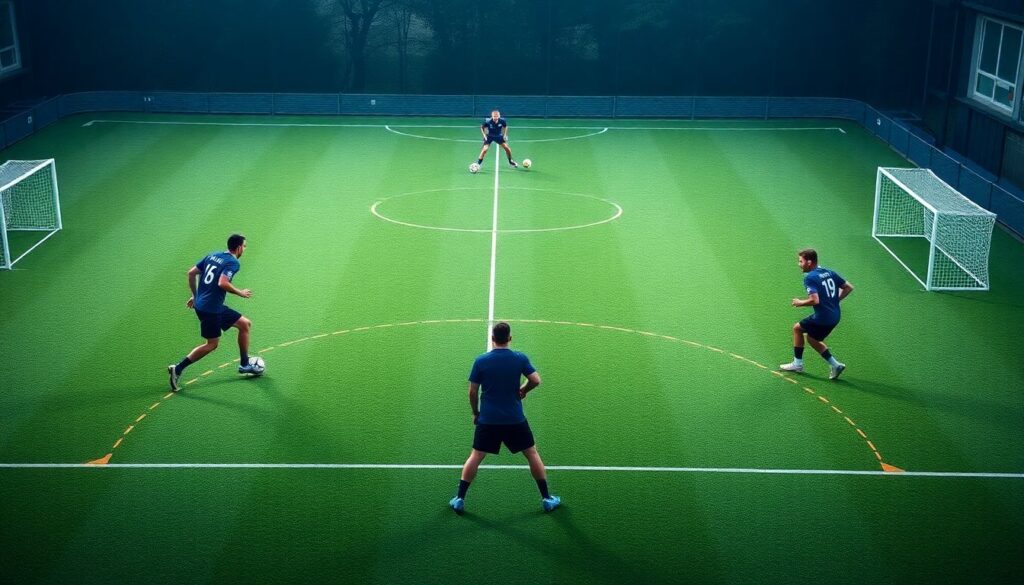
- Centre-forward. Good at curved runs, patient enough to screen rather than chase, explosiveness over 5-10 metres, and awareness of passing lanes, not just the ball.
- Wingers. Willing to sprint repeatedly, smart at judging when to leave full-back to press centre-back, comfortable defending inside in the half-space.
- Central midfielders. Aggressive in duels, brave to jump beyond the ball, and disciplined to track runners when the press is broken.
- Full-backs. Confident stepping into midfield, strong in 1v1 recovery sprints, and positionally flexible to form a temporary back three.
- Centre-backs and goalkeeper. Comfortable defending large spaces, good communication to control line height and coordinate offside decisions under pressure.
Structural limitations and role-related risks
- If the striker does not curve his press, the pivot receives freely and breaks the whole structure with one pass.
- If wingers tire and stop tracking inside, the opponent can overload the half-spaces and bypass the press with simple wall passes.
- If midfielders jump too early without cover, they leave big gaps between lines, forcing emergency defending and cheap fouls.
- If full-backs are too cautious and never step up, the block stretches vertically and second balls drop in front of the back line.
- If the goalkeeper stays too deep, long balls behind the defence become constant one-vs-ones, making the high press unsustainable.
- Mini-scenario for adaptation: in a youth team missing a fast striker, coach can move a dynamic eight higher during pressing phases, then drop him back in settled possession.
Preparation: Drills, Conditioning, and Periodization
Much of Galatasaray’s pressing success comes from how the work is distributed across the week. It is not just about running sessions; it is mainly about rehearsal of specific shapes and triggers in realistic contexts, supported by off-field tools like a galatasaray match analysis subscription.
- Myth: separate fitness days create pressing teams. Reality: pressing intensity comes from football actions inside small- and medium-sided games where players sprint, decelerate, and re-accelerate in real tactical patterns.
- Myth: one drill fits all opponents. Reality: staff adjust constraints (field zones, touch limits, direction) according to the next rival’s build-up structure, for example 3-2 versus 2-3-2-3.
- Myth: more volume always improves pressing. Reality: if fatigue is too high, timing and coordination collapse. Short, sharp blocks of pressing work with full focus beat long, sloppy sessions.
- Common mistake: ignoring rest defence. Coaches sometimes train front pressing without checking the back line and holding midfielder positions when the ball is lost after a failed counter-press.
- Common mistake: no clear cues or vocabulary. Without simple words or gestures for triggers, players press late and alone. Shared commands like jump or lock inside make the mechanism faster.
- Training scenario. 10v10 in a 60x40m space: the pressing team scores by winning the ball in the final third or after forced long balls. Work in 4-5 short blocks with video clips shown between them as a live galatasaray pressing tactics breakdown.
Responses from Opponents and Tactical Countermeasures
Opponents rarely accept the high press passively. They adapt by changing build-up shapes, using false full-backs, or playing longer. Understanding typical responses helps coaches tweak the press without abandoning it.
- Opponent goes long early. Solution: bring the block five to ten metres deeper, keep the same pressing cues but prioritise winning second balls and stabilising the structure for the next wave.
- Opponent uses box midfield (2-2 inside). Solution: have wingers narrow to help mids, allowing full-backs to own the wide channels. The striker mostly screens the deepest pivot instead of sprinting at both centre-backs.
- Opponent drops a winger next to the pivot. Solution: centre-mid tracks that winger tightly, while the near full-back becomes responsible for the original wide player. This keeps number equality around the ball.
- Opponent overloads one side then switches quickly. Solution: pre-plan a limit on how many can jump to the ball side. Far full-back and winger hold slightly deeper starting spots to defend the eventual switch.
- Opponent’s keeper acts as extra centre-back. Solution: choose between a higher striker press onto the goalkeeper or a narrow mid-block that invites passes wide, where pre-set traps wait.
- Mini match scenario. Imagine a European away game: early on, the opponent beats the press twice with long diagonals to the far winger. Galatasaray respond by keeping the far full-back deeper and instructing the far winger to start narrower. Within ten minutes, long diagonals land into 2v1 or 3v2 traps, and the press regains control.
Clarifying Common Doubts About the System
Is Galatasaray’s high press only suitable for top-level players?
No. The principles scale down. Youth or amateur teams can copy the basic triggers, compact shape, and role allocation, even if the pressing height or intensity is lower due to physical and technical limits.
Can this pressing model work without fast centre-backs?
It can, but with adjustments. The block should start a little deeper, the goalkeeper must be proactive, and the team may press in shorter, defined periods instead of for long continuous stretches.
How important is video for learning this press?
Very important. A clear galatasaray high press analysis video helps players see the correct distances and timing. Short clips before and after training turn abstract coaching points into specific visual references.
Do I need to copy Galatasaray’s formation to copy the press?
No. You need the same relationships and triggers, not the exact formation. A 4-4-2 can replicate many of the same behaviours if the first and second lines are coordinated.
How often should a team train high pressing in a normal week?
Usually in small doses across several sessions: part of the main tactical day, integrated into positional games, and briefly in pre-match activation. The key is quality and clarity, not sheer volume.
What resources can a coach use to study this system in depth?
Detailed galatasaray tactical analysis articles, a galatasaray match analysis subscription, and any football tactics course galatasaray pressing modules provide structured breakdowns, while coaches can add their own edits to build a personalised library.
Is it risky to press high when protecting a narrow lead?
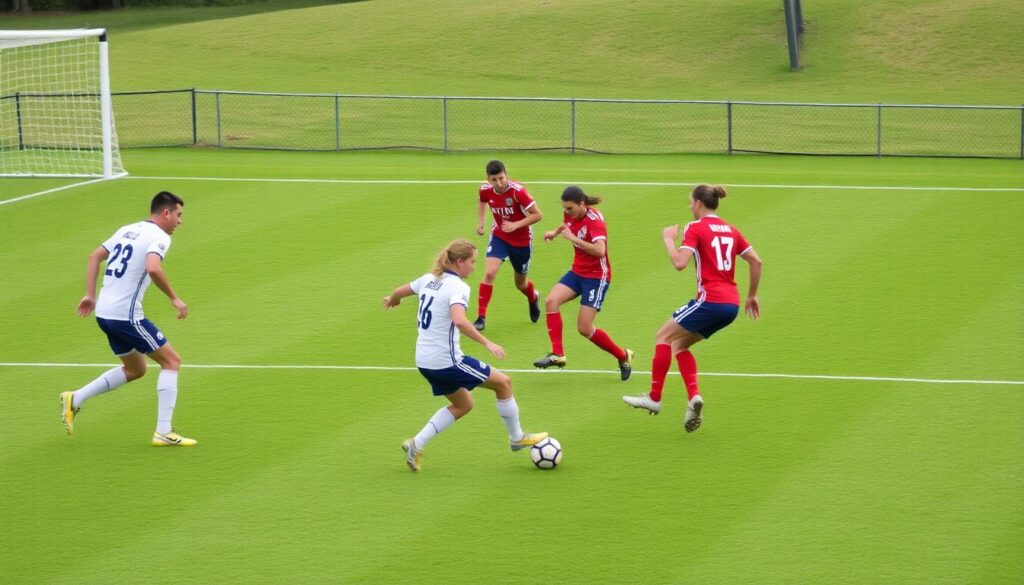
There is risk, but controlled pressing can actually reduce pressure. Short, intense pressing phases after goal kicks can keep the ball far from your box and create chances to secure a second goal.
Комментарии