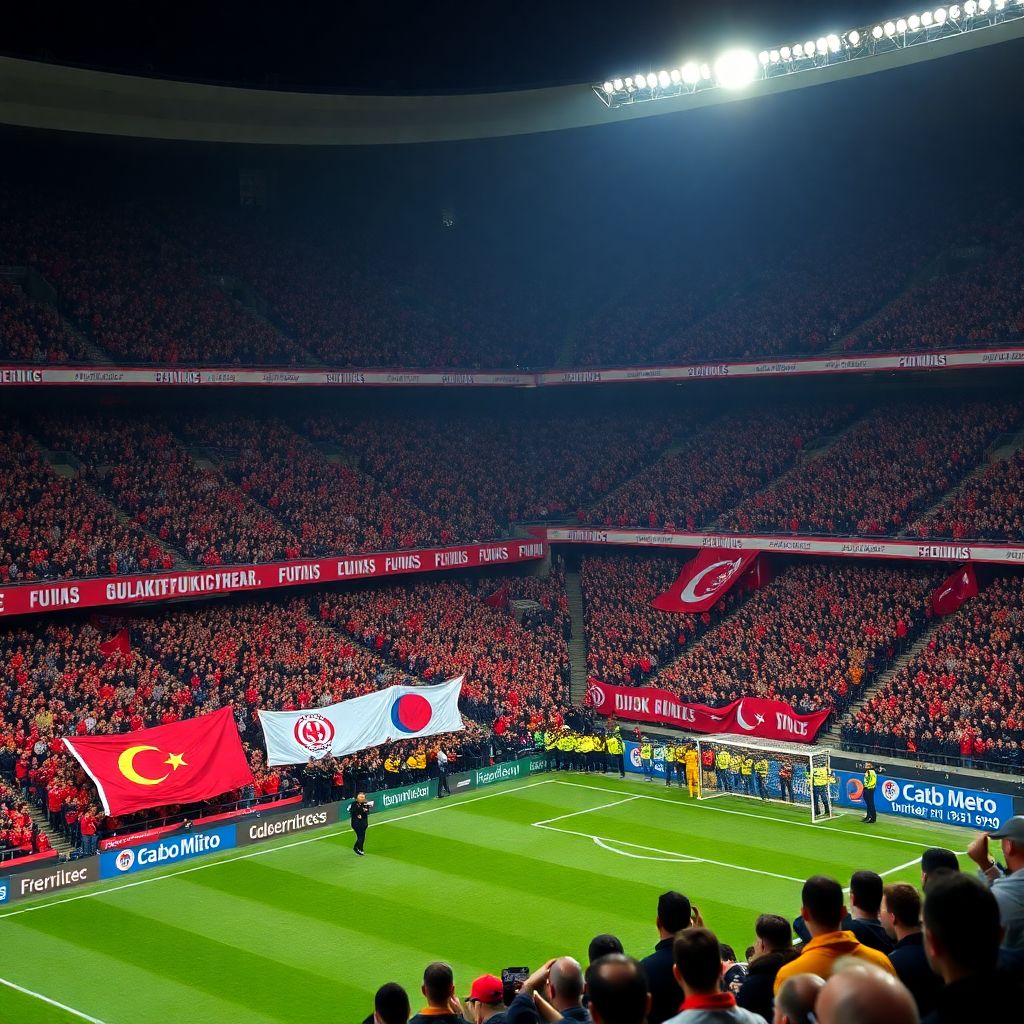
Political and social factors shape who supports which Turkish club, how stadiums feel, what is allowed in chants and banners, and even access to big games. To understand Turkish football culture, you must track how state power, city politics, class, religion and media narratives interact around clubs, derbies and fan groups.
Core Intersections: Politics, Society and Turkish Football
- Clubs in major cities emerged from specific social classes, ethnic backgrounds and political currents, which still colour their fan bases.
- State institutions regulate stadium security, finances and speech, steering how football in Turkey can be expressed publicly.
- Mass urban migration has turned neighbourhood identities into long-term club loyalties transmitted across generations.
- Media and politicians frequently use football language and club symbols, reinforcing polarisation but also shared national pride.
- Security policies against hooliganism sometimes reduce violence but can also restrict peaceful supporter culture.
- Sponsorships, construction contracts and political patronage influence club budgets and competitive balance.
Historical origins of political engagement in Turkish clubs
To understand the political dimension of turkish football culture, it helps to start from how clubs were founded. Early clubs in Istanbul and Izmir grew in the late Ottoman and early Republican periods, often linked to specific schools, military circles, business elites or minority communities. Each carried a social profile that differentiated it from the others.
Over time, these social profiles became simplified into political labels: “people’s club”, “establishment club”, “secular”, “conservative” and similar categories. While these labels are never perfectly accurate, they still influence how fans read every event, from a transfer to a referee decision, through a political lens.
In the multi-party era and beyond, political parties and leaders repeatedly connected themselves to clubs. Attending derbies, meeting ultras, or commenting on big refereeing controversies helped them project power and emotional closeness. As a result, football in Turkey became a stage where state-society tensions, regional inequalities and ideological differences are regularly acted out, not just a sports competition.
For students or readers using a turkish football history book, it is useful to track continuity: many fan rituals, rivalries and chants that look purely emotional today were shaped by earlier political struggles, bans, crackdowns and symbolic victories in stadiums.
State institutions, regulation and the governance of football
State power influences football through a network of laws, regulators and informal expectations. The details change over time, but several recurring mechanisms can be observed:
- Legal framework and federations – Parliament and ministries define the legal status of clubs, federations and broadcasting rights. The Turkish Football Federation operates under this framework, which shapes how independent it can be in scheduling, discipline and governance.
- Security and policing – Interior ministry, provincial governors and police control stadium security, away-fan bans, camera systems and the registration of fans. They decide how strongly to enforce rules on banners, chants and political symbols.
- Financial oversight – Public agencies influence tax rules, debt restructuring and sometimes state guarantees for stadium projects. Their decisions help determine which clubs can refinance debts or build new arenas.
- Infrastructure and stadium building – Central and local governments often co-finance stadiums or grant land-use rights. This can favour certain cities or clubs, changing competitive and symbolic balances.
- Broadcasting and media regulation – Regulators approve TV deals and content rules. Their stance affects which narratives about clubs and fan groups reach a national audience.
- Informal political pressure – Leaders may publicly criticise referees, federation officials or clubs, sending signals that shape behaviour even without formal decisions.
In comparative perspective, these mechanisms are not unique. For example, Italy has long combined strong policing of ultras with deep political links to clubs, while in England financial regulation and stadium safety reforms after disasters re-shaped supporter behaviour. The distinct factor in Turkey is how closely high politics and football crises tend to overlap in timing and language.
Practical mini-scenarios for policy and club decisions
The mechanics above become concrete in everyday choices. A few simplified scenarios show how political and social factors translate into practice:
- Club board planning a stadium renovation
The board must consider: Will public funds or land be available? How will local and national politicians want to appear in the project? How might a naming-rights sponsor with clear political ties be perceived by different supporter groups? - Local governor deciding on derby security
Ahead of selling istanbul football derby tickets, the governor weighs risk reports, recent political tensions and media pressure. They may restrict away fans, limit banners, or demand earlier kick-off times, directly changing the fan experience. - Broadcaster designing a pre-match show
Producers choose which guests, graphics and historical clips to use. Referring to sensitive political episodes or avoiding them shapes whether the show fuels polarisation or underlines shared history.
Urban migration, neighborhood identity and club loyalty
Urbanisation is one of the strongest engines behind club identity. As millions moved from Anatolia into big cities, especially Istanbul, Ankara and Izmir, they sought new networks of belonging. Supporting a club became a long-term social anchor, often more stable than job or housing.
Several typical scenarios illustrate how this works in practice:
- Neighborhood socialisation – A child grows up in a district where almost every shop, café and barber displays one club’s colours. Weekend noise and street celebrations after wins normalise loyalty before the child ever enters a stadium.
- Family transmission across regions – A family from a Black Sea town moves to Istanbul but keeps supporting its hometown club. Children grow up with a mixed identity: local school friends support big Istanbul clubs, but home rituals centre on the smaller regional team.
- Migrant community protection – A group of recent migrants adopts one club whose fans they perceive as “similar people” in class, origin or religious practice. Wearing the scarf becomes a signal of safety in unfamiliar urban spaces.
- University and workplace integration – Young adults who move for study or work choose a club based on roommate influence or office traditions. Joining match-viewing groups helps them build social capital much faster than formal associations.
- Derby-day city geography – On days when galatasaray fenerbahce derby tickets are sold or derbies played, different city zones become visibly coloured and sometimes tense. Knowing which streets to avoid or join is part of everyday urban literacy.
For visitors trying to understand football in Turkey, observing how club symbols cluster in different neighbourhoods offers quick insight into local histories of migration, class and politics, often more revealing than official statistics.
Media discourse, political rhetoric and supporter narratives
Media and political speech can amplify or soften tensions around football. Headlines, talk-shows and social media frames often choose between seeing an event as a simple sporting issue or as a symbol of deeper national and ideological struggles.
Constructive roles of media and political discourse
- Highlighting community work by fan groups, such as charity drives or earthquake relief, which broadens public respect for ultras beyond stereotypes.
- Using inclusive national language around the national team, which temporarily bridges club divides and lowers hostility.
- Producing well-researched documentaries and books, similar to a balanced turkish football history book, that contextualise rivalries without glorifying violence.
- Encouraging cross-club initiatives against racism, sexism or hate speech, led jointly by politicians, journalists and supporter leaders.
Risks and constraints of politicised football narratives
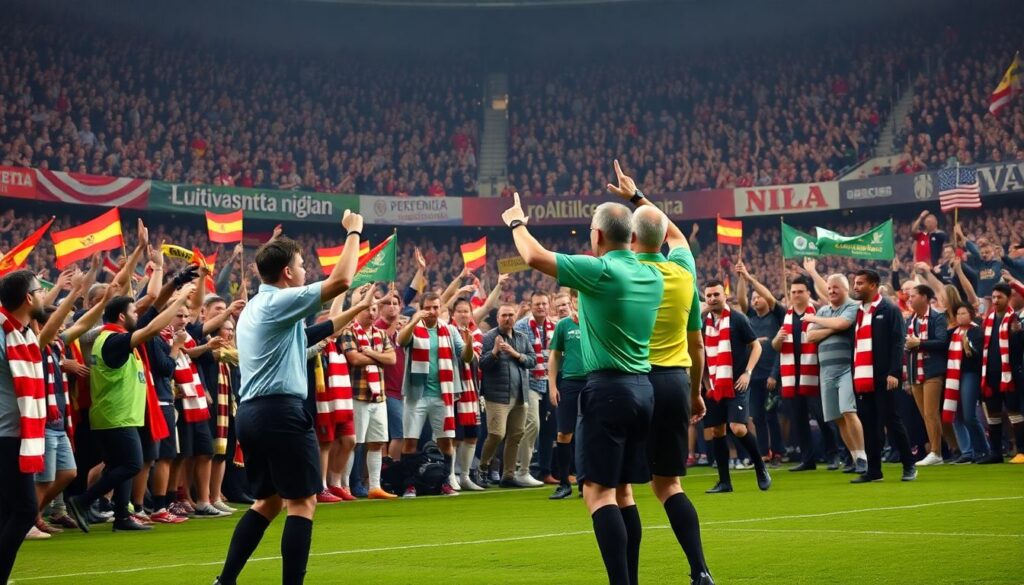
- Framing every controversial referee decision as part of a political conspiracy, which normalises distrust and potential aggression.
- Using club identities as short-hand for political camps, so that criticism of a team is heard as an attack on voters or regions.
- Rewarding the loudest, most extreme fan voices with airtime, which sidelines moderate supporters and nuanced analysis.
- Allowing partisan media to repeat unverified rumours before and after derbies, speeding up online hate campaigns.
Security, hooliganism and the legal management of crowds
Security policies are meant to prevent violence and protect property, but they can also reshape how fans participate. Misunderstandings about hooliganism often lead to blunt tools that punish the many for the behaviour of a few.
Common errors and myths include:
- “All ultras are violent” – Many ultra groups in Turkey organise choreographies, songs and social projects without engaging in physical violence. Treating them as a single criminal block blocks cooperation that could improve safety.
- Over-reliance on technology alone – Electronic ticketing and cameras help identify offenders, but without transparent procedures and independent oversight they can also create fear and discourage ordinary fans from attending.
- Ignoring local knowledge – Security plans made without consultation with supporter groups often miss practical details, such as dangerous bottlenecks, public transport timing or traditional gathering points.
- Assuming “zero tolerance” always works – Very harsh penalties for minor infractions can push fans to operate informally and outside regulated spaces, making real threats harder to monitor.
- Reading every incident as political extremism – Some conflicts are about ticket prices, board mismanagement or local disputes; labelling them as ideological can escalate rather than resolve tensions.
Balanced approaches seek cooperation between police, clubs and fan representatives, with clear communication before and after major matches, especially high-risk derbies where the sale of istanbul football derby tickets is tightly controlled.
Economic networks: sponsorship, oligarchs and political patronage
Money flows into Turkish clubs through sponsors, construction contracts, broadcast deals and sometimes politically connected business figures. These economic ties can stabilise clubs but also create dependence on changing political winds.
A simplified mini-case helps illustrate:
- Step 1 – Political-business alignment
A major construction company with close ties to government wins multiple public infrastructure contracts. Seeking brand exposure and prestige, it offers a generous sponsorship to a top-flight club. - Step 2 – Stadium project opportunity
The club needs a new or renovated stadium. Public authorities agree to support the project, and the same company becomes the main contractor, integrating commercial and political interests. - Step 3 – Shifts in balance of power
Club leaders become reliant on the sponsor for cash flow. Critical fans who protest mismanagement risk being framed as opposing not only the board, but also powerful political allies. - Step 4 – Long-term sporting impact
If political conditions change or contracts end, the club may face sudden financial stress. Competitive balance can swing quickly, affecting league results and even the availability and pricing of high-demand matches like galatasaray fenerbahce derby tickets.
For analysts or advanced fans, mapping these economic networks is essential to interpreting transfer policies, managerial appointments and stadium decisions, not just final scores.
Concise answers to common practical questions about political impact on football
How visible is politics on a normal match day in Turkey?
On regular league days, politics is often indirect: in chants, banners, or jokes about leaders rather than formal party campaigning. The effect becomes more visible around major derbies, crises or national political events, when language in stadiums and media clearly shifts.
Does political affiliation decide which Turkish club people support?
Not mechanically. Many fans choose based on family, neighbourhood or favourite players. Political views can strengthen or weaken attachment to certain clubs, but in daily life emotional and local factors usually dominate over formal party preference.
What should a foreign visitor know before buying derby tickets in Istanbul?
Before searching for istanbul football derby tickets, check official club or federation channels, and be aware that ID-linked systems are often mandatory. Avoid unofficial resellers, arrive early due to security checks, and follow local advice about which routes and bars are safest for away colours.
Is it safe to attend a big match with children?
Upper stands and family sections at most major stadiums are generally suitable, especially for non-derby league games. For high-tension derbies, families often prefer watching in cafés or at home, as the atmosphere can be intense even when physical violence is rare.
How do political tensions affect TV coverage of football in Turkey?
They shape which controversies receive most airtime and how aggressively referees and institutions are criticised. Some channels take a more partisan tone, while others focus on tactics and statistics. Switching between channels after a big match exposes these different narratives clearly.
Can reading about history really help understand today’s fan culture?
Yes. Many current chants, symbols and rivalries refer to past political and social conflicts. A good turkish football history book helps decode references that otherwise look like pure emotion, and explains why particular derbies carry more meaning than the league table alone suggests.
Are Turkish clubs more politically influenced than clubs in other countries?
Influence levels are comparable to several Southern European and Latin American countries, where politics, media and football are closely intertwined. The distinctive feature in Turkey is how often national political debates and football controversies overlap in time and language.