
Financial Fair Play (FFP) limits how much big Turkish clubs can spend compared with what they sustainably earn. It pushes Galatasaray, Fenerbahçe, Beşiktaş and others to control wages and transfer fees, grow real revenues, reduce debts, and avoid long-term operating losses, or risk UEFA and TFF sporting and financial sanctions.
At-a-Glance: Core FFP Concepts for Turkey’s Biggest Clubs

- FFP does not ban spending; it forces clubs to match spending with recurring, documented revenues.
- UEFA rules mainly apply when clubs qualify for Europe; TFF rules extend discipline to all Süper Lig seasons.
- Salaries and transfer amortisation usually create the biggest FFP pressure for Turkish giants.
- Breaches can lead to squad limits, transfer caps, fines or bans from European competitions.
- Strong commercial growth and controlled wage bills are the most practical levers for compliance.
- Early planning and professional budgeting reduce the need for crisis-driven negotiations with UEFA.
Debunking Myths About Financial Fair Play in Turkish Football
Many discussions about financial fair play turkey big clubs are driven by myths rather than how the rules actually work. This creates confusion for fans, media and even some club decision-makers, and it often leads to reactive, short-term choices instead of planned compliance.
Myth 1: FFP is a simple debt ban. In reality, FFP focuses on whether a club can meet its obligations and avoid chronic operating losses. High debt by itself is not automatically a breach; the key question is whether the club’s future cash flows and equity support that debt.
Myth 2: Rich owners can pay for everything. Under UEFA financial fair play impact on turkish clubs, direct owner subsidies are restricted and must follow equity and related-party rules. Owners can support, but they cannot endlessly cover wage and transfer overspending without facing break-even and sustainability issues.
Myth 3: FFP only matters if you play in the Champions League. UEFA rules apply to clubs in European competitions, but turkish super lig clubs financial fair play regulations and local licensing standards push the same discipline domestically. A club that ignores FFP risks trouble as soon as it returns to Europe.
Myth 4: FFP kills ambition. FFP does not stop investment in academies, infrastructure or smart transfers. It demands that Galatasaray, Fenerbahçe and Beşiktaş link sporting ambition to realistic revenue growth, rather than relying on short-term, high-risk gambling on success.
Defining Financial Fair Play: Rules That Matter for Big Turkish Clubs
At its core, FFP is a structured set of rules that guides how much and how fast a club can grow its costs relative to sustainable income. For practical purposes, big Turkish clubs should translate the regulations into a clear internal checklist.
- Break-even concept. Over a monitored period, football-related expenses (wages, transfers, agents, some operating costs) must not exceed football-related revenues beyond an allowed deviation. Persistent large losses trigger intervention.
- Owner support limits. Cash injections from owners are allowed only within defined formats (mainly equity) and cannot permanently mask structural deficits in the football business.
- Transfer amortisation. Transfer fees are spread over the length of a player’s contract. This means a big fee today creates several years of accounting cost, which can lock a club into FFP pressure.
- Wage control. Total salary cost for players and staff is assessed against revenues. Rapid wage inflation without matching income growth usually drives FFP risk for Turkish giants.
- Timely payments. Clubs must pay other clubs, players, staff and tax authorities on time. Overdue payables and restructuring signals can trigger scrutiny even if break-even looks acceptable on paper.
- Transparent reporting. Detailed financial statements and notes must be provided to UEFA and TFF. Aggressive accounting or non-transparent related-party deals are red flags for auditors.
- Medium-term sustainability. Newer UEFA rules focus not only on past losses but also on future cost ratios, especially squad cost compared to income, forcing proactive planning.
Revenue and Cost Structures Driving FFP Pressure: Wages, Transfers, and Commercials
For how financial fair play affects galatasaray fenerbahce besiktas in practice, the structure of their income and costs is more important than individual single-season results. Certain patterns make FFP compliance harder or easier over time.
- High wage-to-revenue ratios. When player and coach salaries consume a very large share of club income, any drop in European qualification or broadcasting revenue immediately creates FFP strain. Long contracts with high net salaries are especially risky.
- Front-loaded transfer projects. Paying big fees for multiple players in one window adds large amortisation charges for several seasons. If sporting results do not improve quickly, the club is left with high fixed costs and limited flexibility.
- Volatile European revenues. Dependence on Champions League or Europa League money is common among big Turkish clubs. Failure to qualify even for one season can flip the FFP equation, especially when budgets were planned assuming European income.
- Limited, underdeveloped commercial streams. Weak sponsorship structures, low merchandising productivity and underused stadium rights mean less recurring revenue. This reduces the safe level of wages and transfers under FFP.
- Short-term borrowing and FX exposure. Heavy bank loans, often in foreign currency, increase interest costs and vulnerability to exchange rate changes. While not the only factor in FFP, they shrink the room left for football spending.
- One-off income versus sustainable growth. Occasional big player sales or one-off sponsorship deals help temporarily, but FFP monitors multi-year trends, so clubs cannot rely only on sporadic windfalls.
How Enforcement Works: UEFA, TFF, Audits and Potential Sanctions
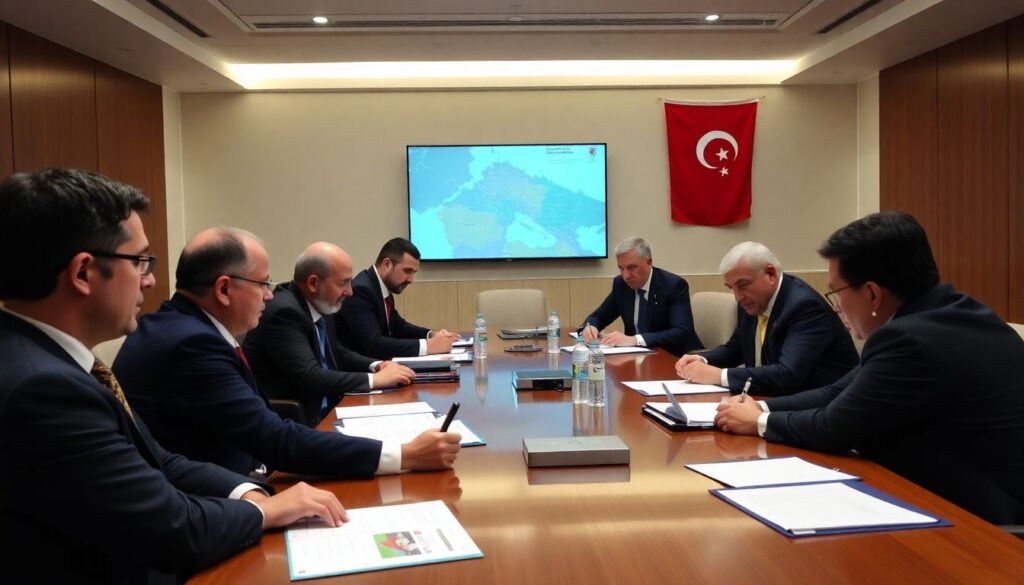
Enforcement determines how strictly turkish super lig clubs financial fair play regulations and UEFA rules are applied. Understanding this process helps boards, CFOs and sporting directors anticipate consequences and prepare evidence before sanctions are considered.
At a high level, UEFA focuses on European licensing and club competitions, while TFF (and in some cases national authorities) handle domestic licensing and continuous oversight. Cooperation between them shapes the real-world impact of FFP on Turkish clubs.
| Aspect | UEFA Role | TFF Role |
|---|---|---|
| Scope | Clubs participating in UEFA competitions | All professional clubs under Turkish licensing |
| Key focus | Break-even, sustainability and overdue payables | Licensing criteria, timely payments, local compliance |
| Audits | Centralised review of submitted financial statements | Domestic checks, often aligned with UEFA standards |
| Sanctions | Limits, fines, prize money retention, competition bans | Points deductions, squad limits, potential relegation |
Benefits of Strong FFP Enforcement for Big Turkish Clubs
- Reduces pressure to overspend simply to keep up with rivals.
- Encourages long-term investment in academies, data and scouting.
- Improves credibility with sponsors, broadcasters and lenders.
- Creates more predictable cash flow and squad planning cycles.
- Aligns Turkish football with European standards of governance.
Limitations and Practical Challenges in Enforcement
- Differences in accounting assumptions can obscure the real financial picture.
- Related-party sponsorships and asset deals are difficult to value objectively.
- Domestic political and fan pressure may resist strict sanctions on major clubs.
- Rules sometimes lag behind financial innovation and new deal structures.
- Inconsistent enforcement between countries can create perceived unfairness.
Practical Case Studies: How Galatasaray, Fenerbahçe, Beşiktaş and Others Adapted

While full financial histories are complex, some clear behavioural patterns show how financial fair play turkey big clubs have adjusted to avoid or respond to investigations and settlement agreements.
- Galatasaray’s focus on European-dependent budgeting. At times, Galatasaray structured squad costs assuming regular Champions League income. When qualification did not materialise, corrective measures such as contract renegotiations, player sales and tightened wage policies followed to realign with FFP expectations.
- Fenerbahçe’s balance between ambition and restructuring. Fenerbahçe has alternated between aggressive transfer windows and phases of consolidation. In consolidation periods, the club emphasised freeing wage capacity, accelerating exits for non-core players and prioritising loan structures that reduce immediate FFP burden.
- Beşiktaş’s cycles of high spending and partial reset. Beşiktaş has experienced cycles of strong success followed by financial stress due to accumulated commitments. Responses have included more cautious contract lengths, increased use of free transfers and a greater push for youth integration to lower average squad cost.
- Common pitfall: underestimating amortisation tails. Across clubs, a typical mistake is focusing on the cash paid in a single window, not the multi-year amortisation impact. This leads to surprise FFP pressure even two or three seasons after a big transfer spree.
- Common pitfall: assuming one big sale will fix everything. Clubs sometimes believe that a single major outgoing transfer will reset their FFP status. In practice, if underlying wage and cost structures remain high, the relief is temporary and monitoring bodies still expect a sustainable plan.
- Role of external advisers. financial fair play consulting for football clubs in turkey has become more common, with specialists helping clubs model different scenarios, negotiate settlement agreements, and design wage and bonus structures compatible with FFP projections.
Strategic Responses and Long-Term Risks: Sustainable Models for Top Turkish Clubs
Strategic responses determine whether FFP becomes a recurring crisis or a framework that supports smart growth. Big Turkish clubs can treat the regulations as a planning tool rather than a threat by focusing on specific, controllable levers.
A practical approach is to convert broad FFP text into a few operational rules that guide every transfer and contract decision. This reduces reliance on last-minute fixes when UEFA or TFF deadlines approach, and it aligns sporting projects with financial capacity.
- Anchor wages to stable revenues. Set an internal wage-to-revenue ceiling. Before approving a new contract, test its impact on the ratio for at least three seasons, assuming conservative revenue forecasts without guaranteed European money.
- Plan transfer cycles, not transfer windows. Instead of reacting to each summer, design a three-year squad plan. Spread big transfer fees across different seasons and avoid stacking long, expensive contracts in the same age bracket.
- Prioritise recurring commercial growth. Expand sponsorship, matchday and merchandising using the strength of large fan bases. Every extra unit of steady revenue increases the legally safe space for future salaries and transfer amortisation.
- Use flexible contract structures. When possible, prefer performance-based bonuses and shorter terms, or built-in wage adjustment clauses tied to European qualification, to reduce fixed cost risk if income falls.
- Integrate academy and data-driven recruitment. A pipeline of academy graduates and analytically scouted, undervalued players keeps overall squad cost lower without sacrificing competitiveness.
Mini case-style illustration: A top club targets three expensive signings but faces FFP pressure. Instead, it (1) signs one key player with a four-year contract, (2) adds two lower-cost, data-identified players, (3) renews two academy graduates on moderate wages, and (4) sells one high-earner. The squad improves, while projected wage-to-revenue remains within internal limits and UEFA’s sustainability thresholds.
Common Concerns and Quick Clarifications on FFP
Does FFP stop Turkish clubs from signing star players?
No. FFP restricts unsustainable total spending, not individual signings. Turkish clubs can still sign stars if they keep overall wage and transfer commitments aligned with realistic revenue projections.
Can a big owner injection instantly solve FFP issues?
Owner money helps liquidity but does not erase past break-even deficits. UEFA reviews how that support is structured and still expects a credible plan to reduce structural losses over time.
Why do FFP problems often appear after a successful season?
Because amortisation and wage commitments continue for years. A club might spend heavily in a successful year, but if later results or revenues fall, those old commitments can push it into FFP difficulty.
Is selling one player enough to return to FFP compliance?
Sometimes, but not always. A big sale can improve the current season, yet monitoring bodies look at multi-season trends and the remaining wage structure before declaring long-term compliance.
How early should a club start FFP planning for European participation?
Ideally at least two to three seasons in advance. Transfer and wage decisions today shape the monitored periods used when UEFA assesses a club’s eligibility for future competitions.
Do domestic FFP rules differ from UEFA’s framework?
Yes, details differ, but TFF rules broadly follow UEFA principles. Clubs that organise themselves for UEFA compliance usually find domestic licensing requirements easier to satisfy.
Is FFP only about cutting costs, or can clubs grow out of trouble?
Both are possible. Cost control is the fastest short-term tool, but sustainable revenue growth through better commercial strategy is essential for long-term freedom to invest.