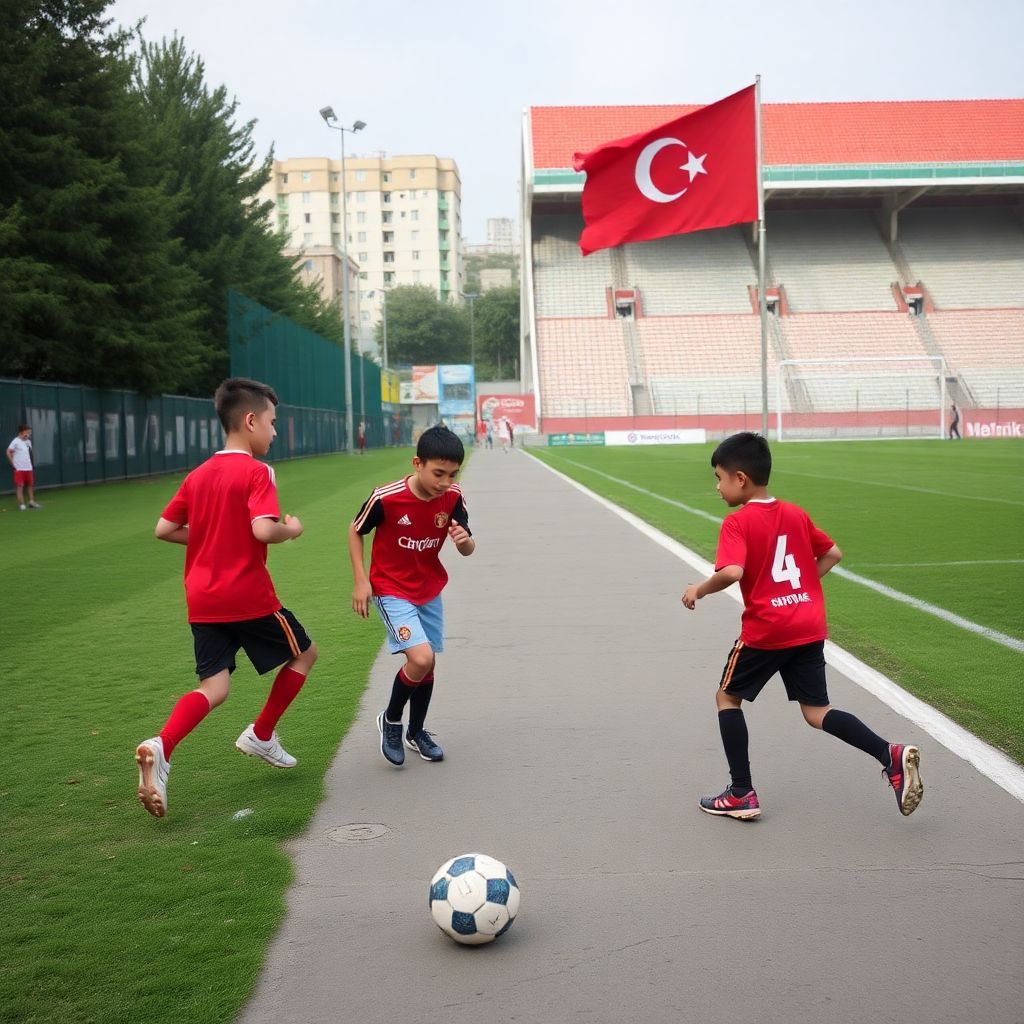
Development paths of Turkish football stars follow a clear sequence: intense grassroots play, entry into a club system, structured work in a Turkish football talent academy, progressive physical and mental preparation, then a professional transition. This page breaks that journey into practical, repeatable steps for players, parents and coaches in Turkey.
Core elements shaping Turkish stars’ journeys
- Heavy early exposure to street football, school play and local tournaments.
- Early identification through Turkey football scouting programs and school competitions.
- Structured training in the best football academies in Turkey or strong regional clubs.
- Parallel development of technique, game intelligence and resilient mindset.
- Targeted conditioning, nutrition and recovery habits from early teens.
- Guided transition to professional contracts, agents and potential moves abroad.
Grassroots origins: street football and local tournaments
In Turkey, development usually starts in unstructured environments: street football, school yards, futsal halls and small-sided games in parks. These hours build ball mastery, creativity and competitiveness long before a child enters any turkish football talent academy or formal club program.
Local tournaments organised by municipalities, schools and amateur clubs then add basic structure: fixed teams, simple tactics and pressure to perform in front of family and peers. For many, this is the first real showcase before scouts linked to professional clubs and youth soccer training camps in Turkey.
At this stage, the aim is not complex tactics but repetition of basic actions under pressure: first touch, 1v1, simple passing combinations, pressing the ball and quick transitions between attack and defence. Consistency here makes later academy work much easier.
- Encourage frequent small-sided games (3v3-7v7) on varied surfaces.
- Join school and neighbourhood tournaments as early and often as possible.
- Use simple rules: ball always in play, minimal stoppages, winner-stays-on formats.
- Track basic self-metrics: number of games per week, minutes with the ball at feet.
Scouting, youth academies and pathways into clubs
Moving from the street to a structured pathway means entering a club environment and being visible to scouts. In Turkey this usually follows predictable, action-focused steps.
- Local club registration: Join an amateur or semi-professional club close to home. This gives access to weekly training, official matches and basic medical supervision.
- Participation in regional leagues: Competing in provincial youth leagues increases exposure to scouts from bigger clubs and turkey football scouting programs.
- Trial days and open selections: The best football academies in Turkey regularly organise open trials. Players should prepare video clips, basic physical test results and ask coaches for written feedback.
- Entry into professional academies: Once selected, the player trains under licensed coaches (usually UEFA-certified) with structured team and individual development plans.
- National team and elite camps: Strong academy performance can lead to invitations to youth soccer training camps in Turkey run by federations or top clubs.
- Internal club promotions: Players progress from younger age groups to U17, U19 and reserve teams, creating a direct line to the first team.
- Register early with a stable local club that competes regularly.
- Attend official trial days at least once or twice per year from early teens.
- Maintain a simple player portfolio: clips, basic stats, coach references.
- Prioritise academies with clear promotion paths, not just big names.
Technical, tactical and mindset development phases
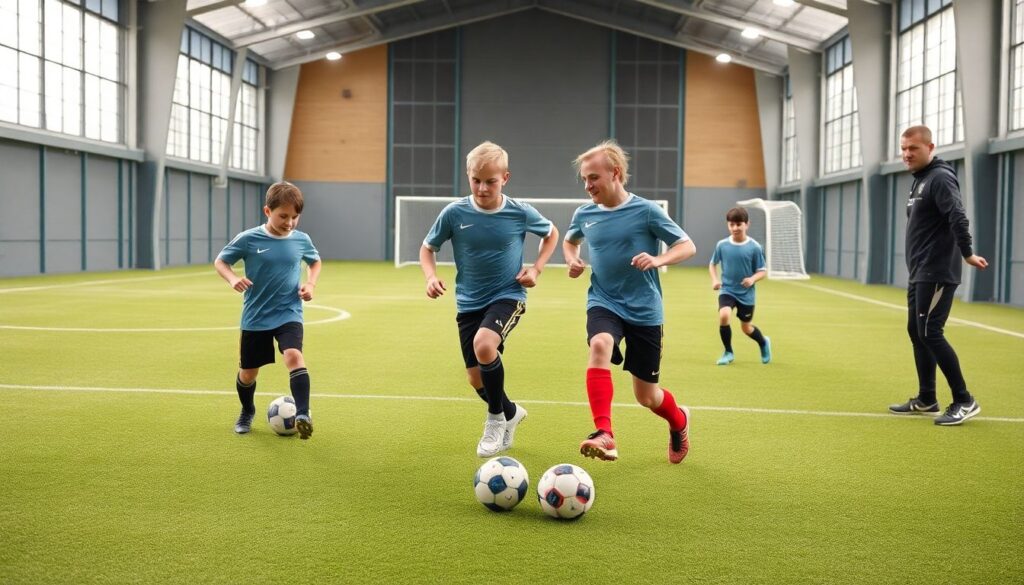
Inside academies, development is not random. It progresses through overlapping phases targeting technique, tactics and mentality. Understanding these helps coaches and families support the process instead of rushing it.
- Ball mastery and coordination (early phase): High repetition of first touch, dribbling, turns, passing and ball striking, often in tight spaces. Objective: automatic control under low pressure.
- Position-specific skill sets (middle phase): Full-backs, wingers, forwards, central midfielders and centre-backs work on role-specific tools: crossing, 1v1 defending, finishing, build-up passing.
- Game intelligence and tactical habits: Small- and large-sided games are used to train scanning, decision-making, pressing triggers, compactness and transition behaviours, not just isolated drills.
- Competitive mindset formation: Players learn to handle selection decisions, benches, injuries and form drops. Mental routines, reflection and goal-setting are introduced in simple formats.
- Professional behaviour patterns: Time management, sleep hygiene, nutrition discipline and social media control become part of the training content, especially in a serious turkish football talent academy environment.
For anyone asking how to become a professional footballer in Turkey, mastering these phases consistently is more realistic than chasing shortcuts like one-off trials or highlight videos.
- Align training with the current phase: technique first, then role, then complex tactics.
- Use video to review decisions, not only goals and highlights.
- Set written monthly goals for skill, tactical behaviour and mindset habits.
- Review progress with a coach every 8-12 weeks and adjust the plan.
Physical preparation: conditioning, nutrition and recovery
Physical development supports, not replaces, technical and tactical growth. It covers strength, speed, endurance and movement quality, plus daily habits like eating and sleeping. Poor physical preparation is a major reason talented players stall or suffer preventable injuries.
Simple, age-appropriate structures work best and can be integrated even in basic club contexts, not only in the best football academies in Turkey.
- Strength and power benefits: Better duels, reduced injury risk, improved acceleration and jumping ability.
- Endurance and work-rate benefits: Higher intensity for longer, consistent performance across both halves.
- Nutrition advantages: Stable energy, better recovery between sessions, fewer illness-related absences.
- Recovery and sleep benefits: Improved adaptation to training load, clearer decision-making in matches.
- Overloading too early: Heavy gym work or excessive running in pre-teens can harm technique and increase injury risk.
- Copying adult programs: Professional routines seen online rarely fit youth needs or schedules in Turkey.
- Ignoring recovery signals: Training hard while ill or very fatigued reduces long-term progress.
- Unstructured diet choices: Skipped meals, excessive junk food and poor hydration undermine every other effort.
- Introduce bodyweight strength and movement skills before heavy external loads.
- Plan at least one lower-intensity day after matches or very hard sessions.
- Keep simple nutrition rules: regular meals, water intake, basic pre/post-training snacks.
- Monitor sleep and soreness; adjust training when persistent issues appear.
Socioeconomic, regional and cultural factors influencing progression
Even with talent and effort, external conditions shape a player’s path. Access to quality pitches, coaching, transport, equipment and balanced education is uneven across Turkey. Misunderstanding these realities leads to false expectations and unhelpful myths around success and failure.
- Myth: Only Istanbul-based players succeed. Reality: Big cities offer more scouts, but strong regional clubs and organised turkey football scouting programs regularly move players into central academies.
- Myth: Expensive private schools or academies guarantee contracts. Reality: Training quality and consistent match exposure matter more than brand names.
- Myth: Education must be sacrificed early. Reality: Poor education limits language skills, tactical learning and later life options, especially for those moving abroad.
- Myth: One failed trial closes all doors. Reality: Scouts revisit players; performance trends over seasons carry more weight than a single event.
- Myth: Street football alone is enough. Reality: Later stages demand structured work in a club or academy plus targeted mental and physical preparation.
- Map realistic club and academy options within your region and transport range.
- Balance school and football so both remain viable until late teens.
- Evaluate environments by coaching quality and playing time, not just facilities.
- Use each trial mainly as feedback for the next development block.
Professional transition: contracts, agents and moving abroad
The step from youth to professional football brings legal, financial and lifestyle decisions. This is where clear information and trusted guidance matter more than raw talent. Many careers stall here due to poor choices around contracts, representation and unrealistic moves abroad.
A simplified practical flow can help parents and players structure this phase:
1. Secure consistent U17/U19 or reserve team minutes.
2. Review first pro contract offers with a football lawyer.
3. Shortlist 2-3 trusted agents; verify licenses and references.
4. Evaluate foreign options only if: stable playing role + support system.
5. Reassess plan every season based on actual minutes and progress.
International opportunities often originate at tournaments or youth soccer training camps in Turkey where foreign scouts attend. However, moving abroad too early, without language preparation or a clear playing pathway, can reverse progress built across many years.
- Document every season: minutes played, positions, injuries, coach evaluations.
- Seek independent legal advice before signing any long-term agreement.
- Choose agents for track record and transparency, not promises about big clubs.
- Prioritise stable playing time and development over the prestige of the league.
End-of-journey self-check for players and parents
- Is there a clear, written development plan covering technique, tactics, physical work and mindset for the next 6-12 months?
- Are club and academy choices based on coaching quality, playing time and pathways, not just reputation?
- Are school, language learning and life skills progressing alongside football development?
- Is each season evaluated using objective information: minutes, roles, feedback, health?
- Are professional decisions (contracts, agents, moves) taken slowly, with expert advice and realistic expectations?
Practical clarifications and common practitioner concerns
At what age should a child in Turkey join a club or academy?
Most children benefit from joining a local club as soon as they regularly play organised games, typically in primary school. Formal entry into a structured turkish football talent academy usually makes sense once basic coordination and motivation are clear, not at a fixed age.
How important are summer camps for long-term development?
Well-run youth soccer training camps in Turkey can accelerate learning over short periods, especially by increasing daily ball contact and match exposure. They are supplements, not replacements, for continuous weekly training at a stable club or academy.
How can parents spot quality in the best football academies in Turkey?
Look for licensed coaches, clear training plans by age group, regular feedback to families, a history of promoting players to higher levels and balanced focus on education. Facilities matter, but structured processes and coaching behaviours matter more.
What is the realistic path for how to become a professional footballer in Turkey?
The most common path is: strong grassroots play, performance in regional leagues, selection for a professional club academy, consistent progress through youth teams, then minutes with reserves and finally the first team. Shortcuts are rare and usually involve exceptional talent plus optimal timing.
Are private turkey football scouting programs worth the cost?
Some organised programs provide extra exposure and feedback; others overpromise. They make sense only if the player already performs well in official matches and the program can show real past cases of players moving to solid clubs or academies.
Should players focus on one position early?
In early years, learning multiple roles improves understanding and adaptability. Specialisation becomes more important in mid-teens when physical profile and tactical strengths are clearer. Even then, being comfortable in two related positions is usually an advantage.
What if a player lives far from major football centres?
Start with the best available local club, maximise regional competitions, then plan targeted visits to trial days in main cities. Many clubs now monitor regional leagues and work with local coaches to identify promising players outside big centres.