To set up a team in the Süper Lig like the best European football managers in Turkish Super Lig clubs, start from your squad’s physical profile, define one primary formation plus a backup shape, and build clear rules for pressing, counter-attacks, and set pieces that respect local tempo, climate, and fixture intensity.
Core Tactical Principles for Süper Lig Success
- Prioritise compact defensive spacing and clear pressing triggers instead of constant high pressing in hot, high-intensity conditions.
- Use one main structure and one contingency shape, both rehearsed weekly, to cope with injuries and fixture congestion.
- Exploit wide areas and transition moments; many Süper Lig games are decided by counters and set pieces, not long settled attacks.
- Adapt tempo: combine short passing with sudden direct balls behind advanced full-backs rather than sterile possession.
- Invest in detailed Super Lig match analysis and stats service support, not just individual scouting, to detect opponent patterns.
- Maintain emotional control: plan for hostile atmospheres and momentum swings with pre-agreed game-state scripts.
Assessing Squad Characteristics and Turkish League Constraints
Use this framework before copying how top European managers would set up a team in the Süper Lig. The same coach-style idea looks different with different squads, climates, and opponent profiles.
- Check physical and running profiles – Identify how many players can repeat high-intensity runs for 60-90 minutes. If only a few can, avoid constant high press; prefer mid-block plus targeted pressing triggers.
- Audit technical quality under pressure – Rate defenders and pivot players on first touch and press resistance. If they struggle, do not build from deep every time; script more direct exits and second-ball plans.
- Factor climate, travel, and pitch conditions – Summer heat, long away trips, and variable pitch quality limit extreme possession or pressing models. Plan one more conservative away shape for tough venues.
- Understand Süper Lig game rhythm – Matches often swing quickly and can be chaotic. Prioritise fast transition organisation over complex positional rotations that need long stable phases of possession.
- When not to apply a “top European” model – Do not force a Pep-style high-possession or Klopp-style relentless press if your squad lacks fitness, passing quality, or depth. In such cases, build a pragmatic hybrid with clearer, simpler roles.
Contingency for injuries and fixture congestion: If you lose key runners or play three matches in a week, immediately reduce pressing demands and lower your block by 10-15 metres to protect legs and avoid late collapses.
Preferred Formations and How They Map to Local Talent
Pick structures that fit common Turkish player profiles and foreign signings, not fashionable shapes from abroad. Below is a compact “one-page” prep checklist contrasting options.
| Primary Formation | Ideal Player Profiles | Main Training Focus | Backup Shape & Use Case |
|---|---|---|---|
| 4-2-3-1 |
|
|
4-4-2 – switch when defending a lead or under heavy pressure away. |
| 4-3-3 |
|
|
4-1-4-1 – use for extra central compactness versus dominant opponents. |
| 3-4-2-1 |
|
|
5-4-1 – drop into this when protecting the box late in games. |
| 4-4-2 diamond |
|
|
4-3-1-2 – choose when your wingers are injured but strikers are fit. |
Secure objective input from a Super Lig match analysis and stats service before finalising your main and backup shapes; do not rely only on internal impressions or casual Super Lig live streaming and betting odds commentary.
Contingency for injuries and fixture congestion: When you lose wide players, shift immediately to a narrower system (diamond or 3-4-2-1) and re-route chance creation through central combinations and set pieces.
Defensive Organisation: Pressing Triggers and Transition Plans
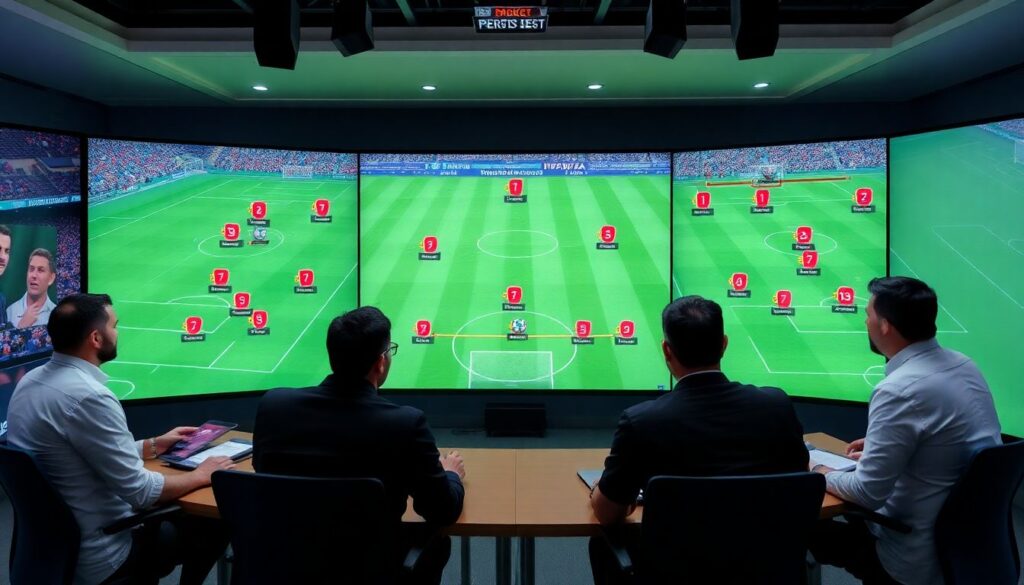
Before applying detailed pressing steps, run this short preparation checklist:
- Define one pressing height (high, mid, or low) for home games and one for difficult away venues.
- Identify 2-3 opposition build-up patterns using recent video from a Turkish Super Lig tactical analysis subscription.
- Nominate the player who shouts and starts each pressing cue (usually No.9 or No.10).
- Prepare a clear fallback call (e.g. “Drop!”) to abort press and protect tired legs.
- Set your basic block height and spacing – Decide whether you defend in a mid-block (most common in Süper Lig) or low block. Fix maximum vertical distance between striker and last defender to avoid stretched lines that intense home atmospheres can exploit.
-
Define 3-4 simple pressing triggers – Use clear cues:
- Back pass from full-back to centre-back on weaker foot.
- Goalkeeper receiving on first touch facing own goal.
- Loose or bouncing pass into opposition pivot.
Assign who jumps, who covers inside, and who protects the last line for each trigger.
- Drill directional pressing, not just intensity – Force play to one side so your trap zones are predictable. Show opponents outside if your wingers defend well, or inside towards a strong ball-winning pivot if central pressure is your strength.
-
Organise immediate defensive transition – When you lose the ball, pre-define:
- Who counter-presses for 3-5 seconds around the ball.
- Who drops to protect space behind full-backs.
- Which zone your deepest midfielder must occupy first.
This balance keeps you safe against the fast counters typical in the league.
-
Script attacking transition after winning the ball – Decide in advance:
- Main outlet (target striker vs pacey winger).
- Preferred corridor (left, right, or central) based on opponent weak side.
- Support runs (one wide, one central, one late from midfield).
Train 2-3 repeatable counter patterns so players act, not think, in noisy stadiums.
- Review and adjust with objective data – After each game, check how often your triggers actually occurred and whether they led to chances for or against. Adapt next week’s plan based on video, not emotion from the stands.
Contingency for injuries and fixture congestion: If your first-choice pressing forward is unavailable or the team shows fatigue, cut your pressing triggers in half, drop into a compact mid/low block, and focus on denying space between lines rather than chasing high.
Building Attacking Patterns with Limited Tempo Windows
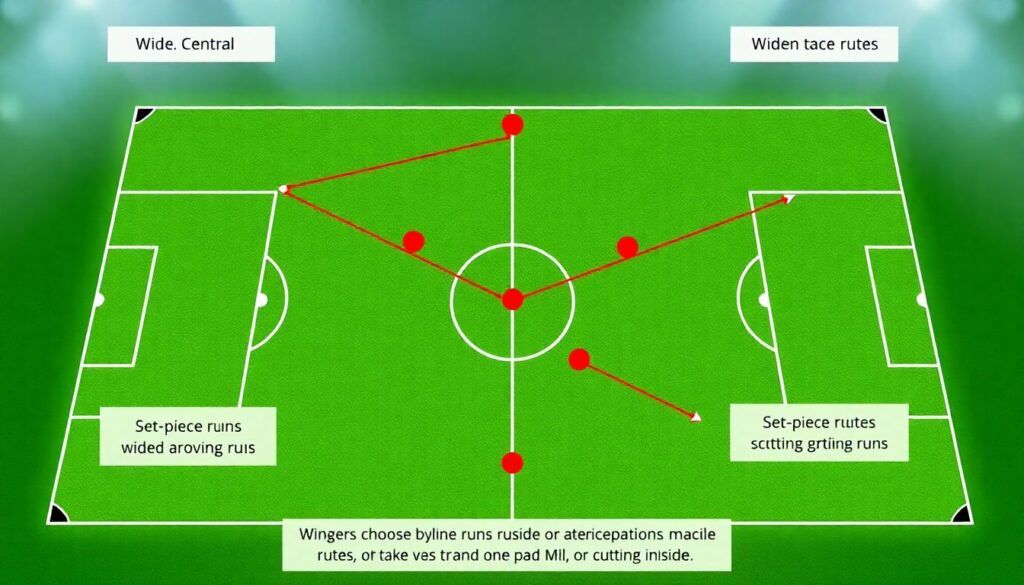
Use this checklist to confirm that your attacking plan fits Süper Lig rhythm and your squad’s limits.
- Your team has 2-3 clear routes to goal: one central, one wide, and one from set-piece second balls.
- Wide players know when to attack the byline versus when to cut inside for shots or wall-passes.
- At least one midfielder is designated to stay behind the ball to protect transitions whenever both full-backs advance.
- Your striker understands movements against deep blocks (pin centre-backs, lay off) and high lines (run channels, attack space).
- You rehearse “fast five-pass” sequences starting from regains in midfield, not only slow build-up from the goalkeeper.
- Players can name the main crossing zones (early, byline, cutback) and which teammate each zone is aimed at.
- There is a predefined plan for the last 15 minutes when chasing a goal: extra striker, more crosses, or more shots from distance, not random chaos.
- Attacking patterns are mirrored on both sides where possible so injuries to one winger do not destroy your whole plan.
- Video clips of 3-5 “ideal attacks” are shown before matches so players share the same picture.
Contingency for injuries and fixture congestion: When technical leaders are missing or tired, simplify: emphasise early crosses, direct balls to the target striker, and second-ball fights instead of complex combination play.
Set-Piece Strategies Adapted to Süper Lig Opponents
Avoid these common errors when copying elite European routines into Turkish conditions.
- Overcomplicating corner routines with too many blockers and decoys for players unused to such patterns.
- Ignoring opponent-specific tendencies; some Süper Lig teams always leave the same player free at the edge of the box.
- Using the same delivery type on every corner, making life easy for goalkeepers and markers.
- Failing to secure the rest defence shape, leaving huge spaces for counters from your own set pieces.
- Assigning your best aerial defender to attack the ball instead of marking the opponent’s top threat on defensive set plays.
- Not rotating corner and free-kick takers when fatigue or form drops, which leads to wasted dead balls late in games.
- Copying near-post EPL routines without adapting to refereeing style and blocking tolerance in Turkey.
- Neglecting throw-in schemes, even though quick or long throws can create chaos in tight, emotional fixtures.
Contingency for injuries and fixture congestion: When key set-piece takers or tall targets are unavailable, simplify: focus on quick short corners to safer areas, near-post flick-ons, and rehearsed routines aimed at your remaining best headers.
Training Week Blueprint: From Scouting to Matchday Roles
Here are alternative weekly structures that top European-style managers could use in the Süper Lig, each suited to different constraints.
- Standard weekly microcycle (one match per week) – Use: normal schedule without heavy travel.
- Day 1: Recovery + video review (defensive errors, pressing triggers).
- Day 2: Physical top-up + small-positional games.
- Day 3: Tactical focus on block shape and set pieces.
- Day 4: Attacking patterns + match preparation.
- Day 5: Pre-match activation + rest defence walkthrough.
- Congested-week plan (two or three matches) – Use: league plus cup or European games.
- Cut training volume, keep intensity in short tactical blocks.
- Rotate in three lines: full-backs, central midfield, wide forwards.
- Focus on walkthroughs and video instead of hard physical work.
- Defensive-stability cycle – Use: after a run of conceding goals or tough away fixtures.
- Prioritise shape work, line distances, and defensive set plays.
- Limit risky build-up drills; start more actions from mid-block positions.
- Reinforce communication roles: who leads line, who covers depth.
- Attacking-confidence cycle – Use: after scoring droughts or when new forwards arrive.
- Extra finishing and crossing repetitions under moderate fatigue.
- Video of successful attacks and top European examples adapted to Süper Lig context.
- Clear role cards for each attacker: zones, runs, and decision rules.
Super Lig betting tips and predictions may mention tactical trends, but they are not a substitute for proper planning; rely instead on structured scouting and, when possible, a Turkish Super Lig tactical analysis subscription that gives consistent reports.
Contingency for injuries and fixture congestion: In any microcycle, be ready to convert one full training day into low-intensity video and set-piece rehearsal when fatigue or medical reports signal increased risk.
Practical Clarifications and Implementation Pitfalls
How close should I copy a specific European manager’s system?
Use their principles, not their full blueprint. Copy 2-3 ideas that fit your squad’s physical and technical profile, then adapt the rest to Süper Lig tempo, climate, and your club’s recruitment reality.
Can I press high for 90 minutes in the Süper Lig like some European teams?
Only if your squad has exceptional fitness and depth. For most teams, high press should be used in defined phases and zones, with a reliable mid-block as the default to avoid late-game collapses.
How much should I rely on data and external analysis services?
Use data and a Super Lig match analysis and stats service to check whether your ideas work under real match conditions. Combine this with your staff’s observations to avoid blind spots or emotional overreactions.
Do I need different tactics for home and away matches?
Yes, at least variations. Keep your core principles, but adjust pressing height, risk in build-up, and set-piece aggression to reflect stadium atmosphere, pitch quality, and travel fatigue for each venue.
How do I manage players resisting tactical changes?
Introduce changes in small, clear steps, showing video of successful actions. Connect each role to how it helps players look better and win more, and avoid switching structures every week without explanation.
Are gambling-focused insights useful for tactical planning?
Comments attached to Super Lig live streaming and betting odds or Super Lig betting tips and predictions may hint at general trends, but they are not reliable coaching tools. Treat them as background noise, not decision drivers.
What if I lack staff for detailed opponent scouting?
Simplify. Focus on 2-3 core aspects: opponent build-up patterns, key attackers, and set-piece tendencies. Use public video and, when possible, an affordable Turkish Super Lig tactical analysis subscription to fill gaps.
Комментарии