
Foreign players shape the Süper Lig identity by raising tactical quality, intensifying competition between Istanbul giants and Anatolian clubs, and globalising the league’s brand. Their influence appears in transfer strategies, sponsorship value, fan culture, and youth development. Understanding this role helps interpret club decisions and evaluate foreign-player policies more accurately.
Core Contributions of Foreign Players to Süper Lig Identity
- They raise the overall tempo, technical standard and tactical variety of the league.
- They attract international media, sponsors and audiences, strengthening the Süper Lig brand.
- They reshape club identities, from local community teams into globally followed brands.
- They influence youth pathways, standards in academies and role models for young players.
- They create new fan rituals, narratives and rivalries across Turkey and abroad.
- They force clubs and the federation to constantly adjust quota and registration rules.
Historical Waves of Foreign Influx into the Süper Lig
The role of foreign players in Turkey’s top division can be understood as a sequence of waves, each with its own logic and impact. Early decades were dominated by local stars, with only a few high-profile imports who brought prestige more than structural change. As broadcasting expanded and European competitions became financially critical, clubs began to rely on experienced foreigners to close the gap with stronger leagues.
Over time, quota rules softened and recruitment broadened from European veterans to South American, African and later Eastern European and Asian talents. Each change in the foreigner limit triggered a new strategic phase, visible in any turkish super lig foreign players list compiled across seasons: more diversity in nationalities, positions and age profiles. Recent years show a mix of short-term fixes and project signings, with clubs balancing instant impact against future resale potential.
Today’s environment is defined by global scouting networks and data-driven assessment of turkey super lig player stats foreign, combined with traditional agent relationships. This historical layering explains why foreign players are not a side detail but a central pillar of how the Süper Lig defines itself compared with other European leagues.
- Identify which quota era a foreign signing belongs to in order to understand the club’s context.
- Compare nationality and age trends across seasons to see how strategies evolved.
- Relate major waves of arrivals to changes in TV deals, European competition performance and federation rules.
Tactical Evolutions Triggered by International Talent
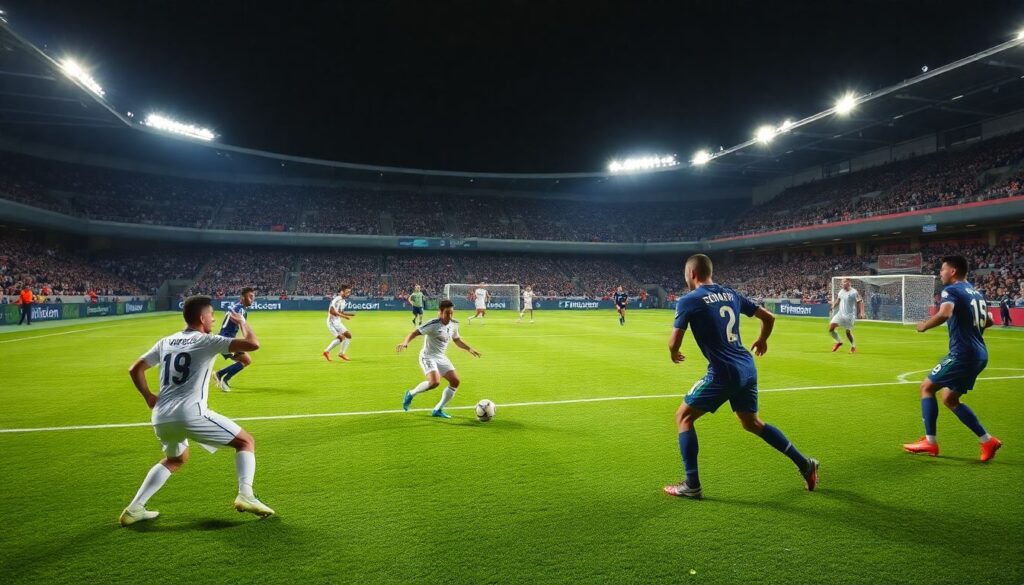
International arrivals have pushed the Süper Lig from a primarily direct, physical style toward a more hybrid, system-based game. Coaches increasingly design around imported profiles, especially in creative and finishing roles, while domestic players often carry out high-intensity and complementary tasks. This mix has produced clear tactical shifts on the pitch.
- Possession and build-up: Foreign centre-backs and deep-lying playmakers encouraged patient build-up and structured pressing-resistance instead of long-ball reliance.
- Pressing and counter-pressing: Coaches imported from Europe and South America implemented coordinated pressing, supported by tactically disciplined foreign midfielders and forwards.
- Wing play and half-spaces: Technically strong wingers and inverted forwards brought varied 1v1 solutions and flexible positioning between the lines.
- Set-piece sophistication: Specialist takers and tall defenders from abroad improved routines in both attack and defence.
- Game management: Experienced internationals influenced tempo control, fouling patterns and psychological momentum in tight matches.
When analysts talk about the best foreign players in turkish super lig history, they often refer not only to individual statistics but to this tactical legacy: players who changed how whole teams, and sometimes rival clubs, approached the game. The presence of such profiles explains why the league can look very different tactically from one decade to the next.
- Map which positions foreign players dominate in a team to predict its main tactical tendencies.
- Track whether a club’s foreign signings match the coach’s preferred system or contradict it.
- Use match footage plus role-specific stats to connect tactical changes to individual foreign arrivals.
Club Strategies: Recruitment, Integration and Quota Management
Clubs in Turkey vary widely in how they recruit, integrate and rotate foreign professionals. Big Istanbul teams often target high-impact profiles with proven European or national-team experience, aiming for immediate success and marketing value. Mid-table and smaller clubs tend to seek undervalued talent that can be developed and sold on, or loanees from larger markets.
Strategic planning must account for foreign-player limits and registration rules. Poor quota management can leave a club paying salaries to players who cannot be registered, or blocking pathways for domestic prospects in key positions. Successful clubs build clear succession plans so one generation of foreign stars is gradually replaced without breaking the team’s tactical structure or dressing-room balance.
- Star-driven model: Signing marquee names near or past their peak to drive title pushes, shirt sales and international visibility.
- Value-trading model: Targeting young foreigners with resale potential, supported by strong scouting and data analysis.
- Loan-dependent model: Using loans from bigger European clubs to upgrade quality without long-term commitments.
- Hybrid continuity model: Combining a stable domestic core with a rotating layer of foreigners refreshed every few seasons.
Every super lig transfers foreign players 2024 window reveals which model each club currently favours, and how disciplined they are in sticking to it across multiple seasons.
- Verify whether each foreign signing fits a defined role in the squad plan and quota structure.
- Monitor contract lengths and ages to avoid stacking too many foreigners in the same phase of their career.
- Assess how quickly new arrivals integrate linguistically and culturally, not only tactically.
Economic Effects: Transfers, Sponsorships and Broadcast Value
Foreign players function as economic assets as much as sporting ones. High-profile arrivals push TV interest, stadium attendance and international attention, which in turn supports sponsorship deals. Younger imports can generate transfer profits that stabilise club finances. However, these benefits depend heavily on disciplined salary structures and realistic resale planning.
At league level, the presence of recognisable foreign names makes the Süper Lig easier to market abroad, especially when top goal scorers foreign players super lig figures appear regularly in European competitions. This visibility supports broadcast negotiations, which then influence every club’s budget, domestic and foreign alike.
Main financial advantages
- Enhanced attractiveness of the league for TV broadcasters and digital platforms.
- Improved sponsorship offers for clubs and the league due to higher global exposure.
- Potential transfer profits when developing and selling successful foreign talents.
Key economic risks and constraints
- Overpaying for reputation, leading to unsustainable wage bills and debt.
- Short-term focus on ageing stars instead of balanced portfolio of assets.
- Regulatory changes in quotas or financial rules that suddenly reduce squad flexibility.
- Cross-check each foreign signing’s cost (fee + salary) against realistic on-pitch and resale value.
- Ensure wage structure keeps top earners from destabilising the rest of the squad.
- Link commercial expectations (tickets, shirts, sponsors) to measurable targets, not hype.
Cultural Impact on Fan Identity and Club Branding
Foreign players also reshape how fans experience clubs and how clubs present themselves. Supporters develop strong emotional bonds with foreign heroes, who become symbols of whole eras and often ambassadors for the club abroad. Some sides build their image around long-term foreign captains who embody specific values such as resilience, flair or work ethic.
Clubs leverage this in branding, social media content and overseas tours. International players help open new markets and attract fans who may follow one player before they follow the team. Misunderstandings arise, however, when a club is seen as losing its local character, or when cultural integration is weak and communication with fans feels distant.
Common myths and mistakes
- Assuming more foreigners automatically means less club identity, rather than a different kind of identity.
- Over-romanticising the past as purely local, ignoring historical foreign influences.
- Blaming foreigners alone for poor results instead of analysing structures, coaching and recruitment.
- Underestimating language support, community engagement and media training needed for smooth cultural integration.
- Balance local traditions (chants, colours, community projects) with inclusive narratives featuring foreign players.
- Use foreign stars in club storytelling that still centres the club, not just individual celebrity.
- Track how international fanbases grow around key foreign players and adjust digital strategy accordingly.
Youth Development: How Foreign Prospects Shape Domestic Pathways
Foreign players influence youth development both positively and negatively. On the positive side, training alongside experienced internationals sets higher daily standards and offers local prospects direct role models. Academies learn to align their work with first-team tactical demands, which are often defined by foreign coaches and key imports.
The risk is that short-term pressure leads clubs to block key pathways with foreign signings in positions where they have promising youngsters. Balancing these forces requires clear planning: deciding where the club will develop domestic players and where it will rely on imported quality. Data from turkey super lig player stats foreign, combined with minutes played by domestic players, helps reveal whether the balance is healthy.
Mini case-style logic for pathway design
- List core positions where the club wants strong local identity (for example, goalkeeper or central midfield).
- For each position, compare academy prospects’ potential with realistic foreign options.
- Allow foreign recruits mainly where no local player can reach the required level within a reasonable timeframe.
- Review this mapping every season and after each major transfer window.
- Define 2-3 priority positions for domestic development and protect them from unnecessary foreign signings.
- Use experienced foreigners intentionally as mentors, especially in training and off-pitch routines.
- Monitor academy graduates’ minutes each season to ensure the foreign quota is not closing all doors.
Quick Self-Review Algorithm for Your Analysis
To check whether your evaluation of foreign players’ role in the Süper Lig is complete and balanced, you can use a short, repeatable process. This simple algorithm helps you avoid focusing only on star names and headlines while missing structural and long-term effects.
- List dimensions: Write down five areas for the club or league you are analysing: tactics, economy, culture, branding and youth development.
- Assign effects: For each area, note at least one positive and one negative way foreign players currently influence it.
- Cross-check data: Compare your impressions with available statistics, such as goal contributions, minutes played and recent transfer fees.
- Time-frame test: Separate short-term effects (this season) from long-term trends (3-5 seasons) in your notes.
- Adjust conclusion: Rewrite your initial opinion, explicitly referencing at least three of the five areas above.
- Ensure your judgement covers both on-pitch and off-pitch aspects of foreign-player impact.
- Use at least one concrete example (player or season) when forming conclusions.
- Repeat the process after every major transfer window to keep your view up to date.
Practical Queries on Foreign Players’ Influence
How do foreign players change the style of play in the Süper Lig?
They raise the technical baseline, encourage more structured pressing and possession, and diversify attacking patterns. Teams with strong foreign spines usually show clearer game plans and more consistent execution across the season.
Why do clubs invest in older foreign stars instead of only young talents?
Older stars bring instant impact, leadership and marketing value, which clubs use to compete for titles and sponsors. The risk is financial; without a resale option, these deals must be justified purely by sporting and commercial performance.
Do foreign players block opportunities for Turkish youngsters?
They can, especially when clubs sign foreigners in positions where they already have strong prospects. With careful planning, however, foreign players can act as mentors while domestic talents are prioritised in specific roles and minutes are actively managed.
What should I look at beyond goals and assists when judging foreign signings?
Consider tactical fit, defensive contribution, injury history, influence on team structure and off-field professionalism. Advanced metrics plus video help reveal whether a player improves team behaviour even when not directly scoring or assisting.
How do foreign players affect the Süper Lig’s global reputation?
Recognisable names and successful performances in Europe make the league easier to market internationally. This drives TV deals, social media reach and the perception of the Süper Lig as a competitive environment for both players and coaches.
Where can I contextualise names from a turkish super lig foreign players list?
Place each name in its tactical role, era and club strategy rather than reading the list in isolation. Combine that with top goal scorers foreign players super lig records and recent super lig transfers foreign players 2024 to see continuity and change over time.
How can analysts use turkey super lig player stats foreign effectively?
Use stats to compare roles, age profiles and impact across seasons, not just to rank players. When matched with match footage and context, these numbers show how foreign arrivals shape the league’s identity on multiple levels.