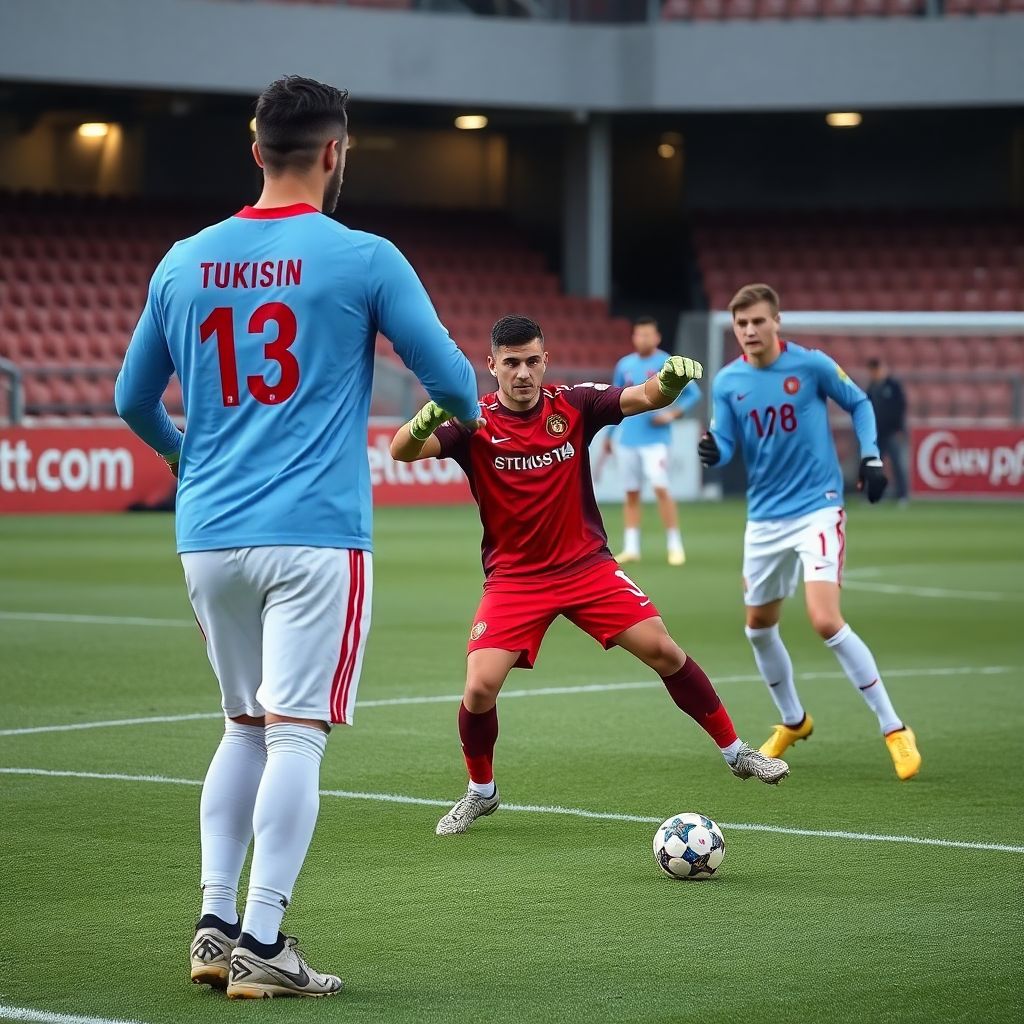
Modern goalkeepers in Turkey adapt to sweeper-keeper demands by training higher starting positions, sharp footwork, brave but calculated exits, and precise passing under pressure. They combine club sessions with targeted sweeper keeper training programs, smart equipment choices like modern goalkeeper gloves for sweeper keepers, and clear communication habits that fit Turkish league tactics.
Core Competencies for Turkish Sweeper-Keepers
- Comfort receiving and playing under pressure with both feet, including first-time passes.
- Positioning high enough to cover depth without exposing the goal to simple chips.
- Reliable reading of long balls, through passes and counter-attacks in Turkish league tempo.
- Calm decision-making on when to leave the box and when to retreat.
- Clear, loud communication to organize a high defensive line and build-up patterns.
- Technical handling and dives adapted to playing outside the box safely.
- Match-specific preparation supported by goalkeeper training camps in Turkey or club-based specialist work.
Positioning and Managing a High Defensive Line
A high defensive line suits goalkeepers with good speed over short distances, strong 1v1 skills, and confidence acting as an extra defender. It is especially useful for teams that press high and dominate possession in the Turkish Super Lig and lower divisions.
Avoid an aggressive high line when:
- Your centre-backs lack pace and struggle to turn and sprint back.
- The opponent has fast strikers who constantly attack the space behind.
- Weather or pitch conditions make long balls unpredictable and hard to judge.
- You are not fully confident with timing sweeper actions outside the box.
- Your current form or fitness (e.g. returning from injury) limits explosive sprints and tackles.
Practical positioning checkpoints before kick-off and during play:
- Stay roughly in line with or slightly behind the deepest centre-back when the ball is in the opponent’s half, adjusting for ball pressure.
- Step 3-5 metres higher when your team has controlled possession and good counter-pressing structure.
- Drop early if the ball carrier has time and space to play a long pass or switch.
- Use constant scanning: ball – opponents – teammates – space behind the line – then reset.
Accurate Short and Long Distribution Under Pressure
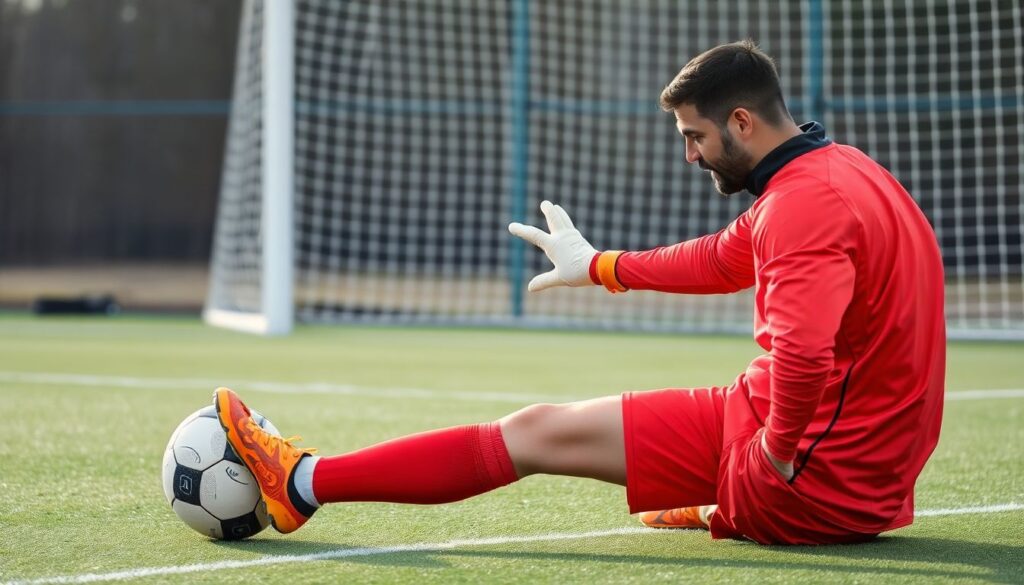
To execute the sweeper-keeper role safely, plan what you need before designing your routine.
Technical and physical requirements:
- Comfortable weak foot for short passes and clearances.
- Stable passing technique over different distances (10-50 metres).
- Solid balance and core strength for first-time passes under pressure.
- Enough aerobic capacity to stay focused and move continuously as an outlet.
Tools, resources and environments that help:
- Dedicated sessions with professional goalkeeper coaching Turkey clubs or private coaches who understand build-up play.
- Structured work at a football academy for goalkeepers in Turkey where outfield passing is integrated daily.
- Quality balls and flat, predictable surfaces (artificial or well-kept natural pitches) to focus on technique.
- Video analysis tools or simple phone recordings to review passing choices and body shape.
- Modern goalkeeper gloves for sweeper keepers with good grip but flexible cut, to allow clean throws and cushioned first touches.
Decision tools during distribution:
- Pre-agreed build-up patterns with centre-backs and pivot (e.g. who shows wide, who drops between centre-backs).
- Simple verbal codes for long vs short options (e.g. trigger words for playing direct to winger or target man).
- A clear rule for clearance: when your back is to play or you feel trapped, clear long and reset structure.
Anticipating Counters and Executing Offside Traps
Preparation checklist before working on counters and offside traps:
- Define with the coach which line (defensive or midfield) leads the trap and who gives the trigger call.
- Walk through the team’s standard high-line position on the pitch and your reference spots.
- Agree a simple vocabulary for stepping up, dropping and covering depth.
- Start with slowed-down, low-contact drills before increasing intensity.
- Confirm that all defenders and midfielders understand the same offside trap rules.
-
Read the opponent’s body shape early
As soon as an opponent can turn forward, lift their head and prepare a forward pass, you must anticipate a possible through ball or long chip. Adjust your position one or two steps higher or lower before the pass is played. -
Synchronize with your back line’s movement
Watch your centre-backs as much as the ball. When they step up for an offside trap, you step with them to close the gap. When they drop, you also drop to protect against lobs.- Use a strong call (in Turkish or your preferred language) each time: up, hold, or drop.
- Train this together in small tactical games, not only in isolated goalkeeper drills.
-
Adopt an aggressive but controlled starting position
In possession, stay high enough to sweep behind your defenders. In transition, quickly move to a central, slightly advanced spot to cut off long passes.- Keep your body half-open, so you can sprint both forward and backward.
- Bend your knees and stay on the balls of your feet, ready to react.
-
Decide between claiming, clearing or delaying
When a through ball is played, quickly decide: can you arrive first, arrive at the same time, or arrive second?- If clearly first, commit fully and clear or control the ball safely.
- If at the same time, prioritize safety: strong side-foot clearance or block tackle, not risky dribbling.
- If second, retreat and set your 1v1 position instead of half-coming.
-
Guide defenders during recovery runs
While moving, give constant information to recovering defenders about which side to cover and whether to pressure or delay.- Use short commands: “left”, “right”, “don’t foul”, “force wide”.
- After the action, reset the line quickly with a firm “out” or “line”.
-
Review patterns and adjust the line for each opponent
After training games or matches, review where counters came from. Adjust how high or low you and the line should start against different teams, based on their favourite runs and pass types.
Deciding When to Leave the Goal: Risk Assessment in Sweeper Actions
Use this checklist after training games or matches to evaluate whether your sweeper actions were safe and effective:
- You only rushed out when you had a clear speed or distance advantage to the ball.
- You avoided “half decisions”; either committed fully or stayed, without stopping in no-man’s-land.
- Your starting position allowed you to reach most through balls with controlled touches, not desperate slides.
- You stayed in control of your body, avoiding dangerous collisions or reckless tackles.
- Your clearances went away from central danger and towards touchlines whenever possible.
- You used the safest available technique: side-foot clearance, header, or chest control, not showy touches.
- Your communication with defenders matched your actions; no surprises for them when you came out.
- After each sweeper action, your team could recover shape quickly instead of being left open.
- You noticed improvement over time in reading long balls and reacting earlier, not later.
- Video or coach feedback confirms that your decisions reduced, not increased, big chances for opponents.
Footwork, First Touch and Progressive Ball-Handling Drills
Common mistakes to avoid when building your sweeper-keeper technical base:
- Training only static passing without adding realistic pressure, angles and movement.
- Ignoring the weak foot, which then fails in real games when opponents force you onto it.
- Taking the first touch inside your body, closing your angle instead of opening up the field.
- Standing flat-footed instead of staying light and ready to adjust to bad touches or bobbles.
- Dribbling towards pressure instead of using the first touch to move away from danger.
- Overusing risk: pointless feints and tricks instead of simple, safe passes and clearances.
- Not pairing ball-handling drills with realistic passing options (support from centre-backs and pivot).
- Skipping repetition; changing drills too often without mastering basic movements.
- Forgetting gloves adaptation: not testing how modern goalkeeper gloves for sweeper keepers feel for ground passes and throws.
- Doing all drills alone, without involving teammates or coaches from sweeper keeper training programs.
Organizing Defensive Build-up: Communication and Role Clarity
Different organization models can support your sweeper-keeper style. Choose the one that best fits your level, teammates and coach’s philosophy.
-
Keeper as main distributor
You become the first playmaker, constantly involved in short build-up. Best when you are technically strong and the coach wants patient possession.- Use at clubs or a football academy for goalkeepers in Turkey that train structured positional play.
- Avoid if centre-backs lack basic build-up skills or panic under pressure; they must still carry responsibility.
-
Centre-backs as primary outlets, keeper as safety valve
Here you stay active but mainly offer support passes and switches. Ideal for teams with ball-playing centre-backs and less experienced keepers.- Use when you are still developing under professional goalkeeper coaching Turkey environments.
- Focus on safe angles, quick lay-offs and switch passes, not risky vertical balls.
-
Mixed direct and short build-up
You alternate between short passing and direct balls depending on pressing pressure and match state.- Useful in many Turkish leagues where pressing intensity changes between opponents and stadiums.
- Requires clear pre-match rules: against high press, play more direct; against mid-block, build short.
-
Low-risk conservative structure
You reduce back passes and short build-up, focusing more on defending and basic distribution.- Use temporarily when adapting young keepers or after confidence drops from recent mistakes.
- Gradually reintroduce sweeper-keeper behaviours as technical and tactical comfort returns.
Common Practical Questions on Training, Match Prep and In-Game Decisions
How often should I train outside-the-box actions as a sweeper-keeper?
Include outside-the-box actions in two to three sessions per week, mixing technical clearances, timing of runs and small-sided games that force decisions. Keep contact controlled and focus on arriving early rather than sliding late.
Can I develop sweeper skills if my current team plays very deep?
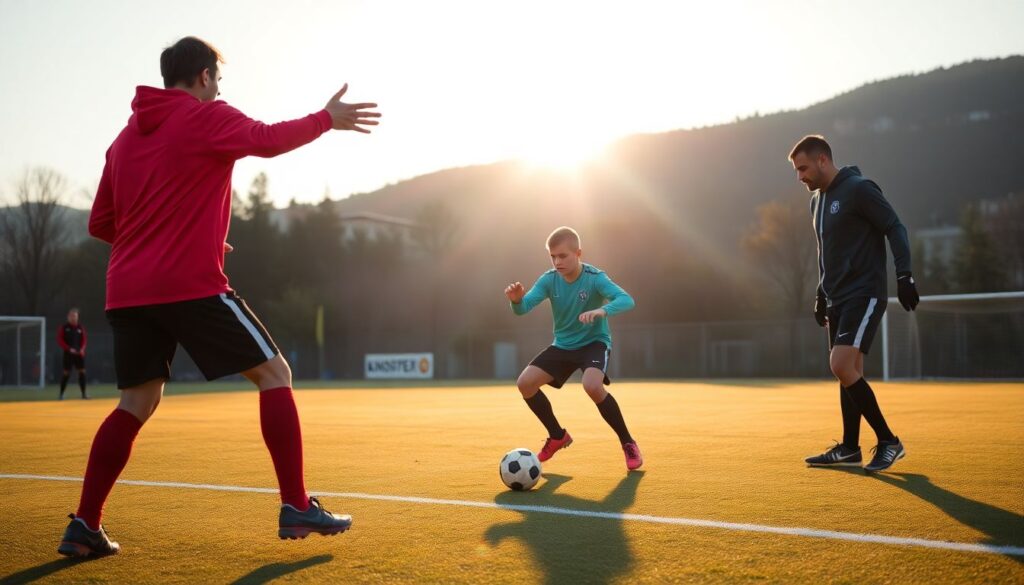
Yes. Use training to work on high-positioning games and passing patterns, even if matches are deeper. Extra work at goalkeeper training camps in Turkey or with private coaches can accelerate your adaptation.
What is a simple rule for deciding when to come out for through balls?
If you are clearly first to the ball and can stay in control, come. If you will arrive second, stay and set for the 1v1. If it is 50-50, choose the safest option: strong clearance or delay rather than risky dribble.
How can I safely improve my passing under pressure?
Start with low-pressure rondos and passing circuits, then add one pressing player and specific touches or time limits. Always have a safety rule: if you lose your orientation or balance, clear long and reset.
Do I need special gloves to play as a sweeper-keeper?
You do not need special gloves, but modern goalkeeper gloves for sweeper keepers with flexible palms and good grip can help with ground passes and quick throws. Test different models in training before using them in competitive matches.
What type of academy environment best supports sweeper-keeper development in Turkey?
Look for a football academy for goalkeepers in Turkey or club setups where keepers regularly join possession games, rondos and build-up drills with outfield players, not only isolated shot-stopping sessions.
How do I reduce mistakes when playing a high line in windy conditions?
Start from a slightly deeper position, read long balls early and prioritize safety. Communicate clearly with defenders, and choose simple clearances instead of controlled takes when the ball flight is unstable.