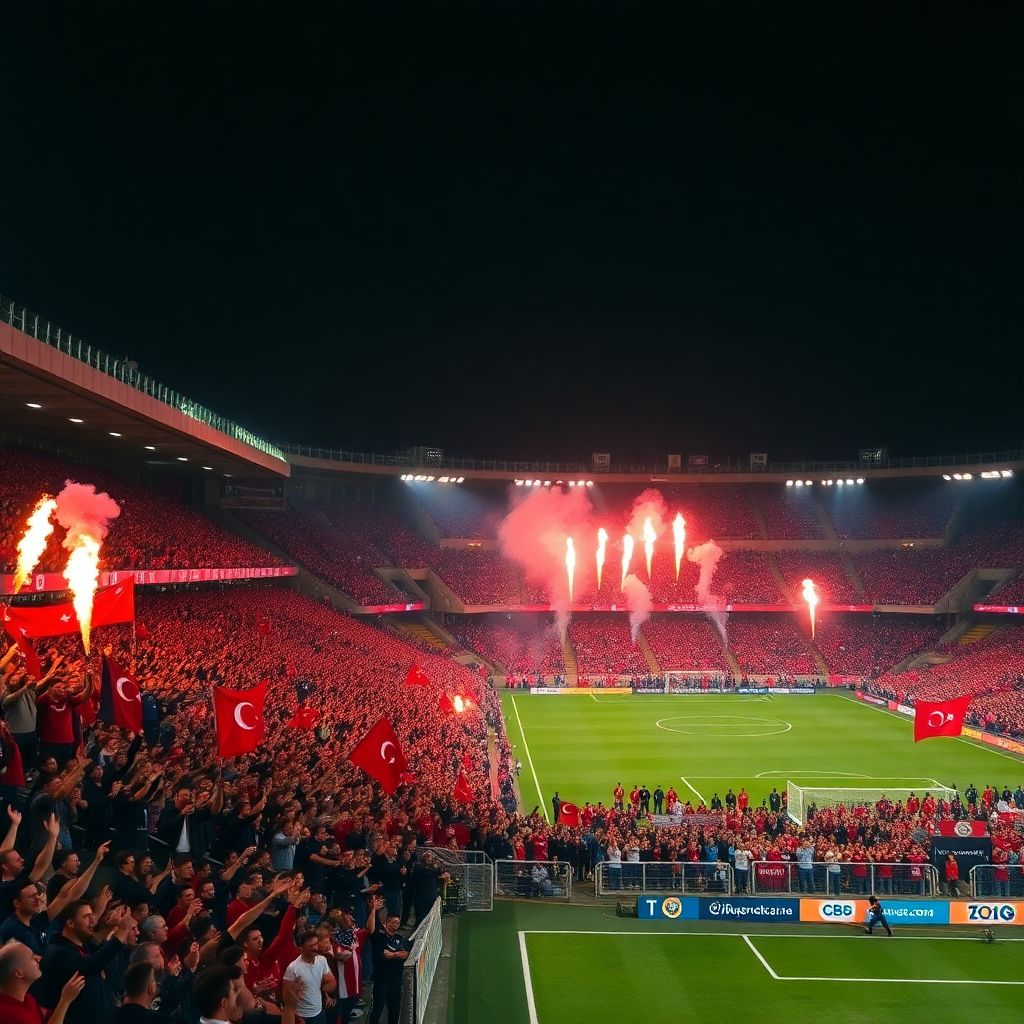
Turkish football fans are considered among the most passionate because support is tied to identity, neighborhood and history, not just entertainment. Ultra-groups, intense rivalries and visually powerful stadium rituals create a high-energy culture that is relatively easy to feel and imitate, but difficult and risky to fully reproduce elsewhere.
Core Drivers Behind Turkish Fans’ Intensity
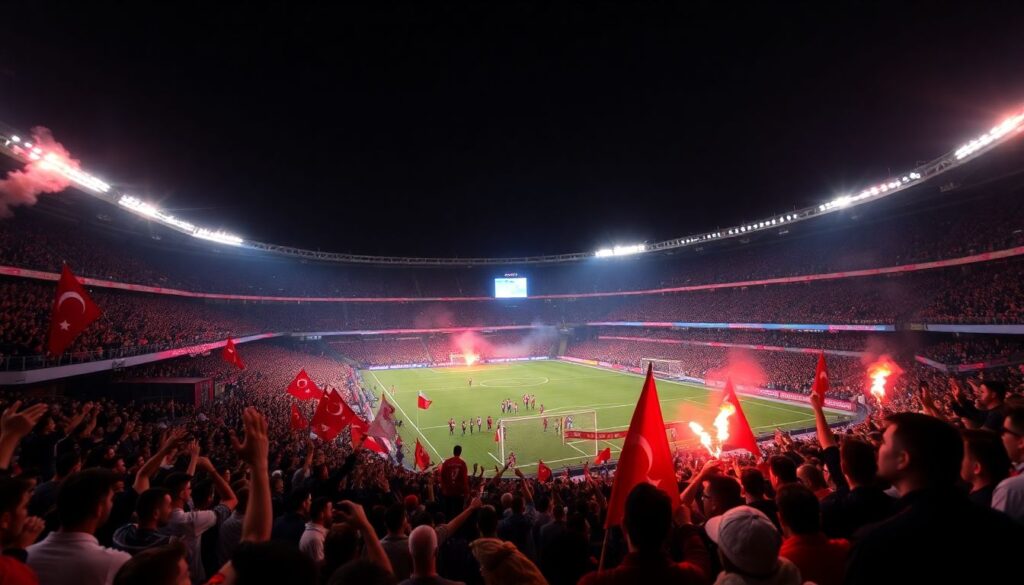
- Football woven into national identity and urban history, especially in Istanbul.
- Highly organized ultras and supporter groups coordinating chants, banners and choreography.
- Derbies turning club loyalty into quasi-tribal belonging and daily identity.
- Political, social and religious narratives amplifying meaning beyond the 90 minutes.
- Compact, steep stadiums that trap noise and reward coordinated support.
- Media, tourism and “football fan experience trips to Turkey” reinforcing the spectacle.
Historical Roots and National Identity in Turkish Football
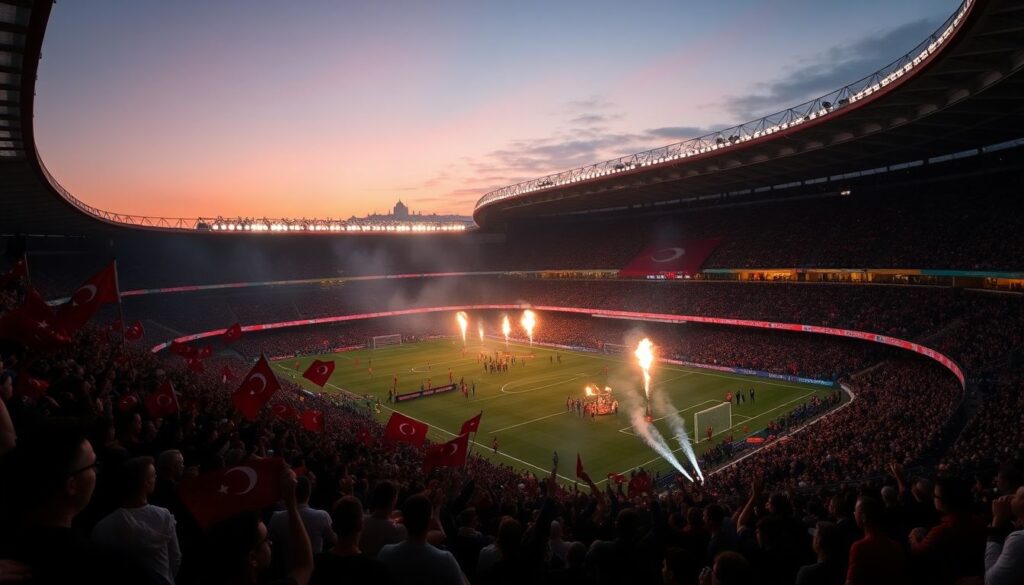
To understand why Turkish fans are among the most passionate, it helps to treat football not as a leisure activity but as a visible continuation of city pride and national story. Clubs in Istanbul and other big cities grew alongside the Republic and became symbols of modernity, resistance and social mobility.
In Turkey, supporting a club often overlaps with how people describe themselves: which side of the Bosphorus they are from, which social class they feel part of, or which workplace and school circles they move in. This makes fandom a long-term commitment, closer to a shared surname than a casual preference.
Over time, landmark matches, dramatic title races and European nights have been remembered as collective turning points. Stories of “we were there” are passed down within families, so new generations inherit not only a team, but also a set of emotional reference points. This inherited memory deepens intensity and makes matchdays feel historically important.
For clubs or leagues outside Turkey trying to learn from this, the low-risk, high-payoff approach is to document and celebrate their own local histories and neighborhoods, instead of copying Turkish chants or pyrotechnics. Strengthening authentic local narratives is easier to implement and carries fewer security or regulatory risks.
Stadium Atmosphere: Chants, Visuals and Matchday Rituals
Inside the ground, Turkish passion becomes visible and audible through a coordinated set of rituals. These are not random; they are planned, rehearsed and optimized across seasons.
- Pre-match build-up: Ultras arrive early to rehearse songs, hang banners and test megaphones. Music in the stadium is often chosen to match the club’s image and local culture, priming fans emotionally before kickoff.
- Chants and rhythm: Chants are structured with clear leaders, call-and-response patterns and drum rhythms. This lets tens of thousands of fans synchronize, which dramatically increases perceived intensity while still being relatively easy to copy in other countries.
- Visual choreography (tifos): Large banners, coordinated scarves and colored cards turn stands into moving images. While impressive, these displays can involve fire regulations, costs and safety risks, especially if combined with pyrotechnics.
- Match-phase adaptation: Different songs are used for pressure, celebration or psychological warfare against the opposition. Ultras read the game and adjust tempo and tone, keeping the atmosphere continuously “live”.
- Post-match rituals: Win or lose, fans often stay to sing with players, reinforcing the feeling of a shared mission. This habit makes loyalty visible and strengthens long-term bonds.
- Integration with tourism: The intensity of these rituals is one reason why “Turkish football fans tour packages” and other “football fan experience trips to Turkey” are offered by travel agencies. Visitors come not just for the match, but for the atmosphere around it.
From an implementation perspective, structured chants and post-match rituals are the easiest elements for other clubs to adopt with minimal risk. Complex tifos, flares or extremely compressed standing areas add visual impact but require strong safety planning and tight coordination with authorities.
Rivalries, Local Allegiances and the Making of Tribal Loyalty
Rivalry is where Turkish passion peaks. The best-known example is the clash between Galatasaray and Fenerbahçe, where sporting competition overlaps with geography, class and historical narratives. When people search for “Galatasaray Fenerbahce derby tickets”, they are chasing this rare mix of noise, tension and symbolism.
Several recurring scenarios illustrate how tribal loyalty is built and sustained:
- City-splitting derbies: In Istanbul, major clubs divide neighborhoods, streets and even families. Matchday is visible in the colors of flags on balconies, shop decorations and traffic patterns. This constant visibility keeps loyalty active even on non-match days.
- Regional pride vs. metropoles: Clubs from Anatolian cities use matches against Istanbul giants to express regional pride. Fans see these games as a statement that their city matters, which increases emotional stakes far beyond league position.
- Workplace and school micro-rivalries: Friendly but intense banter at offices and universities means that results affect Monday morning mood. This everyday social pressure encourages consistent attendance and vocal support.
- Life-cycle rituals: Children might receive their first club shirt at birth, or have birthday parties themed around their team. These small rituals turn allegiance into a life-long default, not a late or reversible choice.
- Derby tourism: For international fans, tribal loyalty is visible in how hard it is to obtain “Turkey football match tickets Istanbul” for big derbies. Ticket scarcity, strict security rules and members-only sales underline how seriously locals treat these fixtures.
For other leagues, encouraging local derbies and celebrating regional identity can be powerful yet relatively low-risk. However, when rivalry messaging crosses into hostility or dehumanization, it raises safety risks and can invite sanctions. The Turkish example shows both the benefits and the boundaries of tribal loyalty.
Political, Religious and Social Layers Shaping Support
Politics, religion and social movements often color Turkish football culture. They give fans more reasons to care, but they also create points of tension that clubs and authorities must manage carefully.
Upsides of deeper social meaning
- Stronger long-term loyalty, because supporting a club feels morally or socially meaningful, not just entertaining.
- Ability for fans to mobilize quickly for charity campaigns, disaster relief or community projects, using the same networks built for matchdays.
- Richer chants, banners and slogans, as fans draw from political and cultural vocabulary instead of pure football clichés.
- Greater resilience of fan culture in difficult sporting periods, since identity is anchored outside results alone.
Constraints and risks to manage
- Potential clashes with state authorities when political messages appear on banners or in chants, leading to fines, closures of stands or legal cases.
- Internal divisions among fans if wider political or religious disagreements spill into the terraces.
- Reputational risk for clubs, sponsors and leagues associated with extreme or discriminatory messages.
- Higher policing costs and stricter regulations around high-profile matches, which can reduce spontaneity and accessibility for ordinary supporters.
For leagues abroad, the transferable lesson is not to import specific political slogans, but to recognize and support fan-led community initiatives. These are easier to implement, socially positive and less likely to create regulatory problems than overtly politicized displays.
Organization of Fans: Ultras, Supporters’ Clubs and Grassroots Networks
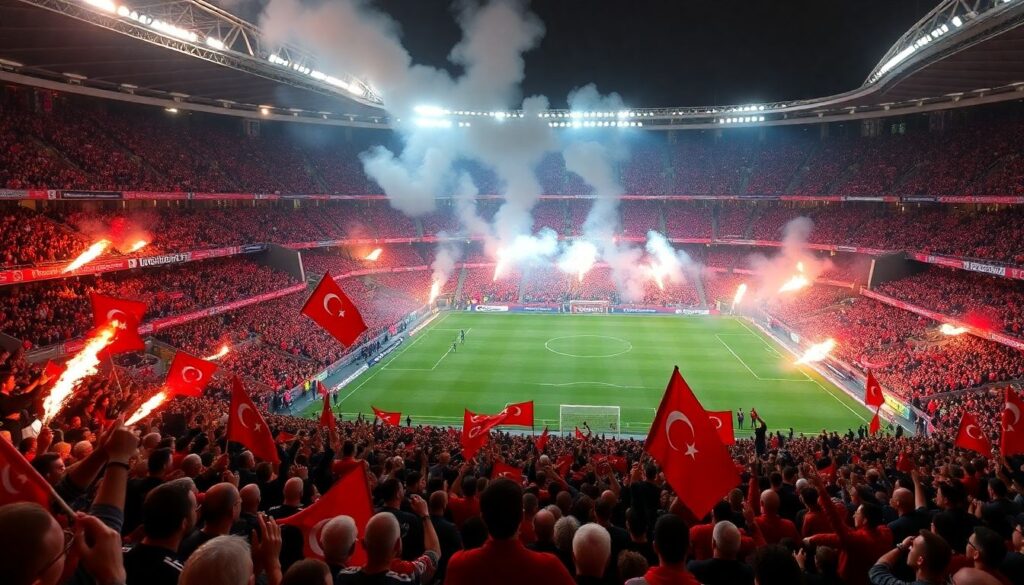
Turkish passion is highly organized. Ultras, neighborhood groups and official supporters’ clubs coordinate travel, choreography and messaging. This infrastructure is a key asset, but outsiders often misunderstand how it works.
Common mistakes and myths when trying to copy the Turkish model include:
- Assuming ultras are only hooligans: While some groups have violent elements, many also manage charity drives, away travel logistics and creative projects. Reducing them to “troublemakers” blocks constructive cooperation and wastes their organizing skills.
- Creating “fake ultras” from above: Some clubs try to manufacture a passionate end by seating temporary groups with drums and flags. Without organic ties to neighborhoods and long-term members, this usually feels artificial and collapses when results dip.
- Underestimating informal leaders: Real influence often lies with chant-leaders, banner designers and travel coordinators, not only with formal club-officer positions. Ignoring these people makes engagement strategies ineffective.
- Over-romanticizing riskier behaviors: Copying pyrotechnics, pitch invasions or confrontational marches without Turkey’s specific context and experience leads to quick clashes with police and safety regulators.
- Neglecting communication channels: Turkish groups use encrypted apps, social media and physical meetings to align plans. Clubs that ignore these channels cannot accurately assess mood or co-design safe, intense atmospheres.
For clubs abroad, the practical, relatively low-risk approach is to recognize and support existing fan organizations with meeting spaces, transparent ticket policies and involvement in decision-making, while clearly drawing red lines around violence and discrimination.
Modern Influences: Media, Economy and Internationalization
Modern media and economics amplify Turkish fan passion and export it worldwide. TV broadcasters, social platforms and tourism operators all package the atmosphere as a product, while fans continue to drive the “content” through their behavior.
Consider a simplified scenario:
- A major Istanbul derby is scheduled at a top venue frequently ranked among the “best stadiums in Turkey for football fans”.
- Travel agencies promote “Turkish football fans tour packages”, bundling “Turkey football match tickets Istanbul”, hotel stays and city tours.
- Ultras prepare a new tifo and choreographed chant, clips of which circulate on social media days in advance.
- During the match, the atmosphere is filmed by broadcasters and visitors. Short videos go viral internationally.
- Next season, more foreign visitors book “football fan experience trips to Turkey”, increasing ticket demand, sponsorship interest and club revenues.
From a risk perspective, this commercialization brings financial stability and global prestige, but it can also price out local fans, increase pressure on police and create tensions between tourist expectations and traditional supporter culture. Balancing economic gains with preserving authentic, locally rooted passion is now one of the central strategic challenges for Turkish football.
Practical Questions about Turkish Fan Culture and Behavior
Is the atmosphere at regular league games as intense as at derbies?
Derbies and title-deciding matches are usually the most intense, but many regular league fixtures in Turkey still have strong noise, color and choreography. Atmosphere depends on opponent, kickoff time, league position and the organization level of ultras for that specific game.
How difficult is it for a foreign visitor to get tickets for big matches?
For major derbies, it can be quite difficult because sales often prioritize members and season-ticket holders, and security rules are strict. Using reputable agencies bundling official tickets with travel, or choosing slightly smaller but still passionate fixtures, is usually more realistic.
Are Turkish fan practices like flares and non-stop chanting legal to copy in other countries?
Continuous chanting is typically allowed and easy to copy, but flares, smoke bombs and standing areas are heavily regulated in many leagues. Before importing these elements, clubs need to check local laws and stadium safety rules to avoid sanctions and closures.
Do all Turkish clubs have equally passionate supporters?
No. Large-city clubs and traditional powerhouses have more visibility and bigger organized groups, but many smaller or regional clubs still show remarkable intensity. Passion levels vary by history, recent success, local demographics and how well supporter groups cooperate with clubs.
Is Turkish fan culture becoming more commercial and less authentic?
Commercial influences are increasing through TV deals, sponsorships and football tourism, but core ultra-culture and local rituals remain strong. The key tension is managing ticket prices, kickoff times and branding so that traditional fans still feel central rather than sidelined.
What can foreign clubs safely learn from Turkish fans?
They can adopt structured chants, visible supporter sections, storytelling around club history and fan-led community projects. These elements are comparatively easy to implement and low-risk, while riskier aspects like pyrotechnics or intense political messaging require local legal and cultural alignment.
Which Turkish stadiums are most recommended for experiencing fan passion?
Stadiums of major Istanbul clubs are often highlighted due to steep stands and coordinated ultras, but several modern venues in Anatolia also offer powerful atmospheres. Researching recent fan feedback and travel reports helps visitors choose matches that best fit their comfort and safety expectations.