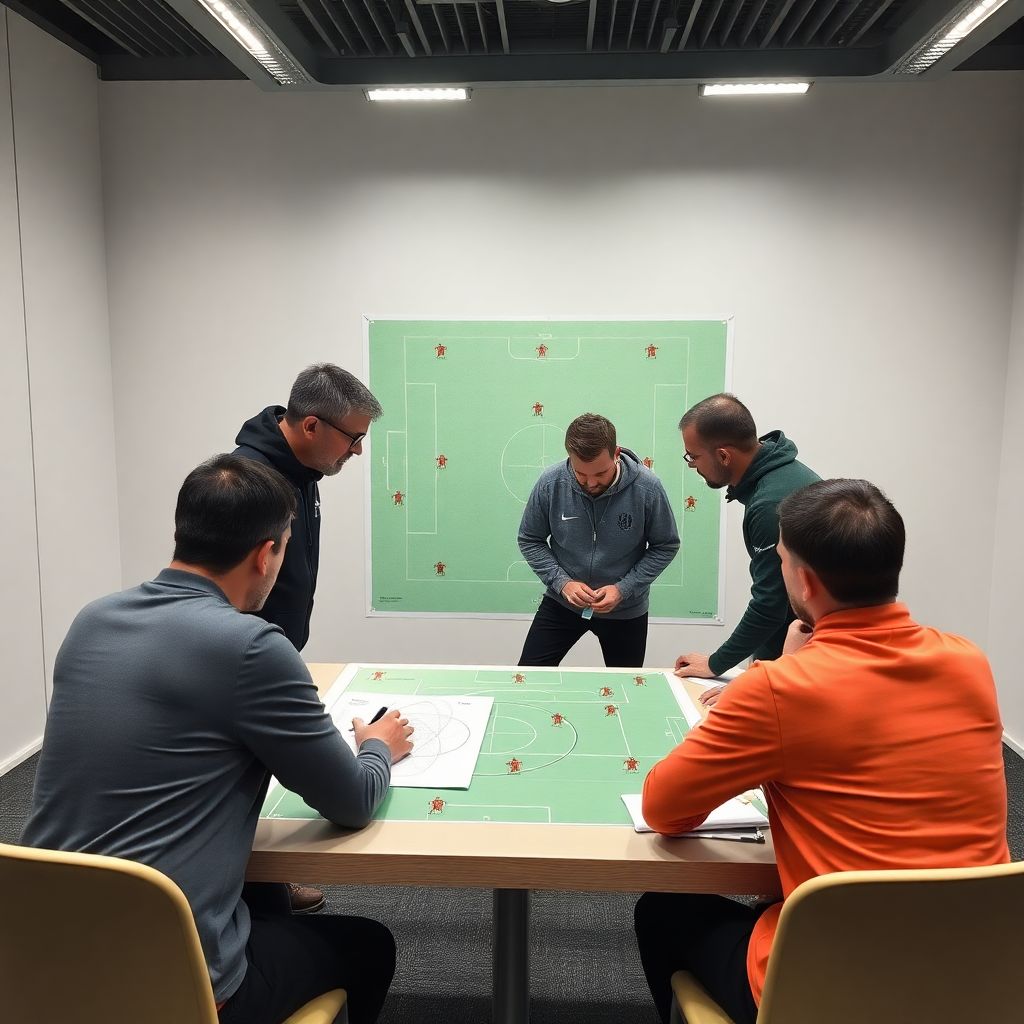
European football’s most influential managers reshaped pressing, positional play, and transitions, and their ideas now strongly guide Turkish tactics at club and academy level. Understanding Klopp, Guardiola, Conte, Mourinho, and their predecessors helps Turkish coaches structure training, choose recruitment profiles, and design match plans that fit Süper Lig realities, budgets, and player types.
Snapshot: Who Changed Modern European Tactics and Why
- Jürgen Klopp and Ralf Rangnick accelerated the pressing revolution, turning ball recovery into a primary attacking weapon.
- Johan Cruyff and Pep Guardiola systemised positional play, spacing, and structured possession to control rhythm.
- Antonio Conte and José Mourinho refined compact blocks, vertical attacks, and transition management against stronger opponents.
- Micro-specialists advanced set-piece design, rotation schemes, and role specialisation, especially at elite European clubs.
- These ideas reached Turkey through foreign coaches, European competition, media analysis, and football coaching courses Europe-wide.
- Turkish clubs like Galatasaray, Fenerbahçe, and Başakşehir adapted these models, with mixed success depending on squad profile and club culture.
Pressing Revolution – Klopp, Rangnick and the Mechanics of High-Tempo Recovery
Pressing-based football, as developed by Klopp and Rangnick, treats regaining the ball as the most dangerous attacking moment. Instead of retreating into a block, the team collectively sprints toward the ball carrier and his closest options, compressing space and forcing turnovers in advanced zones.
Rangnick’s work in Germany built the framework: clear pressing triggers, vertical compactness, and aggressive counter-pressing immediately after loss. Klopp then translated those principles into a high-tempo, emotionally charged style, where the first three to five seconds after losing possession are treated as a "golden window" to attack the opponent’s poor structure.
In Turkish context, these mechanics collide with climatic conditions, schedule density, and varying training intensity. Many teams start with a high press but cannot sustain it beyond 60 minutes, turning a weapon into a liability. Smart adaptation means pressing selectively: choosing zones and moments rather than pressing blindly for 90 minutes.
Mini-scenario: A mid-table Süper Lig side hosting a stronger opponent. The coach designs a mid-block that transforms into an intense press only on backward passes to centre-backs. The players are drilled to jump together, regain the ball near the touchline, and immediately play inside to the number 10 running between lines.
- Define two or three clear pressing triggers in your game model (e.g., back pass to CB, slow switch, poor first touch).
- Condition players for repeated 5-7 second sprints, not continuous running; structure training around short, explosive pressing games.
- Use football analytics software for coaches to track pressing efficiency (regains, fouls, breaking passes conceded) by zones and minutes.
Positional Play Evolution – From Cruyff’s Principles to Guardiola’s Variations
Cruyff’s positional play (juego de posición) builds around several core mechanics:
- Optimal spacing between lines: The team keeps vertical and horizontal distances short enough for support but long enough to stretch the opponent, creating constant passing triangles and diamonds.
- Occupation of key zones: Specific players are responsible for half-spaces, wide lanes, and between-the-lines pockets, ensuring that at least one free man appears between opposition lines.
- Positional superiority over physical superiority: The goal is not to win 1v1 duels all over the pitch, but to create 2v1s and 3v2s in pre-planned areas via circulation and rotations.
- Structured build-up patterns: The first and second lines follow rehearsed schemes for playing out under pressure, turning pressing into an opportunity to progress.
- Guardiola’s adaptations: Pep introduced inverted full-backs, false 9s, and box midfields, using flexible roles to preserve positional discipline while overloading central corridors.
- Rest defence embedded in possession: While attacking, at least two or three players stay in positions that allow immediate counter-pressing and protection against transitions.
Mini-scenario: A Turkish coach in the 1. Lig designs a 4-3-3 where one full-back inverts and the six drops between centre-backs. The team rehearses a simple pattern: CB-inverted FB-eight-winger in half-space. Each player knows his zone and his next passing options before receiving.
- Use an online tactical analysis course football to learn standard positional play patterns and adapt two or three of them to your squad.
- During training, freeze play and check spacing: are width, depth, and between-the-lines occupation consistently maintained?
- Connect your positional structure to rest defence; decide which players stay behind the ball in each phase.
Compact Defence and Transition Control – Lessons from Conte and Mourinho
Conte and Mourinho specialise in compact defensive organisation combined with ruthless exploitation of transitions. Their influence is visible in many Turkish teams that sit deeper against European opponents or title contenders, yet still want a credible attacking threat.
Typical application scenarios include:
- Underdog away games in Europe: Against technically superior sides, a 5-3-2 or 5-4-1 block protects the box. Wing-backs are poised for fast outlets once possession is regained, mimicking Conte’s Juventus or Inter patterns.
- Derbies with high emotional load: Mourinho-style compact 4-2-3-1, with a very tight double pivot shielding central zones, reduces chaos and forces the opponent into low-probability crosses.
- Protecting a lead in the Süper Lig: The team drops ten metres deeper, closes central passing lanes, and prepares rehearsed vertical counters through the nine and weak-side winger.
- Playing with ageing centre-backs: Compactness compensates for lack of pace. The back line defends closer to the box, while the midfield narrows to avoid being split by simple wall passes.
- Short-handed situations after a red card: Block becomes narrower; one forward stays high as a counter outlet, similar to Mourinho’s classic ten-men match plans.
Mini-scenario: Fenerbahçe defending a one-goal lead away. The coach switches from a 4-3-3 to a 5-4-1, asking the wingers to tuck in and block half-spaces. On regain, the nearest midfielder immediately plays a vertical pass to the lone striker, looking for flick-ons to the advancing wing-back.
- Train defensive distances and line coordination daily; do not assume compactness appears automatically on match day.
- Create 8v7 or 9v8 transition games that reward fast, vertical attacks after regaining the ball in your own half.
- Use match clips with clear Conte and Mourinho examples during Turkish football coaching clinics Istanbul sessions to visualise roles for your players.
Micro-Tactical Innovations – Set-Pieces, Rotation and Role Specialisation
Beyond big philosophies, many European coaches influence Turkish tactics through micro-innovations: detailed set-pieces, rotation schemes, and highly specialised roles. Elite staff treat corners and free-kicks almost like American football plays, with rehearsed blocks, screens, and late runs from blind zones.
Role specialisation extends to tasks like "half-space full-back", "pressing forward", or "third-man runner eight". In Turkey, adopting these roles can clarify responsibilities in complex systems, especially for players transitioning from more intuitive, less-structured environments.
Rotations – like winger-full-back overlaps or midfield triangles that reverse positions – are designed to disrupt man-marking and open passing lanes. European sides use data and detailed opposition scouting to decide which rotations to apply and where.
Mini-scenario: A Süper Lig club struggles to break deep blocks. The staff designs three corner routines: one for near-post flicks, one for late edge-of-box shots, and one for crowding the goalkeeper. Each is linked to specific cues from the set-piece taker’s body language, making execution automatic under pressure.
Benefits of micro-tactical innovation
- Clearer, role-based instructions reduce decision stress for players in high-pressure moments.
- Well-designed set-pieces can add several goals across a season without major squad changes.
- Rotations help break strict man-marking schemes common in parts of the Turkish pyramid.
Limitations and risks to manage
- Overloading players with complex codes and routines can slow execution and cause confusion.
- Highly specific roles may fail if injuries force less-suitable players into those positions.
- Poorly defended attacking set-pieces can expose the team to counters if "rest defence" is not structured.
- Prioritise 3-4 high-impact set-piece routines; refine them weekly instead of adding more complexity.
- Use football analytics software for coaches to evaluate which routines produce shots and high-quality chances.
- Define role descriptions in simple, action-based language that your players can recall under fatigue.
Transferring Ideas – Pathways That Brought European Methods to Turkey
European tactical ideas reached Turkey through several overlapping channels: foreign coaches, players returning from abroad, UEFA licensing, and digital analysis culture. However, transfer is rarely clean; concepts get simplified, misinterpreted, or applied outside their original context.
Common myths and errors include:
- "We just need to copy formations": Many assume using a 4-3-3 means playing like Guardiola. In reality, the training methodology, spacing rules, and role definitions matter more than the numbers on paper.
- "Pressing equals running more": Without clear pressing triggers and coordination, players simply chase the ball. This increases fatigue and opens central gaps instead of improving defensive solidity.
- "Data is only for big European clubs": Even modest Turkish teams can benefit from basic video tagging and simple metrics, without expensive, enterprise-level tools.
- "UEFA courses automatically make you modern": Attending high-level programmes is valuable, but concepts must be adapted to the specific physical and cultural environment of Turkish leagues.
- "Online analysis replaces live coaching": Watching top teams and completing digital courses helps, yet practical pitch work and clear communication remain decisive.
Mini-scenario: A young coach completes football coaching courses Europe-wide, then returns to a TFF 2. Lig club. Instead of implementing an ultra-complex pressing scheme, he selects two principles from his education – compact mid-block and structured counter-attacks – and spends a full pre-season embedding them.
- When evaluating a UEFA Pro License coaching course price, focus less on prestige and more on how its content connects to your club’s reality.
- Combine theoretical learning with regular on-pitch experiments; adjust ideas according to player feedback and match outcomes.
- Use an online tactical analysis course football mainly to refine your eye; application should always be contextual and progressive.
Practical Case Studies – Tactical Overhauls at Galatasaray, Fenerbahçe and Başakşehir
Several Turkish clubs have lived through tactical overhauls influenced by European managers and their ideas. While each era is unique, certain patterns reappear: initial resistance, a dip during adaptation, then either consolidation or rejection of the new approach.
Case 1 – Galatasaray and structured pressing: Inspired by German models, coaches increased out-of-possession intensity and compactness. The team adopted zonal pressing cues, especially in European nights, to better handle build-up heavy opponents. The key was teaching forwards to press in curves, blocking central passes while chasing full-backs.
Case 2 – Fenerbahçe and flexible build-up: Different managers experimented with 3-2 and 2-3 structures in the first phase, borrowing from Guardiola-style positional play. When squad composition fit (ball-playing centre-backs, press-resistant six), the team controlled games; when profiles misaligned, build-up became risky and error-prone.
Case 3 – Başakşehir and control-first football: Influenced by European possession coaches, Başakşehir built patiently, using experienced midfielders to manage tempo. Compact rest defence limited counter-attacks, showing how a mid-budget Turkish side can use European principles to compete with bigger budgets.
Mini-pseudocode scenario for a Turkish coach adopting these lessons:
IF squad has mobile forwards AND fit midfielders THEN

  implement selective high press in first 15 minutes of each half

ELSE

  focus on compact mid-block + fast transitions through strongest runner

END IF
- Map your current squad to roles found in successful European systems; avoid forcing players into incompatible tasks.
- Introduce one major tactical change per half-season, not three at once, to limit confusion.
- Use clips from Galatasaray, Fenerbahçe, and Başakşehir to show players familiar shirts executing "new" ideas.
Self-Assessment Checklist for Turkish Coaches
- Can you explain, in one clear sentence each, how your team presses, builds up, and defends transitions?
- Have you adapted at least one idea from European managers to your squad’s exact physical and technical profile?
- Do your training sessions include specific work on pressing triggers, positional spacing, and set-piece routines?
- Are you using at least basic video and data tools to evaluate whether your tactical ideas actually work in matches?
- Do you review and update your game model after every 8-10 fixtures, based on evidence rather than emotion?
Clarifications on Managerial Impact and Tactical Adaptation
How directly do European managers shape tactics in the Turkish leagues?
Impact is usually indirect. Turkish coaches and analysts watch European games, attend courses, and study leading managers, then translate ideas into local conditions. Player profiles, climate, and club culture mean concepts are adapted rather than copied.
Which European influences are most realistic for mid-table Süper Lig teams?
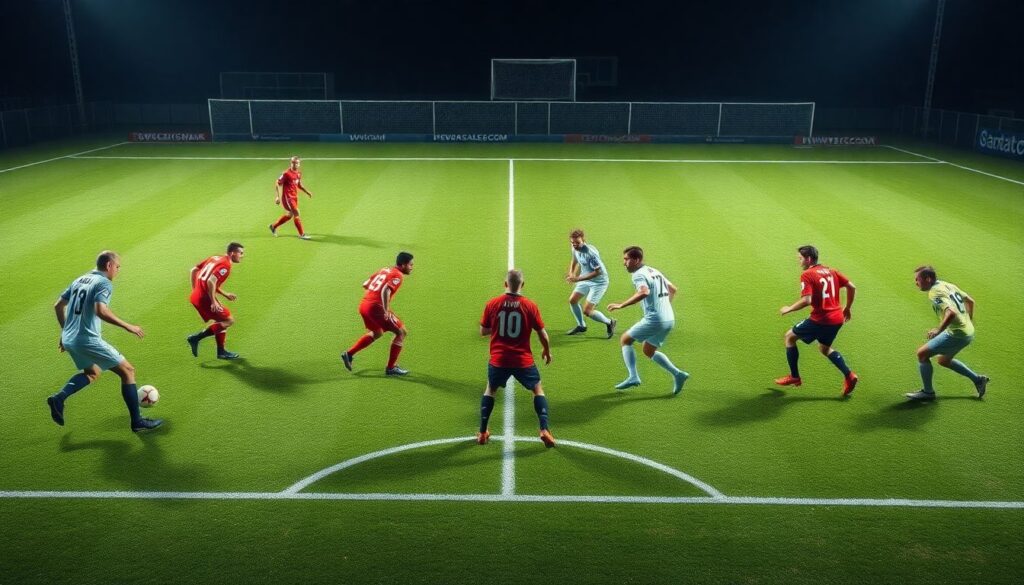
Selective pressing, compact defensive blocks, and structured counters are more realistic than full-scale gegenpressing or extreme positional play. Mid-table squads often lack depth for ultra-high tempo but can execute clear, simple principles consistently.
How can a young Turkish coach start learning these tactical models systematically?

Combine formal education, such as national licenses and football coaching courses Europe offers, with self-study of match footage. Supplement this with an online tactical analysis course football to sharpen your observational and notation skills.
Do clubs need expensive data departments to benefit from tactical analysis?
No. Even modest setups can gain value from basic football analytics software for coaches plus organised video tagging. The priority is consistent, repeatable workflows, not high-end technology for its own sake.
What is the role of local coaching clinics in translating European ideas?
Events like Turkish football coaching clinics Istanbul sessions act as filters. Experienced practitioners reinterpret top-level concepts into drills, terminology, and constraints that resonate with Turkish players and competitive contexts.
Is it risky to mix ideas from different European managers in one team model?
It is only risky if ideas contradict each other or overload players. Combining, for example, Mourinho-style compactness with refined Guardiola-style set build-up is possible, provided roles are clear and training time is sufficient.
How long does it typically take for a tactical overhaul to show results?
At professional level, clear progress usually appears after a full pre-season plus several league matches. At amateur or youth level, timelines are longer, but consistency in language, exercises, and video feedback accelerates adaptation.