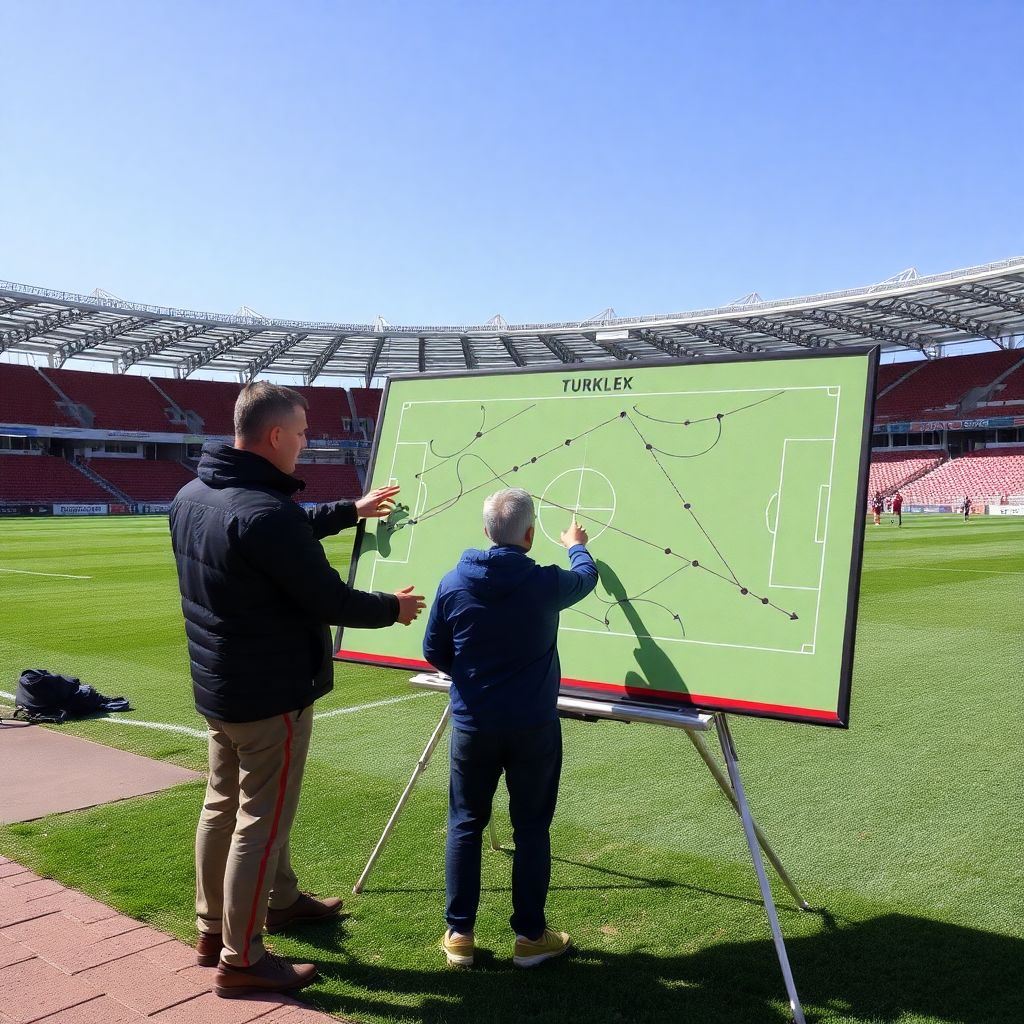
Possession-based football in the Süper Lig is a tactical approach where teams prioritise controlled buildup, short passing and structured spacing to dominate the ball and territory, rather than attacking quickly at all costs. Compared with direct or transition-heavy styles, it is harder to install but can bring more predictable control and long-term competitive stability.
Defining possession-based football in the Süper Lig
- Focus on sustained, purposeful ball retention rather than merely high possession for its own sake.
- Emphasis on structured buildup from the goalkeeper through the thirds, using short and medium passes.
- Positional play principles: width, depth and clear occupation of zones between the lines.
- Collective pressing and counter-pressing to recover the ball quickly after loss.
- Players selected and trained for technical quality and decision-making under pressure.
- Higher tactical and training demands than direct play, with greater upside but clearer structural risks.
Historical context: how Turkey moved toward ball retention
For many years the Turkish Süper Lig was dominated by direct attacks, intense duels and transition-focused football. Big clubs relied on individual flair in the final third, while defensive structures and buildup patterns were often secondary. Possession numbers were less important than emotion, momentum and home advantage.
The rise of global analytics and video scouting changed expectations. As clubs started to follow Turkish Süper Lig advanced stats and analytics, they saw how European opponents controlled matches through structured buildup, not just physicality. Local supporters also became more exposed to elite possession models in European competitions and international broadcasts.
Gradually, more coaches arrived with clear positional play ideas. Through match footage, blogs and Süper Lig possession based football analysis, it became obvious that simply defending deep and countering was no longer enough to compete consistently. The conversation shifted from “how hard we fight” to “how we create and prevent chances through the ball”.
In this context, possession-based football emerged as an attractive route to modernise Turkish clubs, especially those aiming to become the best possession based teams in Turkish Süper Lig. However, the league’s intensity, crowd expectations and board impatience made implementation complex, with different risk profiles than in some Western European leagues.
Quantifying possession: key metrics and what they reveal

Without turning tactics into pure numbers, a few core indicators help explain how possession-based teams actually behave. These are the typical metrics highlighted in any serious Süper Lig tactical analysis subscription or data service.
- Raw possession percentage
Shows how much of the match a team controls the ball, but not automatically how well. In Turkey, some mid-table teams record high possession by circulating in safe areas without penetration, which can mask attacking problems. - Field-tilt and territory
Looks at passes or touches in the attacking half compared with the defensive half. A genuine possession side combines high possession with sustained presence in the opponent’s half, forcing rivals back. - Progressive passes and carries
Counts how often the ball moves significantly closer to goal. This separates sterile possession from effective positional play. In a possession-based Süper Lig side, centre-backs and pivots are responsible for many of these forward actions. - Pass networks and centrality
Data tools visualise which players connect the team. Possession teams usually show strong triangular connections between centre-backs, pivot and full-backs, rather than long, isolated lines from centre-back straight to striker. - Pressing intensity after loss
Even without detailed tracking data, repeated fast regains in advanced zones point to well-organised counter-pressing. For possession models, the first defensive action is often the reaction to losing the ball. - Turnover locations and frequency
Where a team loses the ball reveals its risk profile. A brave possession side in the Süper Lig accepts more turnovers near its own box, trading safety for cleaner buildup, while a direct side loses it more often in wide or advanced areas.
Managerial drivers: coaches who reshaped Süper Lig tactics
The shift towards ball retention has been led by coaches willing to accept short-term risk for long-term structural gain. Their influence appears in at least four recurring scenarios across recent seasons.
- Big-club rebuilds after European failures
When a traditional giant exits Europe early, boards often seek a possession-oriented coach promising control in high-level matches. These coaches demand time to re-educate defenders and goalkeepers in buildup, sometimes facing early league setbacks before the model stabilises. - Ambitious mid-table projects
Some provincial clubs adopt possession to differentiate themselves and attract technical players. For them, a clear, modern style can be a selling point in recruitment and fan engagement, even if the risk of early-season errors is higher. - Foreign managers importing positional play
Coaches arriving from Spain, Portugal, Germany or the Balkans often bring codified positional structures. They introduce strict rules on spacing, rotations and passing lanes, raising training demands but giving players clear references in possession. - Domestic coaches educated through modern courses
As football coaching courses possession based style Turkey have improved, more local coaches emerge with updated tactical frameworks. They blend European positional principles with an understanding of Süper Lig tempo, atmospheres and refereeing styles, creating a more tailored possession model. - Short-term “identity shock” appointments
Occasionally, a club appoints an extreme possession coach to change the culture quickly. Implementation is abrupt, mistakes in the first phase of buildup increase, and if results fall, the board often reverts to a pragmatic, direct manager, showing the political risk of stylistic shifts.
Player archetypes: technical and cognitive traits required
Possession-based football does not just change patterns; it changes the type of player a Süper Lig club needs and how risk is distributed across the pitch. Compared with direct or transition-heavy approaches, it increases cognitive and technical demands while also offering clearer role definitions.
Core strengths of possession-oriented player profiles
- Press-resistant defenders and pivot – comfortable receiving under pressure, turning out of tight zones and breaking the first pressing line with short passes.
- Positionally intelligent full-backs – able to underlap into central spaces or invert next to the pivot, not just overlap on the wing.
- Creative interiors and number 10s – capable of receiving between the lines, combining in small spaces and deciding quickly when to turn or bounce the ball.
- Linking centre-forward – not only a finisher but a wall-pass option to connect wide and central areas, supporting third-man runs.
- Goalkeeper as first playmaker – involved in creating overloads, scanning for free man and choosing calmly between short and long options.
- High tactical discipline – players hold zones, respect spacing and understand when to accelerate or slow the tempo.
Inherent constraints and risk factors in the Süper Lig context
- Higher exposure to counter-attacks – losing the ball during buildup in front of passionate home crowds can quickly flip momentum and cause emotional swings.
- Steep learning curve for defenders – centre-backs raised on clearances and duels must adjust to receiving facing their own goal, which can lead to early-season errors.
- Fan and media impatience – sterile possession without quick penetration is often criticised, especially when compared with direct, “fight-first” football that feels more traditional.
- Recruitment limitations – not every club can attract or afford multiple press-resistant defenders and technically secure midfielders, which can leave the structure incomplete.
- Pitch and weather variability – some stadiums have heavy or uneven pitches during winter, making risky short passing near the box more dangerous than in ideal conditions.
Practical preparation: training designs that build possession
On the training ground, moving from direct to possession-based play demands deliberate design. Coaches in Turkey increasingly borrow ideas from European academies while adjusting for Süper Lig tempo and physicality.
- Overloading rondos without transfer to 11v11
Many teams run beautiful rondos but never link them to position-specific tasks. The risk is that players learn to keep the ball for its own sake, not to progress or prepare for counter-pressing zones. - Ignoring the goalkeeper as a field player
Some coaches work buildup patterns starting from centre-backs, skipping the keeper. This limits options under pressure in real matches, where the goalkeeper must often create the extra man versus the press. - Copying foreign structures without local adaptation
Blindly imitating top European clubs can backfire. Turkish opponents may press differently, and refereeing thresholds for fouls differ; training must reflect these realities or the model collapses under real-game chaos. - Under-training transition moments
Possession sides sometimes assume that if they keep the ball, transitions matter less. In the Süper Lig’s emotional environments, however, one poorly defended counter can undo long periods of control. - Overcomplicating terminology
Flooding players with abstract positional-play jargon confuses rather than clarifies. Simple field references, repeated patterns and clear video clips usually work better than complex theoretical language.
Competitive effects: possession’s impact on results and recruitment
Possession-based football influences not only match flow but club strategy. It affects how teams plan budgets, target markets and measure progress. Comparing it with more direct approaches clarifies both implementation difficulty and risk in the Süper Lig.
| Aspect | Possession-based model | Direct / transition-heavy model |
|---|---|---|
| Implementation difficulty | High: requires coordinated training, patient board and specific player profiles. | Lower: easier to teach clear roles, quicker short-term adaptation. |
| Main risk | Costly errors in buildup, fan frustration with slow attacks, vulnerability on counters. | Inability to control games against strong opponents, dependence on form and duels. |
| Recruitment strategy | Focus on technical, press-resistant players, often from academies or undervalued markets. | Emphasis on athletic forwards, aggressive defenders, cross-focused wide players. |
| Scouting and analytics needs | Heavier use of video, data and detailed Süper Lig possession based football analysis to evaluate decision-making. | More basic metrics (duels, sprints, aerials), less structural analysis. |
| Fan perception | Seen as modern and European if results are good; labelled slow or over-complicated when results dip. | Seen as emotional and traditional; praised for intensity but criticised when control is needed. |
Clubs investing in Turkish Süper Lig advanced stats and analytics often choose possession-based blueprints because they can systematically track spacing, passing lanes and pressing triggers. Data reveals repeatable patterns, making long-term planning and player development clearer than in purely reactive models.
At the same time, a possession identity influences how a club markets itself to players and coaches. It becomes easier to attract staff who value structure and to justify using a Süper Lig tactical analysis subscription in daily work, from opposition reports to individual development plans.
Checklist: is your club ready to commit to possession?
- Board and fans accept that early buildup errors may increase while the model is installed.
- Squad contains or can realistically recruit a press-resistant goalkeeper, pivot and at least one centre-back.
- Coaching staff can design training that links rondos and positional games to match-specific patterns.
- Club uses video and data to monitor progression, not only results, over a full season.
- You have a clear communication plan to explain the style to players, media and supporters.
Clarifications and common tactical misconceptions addressed
Does higher possession automatically mean a team is playing possession-based football?
No. A side can dominate the ball through safe circulation without real progression. A true possession-based model shows clear patterns for breaking lines, occupying spaces between the lines and creating chances, not just passing for the sake of statistics.
Is possession-based football always more risky than direct football?
The visible risk shifts. Possession sides risk turnovers near their own goal; direct sides risk long periods without control and more defending in their box. In the Süper Lig, either approach can be safe or risky depending on player profiles and training quality.
Can a smaller Süper Lig club successfully adopt a possession-based style?
Yes, if recruitment and coaching are coherent. Smaller clubs may even benefit by attracting technical players who want a clear structure. The key challenge is resisting pressure to abandon the model after a short run of poor results.
Do possession-based teams ignore physicality and duels?
No. Successful possession models combine technical quality with intense pressing and counter-pressing. They simply choose to invest physical energy in coordinated collective actions rather than relying mainly on isolated duels and long balls.
Are football coaching courses in Turkey enough to teach this style?
Modern football coaching courses possession based style Turkey provide a strong foundation, but they must be complemented by practical club work, video analysis and exposure to different tactical environments. Course knowledge only becomes effective when applied consistently in daily training.
Is it necessary to fully copy a famous European team’s possession model?

No. Copying one-to-one often fails because league tempo, refereeing and player profiles differ. The most effective Süper Lig models adapt core principles of spacing, pressing and buildup to local conditions and club identity.
Can a team mix possession and direct play within one season?
Yes, many teams blend approaches. A common path is to start from a stable possession structure and use direct attacks when space opens. The challenge is giving players clear rules so they understand when to keep the ball and when to attack quickly.