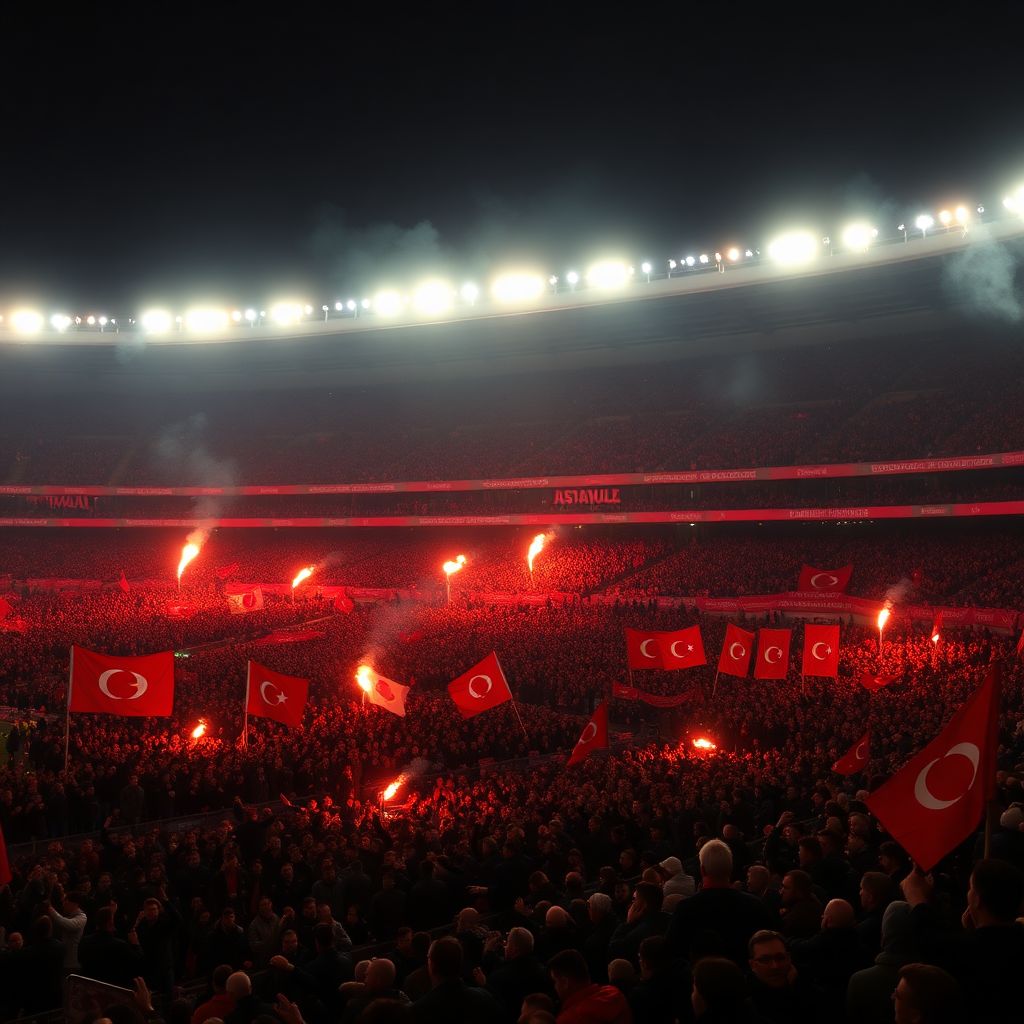
In Turkish football, “European nights” means high-stakes Champions League and Europa League matches played in Turkey, mixing intimidating atmospheres, tactical discipline, and memorable results. The term usually refers to Galatasaray, Fenerbahçe, Beşiktaş and Trabzonspor home games where crowd, city and occasion together create a unique, hard-to-repeat intensity.
What 'European Nights' Represent in Turkish Football
- Home games where Turkish clubs face major European opponents under floodlights.
- Combination of choreographies, noise and pressure that shifts momentum on the pitch.
- Matches that change a club’s reputation abroad, especially in Champions League and Europa League.
- Key moments that attract fans to seek champions league tickets istanbul wide.
- Emotional landmarks that inspire future generations of players and supporters.
Galatasaray and the 2000 UEFA Cup: A Turning Point
For Turkey, European nights gained a new definition with Galatasaray’s 2000 UEFA Cup win. Beating Arsenal on penalties in Copenhagen after eliminating Milan and Leeds United showed a Turkish side could survive a full European campaign against elite opposition, not just pull off one-off upsets at home.
This run redefined how rivals and fans viewed european football trips to turkey. It showed that tactical discipline, game management and smart rotation could match the raw energy of Ali Sami Yen. Turkish clubs started treating European games as long-term projects rather than isolated “big nights”, planning squads and budgets with continental objectives in mind.
Common mistakes from that era still repeat today: over-romanticising atmosphere while underinvesting in fitness, assuming home advantage alone is enough, and ignoring away-leg strategy. Preventing them means detailed season-long planning, modern conditioning, and staff experienced in European two-leg dynamics.
Section checklist: Galatasaray 2000 lessons
- Separate emotion from planning: build squads for a full European season, not one night.
- Treat away legs as equal in importance to home European nights.
- Use historical success (like 2000) as a benchmark for professionalism, not just nostalgia.
Memorable Champions League Nights Hosted in Turkey
Turkey has hosted several defining Champions League evenings that crystallised the meaning of a European night. These games usually combine a famous opponent, a decisive group or knockout context, and performances where Turkish sides exceed expectations in front of intense home support.
- Galatasaray vs Real Madrid (2013) – Quarter-final second leg in Istanbul; Galatasaray won on the night but went out on aggregate, still proving they could trade blows with Spain’s giants.
- Fenerbahçe vs Chelsea (2008) – A 2-1 win in Istanbul in the quarter-final first leg, showing tactical bravery and long-range quality against European champions.
- Beşiktaş vs Liverpool (2007) – A famous group-stage win where İnönü’s atmosphere visibly rattled a Premier League powerhouse.
- Galatasaray vs Manchester United (1993 & 2012) – From the “Welcome to Hell” era to a later group win, these ties shaped how Europe views away days in Istanbul.
- Trabzonspor and later hosts – Group-stage results against bigger-budget opponents kept reinforcing the narrative that Turkey is a dangerous away stop in the Champions League.
Frequent errors around these big events include chaotic ticketing for galatasaray champions league tickets, late logistics planning, and underestimating security coordination. These can be prevented with early ticketing schedules, integrated matchday transport plans, and clear communication with visiting fans and UEFA.
Section checklist: Hosting big Champions League nights
- Lock in operational plans (ticketing, transport, security) at the draw, not one week before kick-off.
- Balance atmosphere with safety by coordinating with supporter groups early.
- Train staff for UEFA procedures so the occasion does not overwhelm organisation.
Atmosphere and Supporter Culture: The Tactical Twelfth Man
The atmosphere in Turkish stadiums is not just noise; it is a tactical tool. Continuous chanting, pressure on referees, and visually coordinated choreographies can swing marginal decisions and unsettle opponents, especially in tight Champions League and Europa League ties.
Typical scenarios:
- Early press triggered by crowd energy – Teams press higher than usual in the opening 15 minutes, feeding off noise to force mistakes.
- Momentum after goals – Supporters amplify intensity immediately after scoring, helping sides turn 1-0 into 2-0 before the opponent regroups.
- Protection of a slim lead – Chants slow down when the team needs composure, then spike when opponents build attacks, mirroring game states.
- Psychological warfare – Banners and coordinated chanting aimed at star opponents or ex-players to distract and provoke errors.
- Travel culture – Turkish fans following european football trips to turkey create mini-home atmospheres abroad, softening away disadvantage.
Common mistakes are overestimating noise while neglecting acoustics, security perimeters that disconnect ultras from the pitch, and last-minute choreography bans that frustrate fans. Prevention requires stadium design that respects active supporter sections, transparent rules on banners and pyrotechnics, and regular dialogue between clubs and fan groups.
Section checklist: Using atmosphere intelligently
- Plan atmosphere with supporter groups like a tactical asset, not just a marketing slogan.
- Design or adjust seating to keep core singing sections close and compact.
- Set clear, consistent rules on displays to avoid late bans that kill energy.
On the Pitch: Tactical Patterns Seen in European Matches
On the field, Turkish clubs often adopt specific tactical patterns on European nights. Against stronger opponents, they favour compact mid- or low-blocks with quick counters. Against equal or weaker teams, they switch to aggressive pressing and full-back overlaps, especially in front of home crowds demanding proactive play.
However, the same patterns can become predictable. Overcommitting full-backs leaves space behind, while emotional pressing waves can collapse after 25 minutes if conditioning is poor. European rivals used to high-intensity leagues can exploit these gaps late in games when concentration drops and substitutions arrive too late.
Advantages of common Turkish approaches
- Compact defending makes Istanbul and other venues difficult places to visit in knockout ties.
- Fast transitions suit technically gifted attackers and wide forwards.
- Home crowds forgive deeper blocks if the team counterattacks with purpose.
- Flexible 4-2-3-1 and 4-3-3 systems allow easy in-game tweaks.
Limitations and frequent tactical errors
- Overreliance on individual brilliance instead of structured chance creation.
- Late substitutions when opponents already control tempo.
- Insufficient rotation, leading to tired key players in decisive second legs.
- Emotional chasing of a game that only needs a narrow win or low-scoring draw.
Preventing these issues means data-led load management, clearly drilled pressing triggers, and staff empowered to make early, unpopular changes despite crowd noise.
Section checklist: Tactical discipline on European nights
- Define clear game plans for different opponent profiles before the draw.
- Rotate domestically before big European ties to protect high-intensity players.
- Use objective metrics (running data, duels lost) to time substitutions, not just intuition.
Players and Moments That Entered Continental Lore
European nights in Turkey are remembered through players and single moments: decisive saves, long-range goals, or ice-cold penalties that define a generation. These icons attract neutral fans and drive demand for football tour packages turkey european nights among visitors who want to “feel” those myths live.
Yet narratives around heroes often create myths that hurt planning. Common misconceptions include believing “big-game players” can always rise above poor tactics, assuming one famous upset proves a club is “European level”, and ignoring the quieter squad members who make stars shine by covering space or doing defensive work.
There are also selection errors: starting a legend on reputation despite poor fitness, or forcing penalty responsibility onto a star who is clearly fatigued. Prevention involves objective fitness testing, pre-agreed penalty orders based on training data, and communication that personal myths are secondary to the match plan.
Section checklist: Managing stars and moments
- Evaluate star players with the same physical and tactical criteria as everyone else.
- Prepare fixed penalty and set-piece hierarchies before matchday.
- Celebrate legends, but base selection on current form and role fit.
Aftermath: How European Runs Reshaped Clubs and Infrastructure
Repeated European runs have pushed Turkish clubs and cities to improve stadiums, training grounds, and matchday operations. Demand for besiktas europa league tickets during strong campaigns, for example, justified modernising facilities and digital ticket systems, aligning better with UEFA requirements and international fan expectations.
Mini-case: a club in Istanbul moves from an old, open-top ground to a modern, enclosed stadium with improved acoustics, safe standing areas, and better transport links. European participation leads to earlier kick-off slots for TV, stricter entry controls, and tailored services for foreign visitors who arrive through european football trips to turkey agencies.
Typical errors in this transformation include prioritising VIP hospitality over supporter acoustics, rushing construction without fan consultation, and overlooking multilingual signage for visiting fans chasing champions league tickets istanbul wide. These are avoidable through phased renovation, transparent surveys of season ticket holders, and collaboration with tourism bodies selling football tour packages turkey european nights.
Section checklist: Converting European success into growth
- Invest in infrastructure that enhances both atmosphere and safety.
- Design stadiums for local ultras and international visitors together.
- Align club, city and tourism strategies around major European fixtures.
Quick Self‑Check: Avoiding Common European Night Mistakes
- Have you separated emotional mythology from concrete planning in squad building and tactics?
- Are ticketing, transport and security planned from the moment the draw is made?
- Do stadium and fan policies treat atmosphere as a structured asset, not a spontaneous miracle?
- Are star players evaluated on current data, not past European memories?
- Is each European campaign tied to long-term infrastructure and brand goals, not just short-term glory?
Clarifications on Turkey's European Night Legacy
What exactly makes a Turkish European night feel different from other countries?
It is the combination of dense urban settings, late kick-offs, coordinated supporter culture and the expectation that big teams can always be beaten at home. Stadium acoustics, proximity of stands to the pitch, and all-day build-up in the city intensify that feeling.
Are European nights only about Istanbul clubs?
No. While Istanbul dominates the narrative, Trabzonspor and other Anatolian clubs have hosted intense European ties. However, Istanbul’s concentration of big clubs and airports means more high-profile fixtures and larger numbers of travelling supporters.
Do Turkish clubs rely too much on atmosphere in Europe?
Sometimes. When game plans, fitness and squad depth are neglected, clubs overestimate what fans alone can change. The most successful European campaigns from Turkey mix strong atmospheres with modern tactics and season-long planning.
How can visiting fans prepare for a European night in Turkey?
Arrive early, understand local stadium rules, and respect supporter culture. Buying official tickets, using club-recommended transport, and following local advice reduces risk and lets visitors experience the atmosphere safely and authentically.
Why are ticketing problems so common around big European games?
Late planning, high demand, and occasional secondary-market abuse all play a role. Moving to fully digital systems, clearer communication, and strict enforcement against unofficial sellers can minimise these issues.
Do European nights still matter financially for Turkish clubs?
Yes, because they bring broadcasting income, matchday revenue and global visibility. They also help clubs attract sponsors and players who want to compete at the highest level, beyond domestic competition.
Can smaller Turkish clubs realistically build their own European night traditions?
They can, by focusing on smart recruitment, stadium atmosphere and consistent participation in European qualifiers. Even a few strong home results against recognised opponents can start a new tradition over time.
Комментарии