VAR has changed the Süper Lig and European competitions by adding a second layer of officiating for clear errors in goals, penalties, direct red cards and mistaken identity. It improves fairness in these specific situations but does not re‑referee the whole match. Its impact depends on strict protocols, technology limits and human decision‑making.
Common Misconceptions About VAR in Turkish and European Football
- VAR is not a separate referee who controls the match; it only supports the on‑field referee in clearly defined, limited situations.
- It does not guarantee perfect decisions; it reduces obvious mistakes but cannot remove human interpretation or grey areas.
- Long delays are not mandatory; most checks are silent and quick, only a few lead to on‑field screens and stoppages.
- VAR does not review every foul or every offside; it intervenes only when a clear and obvious error or serious missed incident is suspected.
- Technology does not remove controversy; it simply moves many debates from “did the referee see it?” to “how did the officials interpret it?”
- VAR has not made football risk‑free for referees; strong pressure and criticism continue, especially after high‑profile games in the Turkish Süper Lig and UEFA tournaments.
Dispelling Myths: What VAR Actually Achieves in the Süper Lig and Europe
Video Assistant Referee (VAR) in football is a team of officials who use broadcast and dedicated camera feeds to help the on‑field referee correct clear and obvious errors in four match‑changing categories. These are: goals, penalty incidents, direct red cards and mistaken identity in disciplinary actions.
In the Turkish Super Lig and major European football competitions, including the UEFA Champions League, VAR is not designed to be a full performance review system. It is a safety net. Its task is to catch big mistakes, not to search for every small infringement or re‑officiate each duel.
When people compare “VAR in football pros and cons”, they often mix expectations. The “pro” is fewer clear injustices in decisive moments; the “con” is not that VAR fails, but that it cannot cover all grey decisions or emotional reactions after tight calls. It is a tool, not a new set of Laws of the Game.
Understanding these limits explains why there is still intense VAR decisions controversy in Turkish Super Lig fixtures and European knock‑out matches. Many disputes come from interpretation and communication, not from the absence of technology. VAR narrows the error margin, but football remains a subjective, high‑speed sport.
How VAR Was Implemented in the Süper Lig: Timeline, Stakeholders, and Rules
The introduction of VAR in the Süper Lig followed a step‑by‑step process with clear safeguards and constraints. The same logic applies to how VAR changed European football competitions, even if local details differ.
- Testing in non‑critical competitions: Before full league use, VAR protocols were trained and tested in friendlies, youth and selected domestic cup matches to check communication and camera coverage.
- Central VAR room setup: A dedicated video operation room was created, usually linked directly to the broadcast trucks, where VAR and AVAR (assistant) monitor several angles in real time.
- Joint training of referees: On‑field referees, VAR officials and assistant referees trained together on communication codes, “check” and “review” language, and what counts as a clear and obvious error.
- Strict intervention protocol: The competition regulations defined that VAR may only intervene for goals, penalties, direct red cards and mistaken identity, and only when a serious error is suspected.
- On‑field review procedure: When necessary, the referee is invited to the pitch‑side monitor to watch replays and then makes the final decision; VAR can recommend but never overrule.
- Communication with teams and media: Clubs, coaches and journalists were briefed on the exact scope of VAR to reduce unrealistic expectations and to explain why some incidents are checked but not reviewed.
- Gradual refinement of guidelines: After controversial weekends, working groups review clips and adapt teaching points and best‑practice examples, without rewriting the basic four‑category framework.
Technical Mechanics: Cameras, Communication and the Match Control Room Workflow
The technical process behind VAR is structured and repeatable, even if fans only see the final signal from the referee. Understanding these mechanisms clarifies why some incidents are reviewable while others are not.
- Camera feeds and calibration: VAR uses all available broadcast feeds plus, in many competitions, dedicated offside cameras. Replay operators quickly provide normal speed and slow‑motion angles on request.
- Constant silent checks: Every goal, potential penalty, serious foul and red card incident is automatically “checked” by VAR, usually while play continues, to see if a formal review is needed.
- Triggering a formal review: If VAR spots a potential clear and obvious error, they call the referee with a standard phrase and ask for a stoppage at the next neutral moment if play is still live.
- On‑field and VAR dialogue: The referee briefly explains what was seen live; VAR then describes what the replays show. If images clearly support the on‑field call, the check is completed without an on‑field review.
- Monitor review and signal: For tight or decisive situations, the referee views the replays on the pitch‑side monitor, replays the incident several times and then signals the final decision with the TV‑screen gesture.
- Post‑match archiving: Clips and VAR audio are stored for later analysis by referee departments and, in some competitions, used in educational material to show correct and incorrect applications.
Refereeing Dynamics: Human Factors, Review Protocols and Decision Transparency
VAR changes how referees work, but it does not remove pressure, risk or responsibility. The on‑field referee still makes the final call, with VAR as a support system in the background.
Positive aspects of refereeing with VAR
- Referees have a safety net for game‑changing decisions, which can reduce fear of making a single decisive mistake.
- Assistant referees can delay tight offside flags when a clear chance develops, allowing goals to be scored and then confirmed or disallowed with replays.
- Obvious missed violent conduct or off‑the‑ball incidents are more likely to be detected and sanctioned appropriately.
- For coaches and players, the presence of VAR in football pros and cons includes greater perceived justice in many penalty and offside calls when images are later shared.
Persistent limits and sources of controversy
- Subjective fouls and handballs remain controversial; VAR does not create a single universal interpretation for contact or “unnatural” arm positions.
- Communication to fans is often limited to gestures; without hearing the conversation, many do not understand which element of the incident was decisive.
- Referees may become over‑dependent on VAR, subconsciously relaxing positioning or decision courage, expecting a video correction that is not always possible.
- Differences between domestic leagues and UEFA guidelines mean a foul given after VAR in one competition might be denied in another, confusing players and supporters.
Tactical and Psychological Consequences for Teams, Managers and Players
VAR also shapes how teams manage risk, pressure and game plans. This is an important part of how VAR changed European football competitions and the Süper Lig.
- Penalty‑area discipline: Defenders must be more careful with shirt‑pulling, late tackles and grappling at set pieces, knowing that cameras capture details missed live.
- Offside line management: Back lines push higher with the comfort that clearly offside goals will be cancelled, but strikers now time runs more precisely to avoid reviews that break momentum.
- Goal celebration behaviour: Players and fans often celebrate with a short pause, glancing at the referee and assistant, expecting a potential check before full emotion is released.
- Touchline tactics and protests: Coaches adapt protests, focusing on reviewable categories; however, emotional reactions to marginal offsides or handball penalties remain strong.
- Mental resilience after reversals: When a goal is disallowed or a penalty awarded after review, emotional swings are bigger, testing concentration and leadership on the pitch.
- Preparation for European matches: Turkish clubs adjust behaviour for the impact of VAR on UEFA Champions League and other continental ties, where refereeing style and VAR thresholds can differ from domestic habits.
measurable Outcomes: Trends in Goals, Penalties, Offsides and Referee Error Rates
Discussions about statistics on VAR influence in football results often expect a single clear pattern, but real‑world outcomes are more nuanced. Different leagues show different tendencies, and many other factors change at the same time as VAR, such as tactical trends and disciplinary guidelines.
A practical example is a Süper Lig match where a late winning goal is first allowed, then ruled out for offside after a VAR review. The emotional story flips: one team goes from celebration to frustration, the other from despair to relief. The table position, coach pressure and media narrative all change because the technology enables a correction that was impossible before. This type of situation shows both the protection and the pain that VAR brings into modern football.
Practical Answers to Typical Concerns from Fans, Coaches and Journalists
Why does VAR intervene in some penalty incidents but not others?
VAR only intervenes when it believes the referee has made a clear and obvious error or missed a serious incident in a penalty situation. If the contact or handball is considered debatable but not clearly wrong, VAR will usually leave the on‑field decision as it is.
Can teams ask the referee to use VAR or challenge a decision?
No, teams cannot demand a review or use challenges like in some other sports. Coaches and players may appeal emotionally, but the decision to check or review always belongs to the referee team and VAR protocols.
Why do some VAR reviews take so long?
Reviews take longer when the incident is complex, involves multiple possible offences or requires synchronising different camera angles. Officials must balance speed with accuracy, but long delays are relatively rare compared with the many quick silent checks that fans never notice.
Is VAR used differently in the Süper Lig compared with UEFA competitions?
The basic four categories and principles are the same, but interpretation and teaching examples can differ slightly. This means a handball or foul might cross the “clear and obvious” line in one competition but not in another, which can confuse players who move between leagues and Europe.
Does VAR reduce pressure on referees in Turkey?
VAR removes some fear of missing a decisive off‑the‑ball incident or clear error, but public and media pressure remain very high. When VAR does not intervene in a controversial moment, the criticism often doubles, because people expect technology to solve everything.
Why are there still big controversies even with VAR?
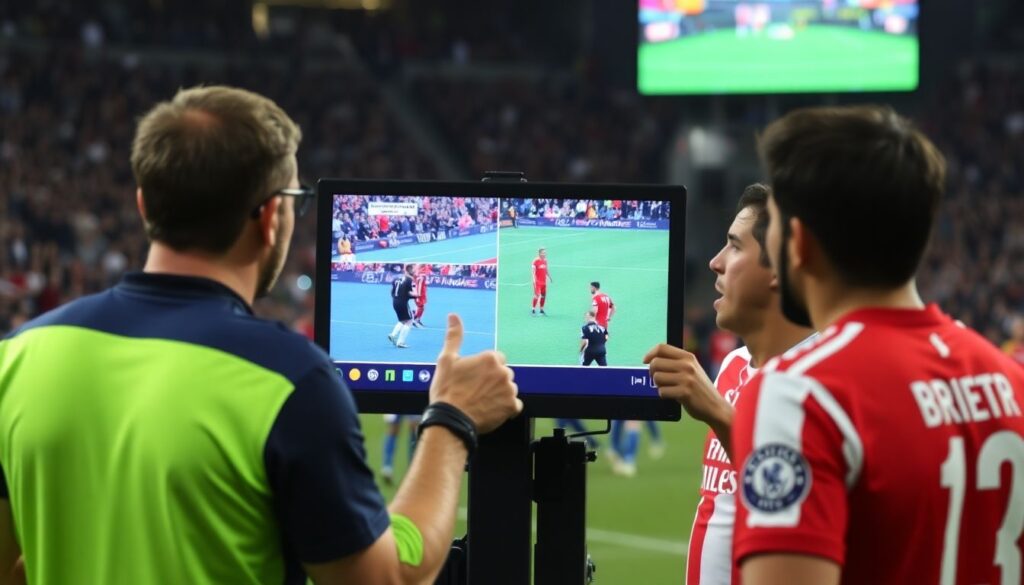
Many football situations remain subjective, even in slow motion. Different people, including referees, may reasonably disagree about the level of contact, intent or advantage. VAR can provide clearer images, but it cannot create universal agreement on every interpretation.
Will future technology make VAR decisions fully automatic?
Semi‑automated systems, especially for offside, are already being developed, but most football decisions involve judgement about fouls, handball and intensity. Technology can help with detection and drawing lines, yet human interpretation will still be necessary for the foreseeable future.