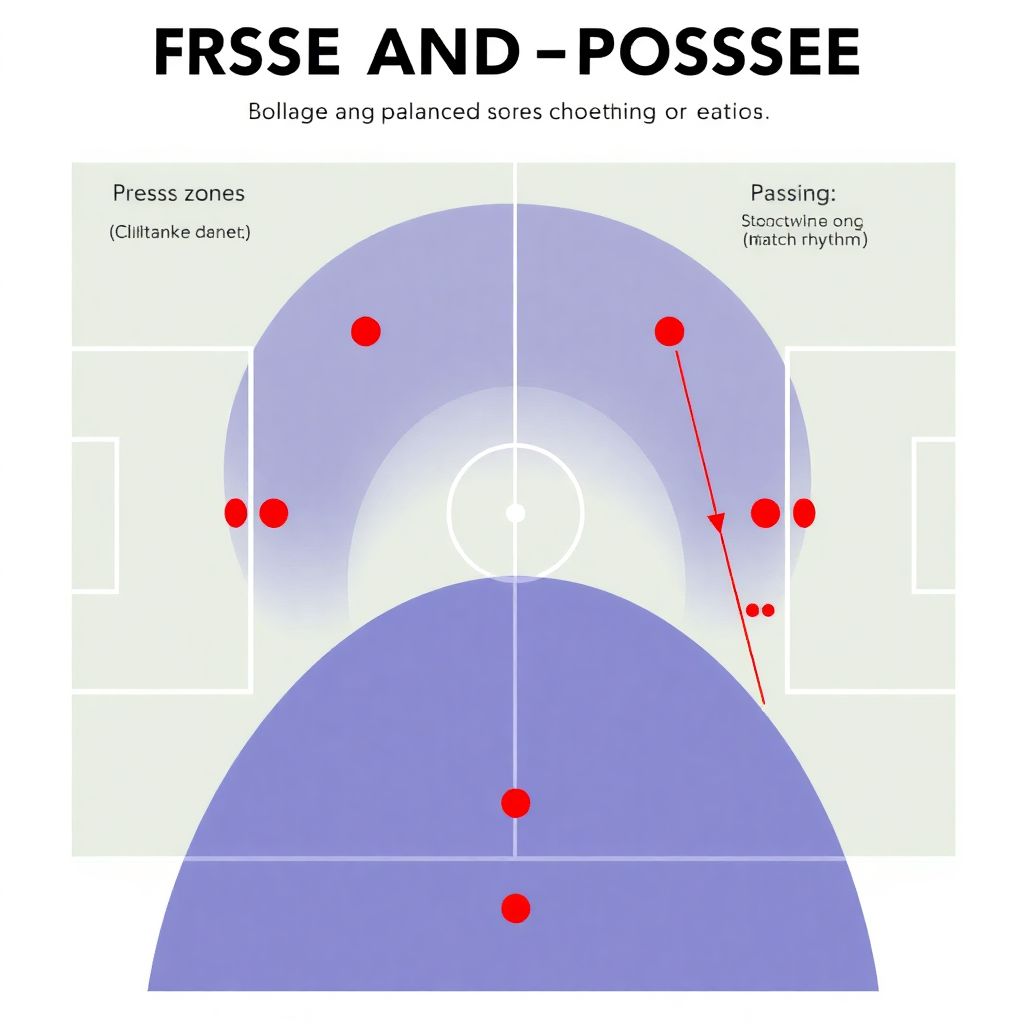
In the Süper Lig, pure high pressing or pure possession rarely wins over a full season. The trend that is “winning” most consistently is a balanced press-and-possess approach: aggressive pressing triggers in selected zones, plus structured possession to control rhythm, protect leads and reduce chaotic transitions against fast Turkish forwards.
Tactical Summary: Pressing and Possession in Brief
- In the Süper Lig tactical analysis pressing vs possession shows hybrids outperform extreme styles across varied stadiums, climates and referee lines.
- High pressing dominates short spells and home games but is punished by direct, pacey attacks if used constantly.
- Possession-first control helps against deep blocks, yet can be slow and predictable without vertical patterns.
- Balanced press-and-possess (situational press, structured build-up) offers the most adaptable game model for title and top‑four races.
- Squad profile is decisive: centre‑backs’ passing range and forwards’ defensive work rate decide how far you can lean to pressing or possession.
- For coaches in Turkey, the smartest path is usually starting from a mixed model and tilting toward pressing or control by opponent and stadium.
Evolution of Tactical Philosophies in the Süper Lig
The Süper Lig has moved from mostly reactive, counter-based football to a diverse mix of high pressing and possession-dominant sides. Choosing between them depends on clear, context-driven criteria rather than fashion or social media noise.
- Squad athleticism and age profile: Younger, explosive squads cope better with long pressing seasons; older or slower back lines need more possession control and compactness.
- Technical level of defenders and goalkeeper: If your back line and keeper are comfortable under pressure, you can build from the back and sustain possession; if not, high pressing without risky build-up is safer.
- Forwards’ defensive mentality: Pressing systems die if strikers do not trigger and curve runs; possession systems suffer if the nine cannot secure wall passes and lay‑offs under contact.
- Club objectives and time horizon: Relegation‑threatened teams often benefit from clearer, more direct pressing or counter models; long-term projects can invest in a layered possession game.
- Home vs away dynamics: In Turkey, home crowds and refereeing trends often favour aggressive high pressing; away matches may demand more controlled, lower‑risk possession.
- Pitch quality and weather: Poor pitches and winter conditions weaken intricate possession; organised pressing and second‑ball focus become more effective.
- Opposition styles: Against build-up sides, pressing high can create turnovers and easy chances; against direct or transition-heavy teams, structured possession and rest‑defence are more important.
- Coaching staff expertise: If your assistants and analysts are stronger in pressing details than in positional play, forcing a complex possession system is risky, and vice versa.
Statistical Edge: Metrics That Reveal Pressing Success
Pressing vs possession decisions should lean on data, not only on aesthetics. Süper Lig teams high pressing statistics 2024 on the best football analytics sites for Süper Lig tactics highlight one pattern: the most stable sides combine above‑average pressing intensity with solid expected goals numbers from structured attacks.
| Variant | Who it suits | Pros | Cons | When to choose |
|---|---|---|---|---|
| High Pressing Dominant | Young, fit squads; coaches with clear pressing triggers and synchronised lines. | Creates turnovers in the final third; raises shot volume; engages home crowd; reduces time spent defending deep. | Physically costly; vulnerable to direct balls behind; can collapse late in season if rotation is poor. | Ideal for underdogs at home, or mid‑table teams seeking quick climbs with aggressive identity. |
| Balanced Press-and-Possess | Teams with mixed age profile, decent ball‑playing defenders, and flexible midfielders. | Adaptable to opponent; controls rhythm; keeps defensive distances stable; usually provides consistent xG both for and against. | Requires high tactical IQ; takes time on training ground; less spectacular than extreme styles. | Best for title challengers and clubs wanting sustainable performance across league and cups. |
| Possession-First Control | Technically strong sides with creative eights and a secure build-up goalkeeper. | Limits opponent’s transitions; allows you to rest with the ball; good for breaking compact blocks with patience. | Can be sterile if lacking penetration; slow tempo may invite pressure; risky if centre‑backs are poor under press. | Useful for favourites against deep‑defending opponents, especially at home or in must‑win games. |
| Reactive Low Block & Counters | Physically strong but less technical squads; fast wingers; deep‑defending centre‑backs. | Simple to coach; protects box; exploits space behind high lines; lower physical stress in pressing phase. | Low possession; hard to chase games once behind; fans may dislike passive style. | Smart for newly promoted or budget‑limited teams in away matches versus top opponents. |
Pressing vs Possession: Metric-by-Metric Comparison
An advanced football data subscription for Süper Lig analysis will typically present pressing and possession side‑by‑side. Below is a simplified comparison of the two main orientations across core performance dimensions.
| Metric | High Pressing Orientation | Possession Orientation |
|---|---|---|
| Pressing intensity (PPDA, challenge rate) | Very high, especially in opposition half; many defensive actions per minute. | Moderate; pressing mostly on triggers, focus on compactness behind ball. |
| Turnovers & ball recoveries | Frequent high turnovers, short distance to goal after regains. | More regains in mid‑block; fewer but more controlled high wins. |
| Expected goals profile | More shots from chaotic transitions; xG can be volatile match‑to‑match. | More shots from structured attacks; xG more stable but peaks lower in some games. |
| Transition speed | Very fast vertical attacks, few passes per shot. | Slower, with circulation and positional rotations before penetration. |
| Personnel requirements | Explosive runners, pressing forwards, aggressive central defenders happy defending large spaces. | Press‑resistant midfielders, technical centre‑backs, a goalkeeper strong with feet. |
Persona-Based Use of Data
- Head coach: Use PPDA, high regains and shot origins to adjust how often you trigger the press versus settling into mid‑block and longer possessions.
- Performance analyst: Track pass networks, progression chains and counter‑pressing recoveries; build dashboards from Süper Lig teams high pressing statistics 2024.
- Scout / recruitment lead: From advanced football data subscription for Süper Lig analysis, filter for players with above‑average defensive actions in final third or high pass completion under pressure, depending on your model.
- Academy director: Align youth training loads and positional profiles with whether the club’s long‑term identity leans to pressing or possession.
Possession Mechanics: When Control Beats Intensity
Possession is not just “keeping the ball”; in Turkey it is a defensive tool that protects fragile back lines from constant transitions. It beats intensity when the match script rewards control more than chaos.
- If you face a transition-heavy opponent with fast wingers, then prioritise long possession phases, rest‑defence with at least three players behind the ball, and slower circulation to deny open-field races.
- If your team is tired or in a congested period, then reduce relentless pressing and use possession to manage tempo, especially after taking the lead.
- If the pitch is good and weather calm, then build from the back to draw the opponent out, using third‑man runs and wall passes to create controlled entries instead of forcing high presses.
- If the opponent sits in a deep 4‑5‑1, then focus on wide overloads, patience and quick switches rather than pressing high, because there is little to press in their half.
- If your best players are creative eights and a playmaking ten, then tilt to possession so your strengths touch the ball often in structured zones.
- If your centre‑backs struggle against aerial balls and crosses, then avoid inviting endless long balls; instead, control midfield with the ball and compress the game away from your penalty box.
Matchups and Context: When Each Approach Prevails
Choosing between pressing and possession in the Süper Lig is a context problem. A quick, repeatable decision checklist helps coaches and analysts align game model, opponent and match state.
- Define objective: are you okay with a draw or do you strongly need three points? When a point is acceptable, favour safer possession and compactness; when you must win, increase pressing risk, especially late on.
- Rate physical freshness: if two or more key runners are below peak freshness, avoid 90 minutes of all‑out pressing; plan pressing waves and longer in‑possession rest phases.
- Scan opponent build-up quality: high‑quality build-up invites selective, trap‑based pressing; weak or nervous defenders are a signal to press high relentlessly and force errors.
- Consider stadium and crowd: at home, allow yourself a higher pressing baseline for the first 20 minutes; away, especially in hostile atmospheres, start with more controlled possession to quiet the game.
- Check weather and pitch: strong wind, rain or poor turf reduce the value of intricate possession, making organised pressing and second balls more reliable.
- Analyse referee tendency: in tighter foul lines, reckless pressing duels are risky; lean toward structured blocks and ball control to avoid cheap free‑kicks and cards.
- Prepare in‑game switches: pre‑plan one pressing‑to‑possession and one possession‑to‑pressing adjustment (substitutions, shape change) for chasing or protecting scenarios.
Coaching Profiles and Squad Construction for Each Style
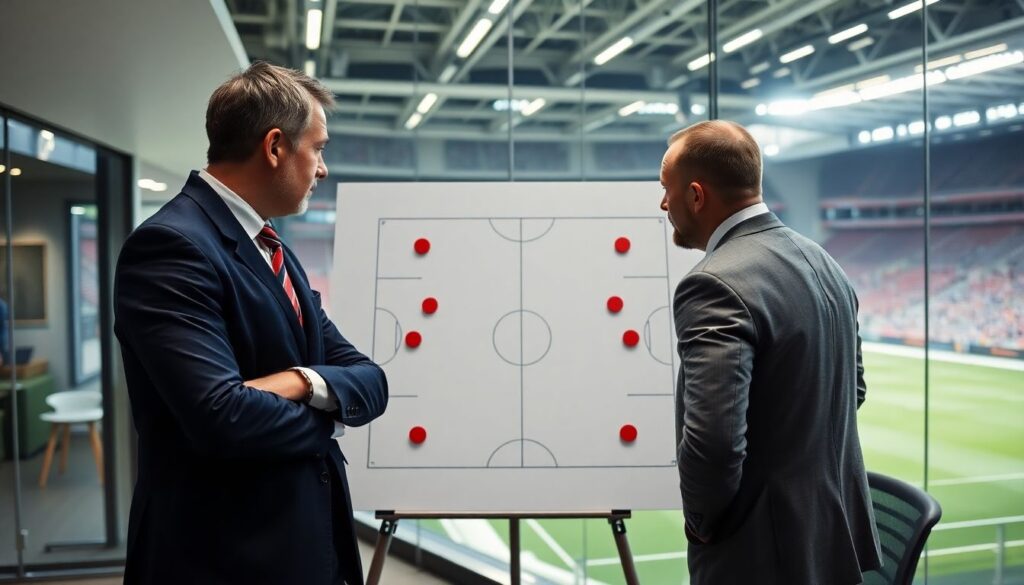
Misalignment between coaching profile, squad build and chosen style is a common Süper Lig problem. Understanding frequent errors helps you decide whether to lean into pressing, possession or a hybrid.
- Hiring a coach whose background is deep‑block defending, then demanding high pressing without giving him time or suitable assistants.
- Signing ageing stars for marketing while insisting on a manic pressing style that their bodies cannot sustain across a 38‑match season.
- Investing in tall, dominant centre‑backs and an average goalkeeper, then trying to copy possession models that require line‑breaking passes from the back.
- Building wingers who only attack but never defend, which kills both pressing cohesion and the ability to protect full‑backs in possession.
- Ignoring language and communication: complex positional play collapses when players cannot understand detailed instructions or each other on the pitch.
- Switching head coaches mid‑season from a low‑block specialist to a pressing evangelist without re‑profiling the squad or adjusting expectations.
- Neglecting set‑pieces: pressing and possession both lose edge if you concede from basic dead‑ball situations after working hard to control open play.
- Skipping staff education: not investing in Süper Lig coaching courses pressing and possession tactics leaves assistants without the tools to adjust micro‑details in training.
- Using data only for transfers, not for daily tactical feedback, even though the best football analytics sites for Süper Lig tactics can support both decisions.
Practical Templates: Gameplans, Transitions and Set-up
In the Süper Lig, a high pressing dominant model is usually best for underdogs at home or ambitious mid‑table sides chasing quick jumps, possession‑first control suits technical favourites in stable projects, while a balanced press‑and‑possess hybrid is the most reliable choice for title races and long‑term club identity.
Common Practical Questions from Coaches and Analysts
How do I decide my default style for a full Süper Lig season?
Audit your squad’s physical and technical profile, then compare it with the four variants above. As a rule, start with a balanced press‑and‑possess model and tilt toward more pressing or more possession based on early‑season performance and injuries.
Can a relegation candidate successfully play possession-first football?
Yes, but only if your defenders and goalkeeper are genuinely secure under pressure. Many relegation fights are lost because teams try sterile possession without penetration or defensive stability; for smaller budgets, a compact block plus sharp pressing triggers is often safer.
How often should I press high within a hybrid model?
Think in waves, not constants: for example, first 15-20 minutes of each half, plus after your own turnovers in good structures. Use data from your analytics provider to identify minutes where your PPDA collapses and reduce pressing frequency there.
What is the simplest way to improve our possession game?
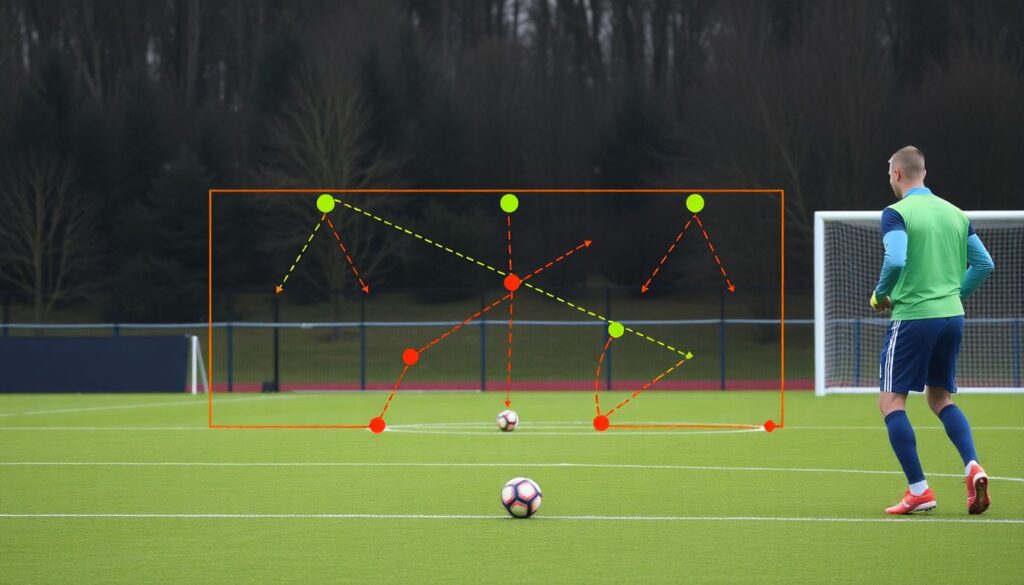
Start with clear positional references for build-up (zones, height of full‑backs, locations of eights), add a few rehearsed third‑man patterns, and demand that the goalkeeper participates as an extra outfield player when unpressed. Complexity can grow once these basics are automatic.
Which data should a small club track to evaluate pressing and possession?
Track PPDA, high regains, passes allowed per defensive action, shot origins, and sequence length before shots. Even without a big budget, free or low‑cost platforms can approximate these; larger clubs benefit from an advanced football data subscription for Süper Lig analysis.
How can an analyst convince a sceptical coach to adjust style?
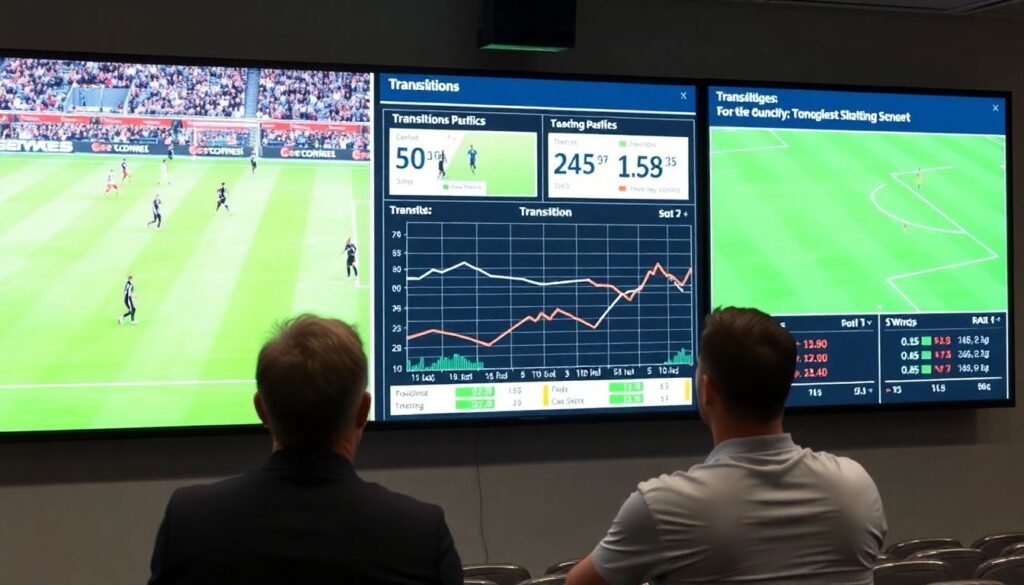
Present short, visual reports linking specific match clips to clear numbers (xG swings after pressing waves, transitions conceded after losing the ball). Coaches respond better to targeted evidence than to abstract tactical theory.
Are coaching courses in Turkey keeping up with these tactical trends?
Süper Lig coaching courses pressing and possession tactics are improving, but staff should still self‑educate through international material and local match studies. Combining formal education with club‑specific video work gives the best tactical development.