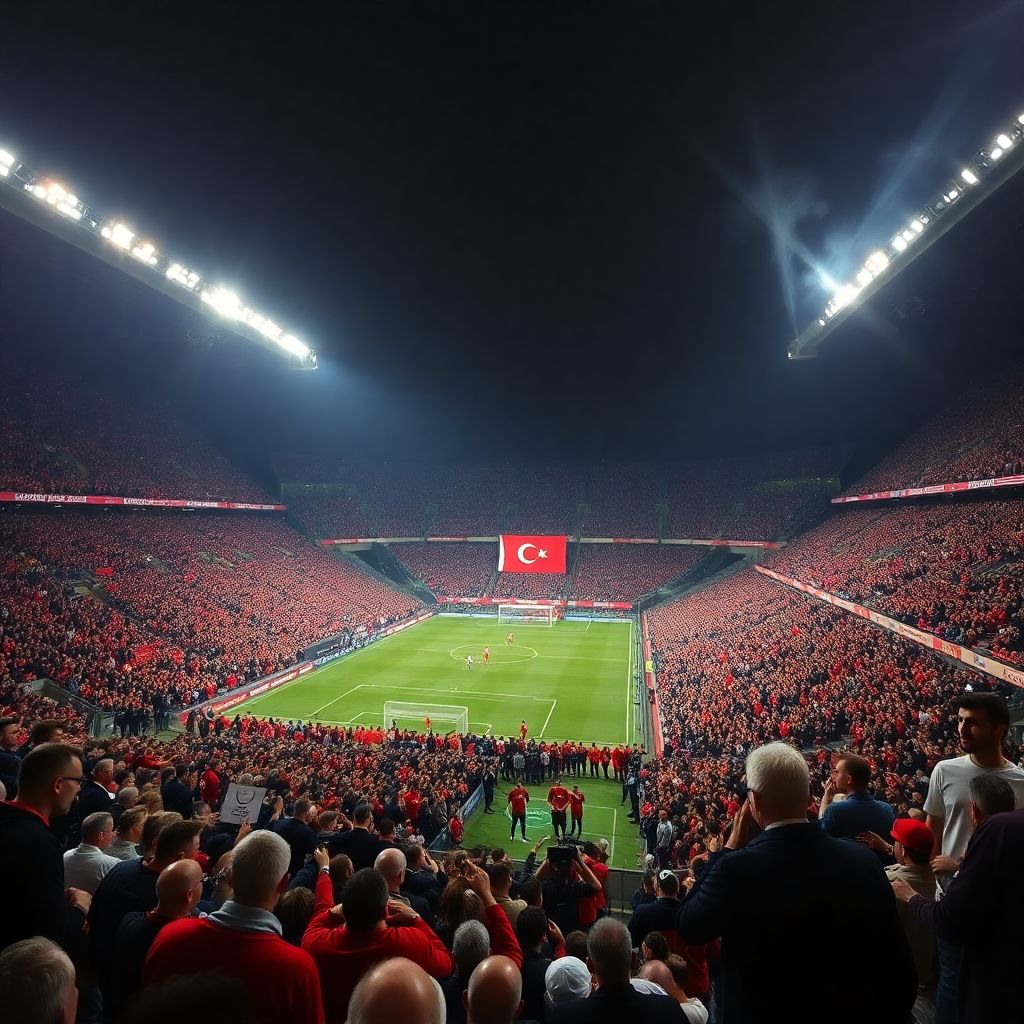
The psychology of Turkish derby matches blends intense local identity, ritualised fan culture, and extreme performance pressure that reshapes tactics, atmosphere, and decision-making. Understanding these forces helps coaches, players, bettors, and organisers build safer routines, realistic expectations, and clear limits on risk, especially around crowd behaviour, emotional swings, and media-driven hype.
Core Psychological Dynamics of Turkish Derbies
- Derbies operate as symbolic battles for local and national identity, not just league points.
- Collective rituals (chants, marches, tifos) regulate group emotion and shape behaviour.
- Pre-match pressure alters attention, risk-taking, and basic decision quality for players and staff.
- Emotional spikes during games drive tactical overreactions and impulsive substitutions.
- Stadium architecture, acoustics, and crowd density amplify stress and communication problems.
- Structured preparation and debriefing can reduce harm but cannot fully neutralise rivalry intensity.
Historical Rivalries and Local Identity
In Turkey, a derby is more than a meeting of two clubs; it is a compressed history of class, neighbourhood, and political symbolism. Galatasaray-Fenerbahçe, Beşiktaş-Fenerbahçe, and other Istanbul clashes are read as statements about who owns the city’s prestige, style, and moral authority.
This makes a derby a psychological derby as well as a tactical one. Players carry not only their own careers but also family stories, fan expectations, and media narratives. Even conversations about turkish football derby tickets or galatasaray fenerbahce derby predictions quickly turn into debates about honour, loyalty, and respect.
Historically rooted meanings narrow the emotional margin for error. A mistake in a regular Süper Lig game is a sporting error; a mistake in a derby can feel like a betrayal of one’s side of the Bosphorus. This perceived weight increases anxiety, aggression, and sometimes unsafe behaviours from both players and supporters.
- Coaches: Frame derbies as one important game in a long story, not as a do-or-die referendum on identity; emphasise controllable tasks over symbolic narratives.
- Organisers and clubs: Communicate rivalry history in a way that honours passion but clearly separates symbolic competition from real-life aggression and violence.
Collective Rituals, Fan Behavior, and Social Cohesion
Rituals around Istanbul derbies act as emotional scripts that coordinate thousands of people. They strengthen belonging but can also lock groups into hostile or risky patterns if not guided responsibly.
- Pre-match gatherings and marches: Street processions, fan marches, and organised travel (including football fan tours istanbul derbies) build anticipation and group identity long before kick-off.
- Chants, songs, and drums: Rhythmic noise synchronises heart rates and emotions, creating powerful waves of confidence or anger that players and referees feel on the pitch.
- Visuals: tifos, colours, and flares: Large banners, coordinated colours, and light effects signal dominance and unity but can cross into safety risks if pyrotechnics or overcrowding are poorly controlled.
- Online mobilisation and rivalry talk: Social media narratives about istanbul derby match packages, away allocations, or controversial calls can escalate hostility before anyone enters the stadium.
- Post-match sharing and myth building: Stories, memes, and highlight clips become shared myths that shape how future derbies are anticipated and emotionally loaded.
These mechanisms are not automatically dangerous; they become risky when leaders, media, or commercial actors amplify hostility instead of channeling it into symbolic expression.
- Fan groups and clubs: Co-create codes of conduct for marches, chants, and visual displays, with clear red lines (no hate speech, no flares in closed spaces, immediate reporting of unsafe behaviour).
- Security and city authorities: Involve respected fan leaders in planning routes, timings, and safe gathering points, rather than treating fans only as a policing problem.
Pre-Match Pressure: Anxiety, Expectation, and Performance
Derby week in Turkey compresses media, fan, and internal club expectations into a narrow window. For players, staff, and even referees, this pressure can either sharpen focus or cause performance collapse, depending on preparation and support.
Typical psychological scenarios include:
- Over-arousal and reckless aggression: Young players hearing constant hype about the derby may try to prove themselves too quickly, leading to wild tackles or early cards.
- Paralysis under scrutiny: Senior players or foreign stars might become overly cautious, avoiding risk to prevent mistakes that will be replayed and criticised for weeks.
- Coach over-complication: Staff may add extra meetings, new systems, or special plays just for the derby, overloading players already dealing with stress.
- Referee hyper-vigilance: Officials, aware of scrutiny and turkey super lig betting tips focused on their decisions, may call more fouls or hesitate on big calls, unintentionally increasing tension.
- Off-pitch distraction: Ticket disputes, late changes to allocations, or last-minute issues around turkish football derby tickets can shift focus from preparation to logistics and blame.
- Family and social pressure: Loved ones and friends demand results, sometimes tying the game to personal worth or future contracts.
- Coaches and performance staff: Standardise pre-match routines for derbies to mirror normal games, changing as little as possible; use brief, focused video and clear role definitions instead of emotional speeches only.
- Clubs: Shield players from non-essential media duties and social distractions in the final 48 hours; designate staff to handle ticket, family, and hospitality requests.
In-Game Tactical Shifts Driven by Emotional States
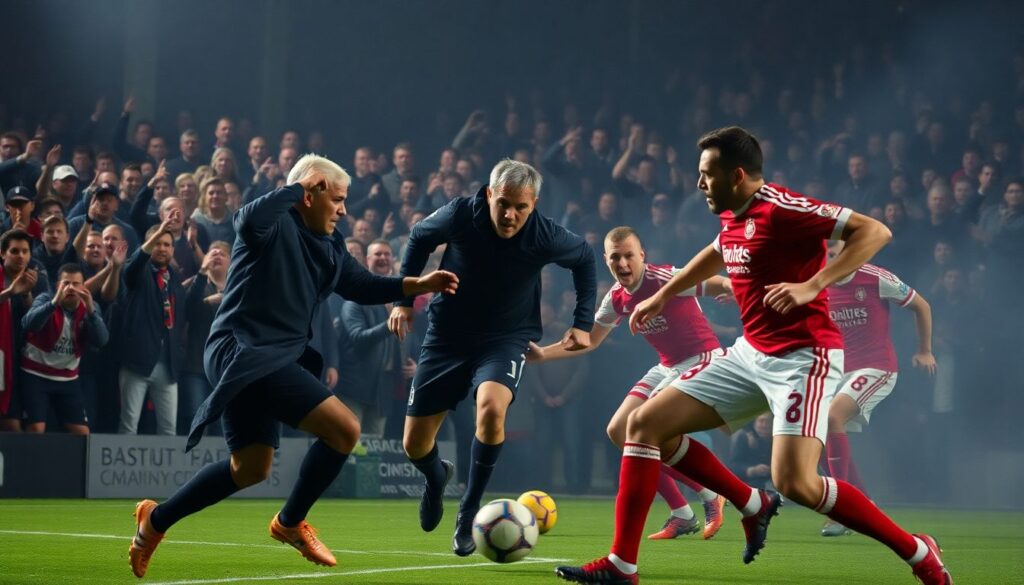
Once the match starts, emotional waves from the stands and the bench often drive decisions more than any pre-written tactical plan. The derby narrative can seduce coaches and players into biased, short-term reactions that look brave but damage long-term performance and safety.
Consider two common mini-scenarios:
- Scenario 1: Early goal conceded away – The away team panics in a hostile Istanbul stadium, abandoning a compact mid-block to press high, leaving huge spaces behind their defence and exposing players to desperate recovery sprints and risky fouls.
- Scenario 2: Home team chasing a historic scoreline – At 1-0 up, the home coach, energised by the crowd, pushes both full-backs very high to please supporters, turning a controlled game into an end-to-end contest that invites counters and emotional chaos.
To see how derbies differ from regular matches psychologically, it helps to compare typical responses:
| Situation | Regular Süper Lig Match | High-Intensity Derby Match |
|---|---|---|
| Conceding a goal | Minor tactical tweak, calm communication | Radical formation change, emotional instructions, rushed substitutions |
| Referee error (perceived) | Short protest, quick re-focus | Extended protests, crowd escalation, risk of cards and loss of control |
| Halftime team talk | Analytical feedback, clear tasks | Heavy emotional appeal, less time on concrete tactical adjustments |
Emotion-driven shifts are not always bad. Sometimes, a bold change inspired by crowd energy breaks a game open. The limitation is that in derbies, the same energy can push teams into unsustainable intensity, increased injury risk, and tactical chaos.
- Potential benefits of emotion-fuelled changes
- Rapid increase in pressing intensity and ball recoveries.
- Greater willingness to make forward runs and support play.
- Collective sense of “fighting for the badge” that boosts short-term resilience.
- Key limitations and risks
- Decision-making narrowed by anger or euphoria, leading to poor game management.
- Players ignoring load limits, increasing late-game injuries and cramps.
- Substitutions made to appease fans, not because of tactical necessity.
- Over-commitment in attack that leaves the team vulnerable to counterattacks and red cards.
- Coaches: Pre-plan “if-then” responses (e.g., “If we concede first, we keep our structure for 10 minutes, then consider one change”) to protect against impulsive bench decisions.
- Team leaders on the pitch: Use short verbal cues and agreed signals to slow the game when emotions spike, especially after goals or controversial calls.
Stadium Environment: Acoustic, Spatial, and Crowd Effects
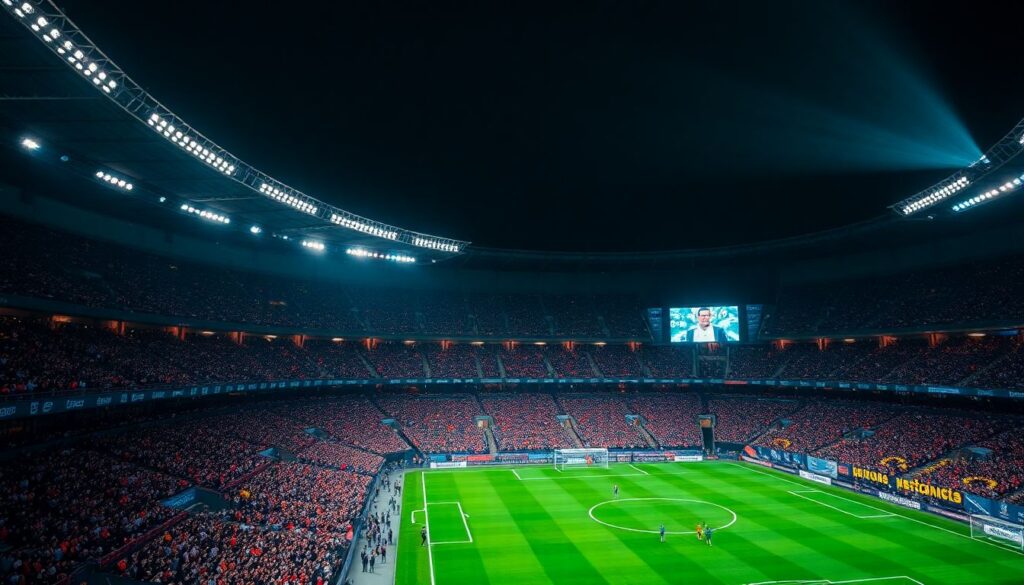
Turkish stadiums, especially in Istanbul, are built and managed to concentrate noise and visual intensity. This amplifies drama but also brings misunderstandings and safety challenges if not addressed with realistic limits and technology.
Several common misconceptions and errors circulate around derby atmospheres:
- “More noise always helps the home team”: Extremely high decibel levels can also disrupt home players’ communication, leading to defensive errors and mis-timed presses.
- “Packed is always better”: Overemphasis on capacity, without flow management, increases crush risk in corridors and queues, even when the stands themselves are safe.
- “Intimidation wins games”: Trying to create a fear-inducing environment may motivate the opponent instead, especially experienced derby squads.
- “Technology is a luxury, not a necessity”: Poor sound systems, unclear public-address messages, and weak CCTV coverage make it harder to de-escalate incidents quickly.
- “Hospitality areas are automatically safer”: High expectations around premium spaces, including those sold in istanbul derby match packages, can backfire if evacuation routes or steward training are weaker than in standard sections.
- Stadium operators: Test communication systems under full-noise conditions; train stewards in calm, simple messaging that cuts through crowd stress.
- Clubs and ticketing partners: Design turkish football derby tickets distribution to avoid extreme last-minute queues and unclear gate assignments, which are major triggers of crowd frustration.
Practical Interventions: Preparation, Recovery, and Institutional Measures
Safe and effective handling of derby psychology requires coordinated action before, during, and after the match. It is not enough for one coach or one security officer to be calm; systems need to anticipate typical rivalry patterns and set limits that everyone understands.
A simplified mini-case, blending common practice from Istanbul derbies:
- Context: A top-club staff expects abnormally high stress around a key clash with a traditional rival. Media are focused, and interest in football fan tours istanbul derbies is driving extra international visitors.
- Step 1 – Pre-week planning:
- Coaches and sports psychologists map “red-flag” moments (early goal, controversial VAR call, mass protest from bench).
- Security, ticketing, and marketing align on clear communication about entrances, timings, and banned items.
- Step 2 – Player and staff routines:
- Training loads remain stable; no last-minute physical overload driven by emotion.
- Media exposure is limited; internal messaging emphasises process goals, not galatasaray fenerbahce derby predictions or betting narratives.
- Step 3 – Matchday micro-rules:
- Bench staff agree: only one person talks to the fourth official; others stay seated to reduce escalation.
- Captains receive simple in-game anchors like “3 deep breaths after any referee dispute” and “pull team together after every goal, for or against”.
- Step 4 – Post-match decompression:
- Cool-down and brief emotional debrief happen before media duties, win or lose.
- Clubs publish messages that de-personalise hostility and emphasise respect, reducing carry-over anger into daily life.
Even for fans using turkey super lig betting tips or travelling on organised packages, simple boundaries help: avoid heavy intoxication, respect steward instructions, and treat rival fans as opponents in a game, not enemies in real life.
- Clubs and federations: Institutionalise derby-specific protocols (training schedules, staffing, communication templates) so that each new season refines, rather than re-invents, safety and performance routines.
- Coaches: Integrate basic mental skills (breathing, focus cues, role clarity) into regular training, so that derbies are a stress test of habits, not a completely new environment.
Common Concerns About Derby Mentality and Performance
How can coaches reduce emotional overreaction without killing derby passion?
Use routines that keep tactical work stable while allowing controlled emotional expression. Short, focused pre-match talks, clear roles, and pre-planned responses to key scenarios preserve intensity but limit panic decisions.
What is a safe way to address fans when tensions are high?
Communicate early, simply, and consistently through trusted channels. Collaborate with recognised fan leaders, avoid inflammatory language, and focus messages on safety, shared love for the club, and respect for rules rather than blame.
Do players need special tactics just for derbies?
Most of the game model should remain the same. Adjustments should be small and clearly explained, such as pressing triggers or set-piece variations, so players are not overloaded mentally on top of existing pressure.
How should players deal with social media abuse after mistakes in a derby?
Agree a short digital-detox window after the match and channel feedback through staff rather than directly from platforms. Clubs should provide psychological support and public backing after high-profile errors.
Is it smart to use derby hype as motivation in training all week?
Overusing hype can exhaust players emotionally before kick-off. Use derby framing sparingly, especially close to match time, and anchor most training in normal performance goals and habits.
What can organisers do when rival fans travel in mixed groups or tourist packages?
Coordinate with tour providers, including those offering football fan tours istanbul derbies, to set expectations and share safety briefings. Provide clear signage, neutral meeting points, and visible but non-aggressive stewarding to manage mixed crowds.
How should betting-related narratives be handled around derbies?
Clubs and media should avoid framing the game purely through odds or tips. Emphasise sporting storylines and responsible behaviour, reminding audiences that unpredictable emotions and refereeing decisions make guarantees impossible.