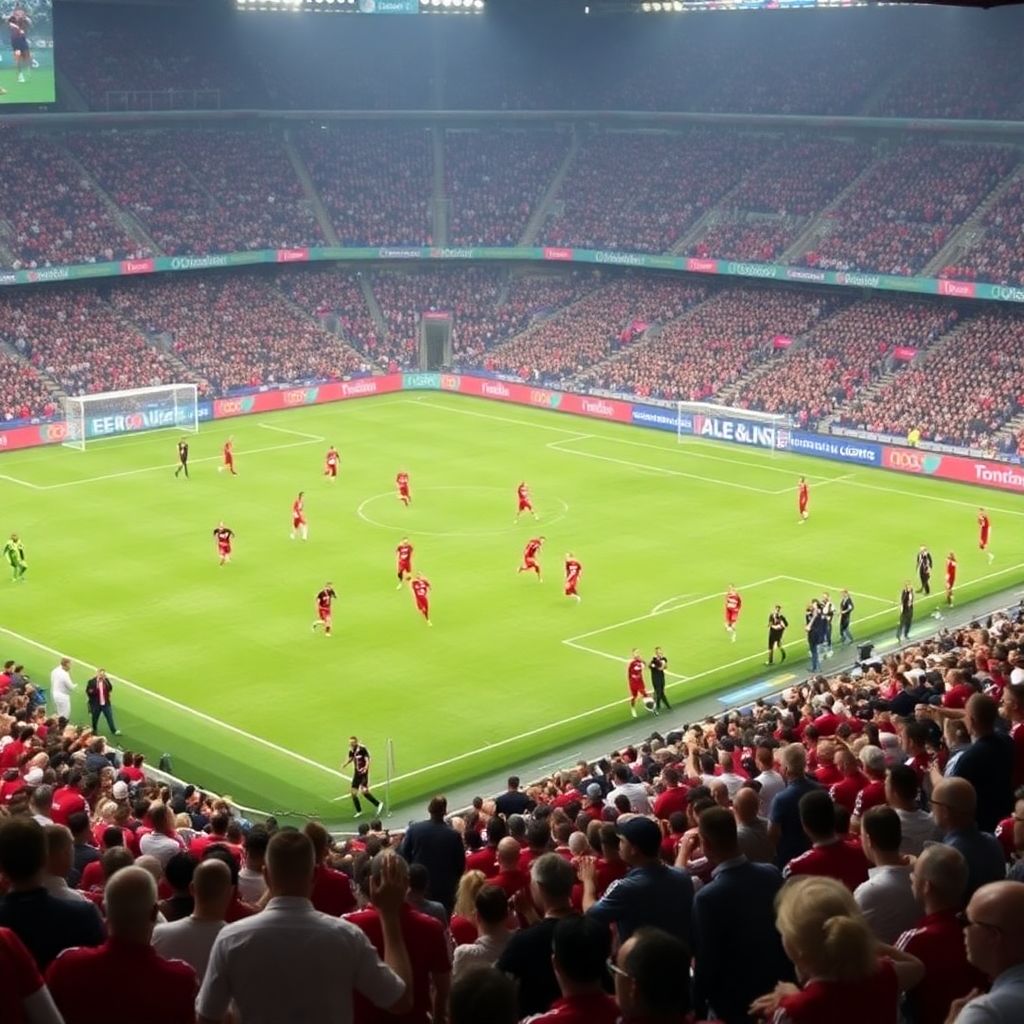
Set pieces decide so many big games in the Süper Lig because they create repeatable, controllable goal chances in otherwise balanced matches. Teams that treat corners, wide free kicks and throw-ins as structured attacking phases gain an edge. However, success depends on detailed planning, personnel fit, and consistent defensive organisation to manage risks.
Core Tactical Insights
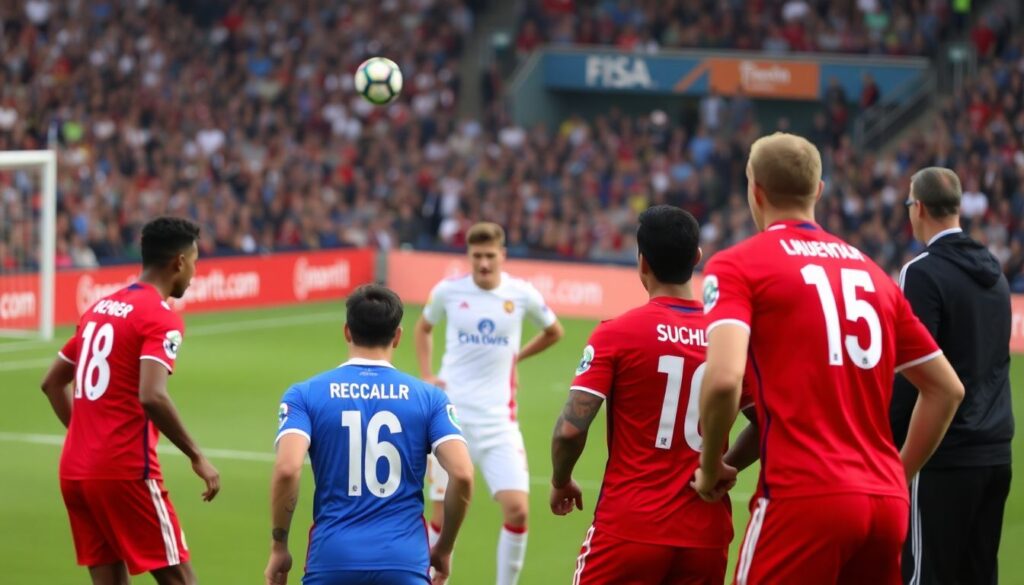
- High-pressure Süper Lig games often have few open-play chances; set pieces become the most controllable route to goal.
- Precise delivery choice (in-swinger, out-swinger, short) must match your aerial profile and second-ball plan.
- Hybrid defending dominates because pure zonal or pure man-marking are easily targeted by modern routines.
- Best results come from 3-5 well-drilled attacking patterns, not huge playbooks that players cannot recall under pressure.
- Defensive reliability at dead balls is mostly about starting positions, match-ups, and clear roles on rebounds.
- Film-based Süper Lig set piece tactics analysis is more valuable than generic drills copied from other leagues.
Set-Piece Frequency and Goal Contribution in the Süper Lig
In the Süper Lig, big matches between closely matched clubs often become tight, stop-start contests. Fouls near the box, corners, and long throws accumulate. Even without quoting exact Süper Lig corners and free kicks statistics, match footage shows that a large share of decisive moments arise from these dead-ball phases.
This is why set pieces are so important in modern football: they temporarily freeze the game, allowing coaches to impose rehearsed structures on a chaotic sport. Attacking teams can position their strongest headers, create mismatches, and pre-plan movements. Defenders, under crowd pressure, must instantly recall assignments and timing.
Visually, imagine a corner in Kadıköy: three attackers bunch at the penalty spot, one lurks edge of the box, two screen the goalkeeper. Defenders pack the six-yard line. In that crowd, one lost duel or blocked run can decide the entire title race, even if open play was balanced.
In the Süper Lig context, pitch quality, refereeing tendencies, and intense atmospheres further amplify set-piece value. Slight misjudgements in contact are often punished by free kicks in dangerous zones, giving specialist takers and tall centre-backs repeated opportunities to impact the scoreboard.
Delivery Types: In-Swingers, Out-Swingers, Short Corners and Their Uses
Any serious Süper Lig set piece tactics analysis starts from delivery type. The ball’s trajectory determines where the duel happens, how fast it reaches targets, and what second-ball zones open up. Choosing between in-swingers, out-swingers, and short routines is not stylistic; it is a calculated risk decision.
- In-swingers towards goal
Used when you trust your aerial power and want chaos in the six-yard box. The ball curves into the goalkeeper, inviting flick-ons and defensive mistakes. Visually: taker on the right side for a left-footer, aiming between penalty spot and near post, with runners attacking front zones aggressively. - Out-swingers away from goal
Chosen to protect against counter-attacks and favour clean headed efforts. Because the ball bends away from the keeper, attackers can run onto it facing goal. Think left-footed taker from the right, targeting a line between penalty spot and far post, with a screen near the keeper to block his path. - Flat, driven deliveries
Useful against zonal lines that sit deep. The ball is whipped at head height toward the first or second corridor, forcing quick reactions. If your team lacks height but has brave, aggressive runners, driven deliveries can beat taller, static defenders to the ball. - Floated, high balls
Offer more time for runs and blocks but also more time for the goalkeeper to claim. Suited when your main target is much taller than markers and can out-jump them cleanly. Excessive use is a limitation: predictable floats make defending and countering easy for organised opponents. - Short corners and 2v1 overloads
Short routines draw one or two defenders out of the box, opening crossing lanes closer to the area. They shine against compact low blocks. A safe sequence: short pass, lay-off to a supporting player, then a controlled cross from a better angle. Limitation: poor execution gifts counters. - Cut-back and edge-of-box options
Against teams overloading the six-yard line, playing to the edge for a volley or low shot is efficient. One attacker positions centrally, unmarked, ready to strike second balls. The risk: if the shot is blocked, opponents have space to break from the top of the box.
Organising the Defensive Line: Zonal, Man-Marking and Hybrid Schemes
Understanding how to defend set pieces in professional football is critical in the Süper Lig, where one lapse can change an entire season. Defensive systems cluster into zonal, man-marking, and hybrid structures, each suited to specific situations and squad profiles.
Zonal schemes in crowded boxes
Ideal when your team is tall overall but not individually dominant. Players occupy key zones (front post, six-yard centre, far post) instead of tracking specific runners. Picture a line of four across the six-yard box and two slightly higher protecting the penalty spot, all attacking the ball as it enters their zone.
Strict man-marking against power teams
Used when opponents rely on clear aerial targets. Each defender locks onto a designated attacker. This works best when you have mobile, disciplined markers who accept physical battles. The downside: one blocked run or clever screen leaves your marker trailing and opens a free header.
Hybrid systems versus rehearsed routines
Most Süper Lig clubs now use hybrid schemes in big games. Four to six players guard zonal areas, while two to four defenders mark the most dangerous threats. For example, centre-backs hold zones; full-backs and midfielders track the best headers. Hybrid lines reduce the main limitations of pure zonal or pure man-marking.
Near-post screens and goalkeeper protection
Good systems explicitly assign someone to protect the keeper’s space and the near-post corridor. One defender stands half a metre in front of the goalkeeper, another at the near post to clear flicks. Without this, in-swingers create unmanageable chaos and constant penalty appeals.
Transition and second-ball structure
Beyond first contact, defenders must cover the edge of the box and wide channels to clear second balls and prevent recycled crosses. Visually: one player top of the D, one wide outlet near halfway, and a staggered line ready to push out together after the clearance.
Attacking Routines: Blocking, Peeling, and Coordinated Runs
The best set piece strategies used in the Süper Lig rarely depend on a single star header. They rely on synchronised movements: one player blocks, another delays, a third peels into space. These patterns are powerful, but they also have clear limitations when overused or poorly matched to your squad.
Imagine a typical peeling routine: three attackers start central. As the taker runs up, one moves towards the near post to drag a marker, another sets a legal screen by standing his ground, and the third curves behind them into the far-post channel. The delivery is timed to meet that third runner’s late movement.
Offensive advantages of structured routines
- Allow smaller teams to create high-quality chances against taller, more expensive opponents.
- Generate free headers by using blocks and decoy runs instead of pure aerial duels.
- Exploit specific weaknesses identified on video (e.g., a full-back who loses track of runners).
- Offer psychological pressure: opponents know each corner is dangerous, leading to panic clearances.
- Help coaches control risk by pre-planning second-ball positioning and counter-pressing reactions.
Limitations and defensive counter-measures
- Over-scripted routines break down if delivery is slightly off; players must still improvise within the pattern.
- Referees in the Süper Lig are increasingly strict on blocking; poorly executed screens can concede free kicks.
- Opponents quickly adapt if you repeat the same design; variety and disguise are essential.
- Heavy focus on first-contact runners can leave you exposed to fast counters if edge-of-box cover is neglected.
- Routines copied from other leagues without considering Turkish refereeing style, pitch size, and player type often fail in practice.
Preparation and Personnel: Coaches, Specialists and Practice Drills
Set-piece success is rarely accidental. It reflects staff roles, training time, and how well drills simulate real Süper Lig pressure. Many myths around set pieces harm preparation, especially the idea that talent alone decides outcomes or that teams need an enormous book of routines to be dangerous.
- Myth: one star taker is enough
Reality: without coordinated movements and blocking, great delivery only creates 50-50 duels. Safe step: pair your best crosser with at least two rehearsed movement patterns per zone (near, middle, far). - Myth: we are too small to be strong on set pieces
Reality: smaller teams can focus on low, driven deliveries, rebounds, and edge-of-box shots. Use video to design routines targeting second balls instead of aerial dominance. - Myth: defending is just about “wanting it more”
Reality: clear assignments, starting positions, and line depth matter more than emotion. Work on repeatable triggers (e.g., everyone steps out together after first contact) rather than shouting for more desire. - Myth: copying big European clubs guarantees success
Reality: what works with tall, elite squads and foreign referees may fail in Turkey. Tailor routines to your specific Süper Lig opponents and stadium conditions instead of blindly imitating trends. - Myth: endless variety is better than a small menu
Reality: players under crowd noise remember only a few patterns. Safe practice: perfect 3-5 core routines before adding wrinkles, then rotate them based on opponent weaknesses found in your analysis reports. - Myth: statistics alone design your strategy
Reality: while clubs increasingly track detailed Süper Lig corners and free kicks statistics, raw numbers must be paired with video. A “low conversion” rate might reflect world-class opposition keepers rather than bad routine design.
Practical drill design should replicate real match spacing and timing. Visually, set up full 10v10 or 11v11 for corners, insisting that the defending team counterattacks on winning the ball. This forces attackers to balance aggression with defensive responsibility.
Case Studies: Match-Winning Set-Pieces from Recent Süper Lig Seasons
Recent seasons offer many examples of big games decided from corners or wide free kicks, especially in title races and relegation six-pointers. While details vary, recurring tactical themes show how routine design, delivery choice, and defensive structure interact under pressure.
Consider a typical late winner scenario: home team is chasing a goal in front of a loud crowd. They win a corner on the left. Instead of the usual in-swinger, the coach has pre-planned an out-swinger targeting the second line around the penalty spot, exploiting the opponent’s deep six-yard zonal line.
Execution sequence (pseudo-code style):
- Three attackers start close to the goalkeeper, one at the edge of the box, one unmarked near far post.
- On the taker’s run-up, two attackers sprint to the near post, dragging markers; the third plants to set a legal screen.
- The edge-of-box player curves into the penalty-spot space, timing his run with the out-swinging cross.
- The far-post attacker holds his run for the second ball, positioned to finish any flick-on or loose clearance.
- Defence, expecting a ball into the six-yard box, collapses too deep, leaving the penalty-spot runner free for a clean header.
In another case, an underdog side away from home scores from a rehearsed short-corner routine. Instead of crossing into taller defenders, they play short, create a 2v1, then drive a low cross towards the penalty spot for a late-arriving midfielder. This reflects safe adaptation: avoiding aerial weakness while still threatening.
These cases highlight why set pieces are so important in modern football, especially in the Süper Lig: they allow underdogs to equalise physical gaps and give favourites controlled ways to break resilient defences. The limiting factor is not creativity, but alignment between ideas, delivery quality, and the real attributes of available players.
End-of-Section Self-Check for Coaches and Analysts
- Have you defined 3-5 core attacking and defensive set-piece patterns that every player can describe clearly?
- Do your routines fit your real squad profile (height, speed, delivery quality) and local refereeing tendencies?
- Is there a specific plan for second balls and counter-pressing after each corner or free kick?
- Do you review conceded and created set-piece chances monthly with video, not just with raw statistics?
- Are roles at defensive set pieces (markers, zonal players, edge-of-box cover, counter threat) written and trained repeatedly?
Clarifications for Tactical Application
How many set-piece routines should a Süper Lig team realistically use?
Most squads function best with 3-5 attacking and 2-3 defensive base patterns, plus small variations. This is enough to be unpredictable without overloading players’ memory, especially in noisy, high-pressure stadiums.
What is the safest basic approach to defending corners?
A hybrid system is usually safest: key zones protected near the six-yard box, with man-marking on the best headers. Assign one player to the near post, one to protect the goalkeeper, and one at the edge of the box for clearances.
When should a team favour short corners over direct crosses?
Short corners are useful if your team lacks height, the pitch is windy, or the opponent dominates aerial duels. They are also smart when you’ve identified a weak 2v2 on the flank that you can convert into a 3v2 with the short option.
How can smaller teams reduce the risk of conceding from set pieces?
Smaller teams should emphasise organisation: strict marking of main threats, aggressive clearances into safe areas, and clear roles on rebounds. Avoid leaving fast players high up unless your structure behind them is stable.
What is the best way to start improving set-piece performance mid-season?
Begin with video review of your last 5-8 matches, tagging every corner and wide free kick for and against. Identify one repeating weakness and one repeating strength, then design or adjust only 1-2 routines per week to avoid confusion.
How should analysts present set-piece findings to coaches?
Keep reports short and visual: 5-10 clips showing patterns, with simple diagrams or freeze-frames. Focus on practical recommendations such as “switch to out-swingers from the left” or “add an edge-of-box runner” rather than drowning staff in data.
Do training-ground set-piece successes always translate to matches?
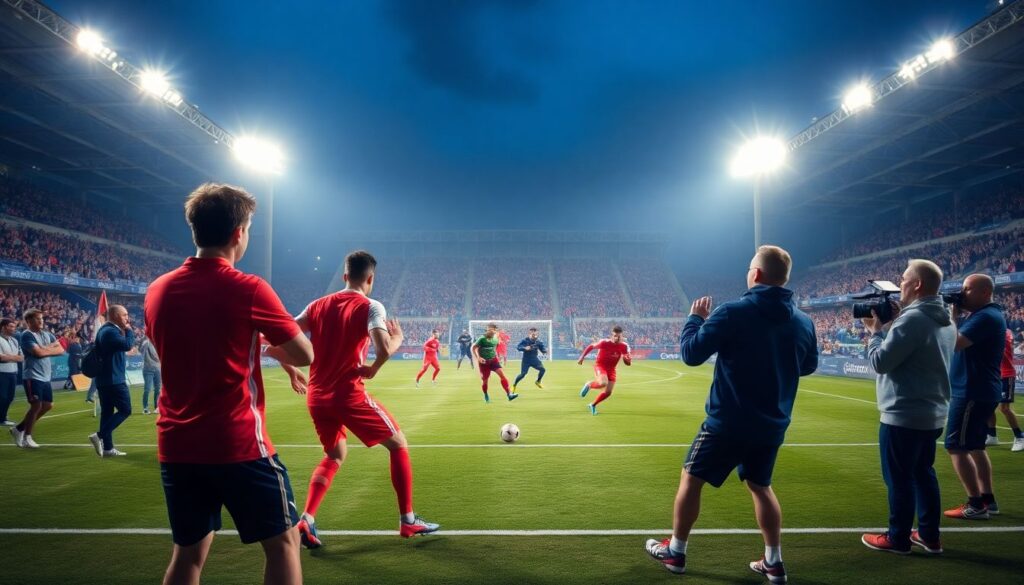
Not automatically. Training often lacks real pressure, crowd noise, and opponent unpredictability. To close the gap, run full-intensity 10v10 or 11v11 set-piece simulations and occasionally film them to compare with match behaviour.