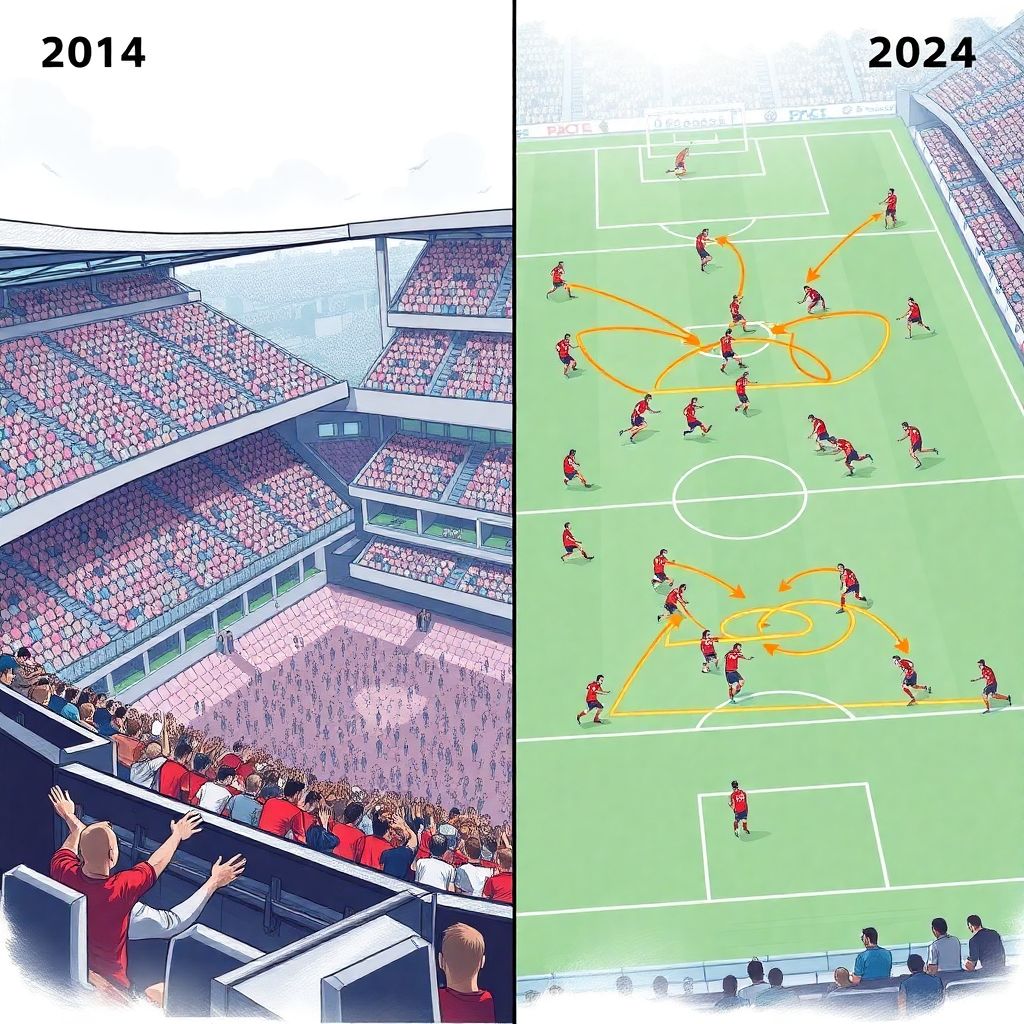
Why this derby looks nothing like it did ten years ago
If you rewatch Fenerbahçe–Galatasaray games from around 2014 and then compare them to the clashes from 2021–2024, it almost feels like a different sport. Back then the matchup was slower, more positional, more about duels and set‑pieces. Over the last decade, and особенно in the last three seasons, the derby has turned into a high‑tempo, transition‑heavy, data‑driven chess match. Both clubs borrowed ideas from the Champions League elite: intense pressing, flexible back lines, aggressive rest‑defence. That’s why Fenerbahce vs Galatasaray predictions based on “old stereotypes” (Fener home dominance, Gala defensive pragmatism) have started to fail: the underlying tactical logic has changed dramatically, even if the emotional intensity hasn’t gone anywhere.
Quick statistical snapshot of the last three seasons
Let’s ground the conversation in concrete numbers. From the 2021–22 to 2023–24 Süper Lig seasons (six league derbies total), the balance is far tighter than fan narratives suggest. Fenerbahçe won 3 matches, Galatasaray won 2, with 1 draw. The combined scoreline, however, tilts slightly toward Galatasaray: 7 goals for Gala versus 5 for Fener. That split tells a lot about tactical volatility: big wins for one side (two 3–0 victories for Galatasaray in 2022–23) and narrow, grind‑it‑out wins or stalemates for the other (Fenerbahçe’s 1–0 away win in May 2024 and the 0–0 draw in late 2023). In parallel, Galatasaray took the league title in both 2022–23 and 2023–24, while Fenerbahçe consistently improved underlying metrics like xG and pressing intensity, even when the silverware didn’t follow.
Phase 1 (mid‑2010s): Derby built on structure and caution
Ten years ago, the derby was dominated by coaches who trusted rigid shape over creative chaos. Think compact 4‑2‑3‑1 blocks, full‑backs on a tight leash, and double pivots whose first instinct was to screen centre‑backs rather than break lines. At Kadıköy especially, Fenerbahçe often controlled the game through physical superiority and aerial power, while Galatasaray tried to neutralize the crowd by slowing the tempo and banking on individual flashes from their No.10s and wide forwards. The rule of thumb was simple: lose the derby and your job is in danger, so coaches chose control over risk. That’s why so many older derbies look cagey and stop‑start compared with the turbo‑charged encounters of recent years.
Case study: Why the 2–1 away win in 2021 felt like a turning point
The November 2021 clash at Galatasaray’s stadium, where Fenerbahçe won 2–1, is a great “bridge” match between the old and new eras. Statistically, it wasn’t a classic high‑press game: possession and shot counts were fairly balanced, but Fener’s approach showed a clear shift. Instead of passively retreating in big away games, they alternated between mid‑block rest and short, targeted pressing bursts on Gala’s build‑up. The decisive late goal came after a transition where Fener had deliberately left one extra runner higher up the pitch, accepting more space in front of their back line. Ten years earlier, that kind of risk, especially away, would have been almost unthinkable for a Fener coach under such pressure.
Phase 2 (late 2010s–early 2020s): Pressing wars and higher defensive lines
From roughly 2017 onward, both clubs started importing coaches with more modern pressing ideas: higher lines, compact vertical spacing, forwards who defend like midfielders. As a result, the derby turned into a “pressing contest”: who can force more turnovers in the opponent’s half, who can trap the deepest midfielder, who can lock the ball on one flank. Statistically you see this in rising PPDA (passes per defensive action) intensity, more shots after high regains, and fewer slow, patient attacks. For analysts and bettors who like to bet on Fenerbahce vs Galatasaray based on historical patterns like “always tight, low‑scoring,” this shift has been a trap: some of the most lopsided scorelines of the rivalry have come precisely in this pressing‑dominated era, when one side manages to crack the opponent’s build‑up early.
Real case: The twin 3–0 wins for Galatasaray in 2022–23
Look at the 2022–23 season as a textbook example. Galatasaray won both league derbies 3–0, away in Kadıköy first and then at home. The raw numbers are striking: over those two games Gala scored 6 and conceded 0, while Fener created far less than their usual league average in expected goals and struggled to get clean entries through the middle. Tactically, Gala’s pressing scheme was the star: they used narrow wingers to block passing lanes into Fener’s No.6, then sprung aggressive full‑backs to suffocate the wings, essentially betting that Fener’s centre‑backs wouldn’t dribble out under pressure. The “hidden” stat was the number of forced long balls — Fener were repeatedly driven into low‑percentage diagonals from deep, which made every lost second ball a launchpad for Gala counters.
Phase 3 (2021–2024): Controlled chaos and rest‑defence as the real battleground
The last three years added another tactical layer: both teams became much more aware of what happens right after they lose the ball. Instead of just thinking, “Let’s press when we lose it,” derby coaches started designing explicit rest‑defence structures. That means planning in advance who stays behind the ball during attack, where the spare man is positioned, and which zones can be sacrificed if possession is lost. The 0–0 in late 2023 is a perfect illustration: Fenerbahçe and Galatasaray were both willing to throw men forward, but they staggered their midfield lines so cleverly that many “almost” transitions died instantly. The resulting numbers looked boring — low scoring, relatively modest xG — but underneath there was a sophisticated duel of spacing and cover shadows that simply didn’t exist in this derby a decade ago.
Real case: Fenerbahçe’s 1–0 away win in May 2024
In the May 2024 clash, which Fenerbahçe won 1–0 away, the emotional storyline was about title pressure and nerves. Tactically, though, it was a masterclass in selective aggression. Fener didn’t press high all game; they picked specific triggers: a backwards pass to a full‑back facing his own goal, a slow switch from Gala’s left to right, or a square ball to the deepest midfielder. The rest‑defence was the real star: whenever Fener’s full‑back bombed forward, the near‑side No.8 dropped into the half‑space, while the opposite winger tucked in to keep a 3+2 structure behind the ball. This meant that even when they lost it, Gala’s first pass forward rarely found open grass. Statistically, Galatasaray’s shots were pushed to worse angles than usual and many of their entries into the final third ended in blocked crosses or under‑hit cutbacks.
Non‑obvious tactical trends analysts often miss
1. How “who presses first” decides the flow
One subtle pattern over the last decade: the side that establishes its pressing rhythm in the first 15 minutes rarely loses. It’s not about scoring early; it’s about whose counter‑press looks more synchronized. In matches where Fener start aggressively and win the second balls, Gala’s build‑up often gets conservative quickly, with centre‑backs opting for safer passes wide. Conversely, when Galatasaray impose their counter‑press early, Fener’s creative midfielders start dropping too deep, shrinking the distance between lines and killing their own transition threat. For people watching a Fenerbahce Galatasaray live stream and trying to read the game on the fly, tracking the first three or four counter‑presses tells you more about the likely script than raw possession numbers.
2. Targeting full‑backs, not centre‑backs
Fans often obsess over centre‑back duels — who marks whom, who wins aerials — but in modern derbies the more decisive battles are around the full‑backs. Over the last three seasons, both clubs consistently designed pressing schemes where wingers curve their runs to block full‑back outlets or, conversely, leave them deliberately open as pressing traps. One recurring Gala ploy in the 2022–23 wins was to “invite” a pass to Fener’s left‑back, then spring a double‑press from winger and No.8, forcing rushed inside passes that were easy to intercept. Fener responded in later games by inverting their full‑back inside to overload midfield, turning the supposed weakness into a free man zone. The numbers back this up: a noticeable share of high‑value turnovers in recent derbies has come from full‑back zones, not central errors.
3. Set‑pieces reinvented as a transition weapon
Another quiet revolution in this rivalry has been the way both clubs use set‑pieces not just to score, but to control transition. Corners and advanced free‑kicks used to be all about stacking the box with tall players. Now you see more short routines, decoy runs and, crucially, better rest‑defence positions from the taker’s team. In the last three seasons there’s been a tangible drop in clear one‑on‑one counterattacks directly after corners in these derbies. It’s not an accident but design: coaches allocate at least two players to the “counter screen” area to foul tactically if needed or slow the first pass. That sacrifice might slightly lower immediate xG from the set‑piece, but it dramatically reduces the chance of conceding a big transition chance the other way — a trade‑off both staffs now accept.
Alternative tactical methods we’ve seen experimented with
Asymmetrical back threes that look like fours
One of the more creative solutions in recent years has been the use of hybrid back lines. On paper, both teams often line up in a back four, but in build‑up one full‑back tucks in as a third centre‑back while the opposite side pushes high like a winger. For example, Fenerbahçe have used an asymmetry where the right‑back stays deeper, forming a back three in possession, while the left‑back flies forward to stretch the pitch. Against Galatasaray’s pressing traps this has two benefits: first, it gives an extra passing lane to bypass the first line, and second, it lets the “free” full‑back attack the blind side of Gala’s narrow wingers. It’s a risky structure defensively, yet recent derbies show that, when drilled properly, these hybrids can actually stabilize build‑up rather than destabilize it.
False full‑backs and inside wingers
Another alternative approach both teams have flirted with is inverting roles: full‑backs drifting into central zones while wingers stay glued to the touchline. You could see this especially in games where one side feared being outnumbered centrally. Moving the full‑back inside creates a 3v2 or 4v3 in midfield, making it harder for the opponent’s No.10 to press effectively. This can completely change the passing maps: instead of classic horseshoe circulation around a compact block, you get diagonal punches through the middle and more lay‑offs between lines. The downside is obvious — lose the ball while your full‑back is inside, and the flank behind him is wide open — which is why coaches pair this with extremely conservative positioning from the ball‑far winger who becomes a temporary auxiliary full‑back.
Non‑obvious ideas for fans, analysts and bettors
1. How to “read” a derby beyond the scoreboard
If you’re planning to watch the next clash and maybe even bet on Fenerbahce vs Galatasaray, there are a few practical angles beyond form tables. First, check the recent pressing data of both teams against top‑half opponents: are they winning the ball high or being pushed back? Second, look at full‑back availability — missing or rotated full‑backs have had a bigger impact on this fixture than missing strikers in the last three years, because they’re vital to both build‑up and pressing traps. Third, track how often each side can find their No.6 facing forward in the first 20 minutes; that single pattern is a strong proxy for control. This kind of micro‑reading generally gives a truer picture than headlines about “momentum” or “psychological edge.”
2. Using stats smartly when everyone has the same data
Professional analysts around these clubs have access to the same tracking and event data, so the edge comes from how they interpret it. Instead of simple metrics like total shots, they zoom in on sequence‑level info: how many passes does it take each team to enter the final third, how often is the first pass after a regain vertical vs horizontal, which players are repeat outlets under pressure. If you’re building your own Fenerbahce vs Galatasaray predictions, it’s worth copying that logic: weighting a shot created after a 10‑pass spell differently from a shot after a 3‑second counter. Over the last three seasons, the more dangerous derby chances have overwhelmingly come from quick attacks, even when total shot counts look balanced.
3. The “game within the game” for wide players
One underrated tactical subplot: how wide players manage their defensive workload. Coaches now give wingers highly specific instructions about when to jump to full‑back, when to tuck inside, when to just screen the pivot. Small miscommunications here have led directly to goals in multiple derbies — a winger presses a centre‑back half a second too early, leaves the pivot free, and within two passes the ball is in the half‑space behind the full‑back. If you’re watching a Fenerbahce Galatasaray live stream and want to sound like you know your stuff, pay attention not just to who beats whom one‑on‑one, but to how wide players react when the ball is on the opposite flank; that’s where tactical discipline (or lack of it) really shows.
Real‑world cases: Coaching gambles that paid off
Switching pressing triggers mid‑game
A recurring successful gamble in modern derbies has been changing the pressing trigger after about 30 minutes. One coach might start by pressing on back‑passes to the keeper, then suddenly shift to pressing on horizontal balls between centre‑backs. This sounds minor, but it can totally scramble the opponent’s automatisms. In at least two of the six league derbies since 2021–22, you can see a distinct improvement in one team’s defensive numbers right after a subtle tweak like this: fewer progressive passes conceded, more rushed clearances, lower pass completion under pressure. For professional staff, the key is having pre‑rehearsed “Plan B and C” triggers, not improvising on the fly — players at this intensity can’t execute ideas that only exist in a PowerPoint.
Rotating the “pressing 10” instead of the striker
Another smart but less obvious move: instead of substituting the centre‑forward when the press drops, some coaches rotate the No.10, who actually covers more ground in many systems. By keeping the striker, they preserve depth and a constant threat in behind, while a fresh attacking midfielder restores intensity in the first defensive line. In a couple of recent derbies, the pressing metrics improved sharply after exactly this type of substitution — fewer free receptions for the opponent’s pivot, more turnovers near the centre circle. This is a classic example of how surface logic (“replace the guy who runs the most”) can mislead; it’s about where that running happens and whether it affects the opponent’s build‑up routes.
Pro‑level “lifehacks” for working on this derby
For coaches and analysts
1. Pre‑model the first 15 minutes as a separate match.
Treat the opening phase as its own game state when preparing Fenerbahce vs Galatasaray predictions for internal use. The emotional charge, crowd noise and adrenaline distort usual patterns. Build specific opening‑phase plans: safer passing maps, limited verticality, and well‑drilled emergency outlets for defenders.
2. Train transition defending from your own set‑pieces.
Given how dangerous both teams are on the break, a lot of derby value comes from not conceding off your own corners and free‑kicks. Professional staffs now script detailed rest‑defence schemes for these situations: one player always occupying the central lane, another covering the ball‑far half‑space, and a communicated “foul zone” where tactical fouls are expected, not optional. It sounds cynical, but it drastically reduces catastrophic counters.
3. Use scenario‑based video, not just highlight reels.
Instead of showing players only goals and big chances, staff increasingly cut clips around recurring patterns: how Galatasaray attack the left half‑space versus a mid‑block 4‑4‑2, or how Fener defend switches when their winger tucks inside. Players absorb concepts better this way, and you can see the effect in how quickly both sides now adjust to in‑game tweaks from the opposition.
For scouts and performance staff
Scouting for this derby is less about raw talent and more about “derby‑proof” attributes. Over the last three years, players who consistently perform well in Fenerbahçe–Galatasaray clashes tend to share a few traits: comfort receiving under pressure, willingness to run backwards as well as forwards, and emotional stability when the stadium explodes around them. Data‑wise, you want to profile candidates by their performance in other high‑stress games — European nights, title deciders, big domestic rivalries — not just mid‑table fixtures. This isn’t just psychology; GPS and tracking data show that some players’ sprint patterns collapse under pressure, which is fatal in a match defined by five‑metre races to loose balls.
For advanced fans, bettors and hospitality planners
If you’re someone who likes to combine analytic curiosity with the match‑day experience — maybe you’re looking at Fenerbahce vs Galatasaray tickets months in advance or comparing Fenerbahce Galatasaray derby hospitality packages — it actually pays to understand the tactical storyline of that particular season. A year where both teams press high and play with aggressive full‑backs will produce a completely different spectacle from a year where one side is injured and forced into a low block. Even the best seats feel different in a transition‑heavy game versus a cagey, tactical one: end‑zone views give you better angles on pressing traps, while central seats make it easier to follow rotations in midfield. Matching your expectations (and your budget) to the likely tactical flavour of the derby can turn the whole trip from “big day out” into a genuine masterclass in modern football.
How the next decade of the derby might look
Given the trajectory of the past ten years, the Fenerbahçe–Galatasaray rivalry is likely to get even more data‑driven and system‑heavy. The tactical evolution so far — from rigid shapes to pressing duels to rest‑defence chess — shows that both clubs are willing to experiment, not just copy European fashions. Whatever happens, simplistic clichés about “who wants it more” will keep losing explanatory power compared to detailed analysis of pressing structures, spacing and rotation schemes. For anyone planning to watch, study or even place a carefully thought‑out bet on Fenerbahce vs Galatasaray, the real edge lies in understanding those invisible battles: who wins the first pressing duel, who controls the full‑back zones, who manages transitions from their own set‑pieces. That’s where this derby has been decided in the last three years, and it’s where the next decade will be written too.