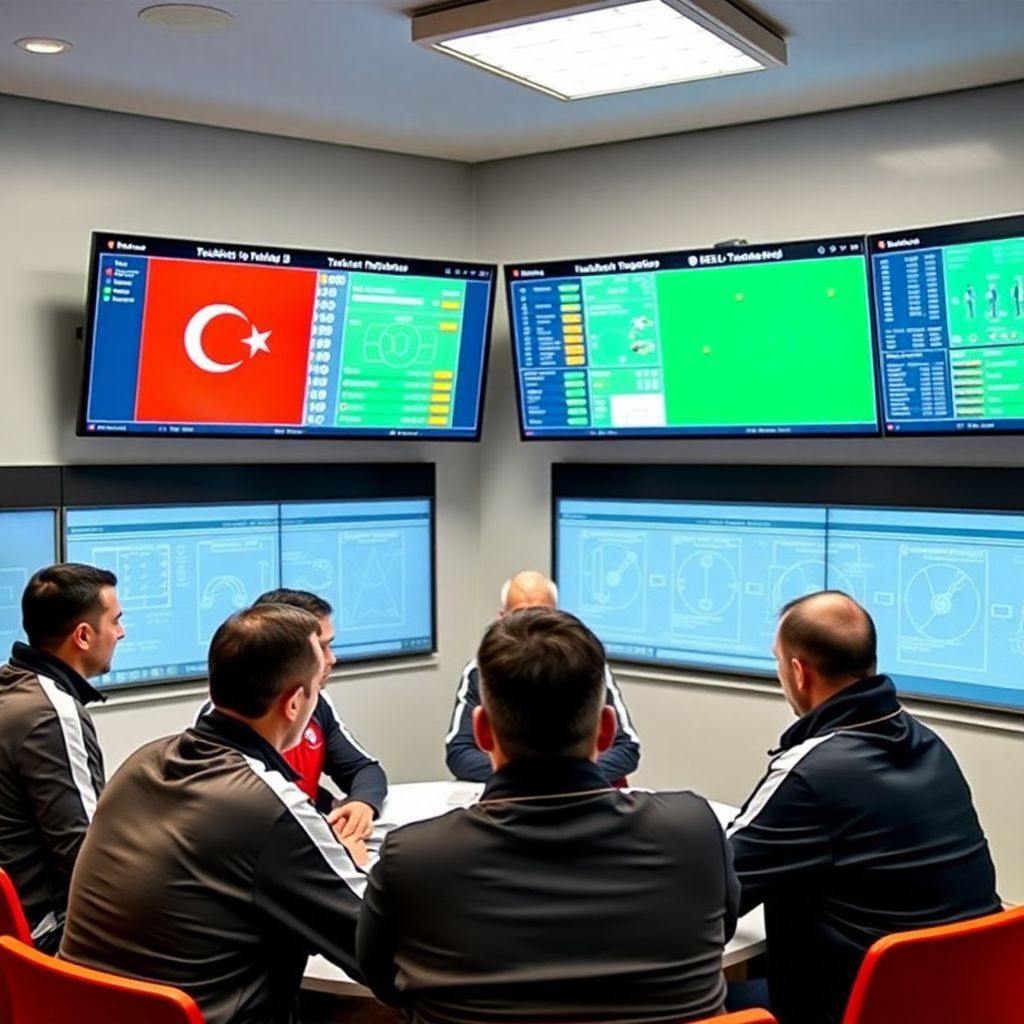
Top Süper Lig coaches prepare for big derbies by building a data-backed match plan, running a tightly controlled training microcycle, drilling set pieces, and preparing players mentally for pressure and rivalry. This guide breaks that process into clear, safe steps you can adapt for academy, amateur, or semi‑pro teams in Turkey.
Tactical Pillars for Derby Readiness
- Anchor preparation in opponent analysis: video, data, and clear behaviour profiles.
- Design a match plan with defined roles, phases of play, and pre-planned scenarios.
- Structure the derby week microcycle to balance intensity, recovery, and tactical rehearsals.
- Use mental skills protocols to normalise pressure and rivalry narratives.
- Create targeted set-piece packages for both attacking and defending.
- Prepare in-game contingency triggers and substitution rules in advance.
- Review and refine your process using objective clips and session notes.
Analyzing Opponent DNA: Video, Data and Habit Mapping
This approach works best for coaches who already record games or have access to basic match footage and event data. It suits intermediate-level staff in the Turkish Süper Lig, 1. Lig, and ambitious academies who want more than instinctive decisions and casual best Süper Lig coaches tactics analysis from TV pundits.
It is less suitable when you are dealing with youth festivals, very small leagues with no footage, or when player safety, pitch quality, or extreme weather are likely to dictate the game more than tactics. In those cases, put more energy into load management and individual skill development than into deep opponent DNA mapping.
To map opponent habits safely and effectively:
- Collect reliable video samples. Use full-match footage from the last three to five games, focusing on opponents’ derbies or high-pressure matches. If you often watch Süper Lig derbies live online, save links and timestamps for later staff review.
- Code key tactical moments. Tag build-up patterns, pressing triggers, rest defence, transitions, and set pieces. Even basic manual tagging in a spreadsheet is enough if you stay consistent with labels.
- Identify repeatable behaviours. Look for habits, not highlights: where the pivot receives, which side they overload, how fullbacks join attacks, who initiates counterpress, and how they defend the box.
- Profile key individuals. Build short notes on 4-6 players who shape the opponent’s play: strengths, preferred foot, pressing intensity, emotional reactions in derbies, and how they cope when pressed.
- Summarise into clear threats and opportunities. Reduce the analysis to a one-page “DNA sheet”: three to five main threats, three to five spaces or behaviours you can exploit. Share this only with staff first, then with players in simplified form.
Crafting the Match Plan: Roles, Phasing and Key Moments
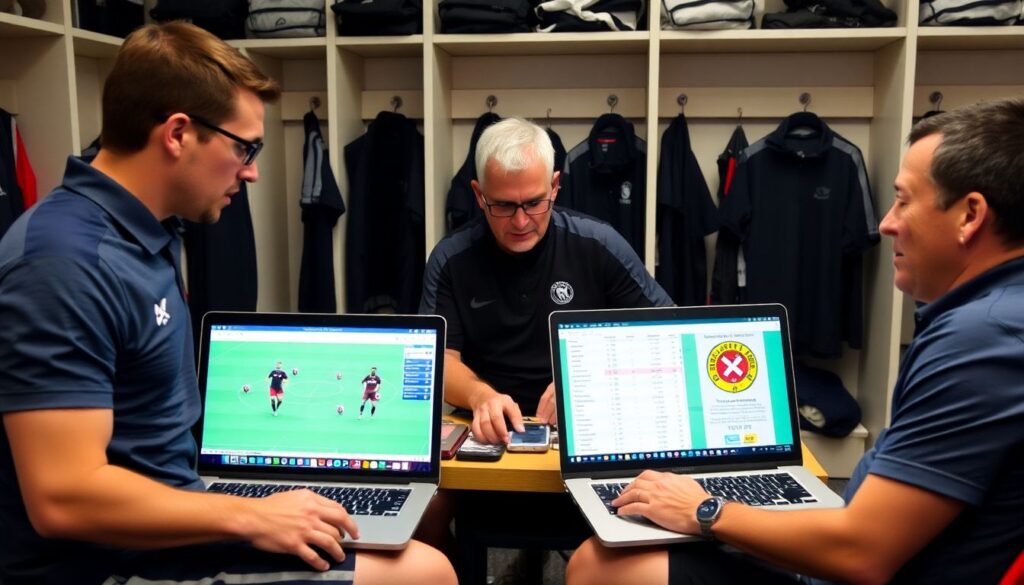
To build a derby-ready match plan, you will need a few non-negotiable tools and structures rather than expensive technology. Aim for clarity and safety in how you communicate and apply them.
Core requirements:
- Recent video and notes: Your opponent DNA sheet, key clips, and staff comments from previous meetings.
- Simple tactical board and pitch props: Magnets or cones to demonstrate structure, pressing height, and rest-defence positions.
- Shared team-playbook document: Digital or printed, with core principles in and out of possession, plus set-piece codes.
- Clear role definitions: Written or visual explanations of what each position must do in each phase (build-up, final third, defending the box, pressing, transitions).
- Communication channels: A short meeting structure (pre-training, post-training, pre-match) and a way to send clips or visuals safely to players.
Optional but useful for a Süper Lig context:
- Basic data dashboards: Pass maps, shot locations, and pressing zones to support your narrative.
- Staff alignment sessions: Short internal meetings to align medical, fitness, and analyst staff on the match plan and training microcycle.
- Continuous education: Enrolment in football coaching courses Turkish Süper Lig tactics, where you can compare your match-plan templates to those of top-flight clubs.
Remember that fans may obsess over Süper Lig derby tickets and social-media narratives, while some people follow influencer-style Turkish Süper Lig derby betting tips. Your job is to shield the squad from distractions and keep everyone focused on controllable tactical processes.
Training the Microcycle: Intensity, Rehearsals and Load Management
Use this step-by-step microcycle as a safe, repeatable framework you can adapt to the local calendar and your level. Assume the derby is on Sunday; adjust days as needed while keeping the same order of content.
- Day 1: Recovery and tactical reset. Prioritise low-intensity recovery from the previous game (mobility, light rondos, short passing). Introduce the derby context and the week’s main theme in a brief, calm meeting. Avoid heavy criticism or emotional language.
- Day 2: Defensive structure and pressing. Work on your out-of-possession plan: pressing height, compactness, and how you protect central spaces. Use medium-intensity drills with clear start-stop commands so you can correct mistakes safely.
- 11v6 or 11v7 shape work for back line + midfield.
- Small-sided games with pressing triggers matching the opponent DNA.
- Day 3: Build-up and attacking patterns. Increase intensity but keep a logical structure. Rehearse your build-up variants versus the opponent’s press and your finishing patterns in the final third.
- Pattern play from goalkeeper to striker, matching your real roles.
- Position games that rehearse how to break their main block.
- Day 4: Transitions and set pieces. Focus on fast, clear reactions when possession changes. Alternate between transition games and your main attacking and defensive set-piece routines.
- 3v2, 4v3 waves to train counter-attack and counterpress.
- Corners and free kicks at realistic intensity, but control collisions and aerial duels.
- Day 5: Match rehearsal and scenarios. Run a shorter, controlled 11v11 or 10v10, starting from typical match situations: defending a lead, chasing a goal, or playing with ten men. Pause to test in-game contingency plans and substitution ideas.
- Day 6: Tactical polishing and mental lightness. Keep the session short and low-load. Walk through key structures on a half-pitch, rehearse set-piece starting positions, and finish with short, confidence-building games or finishing drills.
- Day 7: Matchday routines and communication. Standardise warm-up, staff communication, and half-time processes. Players should know where to be, when, and what information they will receive at each stage of the day.
Fast-Track Derby Microcycle
If time is limited, use this condensed version while maintaining player safety and clarity:
- Session 1: Recovery, introduce derby focus, basic defensive structure.
- Session 2: Pressing + transitions, including 2-3 key attacking patterns.
- Session 3: Set pieces (both directions) and short 11v11 rehearsal with main contingencies.
- Session 4: Light tactical walk-through, mental preparation, and fixed pre-match routines.
Mental Edge Protocols: Squad Messaging, Pressure Simulations and Rivalry Management
Use this checklist to evaluate whether your mental preparation is helping players cope with derby pressure rather than adding to it.
- You have a single, consistent message for the week that all staff repeat in meetings and media.
- Players can state in simple words how you want to play, regardless of crowd noise or opponent behaviour.
- Training includes at least one scenario where crowd noise or time pressure is simulated in a safe, controlled way.
- Staff monitor emotional responses in sessions and quietly support players who show anxiety or aggression spikes.
- Leaders in the squad know their specific off-pitch duties: calming others, communicating with the referee, managing game tempo.
- Pre-match and half-time talks are short, concrete, and free from excessive blame or unrealistic promises.
- Social media, news, and ticket hype are addressed early so players are not overstimulated by talk of Süper Lig derby tickets or fan campaigns.
- You have a post-derby debrief schedule, win or lose, that focuses on learning rather than emotional extremes.
Set-Piece Solutions: Offensive Schemes and Defensive Templates
Set pieces often decide high-pressure matches. These are frequent mistakes that even experienced staffs in the Turkish Süper Lig context still make; avoiding them will already put you closer to top-level standards.
- Overloading the same routine instead of having at least two simple, well-trained variants per zone.
- Assigning markers based on height only, ignoring concentration, aggression, and tracking discipline.
- Changing set-piece roles too late in the week, which confuses players and increases risk on matchday.
- Designing complex attacking movements that look good on video but are too hard for your level and time budget.
- Neglecting second balls and box edge organisation, focusing only on first contact.
- Failing to connect set pieces to the overall match plan (for example, not targeting a defender who struggles under pressure in derbies).
- Ignoring goalkeeper preferences and communication style in defensive set-piece setups.
- Not reviewing set-piece clips the day after matches, which slows learning and correction.
In-Game Contingencies: Triggered Adjustments and Substitution Principles
No match plan survives contact with a chaotic derby. These alternative approaches help you adapt while staying true to your core principles.
- Game-state based plan: Prepare mini-strategies for being level, leading, or trailing by one goal. Each has clear changes in pressing height, risk in build-up, and substitution order.
- Zone-priority approach: Decide one or two zones you must always control (for example half-spaces or flanks against this opponent). Any in-game adjustment or substitution should first protect those zones before anything else.
- Energy-management strategy: Pre-plan time windows for potential substitutions based on player load and mental stress, not just position. This keeps intensity stable and reduces injury risk.
- Role-flexibility model: Work with 2-3 players who can change role or line within your system, giving you extra shapes (e.g., from 4-2-3-1 to 3-4-3) without making chaotic changes.
Fan narratives, TV shows, and people who watch Süper Lig derbies live online often highlight only the final substitution or the last tactical twist. Your job is to make those decisions part of a planned, safe framework rather than gambling, regardless of what external Turkish Süper Lig derby betting tips might suggest.
Practical Doubts Coaches Face Before a Big Derby
How much should I change my tactics specifically for a derby?
Keep your core principles and structures, then adjust two or three elements to the opponent: pressing triggers, specific matchups, and set-piece emphasis. Too many changes increase confusion and stress, especially under derby pressure.
How do I handle players who are emotionally overexcited?
Speak to them early in the week, set clear behavioural expectations, and give them simple, concrete tasks. In training, monitor their reactions in duels and transitions, and consider substituting earlier if they show signs of losing control.
What if I have very limited video or data on the opponent?
Focus on universal principles: protect central spaces, organise rest defence, and control transitions. Use any available clips to at least identify their main creators and finishers, and run sessions that prepare your team for different pressing heights.
How can I involve my staff more effectively in derby preparation?
Assign specific responsibilities: one for opponent analysis, one for set pieces, one for physical load, and one for mental support or leadership. Hold short daily check-ins so information flows quickly and consistently through the week.
Should I show the players emotional fan content or historical derby moments?
Use such content sparingly and only when your group can handle it. Prioritise tactical clips and positive reinforcement; emotional videos can overload some players and reduce their decision-making quality during the match.
How do I keep substitutes mentally ready for impact?
Define possible entry scenarios for each substitute in advance and share them clearly. During the game, keep them engaged with mini-tasks on the bench, and give short, precise instructions when they start warming up.
Can I really apply top Süper Lig methods at amateur level?
You can apply the principles-clear roles, structured microcycle, set-piece focus-even without pro resources. Adapt volume and complexity to your reality, and keep learning from best Süper Lig coaches tactics analysis and high-quality football coaching courses Turkish Süper Lig tactics.