
From academy to superstar in Turkey, a safe U-21 pathway means gradual exposure to higher levels, clear technical and physical benchmarks, data-led evaluation, and careful timing of transfers abroad. Coaches, agents, and families must protect game time, mental health, and long-term development, not chase short-term hype in the Turkish wonderkids transfer market.
What Defines a Breakout U-21 Prospect in Turkey
- Consistent impact in first-team minutes, not just highlight clips or youth scores.
- Clear technical and physical benchmarks relative to senior Süper Lig standards for their position.
- Tactical discipline: pressing, positioning, and decision-making trusted by the coach.
- Data profile that scales to stronger leagues, not only dominating weaker youth levels.
- Psychological resilience and professionalism across training, recovery, and lifestyle.
- Sustainable career plan that avoids premature big transfers or unstable loans.
Pathways from Club Academies to First Team Football

In the Turkish context, the standard route from academy to superstar runs through local club academies, reserve teams, strategic loans, and then stable roles in the Süper Lig. The best young Turkish football talents usually follow a pattern of progressive challenges, where each step is difficult but still manageable and safe.
A breakout U-21 prospect is not only the most talented teenager in an academy, but the player whose skills and mentality survive the jump to adult football. For Turkey U21 football prospects to watch, the critical milestone is becoming a reliable first-team option, even as a substitute, while maintaining steady development in training.
Safe pathways usually include clear communication between academy, first-team staff, and the player. Training loads, match minutes, and position roles are managed together, so the player does not get burned out or misused. This is especially important in clubs that regularly produce the next generation Turkish football stars but also face pressure for quick results.
When discussing top Turkish U21 football players 2025, many will have passed through short-term loans to 1. Lig or lower Süper Lig clubs. The safer moves are those where the player is guaranteed a defined role, aligned with their strengths and long-term position, instead of random loans just to say they are playing abroad or in a higher division.
Technical and Physical Benchmarks for Elite U-21s
Technical and physical benchmarks make the definition of a breakout U-21 more objective and protect players from being over- or underrated by hype.
- First touch and ball security under pressure
Can the player receive and control the ball in crowded central zones or wide channels when pressed by senior defenders? Losing the ball cheaply is a red flag, even if the player scores sometimes. - Passing range and speed of release
For midfielders and defenders, safe progression means completing forward passes at realistic game tempo, not just sideways passes. For wingers and forwards, quick wall passes and through balls matter as much as dribbling. - Position-specific duels
Centre-backs need aerial and 1v1 defending ability; full-backs need repeated sprinting and recovery runs; attackers must win enough attacking duels to justify risk. These duels show whether the body and mindset are ready for top-level contacts. - Repeat sprint and recovery capacity
U-21s must perform their role for 90 minutes, not only in short bursts. Monitoring repeated high-intensity runs helps staff give safe game time increases rather than sudden jumps that risk muscle injuries. - Injury robustness and load tolerance
Safe progression includes building strength, mobility, and good sleep/nutrition habits. The gap between academy and senior training intensity is big; players who adapt gradually avoid long layoffs that slow their rise. - Technical execution under fatigue
Many young players look elite for 30 minutes and then drop sharply. Coaches look for those who still pass, press, and decide well in the final 15 minutes.
Tactical Roles and Position-Specific Development
Tactical understanding turns raw potential into reliable first-team output. Even the best young Turkish football talents fail to break out if they cannot execute a specific role within the team structure.
- Modern full-back / wing-back
In Turkey, many academies now develop full-backs who can invert into midfield or overlap aggressively. Safe development means teaching both roles gradually: first defensive basics, then interior build-up and attacking timing. - Ball-playing centre-back
Young centre-backs are often judged harshly for mistakes. Clubs that produce Turkey U21 football prospects to watch usually start them in low-risk pairings with an experienced partner, gradually increasing their responsibility in build-up and in defending space behind the line. - Press-resistant central midfielder
These players must scan continuously, receive on the half-turn, and decide quickly. A safe step is giving them 20-30 minutes as substitutes in games where the team is already stable, not throwing them into chaotic derbies too early. - Inverted winger / inside forward
Forwards coming inside from the wing must learn when to attack 1v1 and when to combine. Limiting them to one or two key zones on the pitch in early first-team appearances helps reduce turnovers and preserves confidence. - Mobile number 9
U-21 strikers are often judged only by goals, but their pressing triggers, runs to create space for others, and link play decide if a coach can trust them. Safe development includes video feedback, clear movement patterns, and set-piece roles that boost contribution. - Hybrid 8/10 creator
These players can be overprotected in youth football. In senior football, they must also press and track. A controlled introduction is giving them creative freedom in possession but strict off-ball rules, monitored with video and positional data.
For all these roles, the limitation is that a player cannot learn every system at once. Development plans should focus on two or three tactical demands per season instead of constant role changes, which are common but risky in clubs with frequent coaching changes.
Performance Indicators: Data to Monitor (with table)
Data helps compare top Turkish U21 football players 2025 across clubs and leagues, but metrics must be interpreted carefully. Numbers support safe decisions about minutes, positions, and transfers, instead of emotional reactions to a few good or bad games.
| Indicator Type | Example Metrics | What It Shows | Key Limitation |
|---|---|---|---|
| Technical | Pass completion, key passes, successful dribbles, first-touch errors | Quality of execution on the ball and decision-making in possession | High values in weak leagues or easy roles may not translate to stronger opposition |
| Physical | Sprints per match, high-intensity distance, aerial duels contested | Ability to cope with tempo, transitions, and physical contact of senior football | GPS and tracking differences between clubs can make comparisons unreliable |
| Tactical / Defensive | Pressures, interceptions, blocks, defensive duels | Involvement in team pressing, positioning, and defensive work rate | Context (team style, game state) heavily affects volume and locations of actions |
| Attacking Output | Shots, expected goals, expected assists, touches in box | Threat level and quality of chances created or received | Small samples for U-21 players can be misleading over short periods |
| Durability | Minutes played, starts vs. sub appearances, games missed | Trust from coaches and robustness to training and match loads | Missing games can be due to tactical choices, not only fitness or form |
Advantages of Using Data for U-21 Evaluation
- Creates objective benchmarks to identify the next generation Turkish football stars early and track their growth safely.
- Helps detect hidden strengths, such as pressing intensity or progressive passing, that may not be obvious from highlights.
- Supports more rational decisions in the Turkish wonderkids transfer market, avoiding overpaying for unsustainable hot streaks.
- Allows medical and performance staff to manage training loads based on quantified physical outputs.
Limitations and Risks of Over-Reliance on Metrics
- Data without context can reward stat-padding in low-pressure games and ignore impact in difficult minutes.
- U-21 samples are often too small to predict long-term level reliably, especially for goal contributions.
- Different tracking technologies and tactical styles between clubs make direct comparisons difficult.
- Obsession with numbers may push players to chase metrics instead of making the right decisions for the team.
Transfer Market Dynamics and Career Management
Once a U-21 becomes visible as one of the Turkey U21 football prospects to watch, the next danger is poor transfer choices. Working in the Turkish wonderkids transfer market demands restraint and a long-term view.
- Myth: The earliest move to Europe is always best
Going abroad too early can reduce minutes, increase cultural stress, and stall development. A safer pattern is to become a regular in the Süper Lig first, then choose a club where the tactical role and competition level fit the player. - Myth: A big-name club guarantees success
Even the best young Turkish football talents can disappear in clubs with too many established stars. The key is not the club name but the realistic pathway to minutes: who plays in your position, how old they are, and how the coach uses young players. - Mistake: Chasing short-term salary over development
At U-21, gaining stable starts and good coaching is often more valuable than a higher wage. Contracts should include clear sporting plans, not only financial bonuses. - Mistake: Unstable loan cycles
Multiple short loans in different systems can confuse a player and slow progress. Safer loans have clear roles, agreed playing time expectations, and tactical alignment with the parent club. - Myth: One breakout season is enough proof
Top Turkish U21 football players 2025 will be those who show impact across different coaches, systems, and pressure levels. Decision-makers should look for repeated performances over time, not a single highlight season. - Mistake: Ignoring off-pitch adaptation
Language learning, family support, and lifestyle habits influence whether a transfer works. A safe move includes structured support for integration, especially for very young players leaving Turkey for the first time.
Case Studies: Rapid Elevations to Superstar Status
Concrete stories link the concept of safe steps and limitations to everyday practice. The following mini-cases are simplified, but they reflect patterns seen among next generation Turkish football stars in recent years.
Case 1: Controlled Rise of a Creative Midfielder
An 18-year-old academy 10 is promoted to the first team after dominating U-19 football. Instead of starting him every game, the staff give him 20-minute substitute appearances in home matches with stable scorelines. Data shows he maintains technical quality under fatigue; video analysis focuses on defensive positioning. After a season of managed minutes, he is ready for guaranteed starts without skipping the physical adaptation phase.
Case 2: Safe Development of a Ball-Playing Centre-Back
A tall centre-back, already noted among Turkey U21 football prospects to watch, is sent on a one-season loan to a 1. Lig club that plays a similar build-up style. He trains as a starter, but the coach limits risky passes early in the season. As his duel success and passing accuracy stabilize, tactical freedom increases. A rushed move abroad is delayed until he proves stability across two full seasons.
Case 3: Managing Hype Around a Prolific Young Striker
A 19-year-old striker scores frequently in half a season and attracts attention from the Turkish wonderkids transfer market. Instead of accepting the first big offer, his club and representatives agree to one more season domestically with a defined role: starting in league matches, rotated in cups to protect overload, and given specific pressing tasks. By the time he moves, the buyer sees proof of his all-round game, not only goals.
Practical Answers on Developing and Evaluating U-21 Talent
How can clubs safely integrate U-21 players into the first team?
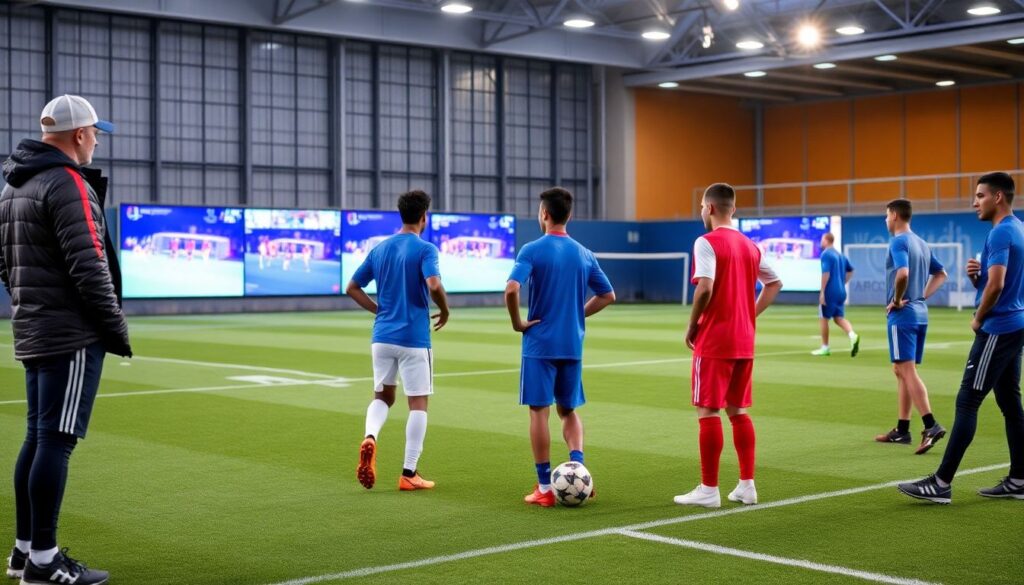
Use a step-by-step plan: controlled training loads, short substitute appearances, and gradual increases in responsibility. Pair young players with experienced leaders in their position and review progress regularly with video and data rather than reacting to single matches.
What should families focus on when a big transfer offer arrives?
Prioritize guaranteed development conditions over prestige: realistic playing time, clear tactical role, language and support structures, and the coach's history with young players. A slightly smaller club with a clear plan is often safer than a famous name without one.
Which data metrics matter most for U-21 evaluation?
For attackers, look at shot quality, chance creation, and off-ball runs. For defenders and midfielders, ball security, progressive actions, and defensive duels are key. Always combine metrics with game context and video to avoid misreading small samples.
How can players protect themselves from burnout and injuries?
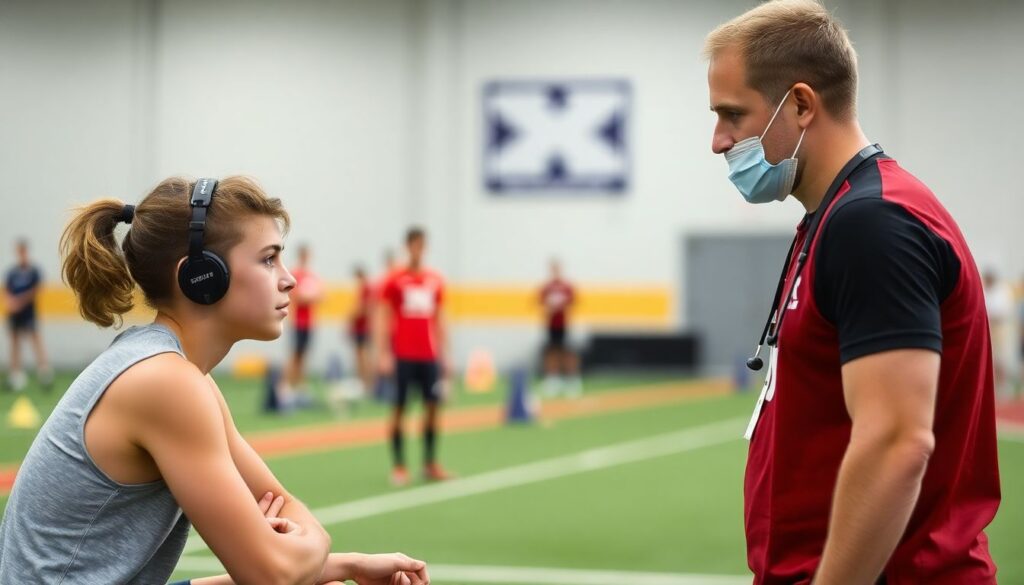
Monitor training and match loads with medical staff, maintain good sleep and nutrition, and report early signs of pain instead of hiding them. Avoid sudden jumps in intensity or minutes; safe progression is more important than short-term heroics.
What role do agents play in safe career development?
Good agents filter offers and negotiate for sporting conditions, not only salaries. They should align moves with the player's stage of development, avoid chaotic loan cycles, and coordinate closely with club staff and family.
Is it risky for U-21s to change positions?
Position changes can unlock potential if handled gradually and with clear reasoning. Constant role changes, especially across very different tasks, are risky; they can delay mastery of any one role and confuse long-term development.
How can fans better judge young talents without overhyping them?
Look beyond goals and highlights to consistency, work rate, and decision-making under pressure. Understand that mistakes are part of learning, and that steady improvement over seasons is a better sign than one explosive month.