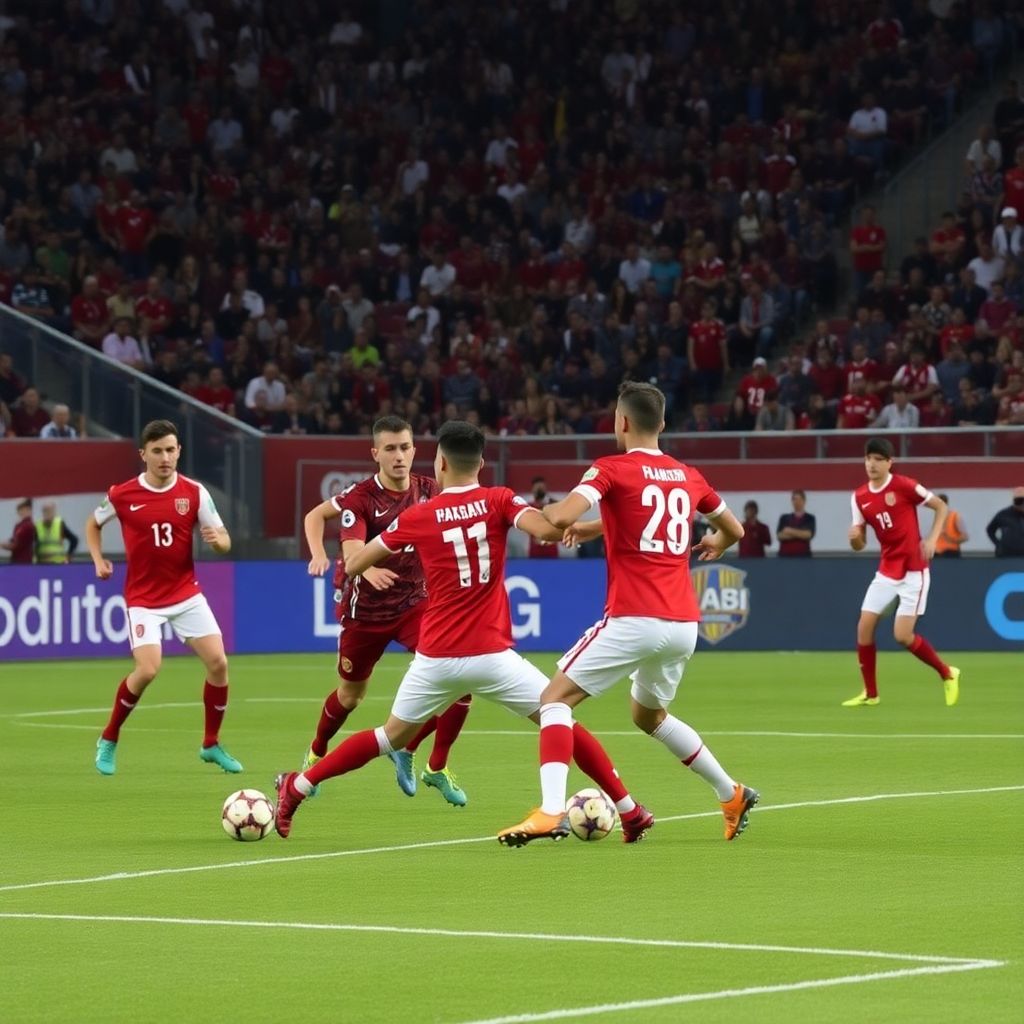
Pressing traps and counter-pressing in the Turkish Süper Lig work when your team deliberately shows rivals a “safe” pass, then collapses aggressively to win the ball and attack quickly. You need coordinated distances, clear lines of responsibility, and training that links pressing cues with immediate forward options after regaining possession.
Pressing Essentials: Tactical Snapshot and Metrics
- Define clear pressing zones (high, mid, low) and use traps only where your team can support quickly from behind the ball.
- Assign primary, secondary and covering players for each trap so there is always protection for the back line.
- Use video and simple football analysis software for coaches to tag triggers and measure compactness between units.
- Link pressing traps with counter-pressing coaching drills so players instinctively attack the ball after a turnover.
- Track how often traps lead to clean regains versus fouls or through-balls to judge risk level.
- Progress from simple patterns on the training pitch to game-like scenarios before relying on them in Süper Lig matches.
Principles Behind Effective Pressing Traps
Objective: Create predictable situations where the opponent passes into an area that your team can surround safely and regain the ball facing their goal.
When it suits your team:
- Your back line is comfortable defending large spaces and is not easy to beat in isolated duels.
- Your midfield can sprint repeatedly and recover into shape quickly after failed presses.
- Your forwards understand defensive tasks and can block passing lanes, not only chase the ball.
- Your squad has trained clear verbal and visual cues for when to jump and when to delay.
When you should avoid pressing traps:
- Against rivals with much faster attackers than your back line, especially in away games.
- When your team is physically tired, late in games, or during congested fixture weeks.
- If your defensive midfielder is missing and replacements cannot read play as well.
- On very poor pitches or in extreme weather when accelerations and quick turns are harder to control.
For intermediate coaches considering a football pressing tactics course or an online soccer coaching certification, the core principle to remember is that pressing traps reduce the field for the opponent while keeping it big for your own first pass after winning the ball.
Opponent Profiling: Identifying Press Triggers in Süper Lig Teams
Objective: Build a simple opponent profile that tells your staff where and when pressing traps and counter-pressing are most likely to work in a Süper Lig match.
Required tools and access:
- Full match videos from at least a few recent league games, ideally home and away fixtures.
- Basic football analysis software for coaches that allows drawing, tagging passes, and exporting short clips.
- Training time to present video to players with clear, short clips instead of long meetings.
- Reports from your scouting staff or trusted contacts within the Turkish football community.
Profiling checklist for Turkish Süper Lig opponents:
- Build-up behaviour
- Identify whether centre-backs are comfortable under pressure or prefer to play long early.
- Note if the goalkeeper invites pressure with short passes or rarely risks central play.
- Mark which full-back drives forward on the ball and which stays deeper.
- Under-pressure tendencies
- Observe which players panic and clear the ball without scanning the field.
- Track where they most often lose the ball: near the touchline, central midfield, or just after receiving back passes.
- Notice who drops into the ball and who hides behind markers when your team presses.
- Preferred “release” pass
- Determine whether they escape pressure through wide areas, direct balls to a target forward, or third-man runs from midfield.
- Use this to decide if your trap should invite inside passes, outside passes, or long diagonals.
- Substitution patterns
- Check how their style changes after common substitutions, especially attacking wide players.
- Prepare alternative trap locations for fresh, fast wingers introduced late in games.
Coaching staffs of clubs and academies that travel regularly, buying turkish super lig tickets to live-scout rivals, can combine stadium observations with video and analysis software to find reliable pressing triggers.
Designing Spatial Traps: Positioning, Angles and Lines
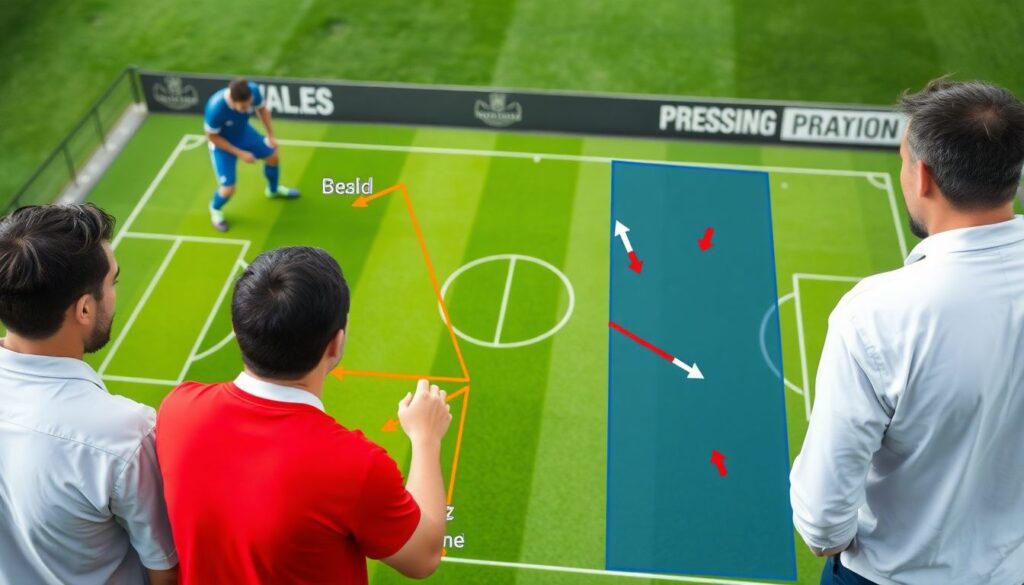
Objective: Build repeatable, safe pressing traps based on field zones, player roles and passing angles, then train them step by step.
Preparation checklist before implementing traps:
- Clarify your main trap zones: wide third, half-space, or central midfield.
- Choose which striker or midfielder calls the moment to jump.
- Agree on simple verbal cues that all players understand under fatigue.
- Set training constraints: pitch size, number of neutrals, and direction of play.
- Prepare at least one transition pattern after ball recovery for each trap.
- Fix your pressing reference lines
Mark clear horizontal and vertical reference lines that guide your block: defensive line, midfield line and pressing line. Players should know how far they can step out from each line without losing compactness.- Coaching cue: “Move as one unit, never more than a short pass away from the nearest teammate.”
- Choose the trap zone and invite the pass
Decide whether you will trap in wide channels, half-spaces, or inside the central corridor. Show rivals a route that appears open while your team quietly closes other options.- Example: Force play towards a full-back by slightly leaving them free, while blocking easy central passes.
- Coaching cue: “Guide, do not chase the ball; steer it into our zone.”
- Define primary and secondary pressers
Assign a first presser to attack the receiver in the trap zone and at least one secondary presser who closes the nearest support option. A covering player protects the space behind.- Coaching cue: “First wins distance, second wins the pass, cover protects the space.”
- Drill example: 3v3 plus extra cover defender in a wide channel, focusing on angles and cover positions.
- Close inside lanes and sideline as extra defender
In wide traps, angle the press so the opponent is caught between touchline and your pressing players. Inside traps demand that central lanes are closed first to prevent split passes.- Coaching cue for wide traps: “Show them outside, then lock the touchline; the sideline is our teammate.”
- Coaching cue for central traps: “Body half-turned, deny forward pass before jumping.”
- Secure rest defence behind the trap
Your closest defenders away from the ball must be ready to deal with a long switch or a chipped pass behind the line. Ensure balance so that missing the trap does not expose the goal.- Checklist: at least one central defender is free from marking and ready to sweep deep balls.
- Drill example: conditioned game where back line cannot step over a marked line, forcing them to read and cover space early.
- Connect trap to immediate attacking options
Decide who offers depth, who supports underneath, and who stays wide once the ball is won. The first pass after recovery should be rehearsed so players act automatically.- Coaching cue: “Recover, pass forward, run forward; do not freeze on the ball.”
- Use counter pressing coaching drills that end with quick shots or final-third entries.
Trigger Moments and Coordination: Timing, Roles and Communication
Objective: Ensure the whole team recognises shared pressing triggers and reacts in sync, so traps are activated together instead of as isolated runs.
Post-training coordination checklist:
- All players can name the main pressing triggers: poor first touch, back pass, sideways pass to full-back, or receiver facing own goal.
- Your striker starts to press only when midfield and back line are close enough to support.
- Wide players react immediately by tucking inside or jumping to full-backs when a trigger appears.
- Defensive midfielder constantly checks distances to centre-backs and nearest forward, keeping the team compact.
- Communication is simple and loud: short words for pressing, delaying, and dropping off, used consistently in training and matches.
- Players understand that if the first press is late or body shape is wrong, they must delay instead of forcing the trap.
- Video clips from matches show the team pressing as a block, not with isolated sprints by individual players.
- In training games, staff can clearly see two or more players jumping together on triggers instead of one player chasing alone.
Transitions: From Immediate Recovery to Controlled Possession
Objective: Turn successful pressing traps into valuable attacks while keeping a stable structure in case the next pass is lost again.
Common mistakes that kill the benefit of pressing traps:
- Ball winner keeps dribbling into pressure instead of playing a simple forward or diagonal pass.
- Nearest teammates admire the regain and stop running, leaving the ball carrier isolated.
- Defensive midfielder joins the attack too early, leaving no protection against a counter after a poor pass.
- Wide players both attack inside at the same time, leaving no width to stretch the rival back line.
- Forwards always look for the most difficult through ball instead of securing a stable first or second pass.
- Team continues to press wildly after a failed trap instead of resetting shape and controlling tempo.
- Set transition patterns are not trained; players rely on improvisation and lose rhythm between press and possession.
- Staff judge pressing only by effort, not by how many controlled attacking situations follow a regain.
Training Drills, Load Management and Matchweek Periodization
Objective: Integrate pressing traps and counter-pressing into your weekly cycle without overloading players, using game-like but safe drills.
Alternative training and planning options:
- Small-sided orientation games
Use compact fields with clear pressing zones instead of full-pitch runs. Focus on correct angles and distances more than sheer running volume.- Drill example: 5v5 plus neutral in a marked half-space; team scores only after regaining in a trap zone.
- Benefit: High decision-making quality with limited physical load early in the week.
- Phase-of-play sessions
Work with full lines (back, midfield, forwards) against a structured opponent from goal-kick or throw-in situations. Stop and correct positions carefully.- Use this on midweek days when tactical focus is high but fatigue from matches may still be present.
- Link each phase to one or two specific pressing traps you want in the next match.
- Integrated matchday minus-one rehearsal
On the day before matches, run short, sharp blocks with the starting eleven against reserves, rehearsing only key triggers and short transitions.- Keep duration low and avoid heavy contacts; priority is clarity, not conditioning.
- Show short clips on the same day so players can connect visual examples with field practice.
- Season-long education and courses
Coaching staff can deepen knowledge through an online soccer coaching certification or a targeted football pressing tactics course. Combine this theory with internal workshops to adapt concepts to Süper Lig realities.- Share course insights with analysts to design better counter pressing coaching drills.
- Use course material alongside your own club data within your football analysis software for coaches.
Clubs and academies that invest in long-term learning, rather than only match-to-match plans, tend to create more stable pressing identities that translate from training ground to stadiums where fans arrive with their turkish super lig tickets expecting proactive football.
Typical Tactical Doubts and Concise Solutions
How many different pressing traps should my team use in one match?
Start with one main trap zone and one alternative, then add variety only when players execute them consistently. Too many patterns confuse roles and distances; clarity is more valuable than constant change.
Is counter-pressing always the best option after losing the ball?
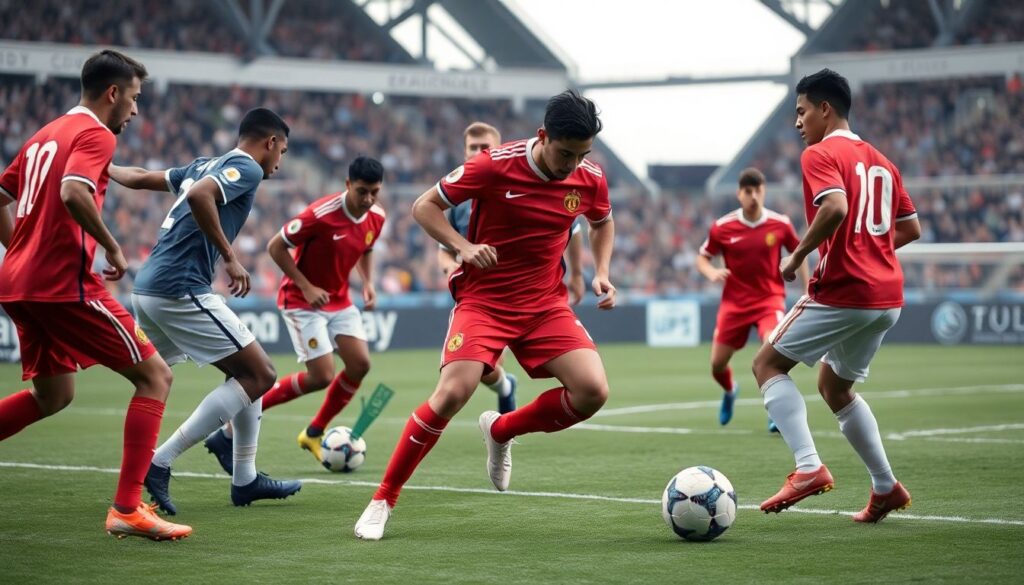
No. Counter-pressing works when your team is compact around the ball and can arrive quickly. If your structure is stretched or players are tired, dropping into a block is safer than forcing a late press.
How can I train pressing traps without GPS or advanced data systems?
Use simple field references and video. Mark trap zones on the pitch, film training, and check if your lines stay compact and if regains happen where planned. Basic video and analysis tools are enough for intermediate-level work.
Should my goalkeeper be involved in organising pressing traps?
Yes. The goalkeeper has the widest view and can warn when the back line is too high or exposed. Encourage regular communication keywords between goalkeeper, central defenders and defensive midfielder.
What if my forwards are not naturally good defenders?
Give them simple, clear tasks: show play in one direction and block one passing lane. Reduce their pressing responsibilities but demand discipline in starting positions and effort in short bursts.
How do pressing traps change when protecting a narrow lead late in the game?
Traps move slightly deeper and risk level decreases. Focus on steering the opponent into wide areas and regaining near the touchline, rather than jumping high and leaving space behind your back line.
Can youth teams safely copy pressing models from top Süper Lig clubs?
Youth sides can copy basic principles, like guiding the ball and pressing in groups, but distance, intensity and complexity must be adapted to age. Avoid long periods of very high pressing for young players.