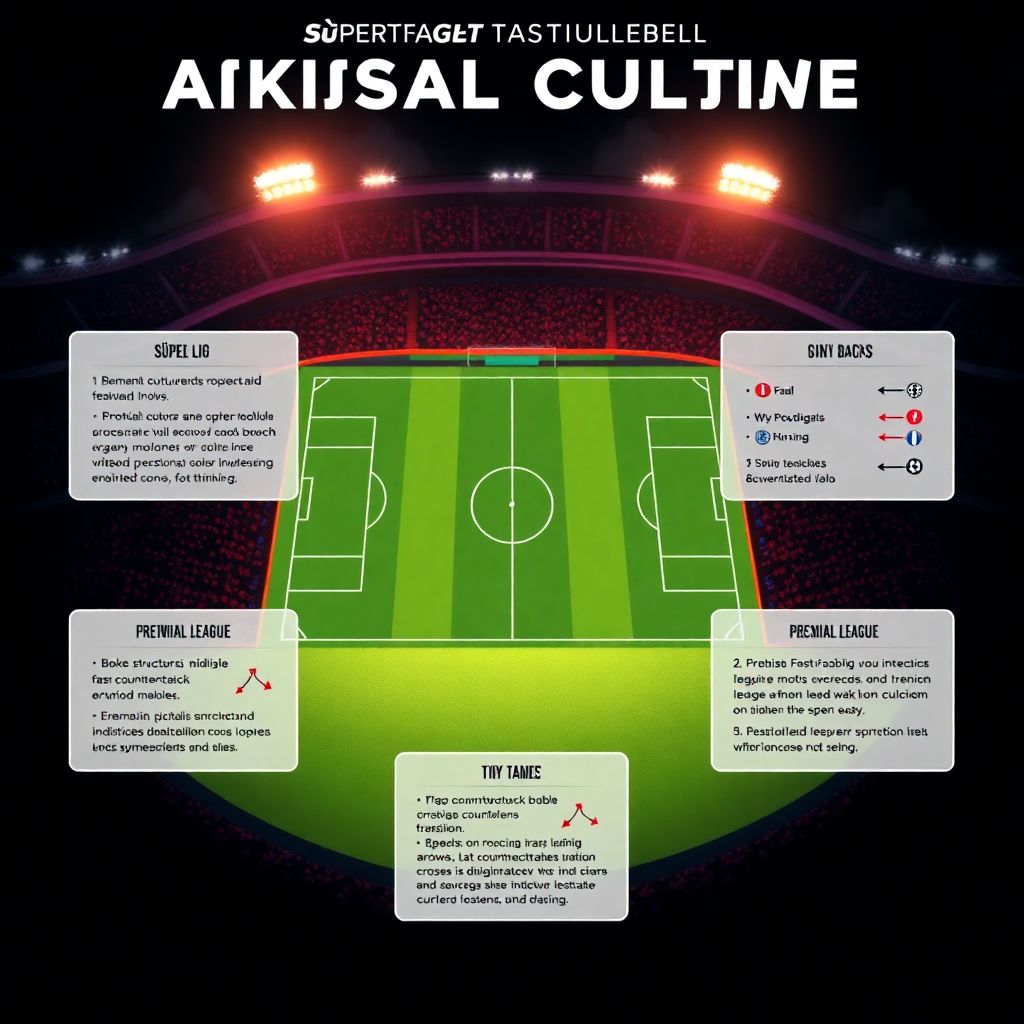
Why Tactical Culture Matters When You Watch (or Bet on) Football
If you only remember one idea from this guide, let it be this:
leagues have “personalities”, and those personalities are tactical.
Comparing the Süper Lig to the top 5 European leagues (Premier League, La Liga, Bundesliga, Serie A, Ligue 1) is not just an academic thing. It directly affects:
– What you should expect from a match
– How you judge players and coaches
– How you use data, xG, and any football analytics subscription European leagues comparison tools
Let’s break it down step by step and keep everything tied to what you can *actually do* with this knowledge.
—
Step 1. Define the Tactical Identity of Each League
Süper Lig: Chaos with a Plan (Sometimes)
The Turkish Süper Lig tends to be:
– Emotionally charged
– Tactically mixed (old-school and modern ideas colliding every week)
– Very dependent on individual talent in key moments
You’ll often see big swings in momentum, fast transitions, and games where structure breaks down late, especially in high-pressure matches in Istanbul.
From a tactical analysis Super Lig vs European top 5 leagues angle, the Süper Lig usually sits closer to the Bundesliga in terms of open, transition-heavy football, but with less collective pressing discipline and more reliance on stars.
What this means for you
If you’re scouting or predicting matches, always factor in:
1. Crowd pressure (especially derbies)
2. Late-game chaos (substitutions, tactical gambling, long balls, and crosses)
3. Refereeing style, which can encourage more emotional swings than in, say, the Premier League or Bundesliga
Short version: expect volatility. Don’t overvalue early-game structure; things can flip quickly.
—
Premier League: Pace, Intensity, and Hybrid Styles
Now, when people discuss Super Lig vs Premier League tactics comparison, they often oversimplify: “England is more physical, Turkey is less intense.” That’s lazy.
The reality:
– Premier League = high tempo + strong pressing culture
– Clearer tactical identities per coach (Guardiola vs Klopp vs De Zerbi etc.)
– Transitions are fast, but pressing structures are more coordinated than in the Süper Lig
Defensive lines tend to be higher, and the risk-reward balance is more carefully managed.
Practical takeaway
When you compare a player moving from Süper Lig to the Premier League:
– Ask: can he handle faster decision-making under pressure?
– Don’t just look at his goals/assists; look at his off-ball work rate and pressing intelligence
– Understand that a 7/10 “hard-working” Süper Lig winger may look lazy by Premier League pressing standards
—
La Liga: Control, Rhythm, and Positional Nuance
A good Super Lig vs La Liga style of play analysis starts with rhythm.
La Liga:
– Slower tempo in many matches, but higher control
– More positional play, shorter passing, and structured buildup
– Pressing is used, but not always at full chaos-intensity like the Premier League
In Spain, teams are often more comfortable recycling possession, drawing pressure, and then exploiting small spaces.
What this changes for you
If a playmaker shines in the Süper Lig:
– In Turkey, he might thrive with more broken play and open spaces
– In La Liga, he’ll need tighter ball control, smarter body positioning, and patience in buildup
So, when you project Süper Lig players to La Liga, ask: do they thrive in chaos or in structure?
—
Bundesliga: Verticality and Organized Chaos
Germany’s league is the benchmark for “aggressive but planned” football:
– Lots of vertical passing and direct attacking
– Heavy pressing and counter-pressing
– Coaches often have clear, data-informed game models
Compared to the Süper Lig, the Bundesliga usually has:
– Better team compactness
– More synchronized pressing triggers
– Fewer “emotion-based” tactical swings
Practical angle
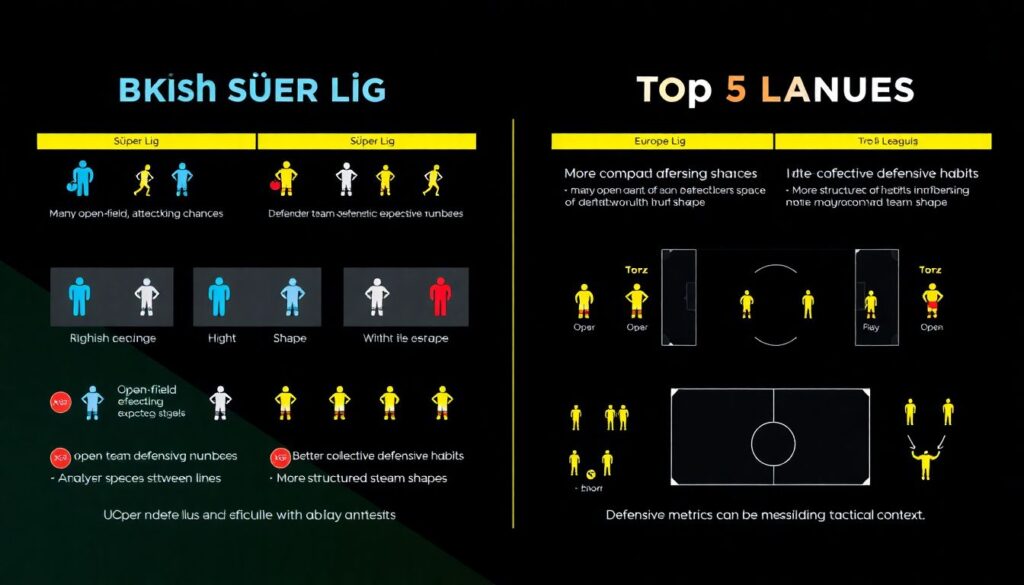
If you’re doing your own Super Lig vs European top 5 leagues deep dive:
– Expect Süper Lig matches to have similar open-field chances, but weaker collective defensive habits
– That means xG models may “like” Süper Lig attacking numbers, but defensive metrics can be misleading if you ignore tactical context
—
Serie A: Tactical Chess and Game Management
Serie A is still the league of:
– Detailed defensive structures
– Clever rest-defense and game management
– Tactical fouling and tempo control
It’s not all “catenaccio”, but it is more “control the game with and without the ball” than the Süper Lig.
Why this matters
A Süper Lig striker scoring 20+ goals:
– In Turkey: he may exploit broken lines and poor transitions
– In Italy: he’ll face better-organized blocks, fewer open spaces, more need for clever movement
If you ignore that, your expectation of his output in Serie A will be inflated.
—
Ligue 1: Athleticism Plus Growing Tactical Detail
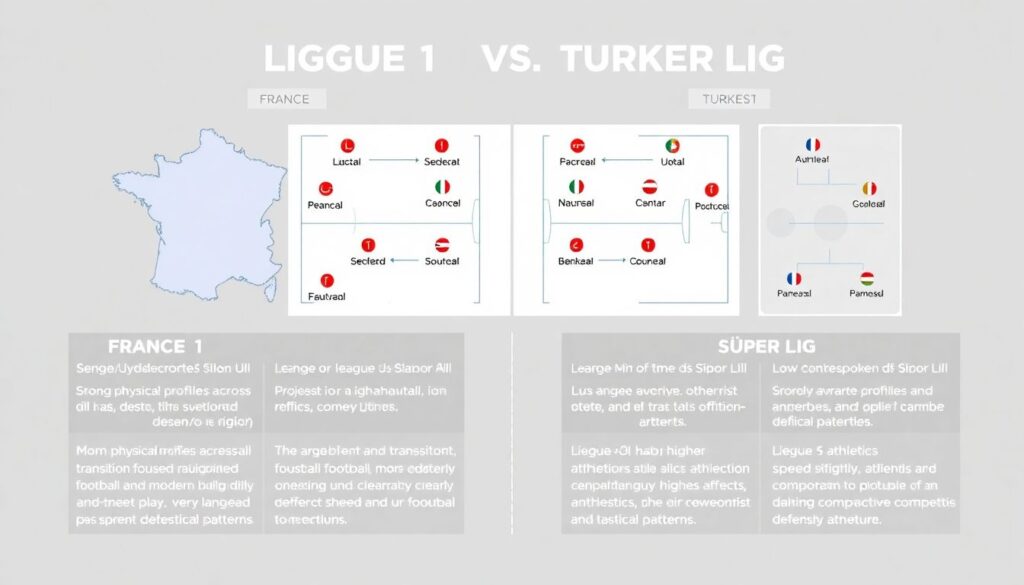
France:
– Strong physical profile across positions
– Mix of direct, transition-focused football and modern buildup
– Big gap between PSG and many others, which affects stats and tactical patterns
Compared to the Süper Lig, Ligue 1 has:
– Higher average athleticism
– Slightly more compact defensive shapes
– More systematic development of young players
—
Step 2. Learn to Read a Match Through Tactical Lenses
Instead of just watching the ball, pick one question for each league.
1. Süper Lig – How quickly does structure break after losing the ball?
2. Premier League – How high is the defensive line and how coordinated is the press?
3. La Liga – How do teams keep or change rhythm during buildup?
4. Bundesliga – How aggressively do teams attack vertical spaces after recovery?
5. Serie A – How do teams protect a lead in the last 20 minutes?
6. Ligue 1 – How often are duels and sprints decisive for chance creation?
Watch 10–15 minutes focusing only on that question.
You’ll start to *feel* the tactical culture.
—
Step 3. Typical Mistakes People Make in Cross-League Comparison
Mistake 1: Judging Only by Stats, Ignoring Tactical Context
New analysts often say:
> “He scored 15 in the Süper Lig, he can surely score 15 in the Premier League.”
That’s a trap.
– Defenders’ positioning is different
– Pressing intensity is higher
– The quality of passing into him may be lower or higher depending on team
Always combine data with tactical film. A Super Lig vs Premier League tactics comparison without video is half-blind.
How to fix it
When you look at stats, ask three questions:
1. *Where* on the pitch did he receive the ball?
2. *How* did his team progress (long balls, short buildup, transitions)?
3. *Against what* defensive structures did he produce (low blocks, high press, transitional chaos)?
—
Mistake 2: Assuming “Intensity” = “Quality”
Some people mistake running and pressing for tactical superiority.
– Süper Lig can be intense but disorganized
– Serie A can be slower but extremely smart
Intensity without structure can inflate some numbers but collapse under pressure in Europe. Remember that when clubs from Turkey face top 5 European leagues in continental competitions.
—
Mistake 3: Copy-Pasting Tactical Ideas Between Leagues
A pressing scheme that works in Germany might fail in Turkey if:
– Players don’t have the fitness
– Squad depth isn’t there
– Training culture isn’t adapted to that intensity
As a coach or analyst, don’t just copy a Premier League 4‑3‑3 high press into the Süper Lig and expect instant success. Context matters.
—
Step 4. Practical Toolkit for Fans, Bettors, and Young Analysts
If You’re Just Getting Into Tactical Analysis
Start simple. Here’s a basic 5-step routine you can apply to almost any match:
1. Pick one team’s defensive shape (4‑4‑2, 4‑2‑3‑1, etc.).
2. Watch how that shape changes when they lose the ball.
3. Notice where the *biggest gaps* appear consistently.
4. Check if the opponent adapts and attacks those gaps on purpose.
5. Compare this behavior between a Süper Lig match and a top 5 league match.
After a few games, you’ll literally see the difference in tactical culture.
—
Practical Use Case: Scouting a Player from the Süper Lig
Imagine you’re evaluating a Süper Lig winger who might move to La Liga.
Focus on:
– Decision speed in tight spaces
– Off-ball positioning in settled possession (not just in counterattacks)
– Defensive work: does he track runners or just jog back?
Then, watch a similar-profile winger in Spain and compare:
– How often he receives in isolation vs inside combinations
– How structured his team’s patterns are compared to the Turkish side
This kind of Super Lig vs La Liga style of play analysis helps you avoid overrating pure “highlight reel” moments that came from chaotic situations.
—
Practical Use Case: Betting or Forecasting Matches
If you bet, the tactical profile of a league is a big edge.
In the Süper Lig:
– Expect more variability in match control
– Emotional swings can lead to late goals, cards, and risky tactical shifts
Compared to, say, Serie A where a leading team is more likely to slow the game, sit deeper, and manage the result in a calculated way.
So you might:
– Be more cautious with unders in volatile Süper Lig derbies
– Value game-state tactics more heavily in Serie A and La Liga
—
Step 5. Using Data and Subscriptions Without Getting Lost
How to Choose Tools for Cross-League Analysis
When looking for the best site for European football tactical analysis, don’t just chase glossy dashboards. Ask:
– Do they separate leagues by tempo, PPDA (pressing intensity), and possession styles?
– Can you filter events by game state (0–0, winning, losing)?
– Do they provide both numbers *and* visualizations (shot maps, pass networks, pressing maps)?
The point of a football analytics subscription European leagues comparison is not more numbers; it’s better context. If a tool doesn’t help you understand *why* leagues play differently, it’s just noise.
—
Simple Data Checks You Can Do Yourself
Even without pro tools, you can:
1. Track average shot locations in matches from different leagues.
2. Count how many passes a team makes before entering the final third.
3. Note how often a team recovers the ball in the opposition half.
Compare a few Süper Lig games with Premier League or La Liga using these mini-metrics. You’ll quickly see differences in directness, control, and pressing.
—
Step 6. Tips for Beginners Who Want to Go Deeper
1. Don’t Start with All 5 Leagues at Once
Pick two: Süper Lig + one top league (for example, Premier League or La Liga).
Watch 3–5 games from each with one *single* question in mind, like:
“How do teams build from the back under pressure?”
Only then move on to more variables.
—
2. Use “Micro-Tasks” While Watching
Give yourself tiny focuses:
– First 15 minutes: only watch the defensive line
– Next 15: only watch the holding midfielder
– Last 15: only watch how the full-backs behave in possession
Comparing those roles in the Süper Lig and in a top 5 league will make structural differences obvious.
—
3. Beware of Highlight Bias
YouTube compilations make Süper Lig games look like end-to-end chaos and Premier League matches like pure speed. Full matches tell a very different story.
Force yourself to watch full 90s, even if you do it in two or three sittings.
—
4. Journal Your Observations
Keep a simple log:
– Match
– League
– Key tactical notes (pressing height, buildup style, defensive block)
After 15–20 matches across different leagues, reread your notes. You’ll see clear patterns in tactical culture emerge on their own.
—
Final Thoughts: Turn “Watching” into “Understanding”
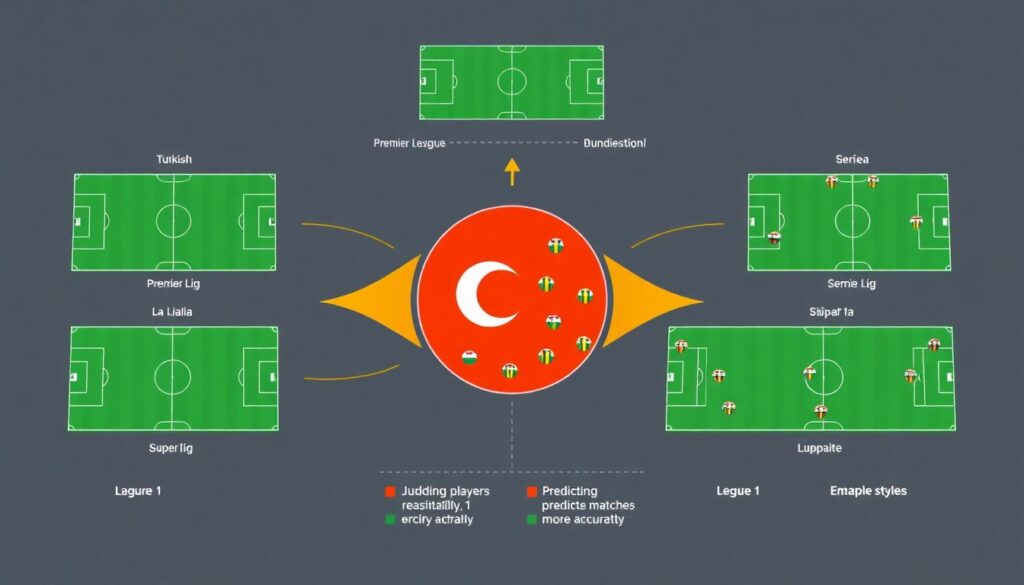
The point of comparing tactical cultures between the Süper Lig and the top 5 European leagues isn’t to crown a “best” league. It’s to understand *how* and *why* football looks different in each place—and then use that understanding:
– To judge players realistically
– To predict matches more accurately
– To appreciate coaches’ decisions instead of shouting “why no high press?!” every time
If you consistently apply the step-by-step approach here—focusing on one tactical theme at a time, avoiding common mistakes, and using data as context rather than as a crutch—you’ll move from casual viewer to informed analyst much faster than you think.
Комментарии