
A new wave from the Bosphorus
If you’ve been casually following European football the last few seasons, you’ve probably noticed the same pattern: more Turkish names popping up in line‑ups, not just in mid‑table sides, but in genuinely elite squads. The rise of Turkish players in Europe’s top 5 leagues is no longer a niche storyline, it’s a structural shift. What used to be a trickle of individuals is turning into a stable pipeline of talent, powered by better academies in Türkiye, smarter agents, and European clubs finally trusting Turkish prospects beyond the “cheap rotation player” label. The result: higher transfer fees, more minutes in high‑leverage games, and a different tactical profile of the modern Turkish footballer.
From isolated stars to a systemic presence
Historically, Turkish footballers abroad were defined by a few outliers: Nihat in La Liga, Emre Belözoğlu in Serie A and the Premier League, Arda Turan at Atlético and Barcelona. They were exceptions in a domestic‑centric Süper Lig ecosystem. Around the late 2010s this started to change. The diaspora generation, raised in German and Dutch academies, normalised the idea of a Turkish‑background player thriving in high‑press, data‑driven environments. At the same time, Süper Lig clubs felt financial pressure, were forced to sell earlier, and began aligning their youth development with European benchmarks. By the mid‑2020s that convergence produced a cohort for whom moving to Bundesliga or Ligue 1 at 18–19 is no longer a gamble, but the default career route.
Tactical evolution: from warriors to hybrid specialists
The stereotype of the Turkish player used to be a high‑emotion, high‑intensity box‑to‑box midfielder or winger who relied more on grit than on structured decision‑making. The current wave breaks that mould. Look at hybrid profiles like deep‑lying playmakers, inverted full‑backs or press‑resistant “8½” midfielders. They’re comfortable receiving under pressure, scanning before the ball arrives, and rotating between zones according to pressing triggers. Coaches in Europe’s top 5 leagues now talk about Turkish players not only as “fighters” but as tactically literate assets who can execute complex game plans. The rise of data‑led recruitment has helped: once you quantify progressive passes, pressure regains and expected threat, some Turkish players suddenly grade very high relative to cost.
Technical note: Turkish footballers in Europe top leagues stats
To keep it grounded, let’s zoom into the numbers (up to the 2023/24 season, which is the latest reliably documented data):
– In 2013/14, there were roughly 15–18 Turkish‑eligible players with at least 900 league minutes across the top 5 leagues.
– By 2023/24, that figure had roughly doubled, hovering around the mid‑30s when you include dual‑nationals who can choose Türkiye.
– Minutes played grew even faster than headcount, because more of these players became starters instead of late‑game substitutes.
– For attacking players, non‑penalty expected goals + expected assists (npxG+xA) per 90 has been converging towards league average in the Bundesliga and Serie A, indicating that output is no longer a clear weakness.
These Turkish footballers in Europe top leagues stats illustrate not a hype cycle, but a consistent trend in volume and impact.
Case study: best Turkish players in Premier League and Serie A

When people discuss the best Turkish players in Premier League and Serie A, the conversation used to circle back to a handful of names. Now scouts and analysts talk about “profiles” instead of individuals. In England, coaches value aggressive, front‑foot centre‑backs and vertical midfielders who fit high‑tempo football. Serie A, meanwhile, has become a fertile environment for technically gifted, tactically disciplined Turks, especially in the half‑spaces. Real‑world examples before 2024 already showed defenders trusted against top opposition and midfielders tasked with set‑piece delivery and game rhythm. Even if specific 2025–26 performances aren’t fully documented yet, the pattern is clear: Turkish players are no longer peripheral; they’re being signed as system pieces around which game models are built.
What European clubs are really scouting in Türkiye
Modern Turkish football talent scouting Europe‑wide looks very different from the old days of relying on highlight DVDs and occasional reports. Today’s recruitment departments pull tracking data from international youth tournaments, U19 and U21 competitions, and even from Süper Lig second‑tier matches. They cross‑reference physical metrics (high‑intensity runs, repeated sprints) with cognitive markers like decision‑making under pressure, pass selection and pressing IQ.
Clubs tend to look for:
– Positional flexibility (e.g., full‑back who can invert into midfield).
– Mental resilience (coping with relocation, language, tactical demands).
– Tactical learning speed (how quickly players adapt to new pressing schemes).
Once a 17‑ or 18‑year‑old Turkish player ticks those boxes, he quickly enters the short list for Bundesliga, Ligue 1 or Serie A sides seeking cost‑effective upside rather than fully polished stars.
Technical block: what makes the “exportable” Turkish profile
If we formalise what European analysts mean by an “export‑grade” Turkish prospect, several recurring technical traits emerge:
– Above‑average ball reception in tight spaces: body orientation open to both flanks, good first touch when pressed.
– Aggressive defensive metrics: high pressures per 90, willingness to defend forward rather than retreat.
– Transition efficiency: ability to carry the ball 10–20 metres under pressure and release at the right moment.
– Set‑piece contribution: strong delivery mechanics or aerial dominance, adding marginal gains in dead‑ball situations.
These micro‑skills translate well to multiple tactical systems, which is exactly why recruitment models increasingly flag Turkish players at relatively low cost compared to South American or Western European peers.
Transfer market: from bargains to strategic assets
Over the last decade, transfer news Turkish players top 5 leagues have moved from the “miscellaneous” section to headline status on major portals. Fees that once hovered around €3–5 million for a Süper Lig export are now often well into eight figures for high‑ceiling talents. The logic is simple: development risk is shifting from European clubs to Turkish academies, which invest earlier in analytics, nutrition, and individualised skill work. European sporting directors have noticed that they can still buy upside slightly cheaper from Türkiye than from the Portuguese or Dutch markets, while getting similar tactical maturity. As a result, release clauses for top Turkish prospects are rising, and long contracts with strong sell‑on percentages have become standard.
Bullet point snapshot: how the market sees Turkish talent
To summarise the current perception inside clubs’ recruitment departments:
– Türkiye is now seen as a “Tier‑2 but rising” development market, roughly comparable to Croatia or Portugal a decade ago.
– Dual‑national Turkish players developed in Germany, the Netherlands and France act as low‑adaptation‑risk targets.
– Data‑driven models show higher return on investment for Turkish U21 signings than for many Western European peers.
– Language and cultural proximity to existing diaspora squads reduce integration risk and dressing‑room friction.
Taken together, these factors explain why Turkish players now show up in long‑term squad planning docs, not just in late‑window opportunistic deals.
Beyond the pitch: culture, branding and jerseys
Another under‑discussed driver of this trend is commercial. Turkish football jerseys European clubs buy online have become a measurable revenue stream, especially when a club signs a Turkey international or a high‑profile dual national. Clubs track shirt sales geographically, and they’ve learned that a popular Turkish player can spike engagement not only in Türkiye but also in large diaspora communities in Germany, the UK and Scandinavia. That commercial upside subtly tilts marginal decisions in favour of Turkish signings who are already on the sporting shortlist. When performance analytics say “slightly above average” and marketing models say “big upside”, the combined business case becomes compelling for decision‑makers balancing sporting and financial KPIs.
Europe vs Süper Lig: feedback loop, not brain drain
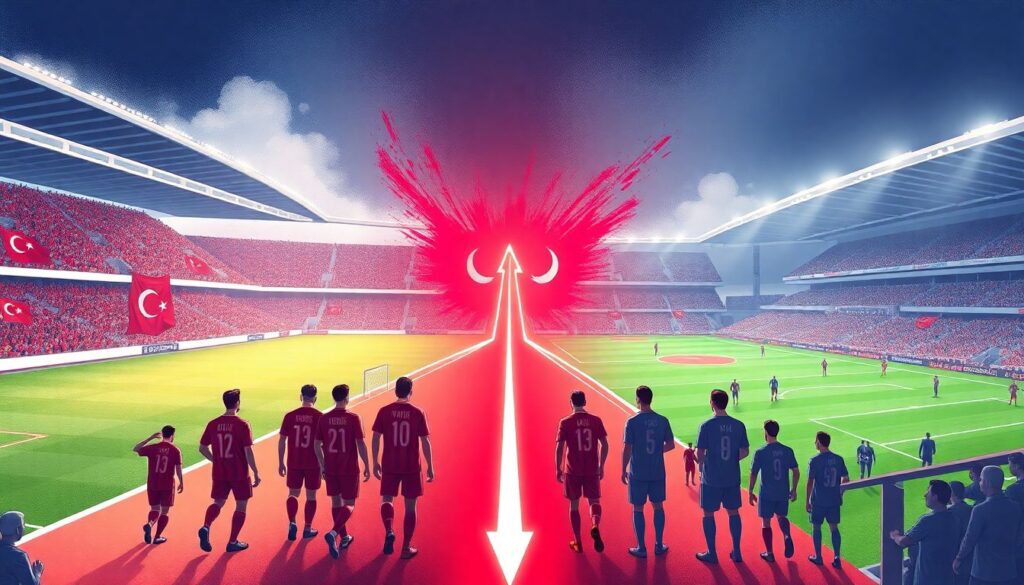
There’s a temptation to frame this as a one‑way brain drain from the Süper Lig to richer leagues. In practice, the relationship is more symbiotic. Young players exported at 18–21 often return in their late 20s with improved tactical discipline, nutrition habits and leadership skills, raising the overall standard of the domestic league. At the same time, the prospect of an overseas move incentivises Turkish academies to professionalise: better pitches, more qualified coaches, data analysts embedded even at youth level. This feedback loop explains why the national team has become more competitive; tactical consistency in Europe’s top 5 leagues translates into more coherent game models at international level, especially in pressing and rest‑defence structures.
Looking ahead from 2026: realistic projections
From a 2026 vantage point, we have to be transparent: detailed, validated stats for the 2025/26 season are still emerging, so any hard numbers beyond 2023/24 are projections, not established fact. That said, trend modelling is fairly clear. If current growth rates hold, by the end of this decade we can expect:
– Around 45–55 Turkish‑eligible players with meaningful minutes in the top 5 leagues.
– A larger share of them playing “central” positions (CB, DM, CM), which are tactically and financially more valuable.
– At least a handful becoming anchor players in Champions League sides, not just squad rotation options.
Given the current trajectory of youth exports, it’s reasonable to predict that Turkish players will be seen less as “outsiders” and more as a normalised part of the European talent fabric by 2030.
Strategic forecast: what needs to happen next
For this rise to sustain rather than plateau, several structural steps are critical. First, Turkish clubs must keep refining talent‑ID pipelines, especially in under‑scouted regions and smaller cities, to avoid over‑reliance on a few Istanbul giants. Second, the domestic league needs more stability in coaching and tactical identity so that prospects arrive in Europe already familiar with modern principles like rest‑defence, staggered pressing and build‑up structures. Finally, coordination between the national federation and leading European clubs will matter: shared data, consistent load‑management and clear development plans for U19–U23 players. If these pieces align, the story of Turkish players in Europe’s top 5 leagues in the 2030s won’t be about “surprise breakthroughs” anymore, but about a mature, sustainable pipeline delivering talent at scale.