
Every few years Turkey produces a wave of kids who play like they grew up juggling a ball in narrow backstreets – because most of them did. The new crop of Turkish wonderkids 2024 is different, though: they’re still street‑smart, but raised on data, GPS vests and video-on-demand of their own mistakes. If you’re trying to understand who the real top Turkish talents to watch this season are – and how to judge whether the hype is real – you need to look not only at skills, but also at how clubs scout, train and protect these players from burning out too early.
The new wave of Turkish wonderkids
When people talk about the best young Turkish footballers now, they usually start with flexible, all‑phase players. Instead of classic “10s” who only create, you see press‑resistant midfielders, inverted wingers who track back, and centre‑backs who step into midfield. Scouts don’t just ask, “Can he dribble?” but “Can he solve problems at high speed under pressure?” A kid who reads pressing triggers, manipulates the opponent with his body shape and stays calm when trapped near the touchline is valued more than someone who just posts flashy highlight reels. That shift explains why big European clubs are circling around Ankara and Istanbul academies.
Different approaches to spotting and shaping talent
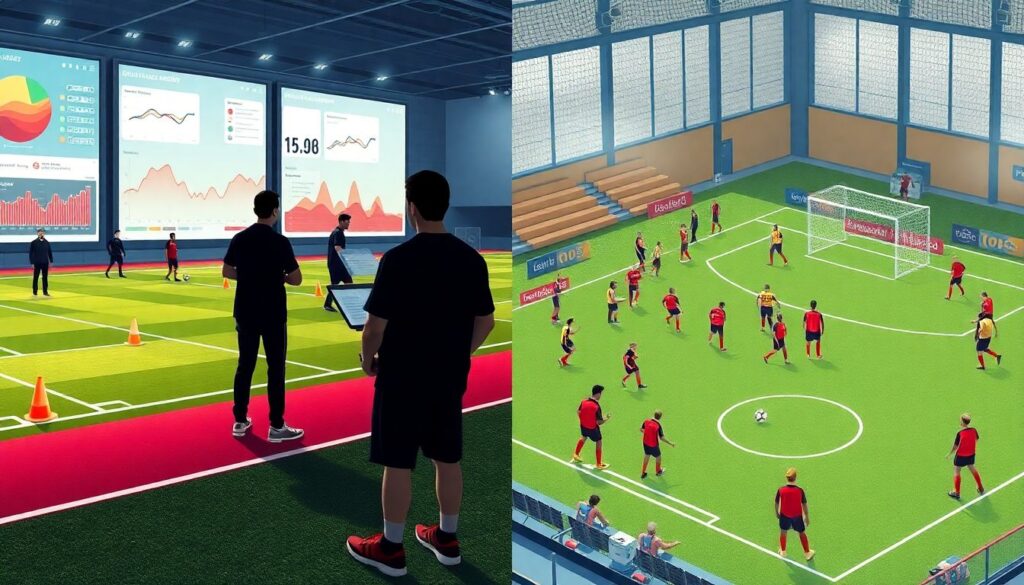
Academies in Turkey now split into two rough camps. The first is the “data‑driven developer”: lots of analytics, strict periodisation, clear individual plans, plus psychologists and nutritionists. The second is the “context cultivator”: more small‑sided chaos, unstructured play, and strong focus on identity – “this is how our club plays.” Data‑heavy setups reduce guesswork and help late bloomers; however, they can create “robotic” players who freeze when the script breaks. Freer academies produce fearless dribblers and risk‑takers, but some prospects arrive in Europe with shaky basics like pressing angles or defensive body orientation. The smartest clubs blend both, adjusting the mix per player rather than applying one rigid formula.
Tech behind the next generation Turkish football stars
To shape the next generation Turkish football stars, staff rely on a full tech stack: GPS trackers, tracking cameras, VR for decision‑making drills, and cloud platforms that store every touch. Video tools let coaches instantly cut clips to show a winger why his run was mistimed. Pros: objective load monitoring cuts injury risk, and pattern analysis reveals what the eye misses – like how often a midfielder receives on the half‑turn. Cons: if you drown a 17‑year‑old in dashboards, he stops playing on instinct. Tech is a tool, not a religion; the best coaches use 1–2 clear metrics per player, translate numbers into simple cues, and leave space for improvisation and creativity.
Real‑world cases: from academy to Europe

Look at how different pathways shaped recent Turkey football wonderkids transfermarkt fans obsess over. Arda Güler grew up in an environment that mixed free expression with early exposure to senior pressure; Fenerbahçe trusted him with the ball in tight games rather than saving him for “safe” minutes. Result: when he moved abroad, his biggest strength was not just technique, but personality – demanding the ball at 19 in packed stadiums. Contrast that with a highly rated youth striker who dominated U19 leagues but rarely faced men. Stat sheets looked great, yet once he met physical centre‑backs, his movements collapsed. The lesson: game context matters more than academy trophy shelves.
Top 10 Turkish wonderkids to watch this season
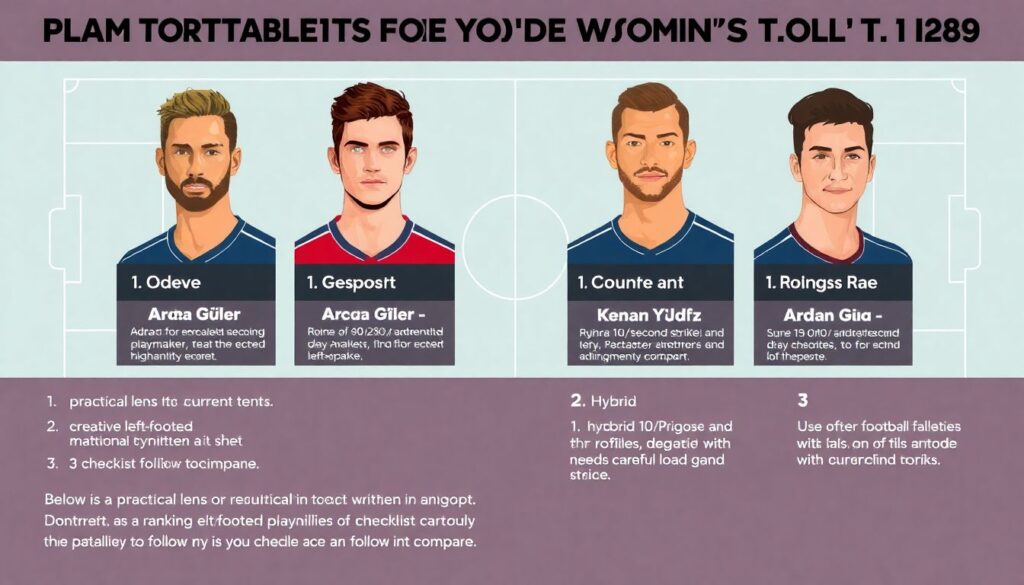
Below is a practical lens for watching the current crop. Don’t treat it as a ranking written in stone; treat it as a checklist of profiles to follow and compare.
1. Arda Güler – creative left‑footed playmaker, elite vision, needs careful load management.
2. Kenan Yıldız – hybrid 10/second striker, great at receiving between lines and driving at defenders.
3. Semih Kılıçsoy – powerful, direct forward who attacks space early and finishes with minimal backlift.
4. Emre Can Uzun – instinctive box striker, strong movement off the last shoulder.
5. Bartuğ Elmaz – press‑resistant midfielder with sharp short passing.
6. Yasin Özcan – modern left‑back who inverts into midfield and can build play.
7. Can Uzun (another promising forward) – eye for goal and strong mentality in clutch moments.
8. Oğuz Aydın – winger comfortable attacking from both flanks, constantly looking for 1v1s.
9. Yusuf Barasi – mobile centre‑forward, good link‑up and pressing discipline.
10. A dynamic U19 centre‑back type – strong in duels, learning to defend big spaces and start attacks.
Watch how they react to adversity, not just highlight moments.
How to pick which talents to really follow
If you want to separate noise from signal, treat yourself like a scout. First, ignore raw goal/assist numbers at youth level. Check: can this player repeat his actions under pressure, or do his best plays happen in low‑intensity moments? Second, judge versatility. A winger who can play inside, press as a second striker and defend the far post is more likely to stick in top‑five leagues. Third, look at decision‑making: does he choose the simple pass when it’s on, or force the spectacular every time? When someone is hyped as one of the top Turkish talents to watch this season, go watch full matches, not just compilations, and see how he behaves when the ball is far away.
Comparing scouting lenses: eye test vs metrics
Professional clubs and fans often argue: should we trust scouts’ intuition or heavy analytics when judging Turkish wonderkids 2024? The pure eye‑test approach catches subtle things – body language after a mistake, how a kid communicates, or whether he “smells” danger before it appears. But it’s biased; a single good game can seduce even experienced scouts. Pure metrics – expected goals, pressing actions, progressive passes – are great at spotting undervalued profiles but can miss context, like a full‑back asked to play ultra‑conservatively by his coach. Successful academies force these two worlds to talk: analysts flag names, scouts validate them live, and then coaches test prospects in different roles to see how adaptable they really are.
Trends and what 2026 is likely to look like
Looking ahead to 2026, three trends will shape how we talk about the best young Turkish footballers. First, earlier overseas moves: more teenagers will leave for Belgium, the Netherlands or Austria at 17–18, seeking tactical education and stable infrastructures. Second, positionless training: kids will rotate between full‑back, winger and central roles until later, building a broader picture of the game. Third, personalised tech: rather than generic GPS reports, each player will have a small “performance team” – coach, analyst, physio – optimising his growth. For fans, this means Turkey will keep feeding Europe with technically gifted, tactically flexible players, and the label “Turkish wonderkid” will increasingly imply game intelligence, not just flair.